














Gjør som tusenvis av andre bokelskere
Abonner på vårt nyhetsbrev og få rabatter og inspirasjon til din neste leseopplevelse.
Ved å abonnere godtar du vår personvernerklæring.Du kan når som helst melde deg av våre nyhetsbrev.

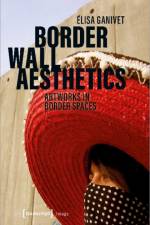
30 years after the fall of the Berlin Wall, we live in a time of globalization and free trade. Nevertheless, 70 new border walls have been built in this period - put together, they would cover the total circumference of the Earth. While governments offer manifold justifications for building these separation barriers, they invariably attract the attention of artists. Is it merely the lure of transgression, however, that attracts them - or is there a deeper significance in the artistic encounter with border walls? And which artistic strategies do these artists employ to approach them?In order to address these questions, Élisa Ganivet revisits the history of border wall aesthetics and compares more recent border-related works by 100 artists, including Joseph Beuys (Berlin), Banksy (Israel-Palestine), and Frida Kahlo (Mexico-US). Through art and thus beyond art, we understand the flaws and shortcomings of supposedly well-oiled systems.With a preface by Élisabeth Vallet.
What can we learn from a teacher's journal about working with challenging youth? Why does the Training Room Program in German schools impede the development of an empowering learning culture? What experiences transpire during a train trip to the sea with an unruly crew of school boys? Or: what happens when children plan a trip on their own? Anyone who has accumulated experiences in teaching faces creative choices when putting that legacy to paper. The author chose to use this selection of studies to illustrate formative and inspirational moments from his years as a dedicated teacher and father.
While research in right-wing populism has recently been blossoming, a systematic study of the intersection of right-wing populism and gender is still missing, even though gender issues are ubiquitous in discourses of the radical right ranging from »ethnosexism« against immigrants, to »anti-genderism.« This volume shows that the intersectionality of gender, race and class is constitutional for radical right discourse. From different European perspectives, the contributions investigate the ways in which gender is used as a meta-language, strategic tool and »affective bridge« for ordering and hierarchizing political objectives in the discourse of the diverse actors of the »right-wing complex.«
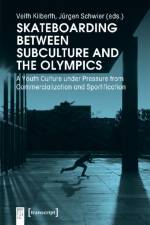
The inclusion of skateboarding as an official discipline in the 2020 Olympic Games marks the pinnacle of a decades-long process of commercialization and sportification. Is the tightly-knit subculture in danger of losing its very identity?This anthology creates an analytical framework for understanding the fundamental conflict between skateboarding's core ethos and the tenets of institutionalized sports. Eleven acclaimed international authors from the fields of architecture, philosophy, sociology, sports sciences and gender studies provide a unique perspective on the manifold manifestations of skateboarding previously ignored by academic discourse.
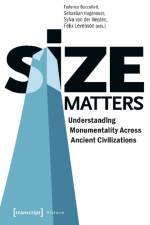
When talking about monuments, size undeniably matters - or does it?But how else can we measure monumentality?Bringing together researchers from various fields such as archaeology, museology, history, sociology, Mesoamerican studies, and art history, this book discusses terminological and methodological approaches in both theoretical contributions and various case studies. While focusing on architectural aspects, this volume also discusses the social meaning of monuments, the role of forced and free labour, as well as textual monumentality. The result is a modern interdisciplinary take on an important concept which is notoriously difficult to define.
The Brazilian Constitution provides a remarkable set of social rights, including the right to housing. Despite this fact, struggles for decent living conditions have become key issues in the daily urban lives of many people in Brazil. Contesting the differentiated access to housing, social movements occupy empty buildings in the cities to challenge historically-rooted and excluding urban politics. Exploring the occupants' agency, Bea Wittger draws attention to the important role of female actors within the buildings. Through oral histories of participants of two squats in Rio de Janeiro, the book delivers a deep insight "e;from below"e; into their own perspectives on citizenship and gender.
This first in-depth study of Miranda July's work reveals some of its major motives and consequently provides fascinating insights into the lifestyle of the contemporary white Californian middle class. Through an analysis of July's award-winning intermedial work, the author lays open how July takes individualism and self-help as constitutive for the creative class. Although a member of the creative class herself, July's voice oscillates between irony and approval. July thus paints a fascinating portrait of neurotic hipsterism, which triggers self-reflection in the general reader and critical thinking in the cultural analyst.
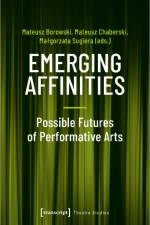
This volume is a response to the growing need for new methodological approaches to the rapidly changing landscape of new forms of performative practices. The authors address a host of contemporary phenomena situated at the crossroads between science and fiction which employ various media and merge live participation with mediated hybrid experiences at both affective and cognitive level. All essays collected here move across disciplinary divisions in order to provide an account of these new tendencies, thus providing food for thought for a wide readership ranging from performative studies to the social sciences, philosophy and cultural studies.
Diabetes is regarded as one of the most challenging global health issues of the 21st century. Especially countries with weak health infrastructure are struggling to deal with the increased demands this chronic disease entails.Tracing the effects of a diagnostic device, the glucometer, this book examines how it contributes to the making of diabetes in contemporary Uganda. Arlena S. Liggins demonstrates that depending on who uses the glucometer, the outcomes may go far beyond diagnosis. The book draws a complex picture of hopes and misplaced expectations, of trust and mistrust in a technology to which access in the first place is all but a given.
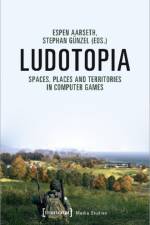
Where do computer games »happen«? The articles collected in this pioneering volume explore the categories of »space«, »place« and »territory« featuring in most general theories of space to lay the groundwork for the study of spatiality in games. Shifting the focus away from earlier debates on, e.g., the narrative nature of games, this collection proposes, instead, that thorough attention be given to the tension between experienced spaces and narrated places as well as to the mapping of both of these.
The Chinese scholar-official Lin Zexu played a crucial role in the First Opium War in the 19th century. Since 1978, the myth surrounding the historical figure is used to legitimise current rulers' political power, to celebrate dominant values, and to promote a certain associated way of life.By analysing Chinese media representations of the myth of Lin Zexu, Angelo Maria Cimino identifies the social and cultural significance of a mediated historical knowledge. He examines cultural products such as feature films, digital images, documentaries, cartoons, and songs, analyses their discursive practices and the responses they spawn, and explains how multiple agents within the Chinese media continuously generate and re-affirm the myth's cultural network.
Since 2008, foreign land acquisitions have attracted international attention under the term »land grabbing.« Illustrated by rich and nuanced empirical accounts of forty Chinese and British investment projects in Sub-Saharan Africa, Ariane Goetz explains the phenomenon of »land grabbing« from the perspective of two investor countries. She reflects on Chinese and British public policy, state-society relations, national developmental contexts, ideologies, and international relations and thereby gives insights into the political economies that enable these investments as well as the development ambitions and institutionalized paradigms of which they form a part.
This work covers the ways in which traditional Moroccan women seers have adjusted to ongoing processes of commercialization and professionalization as well as to the changing needs and expectations of their female clientele. Themes include spirit possession, mother-daughter relationships and more.
Presents an examination of the internationally renowned National Dance Theatre Company of Jamaica (NDTC) in the context of postcolonial theater. This title examines the interrelationship of Jamaican modern dance theater aesthetics and the Caribbean's complex cultural genealogy since 1492.
Abonner på vårt nyhetsbrev og få rabatter og inspirasjon til din neste leseopplevelse.
Ved å abonnere godtar du vår personvernerklæring.