


Gjør som tusenvis av andre bokelskere
Abonner på vårt nyhetsbrev og få rabatter og inspirasjon til din neste leseopplevelse.
Ved å abonnere godtar du vår personvernerklæring.Du kan når som helst melde deg av våre nyhetsbrev.

New knowledge, created in international cooperation, is essential for global sustainability. Set against this background, this study focuses on German science policy for research cooperation with developing countries and emerging economies in sustainability research. Based on interviews with policy makers and researchers, the book scrutinizes the actors, processes and contents of science policy in Germany. The author argues that science policy mainly aims at German economic benefits and technology development. This, however, negatively influences global sustainability. To counter existing path dependencies, the author provides recommendations for sustainability-oriented scientific practice and science policy.
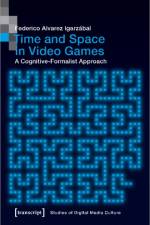
Video games are temporal artifacts: They change with time as players interact with them in accordance with rules. In this study, Federico Alvarez Igarzábal investigates the formal aspects of video games that determine how these changes are produced and sequenced. Theories of time perception drawn from the cognitive sciences lay the groundwork for an in-depth analysis of these features, making for a comprehensive account of time in this novel medium. This book-length study dedicated to time perception and video games is an indispensable resource for game scholars and game developers alike. Its reader-friendly style makes it readily accessible to the interested layperson.
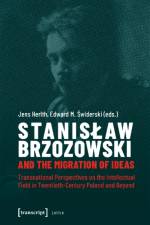
As a writer, critic, and philosopher, Stanislaw Brzozowski (1878-1911) left a lasting imprint on Polish culture. He absorbed virtually all topical intellectual trends of his time, adapting them for the needs of what he saw as his primary mission: the modernization of Polish culture. The essays of the volume reassess and contextualize Brzozowski's writings from a distinctly transnational vantage point. They shed light on often surprising and hitherto underrated affinities between Brzozowski and intellectual figures and movements in Eastern and Western Europe. Furthermore, they explore the presence of his ideas in twentieth-century century literary criticism and theory.
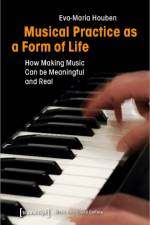
How is musical practice connected with everyday life? Eva-Maria Houben shows that performing music as an activity - indeed, as playing - is a meaningful shift from an approach based on structural analysis. Musical practice, Eva-Maria Houben contends, can be understood as open and never finished. Such an emphasis on repetition offers freedom from perfection, productivity, and purpose, thus allowing meaning to unfold in specific situations, places, and relationships. Musical practice can become a form of life and a reality in its own right. The study includes musical examples from the 17th, 18th, 19th, and 20th centuries as well as contemporary music.
Are artists seismographs during processes of transformation? Is theatre a mirror of society? And how does it influence society offstage? To address these questions, this collection brings together analyses of cultural policy in post-apartheid South Africa and actors of the performing arts discussing political theatre and cultural activism. Case studies grant inside views of the State Theatre in Pretoria, the Market Theatre in Johannesburg and the Baxter Theatre in Cape Town, followed by a documentation of panel discussions on the Soweto Theatre. The texts collected here bring to the surface new faces and voices who advance the performing arts with their images and lexicons revolving around topics such as patriarchy, femicide and xenophobia.
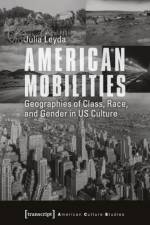
American Mobilities investigates representations of mobility - social, economic, geographic - in American film and literature during the Depression, WWII, and the early Cold War. With an emphasis on the dual meaning of "e;domestic,"e; referring to both the family home and the nation, this study traces the important trope of mobility that runs through the "e;American"e; century. Juxtaposing canonical fiction with popular, and low-budget independent films with Classical Hollywood, Leyda brings the analytic tools of American cultural and literary studies to bear on an eclectic array of primary texts as she builds a case for the significance of mobility in the study of the United States.
What are organizations? Where do they come from? How are they transformed and adapted to new situations? In the digital age and in the global network society, traditional theories of the organization can no longer answer these questions. Based on actor-network theory, this book explains organizations as flexible, open networks in which both human and non-human actors enter into socio-technical assemblies by constantly negotiating and re-negotiating programs of action. Organizations are not macro social structures or autonomous systems operating behind the backs of individuals. Instead, they are scalable actor-networks guided by network norms of connectivity, flow, communication, participation, authenticity, and flexibility.
Philological practices have served to secure and transmit textual sources for centuries. However - this volume contends -, it is only in the light of the current radical media change labeled >digital turn< that the material and technological prerequisites of the theory and practice of philology become fully visible. The seventeen studies by scholars from the universities of Budapest and Cologne assembled here investigate these recent transformations of our techniques of writing and reading by critically examining core approaches to the history and epistemology of the humanities. Thus, a broad praxeological overview of basic cultural techniques of collective memory is unfolded.
Abonner på vårt nyhetsbrev og få rabatter og inspirasjon til din neste leseopplevelse.
Ved å abonnere godtar du vår personvernerklæring.