



Gjør som tusenvis av andre bokelskere
Abonner på vårt nyhetsbrev og få rabatter og inspirasjon til din neste leseopplevelse.
Ved å abonnere godtar du vår personvernerklæring.Du kan når som helst melde deg av våre nyhetsbrev.

When queer Jewish people migrated from Central Europe to the Middle East in the first half of the 20th century, they contributed to the creation of a new queer culture and community in Palestine. This volume offers the first collection of studies on queer Jewish lives between Central Europe and Mandatory Palestine. While the first section of the book presents queer geographies, including Germany, Austria, Poland and Palestine, the second section introduces queer biographies between Europe and Palestine including the sexologist Magnus Hirschfeld (1868-1935), the writer Hugo Marcus (1880-1966), and the artist Annie Neumann (1906-1955).
Lesbian Web Series narrate female-centred stories, strengthen identity construction, and generate transnational communities beyond cultural barriers. Julia Obermayr explores the first definition of a new format, the first representations of lesbian women in US-American, Canadian, and Spanish web series from 2007 and onward, as well as their reciprocal effects regarding identity construction and community building of their transnational, mainly female, audience.The analyzed corpus comprises scenes taken from Venice the Series (2009) and its backstory »Otalia« on the soap opera Guiding Light (1952-2009), Seeking Simone (2009), Out With Dad (2010), Féminin/ Féminin (2014), Chica Busca Chica (2007) and its cinematic sequel De Chica En Chica (2015), as well as Notas Aparte (2016).
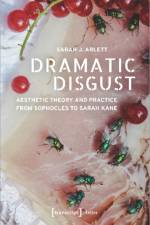
Aesthetic disgust is a key component of most classic works of drama because it has much more potential than to simply shock the audience. This first extensive study on dramatic disgust places this sensation among pity and fear as one of the core emotions that can achieve katharsis in drama. The book sets out in antiquity and traces the history of dramatic disgust through Kant, Freud, and Kristeva to Sarah Kane's in-yer-face theatre. It establishes a framework to analyze forms and functions of disgust in drama by investigating its different cognates (miasma, abjection, etc.). Providing a concise argument against critics who have discredited aesthetic disgust as juvenile attention-grabbing, Sarah J. Ablett explains how this repulsive emotion allows theatre to dig deeper into what it means to be human.
In the late 18th and early 19th centuries, the American theater emerged as a crucial cultural space for debates around gender stereotypes, gendered conduct, sexual desire, the politics of intimacy and domesticity, female authorship, as well as the complex intersections of gender and other markers of cultural difference, such as race, ethnicity, socioeconomic class, age, or nation. This collection explores the role of gender in the formation of American theatrical culture in this period. It features essays on well-known early American dramatists such as Susanna Rowson or Judith Sargent Murray, but also sheds light on anonymous authors and more obscure theatrical practices.
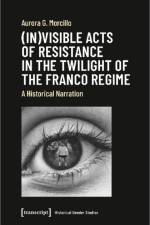
Which everyday practices allowed women to sustain and fulfill individuality and agency under dictatorial rule? This book adds to a rich scholarship on the history of late Francoism and the transition to democracy in Modern Spain through the lens of oral history and life writing. Aurora Morcillo tells the stories of anonymous individuals from both student and working class backgrounds - crucial sites of active resistance against the dictatorship at the time - and provides an interdisciplinary feminist analysis of the inevitable modernization of Spain in the 1960s and 1970s. This study uncovers a Deleuzian rendition of historical unfolding/becoming rather than simply being a collection of oral histories: a historical narration which proposes to be a creative historical ontology.
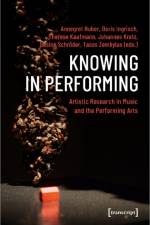
How can performing be transformed into cognition? Knowing in Performing describes dynamic processes of artistic knowledge production in music and the performing arts. Knowing refers to how processual, embodied, and tacit knowledge can be developed from performative practices in music, dance, theatre, and film. By exploring the field of artistic research as a constantly transforming space for participatory and experimental artistic practices, this anthology points the way forward for researchers, artists, and decision-makers inside and outside universities of the arts.
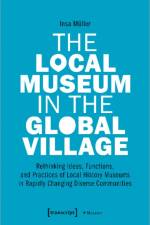
In remote areas of Europe, local history museums struggle to connect with the rapidly changing and increasingly diverse communities around them. Insa Müller asks how these museums can recast themselves to strengthen the links to their communities. Combining theoretical deliberations, empirical investigations of the case of two Norwegian islands and a museum experiment, she offers starting points for rethinking the local history museum, while at the same time providing suggestions for locally adapted museum practice.
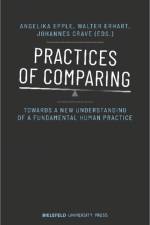
Practices of comparing shape how we perceive, organize, and change the world. Supposedly innocent, practices of comparing play a decisive role in forming categories, boundaries, and hierarchies; but they can also give an impetus to question and change such structures. Like almost no other human practice, comparing pervades all social, political, economic, and cultural spheres. This volume outlines the program of a new research agenda that places comparative practices at the center of an interdisciplinary exploration. Its contributions combine case studies with overarching systematic considerations. They show what insights can be gained and which further questions arise when one makes a seemingly trivial practice - comparing - the subject of in-depth research.
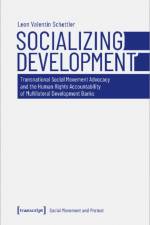
As Multilateral Development Banks increasingly gained influence in shaping global development, transnational social movements pushed to hold them accountable for their human rights impact towards communities. Leon Valentin Schettler presents a novel causal mechanism of movement advocacy towards MDBs, combining disruptive and conventional tactics. Systematically comparing the evolution of human rights standards and complaint mechanisms over the last three decades, he reveals how the combination of 1) declining US hegemony, 2) counter-mobilization by China and 3) movement cooptation by the World Bank bureaucracy led to a dilution of human rights accountability in the 2010s.
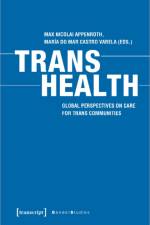
Around the world trans and gender diverse people are marginalized and discriminated against in medical, psychological, and nursing care. This anthology is the first to address the current situation of this population in various global healthcare settings. The perspectives from 11 different countries give insight into the difficult experiences of the trans and gender diverse community when seeking healthcare, and how self-organized community structures can help to overcome barriers to often inaccessible public healthcare systems. The majority of contributions are written from a lived trans and gender diverse perspective.
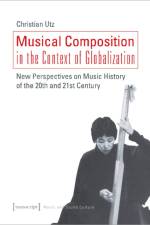
Since the early transformation of European music practice and theory in the cultural centers of Asia, Latin America, and Africa around 1900, it has become necessary for music history to be conceived globally - a challenge that musicology has hardly faced yet. This book discusses the effects of cultural globalization on processes of composition and distribution of art music in the 20th and 21st century. Christian Utz provides the foundations of a global music historiography, building on new models such as transnationalism, entangled histories, and reflexive globalization. The relationship between music and broader changes in society forms the central focus and is treated as a pivotal music-historical dynamic.
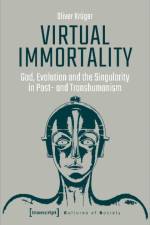
In recent years, ideas of post- and transhumanism have been popularized by novels, TV series, and Hollywood movies. According to this radical perspective, humankind and all biological life have become obsolete. Traditional forms of life are inefficient at processing information and inept at crossing the high frontier: outer space. While humankind can expect to be replaced by their own artificial progeny, posthumanists assume that they will become an immortal part of a transcendent superintelligence. Krüger's award-winning study examines the historical and philosophical context of these futuristic promises by Ray Kurzweil, Nick Bostrom, Frank Tipler, and other posthumanist thinkers.
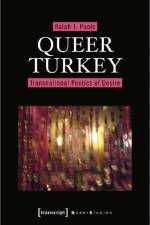
Before President Erdogan's repressive politics took hold, queer cultures were more visible than ever in Turkey. Queer Turkey offers a broad range of reflections on queer Turkish cultures within a transnational, Euro-American context. Based on his experience in Istanbul, Ralph J. Poole shares his impressions of queer desires between Muslim tradition and global pop, observes what goes on in the hamam, and wonders about Arabesk culture.The book features discussions of queer travel writers, poets, playwrights, and film directors. Their multifarious works manifest the subtle and subversive ways in which artists crisscross the cultural borders of East and West. With its many facets of Turkish-Euro-American cultural interactions, Queer Turkey outlines a kaleidoscope of transnational poetics.
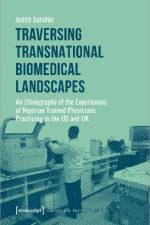
In the age of globalization, the transnational dimension of sciences like medicine seems to be given. However, the agents connecting different parts of this transnational biomedical landscape have yet to receive their due attention. Situated at the intersection of contemporary debates as well as theories of medical anthropology and migration in the 21st century, this book explores the experiences of Nigerian trained physicians who migrated to the US and the UK within the last 40 years. By drawing on individual professional life stories, Judith Schühle illuminates how these physicians disconnect from and (re)connect to diverse local social and biomedical contexts, becoming established abroad while at the same time trying to influence health care services in Nigeria through transnational endeavors.
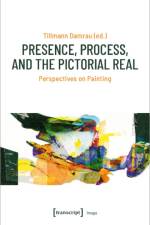
Painting, according to recent findings, dates back more than seventy thousand years, and, across the millenia, it proved to be an extremely robust and versatile medium of human self-reflection. Today, painting is a medium almost exclusively confined to the artistic production of pictures. It has lost its dominant position in contemporary art and has finally become one artistic medium amongst others. Given the incredible number of pictures produced today, it seems to be reasonable and relevant to discuss whether and how painting is still pertinent to contemporary image production. This book will offer a variety of perspectives on the role of painting in the 21st century to address these questions.
Abonner på vårt nyhetsbrev og få rabatter og inspirasjon til din neste leseopplevelse.
Ved å abonnere godtar du vår personvernerklæring.