![[Un]Grounding – Post–Foundational Geographies af Friederike Landau](https://cdnbackdoor.tales.as/thumbnail/150x225/00150/27028/cover.1621209223.jpg)



Gjør som tusenvis av andre bokelskere
Abonner på vårt nyhetsbrev og få rabatter og inspirasjon til din neste leseopplevelse.
Ved å abonnere godtar du vår personvernerklæring.Du kan når som helst melde deg av våre nyhetsbrev.

The expression »to come out of the closet« calls for an analysis of how language and notional as well as social spaces interact and intersect to constitute »queer«. This performative book, a product of artistic research, is an exploration of the proverbial closet through linguistics, queer, and postcolonial theory. It is a project in which opacity, minority, and improvisation happen on the levels of content, analysis, and typography. Eleven queer slangs from around the world become part of an exploration of queerness and knowledge from the Periphery through autoethnography, Édouard Glissant's concept of opacity, José Muñoz's disidentifications, and Gloria Anzaldúa's performative writing. Theory, personal accounts, and art are interwoven to offer an interdisciplinary reading of the slangs as queer methods of survival and resistance.
Intercultural, interdisciplinary, and transdisciplinary research interfaces confront researchers with considerable challenges. Towards Shared Research portrays how scholars from different disciplinary and geographical origins and at various academic career stages strive for a more inclusive and better understanding of knowledge about African environments.The book is addressed to researchers, facilitators, and policy-makers to make a case for participatory and integrative approaches resulting in systemic and co-created analyses.
In Bolivia's plurinational conjuncture, novel political articulations, legal reform, and processes of collective identification converge in unprecedented efforts to 're-found' the country and transform its society. This ethnography explores the experiences of Afrodescendants in plurinational Bolivia and offers a fresh perspective on the social and political transformations shaping the country as a whole. Moritz Heck analyzes Afrobolivian social and cultural practices at the intersections of local communities, politics, and the law, shedding light on novel articulations of Afrobolivianity and evolving processes of collective identification. This study also contributes to broader anthropological debates on blackness and indigeneity in Latin America by pointing out their conceptual entanglements and continuous interactions in political and social practice.
Post-foundationalism departs from the assumption that there is no ground, necessity, or objective rationale for human political existence or action. The edited volume puts contemporary debates arising from the »spatial turn« in cultural and social sciences in a dialogue with post-foundational theories of space and place to devise post-foundationalism as radical approach to urban studies. This approach enables us to think about space not only as socially produced, but also as crucially marked by conflict, radical negativity, and absence. The contributors undertake a (re-)reading of key spatial and/or post-foundational theorists to introduce their respective understandings of politics and space, and offer examples of post-foundational empirical analyses of urban protests, spatial occupation, and everyday life.
Media narratives inform our ideas of the future - and Games are currently making a significant contribution to this medial reservoir. On the one hand, Games demonstrate a particular propensity for fantastic and futuristic scenarios. On the other hand, they often serve as an experimental field for the latest media technologies. However, while dystopias are part of the standard gaming repertoire, Games feature utopias much less frequently. Why?This anthology examines playful utopias from two perspectives. It investigates utopias in digital Games as well as utopias of the digital game; that is, the role of ludic elements in scenarios of the future.
andererseits seeks to provide a forum for unique and exciting research and reflections on topics related to the German-speaking world and the field of German Studies. Works presented in the publication come from a wide variety of genres including book reviews, poetry, essays, editorials, forum discussions, academic notes, lectures, and traditional peer-reviewed academic articles. In addition, contributions by journalists, librarians, archivists, and other commentators interested in German Studies broadly conceived. By publishing such a diverse array of material, we hope to demonstrate the extraordinary value of the humanities in general, and German Studies in particular, on a variety of intellectual and cultural levels.Contributors to this volume: Yvonne Delhey, Andreas Erb, Bernhard Fischer, Rüdiger Görner, Spencer Hawkins, Steffen Kaup, Selim Özdogan, Hugh Ridley, Gertrud Maria Rösch, Peter Stamm, Wim Wenders, and others.
This book explores the potential of the Internet for enabling new and flexible political participation modes. It meticulously illustrates how the Internet is responsible for citizens' participation practices from being general, high-threshold, temporally constricted, and dependent on physical presence to being topic-centered, low-threshold, temporally discontinuous, and independent from physical presence. With its ethnographic focus on Icelandic and German online participation tools Betri Reykjavík and LiquidFriesland, the book offers plentiful advice for citizens, programmers, politicians, and administrations alike on how to get the most out of online participation formats.
Building blocks are practical materials for playing, learning and working at kindergartens, schools, universities and companies. How did building blocks, which were primarily established as toys for children, come to be practical materials used in professional and educational settings?This study explores the historical implications of particular sets of building blocks in the interdisciplinary consolidation and transformation of techniques, materials, discourses and subjects. By mapping the genealogy of building blocks from Fröbel's »gifts« to their current systematization as interlocked blocks, this study proposes that building blocks should be understood not exclusively as concrete objects, but as the materiality of a combinatorial program, which delineates a modular system characterized by a code of composition, a context-neutrality and a semantic component.
This book deals with the values of medicinal plants and associated knowledge(s) in the field of bioprospecting in post-apartheid South Africa. Bioprospecting, the use of genetic or biological resources for commercial purposes, is a profit-oriented enterprise facing new challenges with the rise of human rights and biodiversity politics. This new situation has led to claims for political leverage made by indigenous communities, as well as to claims for national and local cultural identity and heritage. The picture presented here contributes to the widely discussed yet so far unresolved question of how to appropriately share benefits, and how to protect indigenous knowledge in this field.
Gabriela Stoicea examines how the incidence and role of physical descriptions in German novels changed between 1771 and 1929 in response to developments in the study of the human face and body. As well as engaging the tools and methods of literary analysis, the study uses a cultural studies approach to offer a constellation of ideas and polemics surrounding the readability of the human body. By including discussions from the medical sciences, epistemology, and aesthetics, the book draws out the multi-faceted permutations of corporeal legibility, as well as its relevance for the development of the novel and for facilitating inter-disciplinary dialogue.
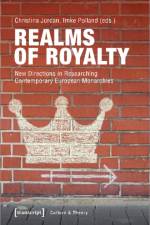
Monarchies are facing public demands for modernization and adapting to changing societal, political, and media environments. This book proposes new directions in the research of contemporary European monarchies and offers innovative perspectives on trans/national royal public interactions and (semi-)fictional representations of monarchs. Its case studies address historic and recent developments, including newly invented royal traditions, media depictions, Meghan Markle's impact on the image of the British monarchy, and the royal family's role in Brexit negotiations. With its interdisciplinary analyses, the book reflects current academic, societal, and popular cultural interest in royalty.
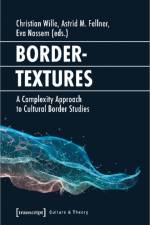
Borders are much more than territorial markers on a map. In recent years, borders have gained more and more scholarly attention, and the field of border studies has become increasingly diversified when it comes to different trends and analytical approaches. This edited collection reflects these latest developments and proposes an understanding of borders as effects and generators of complex formations. The contributors discuss such bordertextures from various theoretical and conceptual viewpoints, supported by empirical examples. By introducing the concept of bordertextures and the approach of bordertexturing, this edited collection opens up new and fine-tuned perspectives on borders and borderlands.
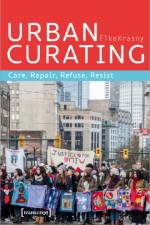
How are art, architecture, critical research, and activism entangled with the politics of urban transformation under the regimes of modern capitalist colonialism and contemporary neoliberalism? Accelerated developments heighten classed, gendered, and radicalized urban injustices.Addressing these issues, Urban Curating is concerned with the interconnectedness of economy, ecology, and labor in urban history as well as practices of remembrance. Drawing on the author's work as an urban curator in cities such as Hong Kong, Vancouver, and Vienna, the focus is on caring repair, refusal, and resistance - fighting the spatialization of injustice by building feminist solidarities and emancipatory imaginaries.
Abonner på vårt nyhetsbrev og få rabatter og inspirasjon til din neste leseopplevelse.
Ved å abonnere godtar du vår personvernerklæring.