





Gjør som tusenvis av andre bokelskere
Abonner på vårt nyhetsbrev og få rabatter og inspirasjon til din neste leseopplevelse.
Ved å abonnere godtar du vår personvernerklæring.Du kan når som helst melde deg av våre nyhetsbrev.

Contemporary PerforMemory looks at dance works created in the 21st century by choreographers identifying as Afro-European, Jewish, Black, Palestinian, and Taiwanese-Chinese-American. It explores how contemporary dance-makers engage with historical traumas such as the Shoah and the Maafa to reimagine how the past is remembered and how the future is anticipated. The new idea of perforMemory arises within a lively blend of interdisciplinary theory, interviews, performance analysis, and personal storytelling. Scholar and artist Layla Zami traces unexpected pathways, inviting the reader to move gracefully across disciplines, geographies, and histories.Featuring insightful interviews with seven international artists: Oxana Chi, Zufit Simon, André M. Zachery, Chantal Loïal, Wan-Chao Chang, Farah Saleh, and Christiane Emmanuel.
The multidisciplinary anthology Religious Fundamentalism in the Age of Pandemic provides deep insights concerning the current impact of Covid-19 on various religious groups and believers around the world. Based on contributions of well-known scholars in the field of Religious Fundamentalism, the contributors offer about a window into the origins of religious fundamentalism and the development of these movements as well as the creation of the category itself. Further recommendations regarding specific (fundamentalist) religious groups and actors and their possible development within Buddhism, Christianity, Islam and Judaism round up the discussion about the rise of Religious Fundamentalism in the Age of Pandemic.
Waiting is an inescapable part of life in modern societies. We all wait, albeit differently and for different reasons. What does it mean to wait for a long period of time? How do people narrate their waiting? Waiting is about the senses. If you do not sense it, there is no waiting. We sense waiting in the form of boredom, despair, anxiety and restlessness, but also anticipation and hope. Prolonged waiting is like insomnia - a state of wakefulness, a kind of mood, an emotional state. But it is also about politics; affecting and affected by gender, citizenship, class, and race.Blending ethnography, philosophy, poetry, art, and fiction, this book is a collection of works by scholars, visual artists, writers, architects and curators, exploring different forms of waiting in diverse geographical contexts, and the enduring effects of history, power, class, and coloniality.
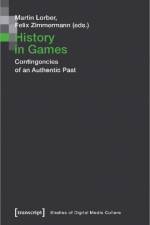
Where do we end up when we enter the time machine that is the digital game? One axiomatic truth of historical research is that the past is the time-space that eludes human intervention. Every account made of the past is therefore only an approximation. But how is it that strolling through ancient Alexandria can feel so real in the virtual world? Claims of authenticity are prominent in discussions surrounding the digital games of our time. What is historical authenticity and does it even matter? When does authenticity or the lack thereof become political? By answering these questions, the book illuminates the ubiquitous category of authenticity from the perspective of historical game studies.
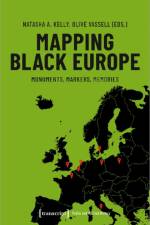
Black communities have been making major contributions to Europe's social and cultural life and landscapes for centuries. However, their achievements largely remain unrecognized by the dominant societies, as their perspectives are excluded from traditional modes of marking public memory. For the first time in European history, leading Black scholars and activists examine this issue - with first-hand knowledge of the eight European capitals in which they live. Highlighting existing monuments, memorials, and urban markers they discuss collective narratives, outline community action, and introduce people and places relevant to Black European history, which continues to be obscured today.
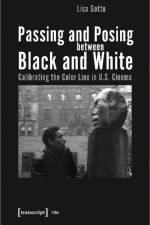
Since its inception, U.S. American cinema has grappled with the articulation of racial boundaries. This applies, in the first instance, to featuring mixed-race characters crossing the color line. In a broader sense, however, this also concerns viewing conditions and knowledge configurations. The fact that American film engages itself so extensively with the unbalanced relation between black and white is neither coincidental nor trivial to state - it has much more to do with disputing boundaries that pertain to the medium itself. Lisa Gotto examines this constellation along the early history of American film, the cinematic modernism of the late 1950s, and the post-classical cinema of the turn of the millennium.
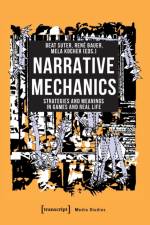
What do stories in games have in common with political narratives?This book identifies narrative strategies as mechanisms for meaning and manipulation in games and real life. It shows that the narrative mechanics so clearly identifiable in games are increasingly used (and abused) in politics and social life. They have »many faces«, displays and interfaces. They occur as texts, recipes, stories, dramas in three acts, movies, videos, tweets, journeys of heroes, but also as rewarding stories in games and as narratives in society - such as a career from rags to riches, the concept of modernity or market economy. Below their surface, however, narrative mechanics are a particular type of motivational design - of game mechanics.
In 2001, Freestyle, a survey exhibition curated by Thelma Golden at the Studio Museum in Harlem, introduced both a young generation of artists of African descent and the ambitious yet knowingly opaque term post-black to a pre 9-11 and pre-Obama world. In Taking Stakes in the Unknown, Nana Adusei-Poku contextualizes the term post-black in its socio-historical and cultural context. Whilst exploring its present legacy and past potential, she examines works by artists who were defined as part of the post-black generation: Mark Bradford, Leslie Hewitt, Mickalene Thomas and Hank Willis Thomas - and, by expanding the scope of the definition, the Black German artist Philip Metz.
Videogames allow us to immerse ourselves in worlds that are reflective of cultural phenomena. At the same time, games are in the process of occupying and utilising the real world as a part of the game. The book provides a combination of theoretical and practical approaches to mixed reality through the lenses of game studies and pedagogy. These novel approaches invite the reader to rethink their conceptions of games and mixed reality. They are complemented with classical analyses of games and applications in educational contexts. In uniting theory and hands-on approaches, the book provides a broad spectrum that facilitates and inspires interdisciplinary thinking and work.
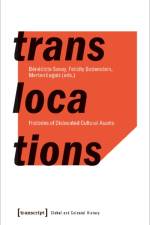
Who owns cultural assets? Who has narrative control? What could fair and just approaches to dislocations of cultural assets look like, independently of restitution?Discussions about historical appropriation practices for cultural assets in the context of their associated relocation are highly topical and widely reflected across different academic disciplines. Such questions increasingly concern those who work in the art market, museums, politics and the media, scholars from diverse disciplines, as well as artists and writers. This volume examines the translocations as such, which rarely come into focus. The contributions address the people involved, the related traumas, discourses, gestures, techniques, and representations.
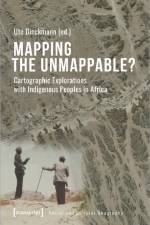
How can we map differing perceptions of the living environment? Mapping the Unmappable? explores the potential of cartography to communicate the relations of Africa's indigenous peoples with other human and non-human actors within their environments. These relations transcend Western dichotomies such as culture-nature, human-animal, natural-supernatural. The volume brings two strands of research - cartography and »relational« anthropology - into a closer dialogue. It provides case studies in Africa as well as lessons to be learned from other continents (e.g. North America, Asia and Australia). The contributors create a deepened understanding of indigenous ontologies for a further decolonization of maps, and thus advance current debates in the social sciences.
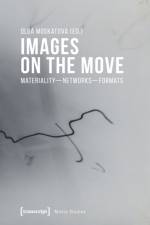
In contemporary society, digital images have become increasingly mobile. They are networked, shared on social media, and circulated across small and portable screens. Accordingly, the discourses of spreadability and circulation have come to supersede the focus on production, indexicality, and manipulability, which had dominated early conceptions of digital photography and film. However, the mobility of images is neither technologically nor conceptually limited to the realm of the digital. The edited volume re-examines the historical, aesthetical, and theoretical relevance of image mobility. The contributors provide a materialist account of images on the move - ranging from wired photography to postcards to streaming media.
Abonner på vårt nyhetsbrev og få rabatter og inspirasjon til din neste leseopplevelse.
Ved å abonnere godtar du vår personvernerklæring.