

















Gjør som tusenvis av andre bokelskere
Abonner på vårt nyhetsbrev og få rabatter og inspirasjon til din neste leseopplevelse.
Ved å abonnere godtar du vår personvernerklæring.Du kan når som helst melde deg av våre nyhetsbrev.

A little more than five hundred years ago, Martin Luther should have nailed ninety-six theses to the church door instead of only ninety-five. The ninety-sixth could have been about predestination, wherewith Luther could have prevented a schism developing in Protestantism over the Doctrine of Predestination. John Calvin, another Reformer who followed Luther quite a few years later, mistakenly taught that predestination, as described in the New Testament, applies to individuals instead of to the Christian Church as a whole. As a result, no one can choose eternal life or eternal damnation because every person has been predestined by God for one or the other. It is the church as a whole that was predestined by God ahead of time and not the individual. However, each individual can choose whether or not to join the church. This book shows Calvin's mistake.
In History and Status of American Physical Education and Educational Sport, Dr. Zeigler makes a unique effort to provide an up-to-date, insightful textbook on the subject for aspiring teachers of physical activity education and coaches of educational and/or recreational sport. By looking at the field's history analytically, the author clarifies for the prospective teacher/coach how and why the present unsatisfactory situation came about. Offering the reader a sequence of narratives, studies, essays, and analyses, both chronological and critical, the hope is that he/she will come to understand what has happened in this important aspect of people's lives from America's early days to the present. The author's hope is that the reader, possibly as an embryonic professional, will comprehend the historical thread or timeline depicting people's greater or lesser involvement in purposeful or purposeless physical activity since America was first settled.On March 25, 2004 in Reston, VA, the National Association for Sport and Physical Education (NASPE) released a revised, second edition of Moving into the Future: National Standards for Physical Education. These national standards were proclaimed to be an essential tool for developing, implementing, and evaluating K-12 school physical education programs. They seek to identify what students should know and be able to do as a result of a quality physical education program. This outstanding set of standards that NASPE has been released for the guidance of professionals in American physical education and educational sport. Nevertheless, after 65 productive years in the profession, and also after reading such an excellent, updated statement of standards for physical education, Dr. Zeigler still finds himself very concerned about the future of the field. How can this be so? Why aren't American schoolchildren and youth receiving excellent daily physical and health education? To help America find the answer to this question, he decided to offer his assessment of the present situation.There is a definite need at this time for this unique textbook. This can be said because it takes an analytic look at the history of American physical education and educational sport, a field facing one more crossroad in its torturous development. Having stated that there is a definite need for this analytic approach to the field's history, I understand, of course, that some people really enjoy reading history, while others can take it or leave it. A very few can't stand it in any form--not even in a highly adventurous novel. But this latter group is decidedly in the minority. Most people seem to respect history, and more so if they were personally involved in the making of it. Perhaps it's a case of revering, and not speaking evil, of the dead. Whatever the reason, just about everybody pays lip service to history and believes that it belongs in the educational curriculum at various points along the way. This is true all the way up the line, in fact, to the required historical review of related literature in a Ph.D. thesis! Each section of the book is described below:Now it is time to explain how--and why, also!-- I organized what I have called an analytic history of American physical education and educational sport. First, in the Preamble, I have included a brief "excursion" into philosophy of history. This is in an effort to place the profession in broad historical perspective. Then, in Chapter I, because the reader needs a review of the historical milieu in which our subject took place, I decided to trace the social and education foundations of the United States from the Colonial Period to the present day. Next, in Chapter II, I prepared an historical precis of the history of physical education and sport in America. This chronological (so-called horizontal or longitudinal) treatment of physical education's history was followed in Chapter III by what I have termed "An Analytic Approach to the
For thousands of years, religion existed, revealing humanity''s need and hunger for the invisible and unfathomable God. Billions of souls were drawn to religion, especially when the children of Israel shared to us the invisible and unfathomable God that is always presence in our lives. Religion forms and prepares us in our long and demanding journey to God; and this book was written as a manual of divine direction, shaping and transforming our soul into the likeness of God. This book was specially made for serious souls who want to give their all to God and achieve salvation. This is dedicated solely for the greater glory and honor of the Triune God through our Lady of Unity.
Is it possible to be born a witch and not know it? It was during a visit from her brother-in-law, Brandt, that Raven Red Wing begins to wonder if this can be so. It has long been rumored that women of past generations of her family had been blamed for witching practices. True, they were herbalists, as is Raven herself, and oft-timer herbalists have been accused of alchemy and witchery.But, the implication s posed by Brandt's evil intent are horrifying. Will he stop at nothing to satisfy the entity which possesses him? Does Brandt possess some sort of multiple evil personality? Or, does it possess him? Does this malevolent evil personality spring up from his own evil, submerged deep within his own psyche? Or, is it some loathsome evil, existing far beyond Brandt's own pathetic life-time? Perhaps two-thousand years beyond?Raven delves deep into the ancient ceremonial rites of her tribal roots, in a desperate attempt to save a sacred forest of her ancestry. In doing so, she is amazed to find that the forest literally comes alive around her, trees and boulders themselves, anticipate and respond to her needs, and she, herself, possessed the essence of the spirit of the white lynx, and the shape shifting ability to call it up.... But will this be enough?In a wild, frenzied battle of free flowing magical antics, that sends Raven spiraling back through the ages, to ancient Egypt itself, Raven discovers the Secret of the Cat as she attempts to fend off the ancient evil that has invaded her forest, staging her final stand down from within the ceremonial chamber of the ancients.
Another dachshund tale about one rescued dachshund bent upon mischief as he travels, his rescued friends and their stories, and his new brother, also a rescued dachshund.Schultz is the storyteller if one uses a smidgen of imagination. Everyday is a new adventure for Schultz, whether he''s home on Vashon Island in Puget Sound in Washington state or sniffing the air while passing through new territory. Stubbornness, playfulness and a talent for mischief are part of his personality, the thread of his story. His tale is about his coming to Vashon Island, his new-found family and his pet primate, Marilyn. Schultz introduces some of his favorite rescued friends midway through the book. Each one tells a heart-warming story of a dachsie abandoned, deserted, lost, or caught in a mischievous moment or two. All of the stories are based on true incidents.
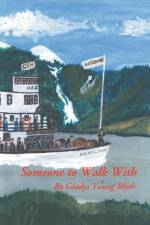
INTRODUCTION.The year is 1910 and Tommy Vincent of Vancouver, British Columbia, almost seventeen, has just completed grade eleven. A tragic boating accident, taking the lives of his parents, jolts him out of his life of youthful complacency. Adding to the trauma of the tragedy, Tommy''s guardian uncle informs him that he was adopted as an infant. Tommy''s real parents are a White man and an Indian woman. He also has a sister, a year younger than himself living in the coastal interior town of Hazelton in northern B.C.On impulse, Tommy boards a ship bound for the frontier town of Port Essington on the north coast. From there he travels by paddlewheel river boat 180 miles inland along the Skeena River to Hazelton, known locally as The Forks or The Junction. With no clues as to his sister''s name or whereabouts, his mission is to find her and to learn something of his roots. From a vantage point on the bow of the riverboat, the Hazelton, Tommy sees first-hand the construction of the western portion of the Grand Trunk Pacific Railroad, Canada''s second great transcontinental railroad, as it parallels the rugged and impervious shores of the mighty SkeenaRiver. Along the way, he meets settlers, pioneers, prospectors, trappers, gamblers, telegraph linemen, wood-cutters, speculators, Corkscrew and Maybelle.At The Forks, Tommy naively thinks he will find his sister right away and return to Vancouver on the next riverboat. However, he runs out of money and has to work as a wood-cutter and as a partner in a trapline venture. The harsh reality of frontier life, in a burgeoning dynamic segment of history, not only changed Tommy but changed the northern region of the province forever. The impact bluntly shaped him into a man of compassion, tolerance, resourcefulness and purpose.
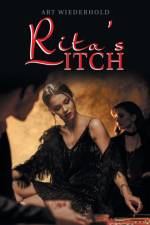
Sexy Filipina Rita has never strayed from her husband in over twenty years of marriage. But when she starts hanging out at the casino with her single friend Zoe, several men try to pick her up. Despite being flattered by the attentions of several much younger men, she remains loyal to her husband. Then playboy Bart Tillman enters the picture and decides to make Rita his next conquest. Bart is handsome, young, and rich, and his bold approach intrigues Rita to the point where she actually wonders what it would be like to sleep with another man. To make things even more interesting, her friend, Zoe, also make a play for her and sends her entire world into a tailspin! Zoe also announces that if Rita cheats with Bart, she is going after Rita''s husband! Rita''s Itch is another erotic satire from the warped mind of Art Wiederhold and pokes even more holes in the false fabric of today''s so-called morality. It is a must-read for fans of his other novels.
I recommend to kids that are twelve and under in age not to read this book. This book is for ages thirteen and up. The three story in one book tells about the dramas, the mysteries and the climaxes. The reason why I only had one story on the "Girls Teenage Chicken Fights" was because this country is more Liberal than with their children of the countries of this world.I have made it plain and simple that everyone in life whether it is in sports or music, writing, poetry, working as a Lawyer, Doctor, Dentist or whatever job might be, all of us are not better than each other. I do not care who you are nor what occupation you are in.Al of us are humble servants in our Lord. This book proves that I am not better than anyone else.One of the things about this book is that I tried to show humility, humbleness, kindness and integrity. I also tried humor, seriousness and I can not forget intelligence in this book.The third and final story was truthfully the first story that I have written. Actually, the issues about "Chicken Fighting" or "Waterknighting" which ever you prefer to call it is that, it deals with strength, stamina, luck, courage and brains. Yes, it was my idea in this book to have everyone (whoever it was) in each story to have everyone battle everyone else.In the second story of the book was truthfully was the second story to have written, which was "Waterknights II".In the third story of the book was truthfully was the first story that I have written, which is called "The Chicken Fights at the Beach".In this whole book, it keeps the reader in suspense. The drama unfolds itself. It is definitely and positively (not meaning to brag) but AWESOME!!!
Our country is in dire distress; a large number of terrorists are trying to destroy our properties, destroy our way of life and kill us! And the number of them appears to be increasing every day. Additionally, throughout the world, there appears to be growing resentment to our "American attitude", our way of life, our foreign policy, especially as it relates to our use of force, and our support for Israel. Yet at this crucial time in our history, when we should be pooling all our resources, working in concert with each other, and constructing creative strategies to defeat terrorism, we appear to be doing the complete opposite. Patriotism, moral values, immigration Christianity, evolution, intelligent design, the war in Iraq, and gay marriages are some of the issues that are being used by some of our leaders to drive wedges between us. The poems in this book are thought provoking, confrontational, satirical, compositions for discussion or reflections on all of these issues and more. Written in a wide variety of poetic styles, these poems (some that are very humorous) can be read for the shear enjoyment of them. Enjoy!
This book chronicles the life of William Whipple who was born in Dorchester, Massachusetts in 1652, and moved with his father, Captain John Whipple, to Providence Rhode Island in 1659. The thirteen member Captain John Whipple family was prominent in New England history for over 250 years. His daughter''s grandson was Stephen Hopkins, governor of Rhode Island and signer of the Declaration of Independence. The line of his second son, Samuel, produced Abraham Whipple, Commodore of the Continental Navy. The social history of these and other families who married into the Whipple family are offered. The antecedents of some of these families are tracked back to the fourteenth century.The William Whipple family lived in northern Rhode Island for the first four generations. His two children married into the prominent Sprague family whose lines produced two Rhode Island governors. William Whipple Junior married Elizabeth Sprague whose great grandfather was Richard Warren, a signatory to the Mayflower Compact. William junior''s son Eleazer married Anna Brown, whose ancestor was the Reverend Roger Williams, putative founder of the Baptisit denomination in the United States. Eleazer and Anna''s youngest son Jesse, an important manufacturer of lime products, moved to the state of Indiana in the early 1800s to further his business enterprises. Jesse''s wife was a member of the Adam''s line of descent remembered for producing two American presidents.The lineage of Jabez Whipple, eldest of this family, is carried through in this book. Biographies of his 11 children are offered, with special emphases given to social histories of Oscar F. and William T. Whipple and their descendants to the present day.
In A Day At The Gate, Ed Nowak invites his readers to take a look at a horse show through the eyes of a paddock master. He reveals to his readers what it is really like to stand at the in-gate of a horse show for 12 hours in the blazing sun or freezing cold with a clipboard and a radio, and he does it with this own unique sense of humor and wit. Complete with nearly 50 cartoons and illustrations, he exposes not only the horse show participants, but everyone that might be on the grounds. Trainers, judges, parents, spectators, show managers, course designers and jump crew, do not escape unscathed. If you have ever shown a horse, trained one, paid for one, or have ever been to a horse show, you will probably recognize yourself in, A Day At The Gate.
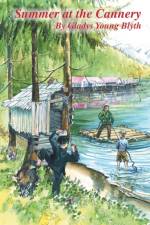
Hello to all children who love to read. This is a story of 12-year-old Ryan Stanley whose father was killed in the Second World War with the Japanese nation. Born in Prince Rupert, British Columbia, Ryan misses having a dad. And, although he loves his mother, he is unhappy that she cannot provide everything he wants.For this reason, Ryan''s mother takes a job at North Pacific Cannery on the Skeena River to earn extra money for the things her son needs.Ryan has become a selfish child, caught up in his demands for the things he thinks he should have. And, because the Japanese killed his father, and because he is partial to playing with only Caucasian children, he is faced with the dilemma of either not having any friends at all, or of making friends with children of other cultures.At North Pacific, Ryan meets up with Danny Judson, 11, a native North American born in Kincolith, British Columbia on the Nass River. Danny has his own problems. He spends every school year at the Port Alberni Residential School and feels that he misses out on his native culture. Because of this he has developed an irritating habit of borrowing things and not returning them.Both boys team up with Kiyoshi Sakamoto, 13, a Japanese boy born in Vancouver, British Columbia. Kiyoshi struggles with the alienation his family experienced when they lost most of their possessions and were evacuated to the interior of the province during the Second World War. During this time his mother died. Kiyoshi is inclined to be cautious and, above all, obedient to his father. Together, the three boys secretly enjoy exciting adventures exploring the Skeena River on an old raft. Ryan makes a trip gillnet fishing with his Uncle Ted which ends in disaster. From this experience he realizes that he really wants to be with his new friends.
The Dark Challenge is a story about reincarnation and how two souls are pitted against each other through a succession of lives that take place at important junctures in Earth''s history. The main protagonist, the Black Knight, seeks to bring darkness and despair to humanity in perpetuity. His protagonist, Flame, is tasked with the almost impossible job of hunting him down through successive epochs in history, hoping to thwart his attempts through the principles of light and freedom of choice.The hunt starts in early Mesopotamia with the Tower of Babel, and takes in pivotal moments of dark in human history: the perfidious annihilation of Carthage in Roman times; the devastation of the Great Plague of mediaeval Europe; the reign of Terror in the French Revolution and the waterlogged trenches of the Somme in the first world war.As the seeds of destruction are sown in different historical timelines, relentlessly pushing the planet towards a precipice of chaos, Flame''s ability to part the twists of time and hunt the dark is called into question by all around him.
What lessons can the woods teach us? This is seven-year-old Lois''s first camping trip! Her father, a well-seasoned outdoorsman, tries to give her some lessons in adapting to her environment. Lois has different ideas! What happens to her is a "real-life" situation where she gets lost and needs to improvise quickly! In a thickly-wooded area, every tree looks the same. How will she overcome the fear of being alone? How will she be found?Children - and their parents - can follow Lois on her journey, and together discover the importance of listening to their elders, observing the world around them and asking lots of questions.
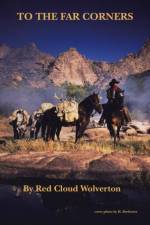
To the Far Corners is a novel about a comtemporary cowboy (from 1930 to 1960), who spends half his life hunting and being hunted by a man who wronged him.The story, in flashback form, has ÒBooger RedÓ telling his wife and daughter, Annabelle, of the holes in his past, as they read the journal he has kept secret for many years.Starting with his earliest memories, of losing his parents and being out on his own at fourteen, Red finds work as a cowboy. Drifting through good luck and bad, from hard times to windfalls, he finally reaches the peak of happiness at his marriage to his true love; only to lose everything within a year. Consumed with hatred, he goes to war, searching for the man who caused his grief.He returns home wearing another manÕs name, and in trouble with the law. He tries to start a new life, but again and again, his past calls him away; until he and his adversary finally meet.Unknown to Red, the outcome of this ÔmeetingÕ is witnessed by Annabelle. When Red realizes what has happened, he tells her that he will do whatever she decides after reading the journal; whether to call the police and have him arrested; whether he should leave home forever, or if she can accept what he has done so they can go on with their lives.
Maps of the Yukon River(Yukon Territory, Canada) drawn in historical style as usedby pilots of the paddlewheelers on the famous "Trail of ''98" gold rush to the Klondike. Shortstories and 42 photos in this 68 page, spiral-bound book provide personalinsights into contemporary river lifestyles and the rich history of the Yukon River. This is the third edition of this regional bestseller-- it was firstpublished in 1975 and revised in 1980-- over 4,000 copies have been sold to canoeists,rafters and other adventurers who have taken this spectacular wilderness voyage. It includes 64"strip maps" which illustrate the route from Whitehorse to Dawson City.
About the Book The book is based on real murder investigations that were conducted in less than professional manners by amateurs. Told by a former County Sheriff''s Detective who saw first hand the results of botched investigations and the affects they have on victim''s families. The book will bring to light the terrible but very real consequences when vacations, department politics, laziness and apathy take control of law enforcement agencies. But one man will stand alone against all odds and fight to bring justice to the victims, even at the cost of his career.
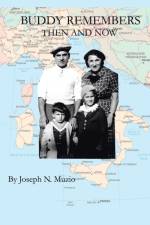
This book is a memoir, the description of my parents'' lives based on my remembrances, conversations with relatives, reviews of family photographs, as well as examining remaining personal documents of our family. This memoir started as a brief description, and was something I had planned for a long time. Initially, I thought it would be perhaps a few dozen pages. Instead, it grew organically and became a much more detailed recollection of my mother and father''s lives, their marriage, their approaches to life, how they raised my sister and me, and their continuing influence upon me. They came to America as immigrant children; they developed here within their cultural boundaries as Italian Americans; they struggled, thrived and pursued their personal goals. They are still with me today. It has been simultaneously an exhilarating and exhausting process as the writing expanded. This is far beyond any sort of genealogical charting or the identification of distant relatives. Rather, it provides perceptions about my feelings and beliefs regarding my parents, their positive qualities and flaws, as well as how I perceive them now that I am an older adult. This process is one that I urge other children to engage in, writing about their parents so that there will be descriptions of the roles they played. I call such writing a critical component of the collective humanity, tracing the historical journeys that would then be available to the remaining family members and their ancestors. Conceivably, such continued writings could become an endless documentation of family behaviors and interactions. It might even provide a greater clarity and understanding of one''s parents through a long-range lens.
"A Family of Survivors" is a factual account of the events experienced by a rural Arkansas family the first half of the twentieth century. It has interesting eyewitness accounts of major events that occurred during this period of our history. These events include World War I, the great influenza epidemic, the Elaine Race Riots, the Great Flood of 1927, the Stock market crash of 1929 and the Great Depression that followed. It details events leading up to World War II, and gives an account of three brothers service in the U.S. Navy, the U.S. Marines and the U.S. Army Air Force. It takes us to the surrender of Hitler''s war machine.As we celebrated V.E. Day, Victory in Europe, on May 8, 1945, we took stock of our losses. We were to learn that the 8th Air Force had spent 1,008 days in action against the enemy. We had burned a billion gallons of fuel, fired nearly 100 million rounds of machine gun ammunition and dropped more that 732,000 tons of bombs on the enemy. The 8th Air Force had lost 6,243 airplanes and more than 47,000 men.The work of the 384th Bomber Group was not over. We would move into France and operate an airline for another seven months. This operation, called "The Green Project" is also outlined in the book.
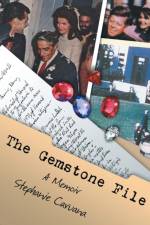
250 pages from Bruce Roberts'' original Gemstone File Letters. Additional chapters by Stephanie Caruana, author of Skeleton Key to the Gemstone File- a notorious 23-page document circulated worldwide from 1975. Did Onassis kidnap Howard Hughes, authorize murders of JFK, RFK, MLK, and take over the USA? Mafia murders, CIA involvement.
Hip-hop has had a fertile and exciting life in the underground scene of Washington DC. There are several clubs that have nurtured the music and many individuals who have upheld the art form in the shadow of DC''s popular music, go-go. Priest do Nomad is one of these formidable MC''s who kept the torch lit. This is the story in historical, musicological and anthropological context. By looking at Priest da Nomad (an underground hip-hop MC) through his various performances, relationships, and compositions, we may be able to understand more clearly what goes on in the life of an underground hip-hop artist and find out what informs his perspective vis-à-vis other pop hip-hop artists. This will also give us a chance to investigate the apparent links between the Africanisms that exist in all other forms of Afro-Diasporic expressions such as jazz, blues, reggae, calypso, Latin music and compare and contrast them with hip-hop.
Ben & his Friends is a story about a young wolf, named Ben, who goes into the forest one day to make friends. But Ben has a problem - no one likes wolves. So how can Ben make friends?Whether you are a child or a "kid at heart," readers should enjoy the story for several reasons: First, it is full of rhymes, and most people like stories that rhyme (just ask Dr. Seuss readers). Second, it is a heart-warming story to which most of us can relate, i.e., being treated differently or unfairly. Third, it teaches good moral values, such as friendship, forgiveness, kindness, peace and love. In essence, an interesting and illustrated children''s book that rhymes and teaches good lessons is worth purchasing! This is the author''s first book, and he hopes that readers will enjoy the story and its'' message. Based upon past experience reading the book to hundreds of children, the author is pretty sure that you will like it too!
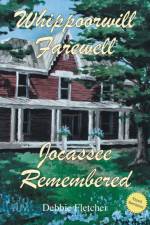
Jocassee Valley, peacefully tucked in the arms of the Blue Ridge Mountains of Oconee County, was finally laid to rest in 1973. Duke Power Company''s multi-million dollar Keowee-Toxaway project abruptly choked the natural flow of four wild rivers: Whitewater, Toxaway, Horsepasture, and Keowee, inundating the Valley under a chilling shroud, in some places over 300 feet deep. The idyllic sights and sounds of Jocassee are forever lost...except in the hearts of those of us who lived and played there.So, let''s get to the bottom of it--Lake Jocassee, that is. Inside these covers are rare--perhaps one-of-a-kind--photographs of this beautiful Valley. Some were taken as early as 1914, long before dynamite carved out its cruel facade.Whippoorwill Farewell: Jocassee Remembered is my collection of childhood and family memories and rare photographs which I hope will make you laugh--perhaps cry--as you take a trip back through your own memories and remember the family times that warm your heart.The word "remember" means "to put back together; to re-member." It is my hope that in these pages...Jocassee will be remembered.
Cliff of Sirens is a set of poems about the plight of a people who, entitled and wishing to enjoy basic freedoms and rights in their own country, are assailed by a counterpart country of equal status. The belligerent has for long monopolized power, refusing to recognize the other party as a country of equal status, depriving it of fundamental rights including the cultural right to express itself in its own language in addition to legal and other rights. The situation is compounded by the fact that the victimized country has been subjected by its counterpart to a status whereby they have never enjoyed a genuine democracy, one man from the belligerent country having usurped power for almost forty years. The people of the assailed country, Southern Cameroon, who have been treated as second-class citizens so far and denied basic economic opportunities, see themselves as having been pushed through a tunnel to a cliff now collapsing dangerously, people of all ages ranging from babies and toddlers to adults being slaughtered with impunity on the basis of a totally unjustifiable genocidal war.
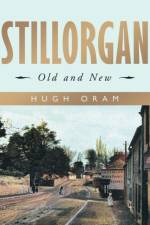
Stillorgan: Old and New covers the story of a unique suburb in South Dublin. Until the 1960s, the district was largely rural, with many farms and a scattering of big houses, but few people lived there. The Stillorgan shopping center was opened in 1966-the first in Ireland-and shortly afterwards, the Stillorgan Bowl was opened. In the 1960s, large-scale housing development began; and since then, Stillorgan has become a major residential area in South Dublin with a wide variety of shopping and leisure outlets.
KNOWLEDGE IZ POWER. KNOWLEDGE COMES FROM BOOKS. IF THE YOUTH WRITE A BOOK, OTHER YOUTH WILL TAKE A LOOK. AND READ ABOUT WATT THEY REAL-ATE 2, NOT WATT MAKES THEM SAD AND AWFUL. WE''LL MAKE THE BOOK HAVE PICTURES AND CALL IT A GRAPHIC NOVEL.AND INCLUDE A DVD OF INTERVIEWS WITH YOUTH, AND A CD OF SONGS RECORDED BY THEM IN THE BOOTH, SO YOUTH GET MULTI-PULL FORMS OF MEDIA TO GET THE TRUTH. THERE MUST BE A GAME CHANGE, HOW MANY YOUTH READ BOOKS BY PEOPLE THE SAME AGE? NONE! THE CHILDREN HAVE NO VOICE, WHICH IZ WHY THEY FEEL LIKE THEY HAVE NO CHOICE, HOW CAN THEY MAKE THEIR POINT? I SUPPORT FREEDOM OF SPEECH EVERY DAY BECAUSE MAYBE THE CHILDREN HAVE SOMETHING TO SAY! THIS IS THE RED PILL STREET ANTHOLOGY VOLUME 1 "IF THESE STREETS COULD TALK!"
Melvin Siggelkow was born in North Dakota in 1904, the youngest of six children. His mother died in the spring of 1905. The family emigrated to Saskatchewan in 1909. Melvin spent most of his childhood on a homestead in southern Saskatchewan He attended country schools going into, but not completing grade five. He learned how to work at a very young age. Melvin stayed with his father and helped him farm until 1927. He then moved to Montana working with his brother farming and custom harvesting. He did a lot of traveling during his free time and had some interesting adventures. He ended up in Minnesota during the early 30''s, working on a road crew. Then back to Montana where he met and married Velma Belle Draper in 1936. They spent eight years in Portland, Oregon, then back again to Montana. They had four girls. In the course of his life Melvin owned or ran three different pool halls, three grocery stores, and a freight and coal business. He worked hard at whatever he did. Melvin died in Scobey, Montana in 1999 at the age of 94. This book is a brief account of his life, the joys, the struggles.
The story of 130 reasonably conditioned young men randomly selected from any town in America and thrown into battle with minimal training against the forces of the Third Reich.A true story with the real people, in real events, using their real names and pictures; the writer Andrew D. Frankenfield being one of them and one of the casualties.
The first thing that this book promises is that it makes no promises. Instead, it invites the reader to re-consider and to re-value his views and priorities about life, motivating him to become a promising person.Not just by reading this book, but through practice.The tool of practice given here is the martial art called Aikido, a method of self-defense and discipline that goes back to Japan''s Samurai training.Aikido: The Book In Between does something daring. It sticks its ''nose'' just about everywhere, refusing to "ignore" issues of life just for the sake of being politically correct.Divided into three parts (The Art, The Code, The Way) it stretches to all walks of life: politics, economics, religion, philosophy, command, and also ethics, friendship, love, death, movies, driving...All of it, given from the martial artist "point of view" that separates fairytale and myth, from the "true magic" of the Art.This book has no doubts. But it leaves the reader the benefit of his doubt, offering knowledge above persuasion.You will not read anything about "diplomas" "ranks" "titles" and "recognitions" of the author.Only a series of his photos appear, that will absolutely stun you!So, is this book some kind of "Samurai code" re-written?Is it maybe the modern''s practitioner philosophy guide?No, it''s neither!Discover for yourself why this book was named "The Book In Between".
Abonner på vårt nyhetsbrev og få rabatter og inspirasjon til din neste leseopplevelse.
Ved å abonnere godtar du vår personvernerklæring.