







Gjør som tusenvis av andre bokelskere
Abonner på vårt nyhetsbrev og få rabatter og inspirasjon til din neste leseopplevelse.
Ved å abonnere godtar du vår personvernerklæring.Du kan når som helst melde deg av våre nyhetsbrev.

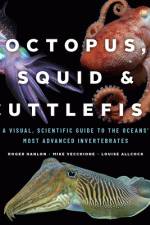
"Cephalopods are often misunderstood creatures. Three biologists set the record straight."--Science News Largely shell-less relatives of clams and snails, the marine mollusks in the class Cephalopoda--Greek for "head-foot"--are colorful creatures of many-armed dexterity, often inky self-defense, and highly evolved cognition. They are capable of learning, of retaining information--and of rapid decision-making to avoid predators and find prey. They have eyes and senses rivaling those of vertebrates like birds and fishes, they morph texture and body shape, and they change color faster than a chameleon. In short, they captivate us. From the long-armed mimic octopus--able to imitate the appearance of swimming flounders and soles--to the aptly named flamboyant cuttlefish, whose undulating waves of color rival the graphic displays of any LCD screen, there are more than seven hundred species of cephalopod. Featuring a selection of species profiles, Octopus, Squid, and Cuttlefish reveals the evolution, anatomy, life history, behaviors, and relationships of these spellbinding animals. Their existence proves that intelligence can develop in very different ways: not only are cephalopods unusually large-brained invertebrates, they also carry two-thirds of their neurons in their arms. A treasure trove of scientific fact and visual explanation, this worldwide illustrated guide to cephalopods offers a comprehensive review of these fascinating and mysterious underwater invertebrates--from the lone hunting of the octopus, to the social squid, and the prismatic skin signaling of the cuttlefish.
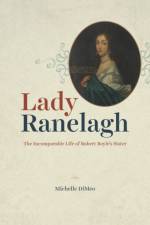
"For centuries, historians have speculated about the life of Katherine Jones, Lady Ranelagh. The details of her relationship with Robert Boyle, her younger brother, have mostly remained a mystery, even though Boyle, "the father of chemistry," spent the last twenty-three years of his life residing in her home, with the two dying only one week apart in 1691. The dominant depiction of Lady Ranelagh shows her as a maternal figure to Boyle or as a patroness of European intellectuals of the Hartlib circle. Yet neither of these portraits captures the depth of her intellect or range of her knowledge and influence. Philosophers, mathematicians, and religious authorities sought her opinion on everything from decimalizing the currency to producing Hebrew grammars. Lady Ranelagh practiced medicine alongside distinguished male physicians, treating some of the most elite patients in London, and her medical recipes and testimony concerning the philosophers' stone both gained international circulation. She was an important influence on Boyle and a self-standing historical figure in her own right. Chemistry's Sister fills out Lady Ranelagh's legacy in the context of a historically sensitive and nuanced interpretation of gender, science, and religion. It reveals how one elite seventeenth-century woman, without suffering attacks on her "modesty," managed to gain the respect of diverse contemporaries, effect social change, and shape science for centuries to come"--
"Published outside North and South America by the British Library, 2018"--Title page verso.
Democracies are in danger. Around the world, a rising wave of populist leaders threatens to erode the core structures of democratic self-rule. In the United States, the tenure of Donald Trump has seemed decisive turning point for many. What kind of president intimidates jurors, calls the news media the "enemy of the American people," and seeks foreign assistance investigating domestic political rivals? Whatever one thinks of President Trump, many think the Constitution will safeguard us from lasting damage. But is that assumption justified? How to Save a Constitutional Democracy mounts an urgent argument that we can no longer afford to be complacent. Drawing on a rich array of other countries' experiences with democratic backsliding, Tom Ginsburg and Aziz Z. Huq show how constitutional rules can both hinder and hasten the decline of democratic institutions. The checks and balances of the federal government, a robust civil society and media, and individual rights--such as those enshrined in the First Amendment--often fail as bulwarks against democratic decline. The sobering reality for the United States, Ginsburg and Huq contend, is that the Constitution's design makes democratic erosion more, not less, likely. Its structural rigidity has had unforeseen consequence--leaving the presidency weakly regulated and empowering the Supreme Court conjure up doctrines that ultimately facilitate rather than inhibit rights violations. Even the bright spots in the Constitution--the First Amendment, for example--may have perverse consequences in the hands of a deft communicator who can degrade the public sphere by wielding hateful language banned in many other democracies. We--and the rest of the world--can do better. The authors conclude by laying out practical steps for how laws and constitutional design can play a more positive role in managing the risk of democratic decline.
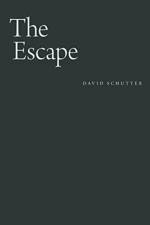
"Artist David Schutter is an associate professor in the Department of Visual Studies at the University of Chicago. Schutter's project constitutes drawings he created in response to renderings of the human emotions ("passions") by the great French artist Charles Lebrun: these renderings have been used by artists and students for centuries as models of facial expressions. Schutter's practice involves deep engagement with the history of art, memory, the body, affect theory, and more. The book features an introductory essay by the artist himself as well as essays on the work by critics Barry Schwabsky and Dieter Roelstraete"--
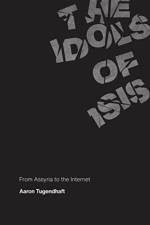
"These writings explore the dynamics of iconoclasm, which in these unstable times is gaining fresh traction as an area of study. Freedberg is widely acknowledged as one of the foremost experts on iconoclasm in the world. This book collects the best of his texts, including a new essay and a freshly written up-to-date survey of the subject. The texts range in subject matter from the furious religious battles over image in the Reformation to government repression in modern South Africa and the US culture wars of the early 1990s"--
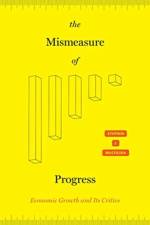
"Why do we believe what we do about the concept of "economic growth"? Why has growth traditionally been measured by economic activity rather than by social factors like the well-being of the worst off in a given society? Seemingly arcane choices like these had implications not merely in the twentieth-century West but in the colonial and postcolonial states where economists and others prescribed this prevailing standard of economic success, usually with appalling results. Stephen J. Macekura here investigates how the conventional discourse around growth took shape and how it gained worldwide cultural and political power. His transnational history examines how key intellectuals, policymakers, and activists conceptualized, pursued, and often resisted prevailing notions of economic development. Reformers criticized persistent flaws in the growth discourse, the misplaced faith in economic growth as a panacea for social and political ills, and the reliance on economic indicators as representations of the world's complexities. Macekura's cast is vibrant and large, and his story covers the sweeping geography of the cold war and more. By historicizing the terms and concepts that underwrite today's increasingly inequitable conditions, Macekura opens the door to pursuing more socially aware policies in the future"--
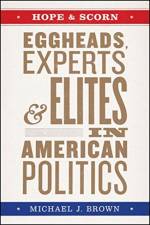
"Michael Brown investigates the ever-fluctuating relationship between American intellectuals and national politics from the Eisenhower era to Obama's-a story of both persistence and evolution. In Brown's words: "intellectuals have been both whipping boys and wonder workers in American politics, targets of hatred and vessels of hope." Brown tracks political debates over intellectuals across the culture, encompassing an array of thinkers and contexts, from Adlai Stevenson to bell hooks. In crystal-clear and unburdened prose, Brown carries us through six key moments that reveal the larger trends and tensions that defined concerns over intellectuals, their formidable abilities, and their myriad shortcomings"--
"Lisa Schrenk offers a detailed assessment of Frank Lloyd Wright's studio in Oak Park, Illinois. She focuses on the educational atmosphere of Wright's office in the context of his developing design ideology, revealing three phases as Wright transitioned from colleague to leader to teacher between 1898 and 1909. She investigates both the minutiae of daily operations and the larger relationship between the school and Wright's design ethos, as well as his place in the Chicago architectural world. The school was in many ways a laboratory for Wright's work, yet it was also his first sustained attempt at teaching others"--
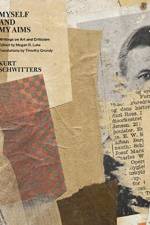
"The first anthology in English of the critical and theoretical writings of the great German artist Kurt Schwitters, considered by scholars, museums, devotees, and collectors alike to be one of the most important "thinking artists" of the twentieth century, surpassed only by Marcel Duchamp in his influence on subsequent generations. Throughout his life Schwitters wrote and published in many genres-and across genres. His children's stories and his poetry and fiction have been translated into English, as have a handful of essays. But most of his critical writing has never been translated into English, and this volume even includes material that has never been published in any language--until now. Schwitters was a prolific writer, lecturer, and critic who penned important works about architecture and design, "the problem of painting" (before it was fashionable to do so), media, aesthetics, style, abstraction, concrete writing, politics, and more. Issuing this book will be a major publishing event in the history of modern art and in the history of this extraordinary artist. The translations are superb, making the volume an extraordinary resource for art historians, curators, critics, and artists. Megan Luke's introduction is accessible, and for the first time, a large field of Schwitters's writing is available not just to Anglophone readers but to readers of numerous nationalities who consider English the lingua franca of their work"--
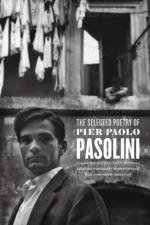
Most people outside Italy know Pier Paolo Pasolini for his films, many of which began as literary works - Arabian Nights, The Gospel According to Matthew, and The Canterbury Tales among them. The author presents poems from every period of Pasolini's poetic oeuvre. In doing so, he gives readers a more complete picture of the poet.
Both intensely personal and deeply rooted in recognizable events of a personal, familial, or national significance, "The Afterlife of Objects" is a kind of dreamed autobiography. Dan Chiasson divulges the enigmas of the mind through a beautifully constructed poetic voice.
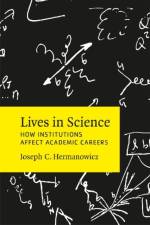
What can we learn when we study people over the years and across the course of their professional lives? In this title, the author asks this question specifically about scientists and answers it here by tracking fifty-five physicists through different stages of their careers at a variety of universities across the country.
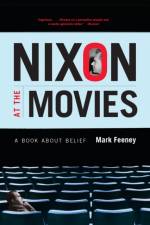
An in-depth examination of Richard Nixon's career draws on biography, politics, cultural history, and film criticism to show how Nixon's character, and the nation's, is refracted and reimagined in film.
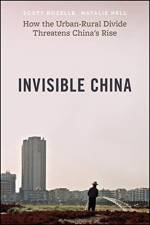
"Twenty years ago, seemingly everything for sale at American retailers had a "Made In China" sticker on it. Now, things have changed. Every year, forty thousand Chinese factories are shuttering their doors as businesses seek cheaper labor elsewhere. Clothes manufacturing is moving to Bangladesh and Vietnam, for example, and shoes to Ethiopia. The exodus is well underway. Even as American commentators fret over "rising China," the real threat lies in a virtually unknown story: that of a nation struggling amid a profound economic transition away from manufacturing. The culprit? Profound inequality and the lack of investment in the people of the most populous place on earth. Health and education are the grave challenges for the country's future-and the world. Far from the prospect of global takeover, a China newly adrift has the potential to be our most unpredictable security challenge in the next decades. This book, a warning from Scott Rozelle and Natalie Hell, cuts through the false alarmism while laying out an ambitious plan to correct course before it's too late"--
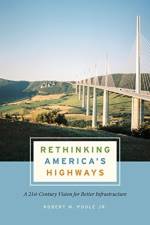
Americans spend hours every day sitting in traffic. And the roads they idle on are often rough and potholed, their exits, tunnels, guardrails, and bridges in terrible disrepair. According to transportation expert Robert Poole, this congestion and deterioration are outcomes of the way America provides its highways. Our twentieth-century model overly politicizes highway investment decisions, short-changing maintenance and often investing in projects whose costs exceed their benefits. In Rethinking America's Highways, Poole examines how our current model of state-owned highways came about and why it is failing to satisfy its customers. He argues for a new model that treats highways themselves as public utilities--like electricity, telephones, and water supply. If highways were provided commercially, Poole argues, people would pay for highways based on how much they used, and the companies would issue revenue bonds to invest in facilities people were willing to pay for. Arguing for highway investments to be motivated by economic rather than political factors, this book makes a carefully-reasoned and well-documented case for a new approach to highways that is sure to inform future decisions and policies for U.S. infrastructure.
Abonner på vårt nyhetsbrev og få rabatter og inspirasjon til din neste leseopplevelse.
Ved å abonnere godtar du vår personvernerklæring.