
















Gjør som tusenvis av andre bokelskere
Abonner på vårt nyhetsbrev og få rabatter og inspirasjon til din neste leseopplevelse.
Ved å abonnere godtar du vår personvernerklæring.Du kan når som helst melde deg av våre nyhetsbrev.

"In this unnerving biography of Norman Douglas, a prolific British novelist, travel writer, and an undisguised and unrepentant pedophile, Rachel Hope Cleves grapples-at length and with feeling-with the interrelated questions of how to write the biography of a repulsive man and why. She focuses less on defining who Douglas was than on why Douglas seems so monstrous to us when he often did not to those who knew and (yes) loved him. Cleves does more than sketch the conditions and influence of Douglas's life and work; she probes how changing social norms affect our aesthetic and moral assessments"--
"As the Weimar Republic morphed into Nazi Germany, the emigrants who left became incredibly influential in a wide variety of fields of inquiry, perhaps nowhere more so than in the development of political theory. In his new book, The Weimar Origins of Rhetorical Inquiry, intellectual historian David L. Marshall focuses on figures such as Arendt, Benjamin, and Warburg, as well as Heidegger, arguing that they articulate a tradition of rhetorical inquiry that remains largely unacknowledged and underexplored. Marshall shows how they inflected and transformed problems originally set out by earlier figures such as Weber, Schmitt, Adorno, Baron, and Strauss, and contends that we miss major opportunities if we do not attend to the rhetorical aspects of their thought. His aim, in the end, is to lay out an intellectual history that can become a zone of theoretical experimentation in parademocratic times, taking inspiration from the conceptions of invention and creativity that reside at the very core of rhetoric. Redescribing the Weimar origins of political theory in terms of rhetorical inquiry, Marshall provides fresh readings of pivotal thinkers and argues that the vision of rhetorical inquiry that they open up allows for new ways of imagining political communities today"--
"'Land's End' promises to be the crowning achievement of this master of the descriptive-meditative narrative poem. Here Gail Mazur powerfully evokes the past, while still writing from the firm ground of the present. In the book's title poem, a beautifully crafted elegy to poets who have passed on, Mazur also charges us with the responsibility of nurturing art and artists of the future, especially in the face of the absurdities of contemporary politics. Throughout the New Poems section, Mazur continues to write with the kind of lyric authority, emotional range, and intellectual and social scope that we have come to expect from her award-winning poetry, and this new and selected volume offers Mazur's very best poems from her seven previous books"--
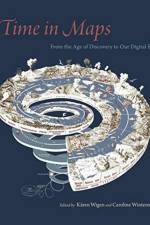
"The new field of spatial history has been driven by digital mapping tools that can readily show change over time in space. But long before such software became available, mapmakers regularly represented time in sophisticated and nuanced ways in supposedly static maps, and even those maps presented as historical snapshot illustrate the centrality of time to what we think of as primarily a spatial medium. In this collection, an array of today's leading scholars consider how mapmakers in a variety of contexts depicted time in their creations--from Aztecs documenting the founding of Tenochtitlan, to early modern Japanese reconstructing nostalgic landscapes before Western encroachments, to nineteenth-century Americans grappling with the new concept of deep time. The book includes a theoretical salvo and defense of traditional paper maps by William Rankin--himself a distinguished digital mapmaker--and includes more than 100 maps and related visuals, all in full color"--
"Originally published in an earlier version as Motion will be denied in New York in 1972. A revised edition was first published as The Chicago conspiracy trial in 1993 by Da Capo Press, New York, and republished by the University of Chicago Press in 2009. This edition published as The conspiracy trial of the Chicago Seven in 2020."--Title page verso.
When Philadelphia naturalist Samuel George Morton died in 1851, no one cut off his head, boiled away its flesh, and added his grinning skull to a collection of crania. It would have been strange, but perhaps fitting, had Morton's skull wound up in a collector's cabinet, for Morton himself had collected hundreds of skulls over the course of a long career. Friends, diplomats, doctors, soldiers, and fellow naturalists sent him skulls they gathered from battlefields and burial grounds across America and around the world. With The Skull Collectors, eminent historian Ann Fabian resurrects that popular and scientific movement, telling the strange-and at times gruesome-story of Morton, his contemporaries, and their search for a scientific foundation for racial difference. From cranial measurements and museum shelves to heads on stakes, bloody battlefields, and the "rascally pleasure" of grave robbing, Fabian paints a lively picture of scientific inquiry in service of an agenda of racial superiority, and of a society coming to grips with both the deadly implications of manifest destiny and the mass slaughter of the Civil War. Even as she vividly recreates the past, Fabian also deftly traces the continuing implications of this history, from lingering traces of scientific racism to debates over the return of the remains of Native Americans that are held by museums to this day. Full of anecdotes, oddities, and insights, The Skull Collectors takes readers on a darkly fascinating trip down a little-visited but surprisingly important byway of American history.
In 1877, the American Humane Society was formed as the national organization for animal and child protection. Thirty years later, there were 354 anticruelty organizations chartered in the United States, nearly 200 of which were similarly invested in the welfare of both humans and animals. In The Rights of the Defenseless, Susan J. Pearson seeks to understand the institutional, cultural, legal, and political significance of the perceived bond between these two kinds of helpless creatures, and the attempts made to protect them. Unlike many of today's humane organizations, those Pearson follows were delegated police powers to make arrests and bring cases of cruelty to animals and children before local magistrates. Those whom they prosecuted were subject to fines, jail time, and the removal of either animal or child from their possession. Pearson explores the limits of and motivation behind this power and argues that while these reformers claimed nothing more than sympathy with the helpless and a desire to protect their rights, they turned "cruelty" into a social problem, stretched government resources, and expanded the state through private associations. The first book to explore these dual organizations and their storied history, The Rights of the Defenseless will appeal broadly to reform-minded historians and social theorists alike.
"One of the most far-reaching transformations in our era is the wave of digital technologies rolling over-and upending-nearly every aspect of life. Work and leisure, family and friendship, community and citizenship-all transformed by now-ubiquitous digital tools and platforms. Digital Technology and Democratic Theory explores a particularly unsettling and rapidly evolving facet of our new digital lives: transformations that affect our lives as citizens and participants in democratic governments. To understand these transformations, scholars from multiple disciplines (computer science, philosophy, political science, economics, history, and media and communications/journalism) wrestle with the question of how digital technologies shape, reshape, and affect fundamental questions about democracy and democratic theory. The contributors consider what democratic theory-broadly defined as normative theorizing about the values and institutional design of democracy-can bring to the practice of digital technologies. From the connectivity and transmission of information that has inspired positive change through movements such as the Arab Spring and #MeToo to the nefarious spread of distrust and outright disruption in democratic processes, this volume broaches the most pressing technological changes and issues facing not just individual states, but democracy as a philosophy and institution"--
Considers the outpouring of photo-based art created in China since the mid-1990s. In addition to fostering an understanding of contemporary Chinese art, this work provides insights into the dynamics of Chinese culture in the 21st century.
There has been an increase in food price instability in recent years, with varied consequences for farmers, market participants, and consumers. Does financial speculation affect food price volatility? This book address this and other questions.
"In the wake of the Great Recession, American cities from Philadelphia to San Diego saw an upsurge in hyperlocal placemaking-small-scale interventions aimed at encouraging greater equity and community engagement in growth and renewal. Michael H. Carriere and David Schalliol's study of micro-interventions at more than 200 sites in 39 cities combines archival research, participant observation, interviews, site visits, and powerful documentary photography. They find that formal and informal placemaking has become firmly entrenched as a mid-level policy bridging local community development with regional economic master plans, and they provide a kaleidoscopic overview of how such initiatives grow-and sometimes collapse"--
"There is a compelling story to be told about the rise, fall, and transfiguration of the ideal of chastity, and Lisabeth During is the perfect person to tell it. In The Chastity Plot, During reveals how the obsession with chastity has played a powerful role in the history of our moral imagination. The metaphysics of purity continue to haunt literature, religion, and philosophy. The demand for chastity has shaped social institutions and figured in the construction of political power; sexual renunciation has been an ornament to sainthood and a technique of ascetics both sacred and profane"--
"Evan Haefeli argues that America's professed religious tolerance arose out of necessity, since no standard could prevail on its polyglot immigrants. More important, Haefeli ties the emergence of religious toleration to events worldwide, creating a true transnationalist history that links developing American realities to political and social conflicts and resolutions in Europe, showing the ways in which the codification of relationships among states, churches, and publics was endlessly contested in the colonial era. This is an ambitious attempt to reconcile our understandings of power-secular and otherwise- and refine our narratives about what came to be seen as American values"--
"David Schley crafts a fresh history not just of capitalism in Baltimore but of industrial capitalism itself, attending to the impacts of railroad development on the politics, geography, and image of cities, in a time when railroads were considered public-spirited undertakings. The inherent tensions-between private and public, profit and public good, image and function- were numerous and profound. By the time the railroad was implanted in the landscape, it had become the very embodiment of blind, grasping, confining capitalism. The iron cage is made of iron rails, and the iron rails define the streets, which confine the people"--
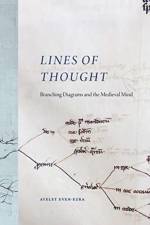
"Lines of Thought is the first book to investigate the surprisingly prevalent yet poorly studied habit of drawing horizontal tree diagrams in manuscripts. The branches of these diagrams ultimately evolved into what we know today as curly brackets. By following this notational practice from its earliest confirmed instances around 1200 up to the introduction of print, and by combining quantitative approaches with thorough case studies, the book provides a deep description and analysis of the peculiar thinking, reading, and writing practices of students and scholars of all faculties at a crucial phase in the Western intellectual tradition. Lines of Thought defines and explores the different cognitive functions such diagramming served and the manners by which it represented, clarified, and shaped conceptual structures in theology, philosophy, law, and medicine"--
African American Political Thought offers an unprecedented philosophical history of thinkers from the African American community and African diaspora who have addressed the central issues of political life: democracy, race, violence, liberation, solidarity, and mass political action. Melvin L. Rogers and Jack Turner have brought together leading scholars to reflect on individual intellectuals from the past four centuries, developing their list with an expansive approach to political expression. The collected essays consider such figures as Martin Delany, Ida B. Wells, W. E. B. Du Bois, James Baldwin, Toni Morrison, and Audre Lorde, whose works are addressed by scholars such as Farah Jasmin Griffin, Robert Gooding-Williams, Michael Dawson, Nick Bromell, Neil Roberts, and Lawrie Balfour. While African American political thought is inextricable from the historical movement of American political thought, this volume stresses the individuality of Black thinkers, the transnational and diasporic consciousness, and how individual speakers and writers draw on various traditions simultaneously to broaden our conception of African American political ideas. This landmark volume gives us the opportunity to tap into the myriad and nuanced political theories central to Black life. In doing so, African American Political Thought: A Collected History transforms how we understand the past and future of political thinking in the West.
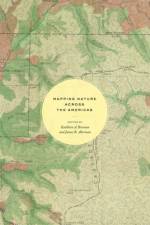
"Maps are inherently unnatural. Projecting three-dimensional realities on two-dimensional surfaces, maps are abstractions that capture someone's idea of what matters within a particular place; they require selections and omissions. It is these very characteristics, however, that give maps their importance in our understanding of how humans have interacted with the natural world over time and that give historical maps the capability to provide rich insights into the relationship between humans and nature overtime. That is just what is achieved in Mapping Nature Across the Americas. The essays in this book argue for the greater analysis of historical maps in the field of environmental history and for greater attention within the field of the history of cartography to the cultural constructions of nature contained within maps. This volume thus provides the first in-depth investigation of the relationship between maps and environmental knowledge in the Americas, from sixteenth century indigenous cartography in Mexico to the mapping of American forests in the US during the early conservation years of the late nineteenth and early twentieth centuries"--
This volume presents five new studies on current topics in taxation and government spending. Mark Shepard, Katherine Baicker, and Jonathan Skinner explore implementation aspects of a Medicare-for-All program, which provides a uniform health insurance benefit to everyone, and contrast it with a program providing a basic benefit that can be supplemented voluntarily. John Beshears, James Choi, Mark Iwry, David John, David Laibson, and Brigitte Madrian examine the design and feasibility of firm-sponsored "rainy day funds," short-term savings accounts for employees that can be used when faced with temporary periods of high expenditure. Robert Barro and Brian Wheaton investigate the impact of taxation on choice of corporate form, on the formation and legal structure of new businesses, and indirectly on productivity in the economy. Jonathan Meer and Benjamin Priday examine the impact of the 2017 federal income tax reform, which reduced marginal tax rates and the incentive for charitable giving, on such giving. Finally, Casey Mulligan analyzes the impact of the Affordable Care Act on whether firms employ fewer than 50 employees, the employment threshold below which they are exempt from the requirement to provide health insurance to their employees.
"In The Comedians of the King, Julia Doe traces the impact of Bourbon patronage on the development of French lyric comedy. The book presents the history of an understudied genre and the institutional structures that supported it, determining how changes in royal sponsorship, especially under Marie Antoinette, contributed to the genre's rapid evolution. The stylistic shift, coming at a time of tremendous cultural change, had sizeable political implications. Drawing on both musical and archival evidence, Doe demonstrates how comic theater was exploited in (and worked against) the construction of the monarchy's carefully cultivated public image. In essence, this book examines the aesthetic, institutional, and political tensions that arose when a genre with popular roots was folded into the Bourbon propaganda machine-and when actors trained at the Paris fairs became official representatives of the sovereign, or comâediens ordinaires du roi"--
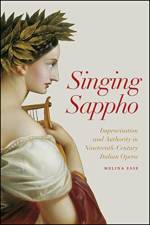
"From the theatrical stage to the literary salon, the figure of Sappho--the ancient poet and inspiring icon of feminine creativity--played a major role in the intertwining histories of improvisation, text, and performance throughout the nineteenth century. Exploring the connections between operatic and poetic improvisation in Italy and beyond, Singing Sappho combines earwitness accounts of famous female improviser-virtuosi with erudite analysis of musical and literary practices. Esse demonstrates that performance played a much larger role in conceptions of musical authorship than previously recognized, arguing that discourses of spontaneity--specifically those surrounding the improvvisatrice, or female poetic improviser--were paradoxically used to carve out a new authority for opera composers just as improvisation itself was falling into decline"--
"It is hard to think of two philosophers less alike than St. Thomas Aquinas and Jean-Paul Sartre. The former was a thirteenth-century Dominican friar known for reconciling the teachings of the Catholic Church with Aristotelianism. The latter was a twentieth-century intellectual known as the central figure in the literary-philosophical movement known as existentialism. The former was a firm believer; the latter was a notorious atheist. And yet, in The Saint and the Atheist, philosopher Joseph Catalano shows that a confrontation between the two, bringing them closer to reveal similarities and bring out the real import of their differences, is fruitful for thinking through some of the central questions about faith, conscience, freedom, and the meaning of life. Written in an accessible style that presupposes no previous philosophical experience, Catalano's book offers a compelling and profound point of entry to two of history's most important and influential thinkers and what they can still offer to us in the present"--
"The story of how American banks helped disenfranchise nonwhite urbanities and condemn to blight the very neighborhoods that needed the most investment is infuriating. And yet, by digging into the history of urban finance, Rebecca Marchiel here illuminates how urban activists changed some banks' behavior to support investment in communities that they had once abandoned. These developments, in turn, affected federal urban policy and reshaped banks' understanding of the role that urban communities play in the financial system. The legacy of reinvestment activism is clouded, but Marchiel's detailing of it transforms our understanding of the history and significance of community/bank relations"--
"The modern discipline of musicology has its roots in early-twentieth-century Germany and in three seemingly distinct but surprisingly connected areas of musical activity: the discovery of Medieval music and music theory through the all-consuming unearthing and decoding of documents; the tremendous growth of youth movements devoted to collective singing and music-making and the study of Medieval music; and the exportation of this music to Protestant and Catholic missions in German East Africa, where it was widely taught and performed. Underlying these activities was the belief that Medieval music, its structure and soundworld, had affinities with the music of "primitive" societies, such as those the missionaries encountered in East Africa. Rejected outright by African musicians and scholars at the time, the belief was kept alive in the European musicological community through the first half of the twentieth century. Anna Maria Busse Berger draws this all together for the first time, anchoring her writing in extensive archival research and her personal experience as the daughter of a German Lutheran missionary in East Africa. The result is a momentous re-thinking of the early history of music scholarship as well as a novel understanding of the imperial and colonial projects that shaped Germany's perception of itself at a crucial time in its history"--
"Forbidden Knowledge explores the censorship of medical books from their proliferation in print through the prohibitions placed on many of them during the Counter-Reformation. How and why did books banned in Italy end up back on library shelves in the seventeenth century? Historian Hannah Marcus uncovers how early modern physicians evaluated the utility of banned books and facilitated their continued circulation in conversation with Catholic authorities. The process of selective censorship and licensing resulted in a vast, dispersed archive of books that have been "corrected" with pens, knives, glue, and paper. Marcus tracked them down to learn more than the effectiveness of religious censorship. She explores how censorship created new avenues of expertise and opened up new discussions about the utility of knowledge. Through her careful combing of the archives, Marcus highlights how talk of utility, once thought to have begun during the Scientific Revolution, in fact began earlier, emerging from ecclesiastical censorship and the desire to continue to use banned medical books. What's more, this censorship in medicine, which preceded by sixty years the Copernican debate in astronomy, has had a lasting impact on how we talk about new and controversial developments in scientific knowledge. Forbidden Knowledge is a masterful, timely book about the interplay between efforts at intellectual control and the utility of knowledge"--
The study of the chimpanzee, one of the human species' closest relatives, has led scientists to exciting discoveries about evolution, behavior, and cognition over the past half century. In this book, rising and veteran scholars take a fascinating comparative approach to the culture, behavior, and cognition of both wild and captive chimpanzees. By seeking new perspectives in how the chimpanzee compares to other species, the scientists featured offer a richer understanding of the ways in which chimpanzees' unique experiences shape their behavior. They also demonstrate how different methodologies provide different insights, how various cultural experiences influence our perspectives of chimpanzees, and how different ecologies in which chimpanzees live affect how they express themselves. After a foreword by Jane Goodall, the book features sections that examine chimpanzee life histories and developmental milestones, behavior, methods of study, animal communication, cooperation, communication, and tool use. The book ends with chapters that consider how we can apply contemporary knowledge of chimpanzees to enhance their care and conservation. Collectively, these chapters remind us of the importance of considering the social, ecological, and cognitive context of chimpanzee behavior, and how these contexts shape our comprehension of chimpanzees. Only by leveraging these powerful perspectives do we stand a chance at improving how we understand, care for, and protect this species.
Abonner på vårt nyhetsbrev og få rabatter og inspirasjon til din neste leseopplevelse.
Ved å abonnere godtar du vår personvernerklæring.