








Gjør som tusenvis av andre bokelskere
Abonner på vårt nyhetsbrev og få rabatter og inspirasjon til din neste leseopplevelse.
Ved å abonnere godtar du vår personvernerklæring.Du kan når som helst melde deg av våre nyhetsbrev.

A timely and necessary look into how we think about the unthinkable, Worst Cases will be must reading for anyone attuned to our current climate of threat and fear.
"Laurence Lampert is well-known for philosophical studies on Nietzsche, Plato, and Leo Strauss. His work is animated by the notion that Nietzsche is the key figure in Strauss's thought and that Strauss is a Nietzschean in disguise. In How Socrates Became Socrates, Lampert brings his work on Nietzsche into conversation with his work on Plato, showing how the "mature" Socrates is himself a Nietzschean avant la lettre, and that this is how Strauss understands him, bringing to completion a decades-long philosophical project in thrilling fashion"--
"In this ambitious book, which he considers the most important of his career, Otfried Hèoffe provides a sophisticated defense of the principle of freedom and the project of modernity. The role of the idea of freedom as central to modernity is assessed in a number of dimensions: natural, economic-social, artistic and scientific, political, and personal-metaphysical. The Kantian notion of autonomy--central to both freedom and modernity--is discussed in terms of art, ethics, education, rights to privacy, free enterprise, constitutional issues, and more, describing in detail the fundamental role of freedom at the heart of modern life. Written in a sophisticated but straightforward style, Hèoffe draws not just on philosophy, but also economics, law, and literature, in order to clearly distinguish and appreciate the many meanings of freedom, and the indispensable role they play in liberal society. This is a bold, ambitious book that will appeal to anyone interested in the philosophical foundations of democratic life"--
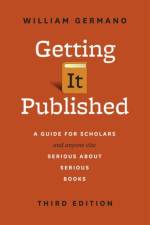
"A version of chapter 5, "Your Proposal," appeared in the October 2000 issue of PMLA and appears here, with alterations, by permission of the Modern Language Association."
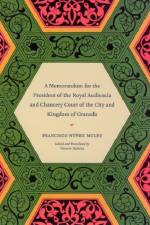
The kingdom of Granada faced radical changes imposed by its occupiers including conversion of its native Muslim population. This title attempts to lodge a protest against assimilationist laws that required converted Muslims in Granada to dress, speak, eat, marry, celebrate festivals, and bury their dead exactly as the Castilian settler population.
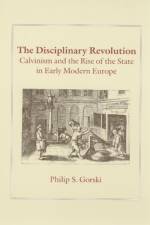
Philip S. Gorski argues for the importance of a disciplinary revolution unleashed by the reformation. He shows how Calvinist inspired social discipline contributed to the governance and pacification of Dutch society.
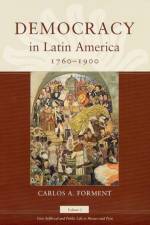
Focuses on the development of democratic life in Mexico and Peru from independence to the late 1890s. The author traces the emergence of hundreds of political, economic, and civic associations run by citizens in both nations and shows how they became models of and for democracy in the face of dictatorship and immense economic hardship.
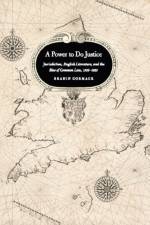
English law underwent transformation in sixteenth century, in response to the Reformation. This book shows how Renaissance writers engaged practical and conceptual dynamics of jurisdiction, both as a subject for critical investigation and as a frame for articulating literature's sense of itself.
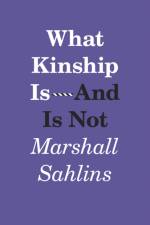
In this pithy two-part essay, the author reinvigorates the debates on what constitutes kinship, building on some of the best scholarship in the field to produce an original outlook on the deepest bond humans can have. He also shows that mutuality of being is a symbolic notion of belonging, not a biological connection by 'blood'.
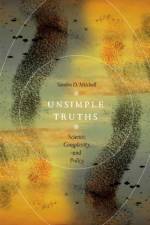
The author argues that the long-standing scientific and philosophical deference to reductive explanations founded on simple universal laws, linear causal models, and predict-and-act strategies fails to accommodate the kinds of knowledge that many contemporary sciences are providing about the world.
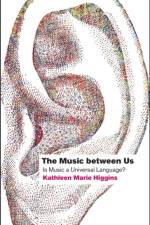
From our first social bonding as infants to the funeral rites that mark our passing, music plays an important role in our lives, bringing us closer to one another. This title investigates this role, examining the features of human perception that enable music's uncanny ability to provoke, despite its myriad forms across continents.
How did slavery and race impact American literature in the 19th century? This book argues that they were the carriers of linguistic restriction, and writers like Frederick Douglass wrestled with the demands for silence and circumspection that accompanied the antebellum fear of disunion and the postwar reconciliation between the North and South.
Offers an understanding of the Enlightenment and the forgotten role of publishing during that period. This title seeks to remedy the common misperception that such classics as "The Wealth of Nations" and "The Life of Samuel Johnson" were made by their authors alone.
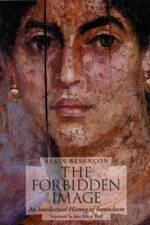
Traces the dual strains of 'iconophilia' and iconoclasm, the privileging and prohibition of religious images, over a span of two-and-a-half millennia in the West. This book addresses arguments regarding the moral authority of the image in European Christianity from the medieval through the early modern periods.
How does religion stimulate and feed imperial ambitions and violence? This title identifies three core components of an imperial theology that have transhistorical and contemporary relevance: dualistic ethics, a theory of divine election, and a sense of salvific mission. It shows how the religious ideas shaped Achaemenian practice.
The authors look to the laws of thermodynamics for answers to the questions of evolution, ecology, economics, and even life's origin.
Studies of concert life in nineteenth-century America have generally been limited to large orchestras and the programs we are familiar with today. But as this book reveals, audiences of that era enjoyed far more diverse musical experiences than this focus would suggest. To hear an orchestra, people were more likely to head to a beer garden, restaurant, or summer resort than to a concert hall. And what they heard weren't just symphonic works-programs also included opera excerpts and arrangements, instrumental showpieces, comic numbers, and medleys of patriotic tunes. This book brings together musicologists and historians to investigate the many orchestras and programs that developed in nineteenth-century America. In addition to reflecting on the music that orchestras played and the socioeconomic aspects of building and maintaining orchestras, the book considers a wide range of topics, including audiences, entrepreneurs, concert arrangements, tours, and musicians' unions. The authors also show that the period saw a massive influx of immigrant performers, the increasing ability of orchestras to travel across the nation, and the rising influence of women as listeners, patrons, and players. Painting a rich and detailed picture of nineteenth-century concert life, this collection will greatly broaden our understanding of America's musical history.
Abonner på vårt nyhetsbrev og få rabatter og inspirasjon til din neste leseopplevelse.
Ved å abonnere godtar du vår personvernerklæring.