



















Gjør som tusenvis av andre bokelskere
Abonner på vårt nyhetsbrev og få rabatter og inspirasjon til din neste leseopplevelse.
Ved å abonnere godtar du vår personvernerklæring.Du kan når som helst melde deg av våre nyhetsbrev.

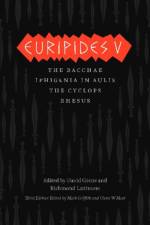
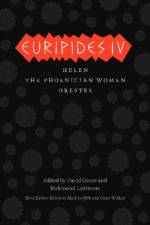
Offers translations of Euripides' "Medea", "The Children of Heracles", "Andromache", and "Iphigenia among the Taurians", fragments of lost plays by Aeschylus, and the surviving portion of Sophocles' "The Trackers". In this title, introductions for each play offer information about its first production, plot, and reception in antiquity and beyond.
Offers translations of Euripides' "Medea", "The Children of Heracles", "Andromache", and "Iphigenia among the Taurians", fragments of lost plays by Aeschylus, and the surviving portion of Sophocles' "The Trackers". In this title, introductions for each play offer information about its first production, plot, and reception in antiquity and beyond.
Offers translations of Euripides' "Medea", "The Children of Heracles", "Andromache", and "Iphigenia among the Taurians", fragments of lost plays by Aeschylus, and the surviving portion of Sophocles' "The Trackers". In this title, introductions for each play offer information about its first production, plot, and reception in antiquity and beyond.
Offers translations of Euripides' "Medea", "The Children of Heracles", "Andromache", and "Iphigenia among the Taurians", fragments of lost plays by Aeschylus, and the surviving portion of Sophocles' "The Trackers". In this title, introductions for each play offer information about its first production, plot, and reception in antiquity and beyond.
Offers translations of Euripides' "Medea", "The Children of Heracles", "Andromache", and "Iphigenia among the Taurians", fragments of lost plays by Aeschylus, and the surviving portion of Sophocles' "The Trackers". In this title, introductions for each play offer information about its first production, plot, and reception in antiquity and beyond.
Offers translations of Euripides' "Medea", "The Children of Heracles", "Andromache", and "Iphigenia among the Taurians", fragments of lost plays by Aeschylus, and the surviving portion of Sophocles' "The Trackers". In this title, introductions for each play offer information about its first production, plot, and reception in antiquity and beyond.
Offers a perspective on the history of food, looking at writings about cuisine, diet, and food chemistry as a key to larger debates over the state of the nation in Old Regime France. This title demonstrates how public discussions of eating and drinking were used to articulate concerns about the state of civilization versus that of nature and more.
Contesting claims that postwar American liberalism retreated from fights against unemployment and economic inequality, this book reveals that such efforts did not collapse after the New Deal but instead began to flourish at the local, rather than the national, level.
Explores the sexual lives of prisoners and the sexual culture of prisons over the years, along with the impact of various issues, including race, class, and gender, sexual violence, prisoners' rights activism, and the HIV epidemic. This title argues for the importance of the prison to the history of sexuality.
From Henry Darger's claborate works of young girls caught in a brutal war to the New Mexican artist who sells animal-hide sculptures by the side of the road, the work of "outsider" artists has achieved unique status in the art world.
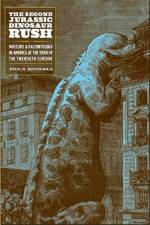
Reconsidering the fossil speculation, the museum displays, and the media frenzy that ushered dinosaurs into the American public consciousness, this work takes us back to the birth of dinomania, the modern obsession with all things Jurassic.
Born out of democracy and raised in open markets, fairness has become our de facto modern creed. In our zealous pursuit of fairness, we have banished our urges to like one person more than another, one thing over another, hiding them away as dirty secrets of our humanity. In this book, the author drags them triumphantly back into the light.
Drawing on Chicago Police Department statistics and interviews with both law-abiding citizens and criminals in one of the city's highest-crime areas, this work demonstrates that drug dealers and robbers are primarily attracted to locations with businesses like liquor stores, fast food restaurants, and check-cashing outlets.
Delving into the archives that document cross-cultural interactions between America and Germany, the author retraces these efforts to export culture as an instrument of nongovernmental diplomacy, paying particular attention to the role of conductors and uncovers the history of the musician as a cultural symbol of German cosmopolitanism.
Lays out a nuanced analysis of the persistence of racial inequality and structural disadvantages, and the ways that whites and blacks continue to see the same problems - the disastrous response to Katrina being a prime example - through completely different, race-inflected lenses.
Over the course of human history, the sciences, and biology in particular, have often been manipulated to cause immense human suffering. By investigating the past, this book features contributors who hope to better prepare us to discern ideological abuse of science when it occurs in the future.
In this work, Jacques Derrida guides the reader through an extended meditation on remembrance, religion, time, and technology - all occasioned by a deconstructive analysis of the notion of archiving.
In the Enlightenment tradition, rationality is considered well-defined. However, the author of this study argues that rationality is context-dependent, and that the crucial context is determined by decision-makers' political power. He uses a real-world Danish project to illustrate this theory.
One of the foundational works of Western culture, Art of Rhetoric has shaped our understanding of speech and persuasion for millennia now; this fresh translation makes it available anew for teacher of rhetoric, philosophy, politics, and intellectual history.
Warmly written and scientifically informed, Animals' Best Friends is the invitation we all need to improve the lives of nonhuman animals among us-and thereby improve our own.
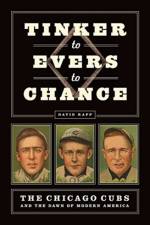
Their names were chanted, crowed, and cursed. Alone they were a shortstop, a second baseman, and a first baseman. But together they were an unstoppable force. Joe Tinker, Johnny Evers, and Frank Chance came together in rough-and-tumble early twentieth-century Chicago and soon formed the defensive core of the most formidable team in big league baseball, leading the Chicago Cubs to four National League pennants and two World Series championships from 1906 to 1910. At the same time, baseball was transforming from small-time diversion into a nationwide sensation. Americans from all walks of life became infected with "baseball fever," a phenomenon of unprecedented enthusiasm and social impact. The national pastime was coming of age. Tinker to Evers to Chance examines this pivotal moment in American history, when baseball became the game we know today. Each man came from a different corner of the country and brought a distinctive local culture with him: Evers from the Irish-American hothouse of Troy, New York; Tinker from the urban parklands of Kansas City, Missouri; Chance from the verdant fields of California's Central Valley. The stories of these early baseball stars shed unexpected light not only on the evolution of baseball and on the enthusiasm of its players and fans all across America, but also on the broader convulsions transforming the US into a confident new industrial society. With them emerged a truly national culture. This iconic trio helped baseball reinvent itself, but their legend has largely been relegated to myths and barroom trivia. David Rapp's engaging history resets the story and brings these men to life again, enabling us to marvel anew at their feats on the diamond. It's a rare look at one of baseball's first dynasties in action.
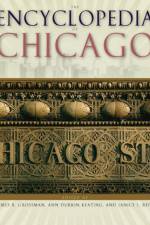
A comprehensive historical reference on metropolitan Chicago encompasses more than 1,400 entries on such topics as neighborhoods, ethnic groups, cultural institutions, and business history, and furnishes interpretive essays on the literary images of Chicago, the built environment, and the city's spo
"In this book Heinrich Meier takes on the question of the meaning of Nietzsche's Thus Spoke Zarathustra, which has long proven controversial among readers. Meier closely examines the work to find a coherent structure and uncover the meanings in the figure of Zarathustra. By showing the unity in Zarathustra's life and teaching, Meier argues that the hidden architecture of the work reveals the development of self-knowledge for the philosopher. What Is Nietzsche's Zarathustra? A Philosophical Confrontation makes clear in its careful attention to the text that Nietzsche's deepest concern is with understanding himself and the world, rather than with a view of himself as a prophet"--
Timed for the 200th anniversary of John Keats's death, these intimate essays show why we love Keats still, and why his odes continue to speak powerfully to our own desires.
"This two-volume biographical work provides a foundational introduction to Friedman's role in several major economic debates that took place over four decades in the US, from 1932 through the end of 1972. The debates considered include both those that were largely carried out in the economic-research literature and those that primarily proceeded in the media or in policy forums. Nelson writes from a unique vantage point, as he draws from his own expertise in monetary economics, and has immersed himself in Friedman's Hoover Institution archives, allowing him unparalleled familiarity with Friedman's publications. Further, Nelson differentiates Friedman's ideas from those of his University of Chicago colleagues-particularly with those of George Stigler. And beyond, Nelson is able to refine and explicate the existing Friedman literature. Nelson provides an analytical narrative of Friedman's career from 1932 to 1972 (with the narrative organized primarily in terms of key economic debates), together with an exposition of Friedman's economic framework. The first volume consists of Chapters 1 to 10, covering Friedman's formative and early years through 1951, and Chapters 11 to 15 (the whole of the second volume), consider U.S. economic debate, and Friedman's participation in it, in the years from 1951 to 1972-the first two decades of Friedman's "monetarist period.""--
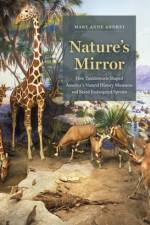
"Nature's Mirror is a history of the taxidermists, including William Hornaday, Carl Akeley, and many lesser known, who created and filled the science museums, zoos, and aquaria of the twentieth century. The care with which they studied wildlife in the field not only led to new methods in taxidermy but also provided data for scientists and contributed directly to growing public awareness of how careless human interaction with the natural world was having devastating effects. They came to regard themselves as museum men, separate and apart from sportsmen, who hunted in the service of science. As a result of their field work, they had first-hand knowledge of threatened species and their diminishing numbers- and many felt compelled to educate the public. The educational exhibits they created, as well as the field work, popular writing, and lobbying they undertook, established a vital leadership role in the early conservation movement for American museums that continues to this day. Through their individual research expeditions and collective efforts to create an ethic of global environmentalism, these men, more than any other single group, created our popular understanding of the animal world. For generations of museum visitors, they turned the glass of an exhibition case into a window on nature-and also a mirror in which to reflect on our responsibility for its conservation"--
Abonner på vårt nyhetsbrev og få rabatter og inspirasjon til din neste leseopplevelse.
Ved å abonnere godtar du vår personvernerklæring.