




















Gjør som tusenvis av andre bokelskere
Abonner på vårt nyhetsbrev og få rabatter og inspirasjon til din neste leseopplevelse.
Ved å abonnere godtar du vår personvernerklæring.Du kan når som helst melde deg av våre nyhetsbrev.

The story of Alison Davis, one of the first black anthropologists and the first black tenured professor, a pioneer whose work-in part because it was so multifarious-has been all but forgotten.
"An earlier version of chapter 1 appeared as "Avant-Garde in a Different Key: Karl Kraus's The Last Days of Mankind," Critical Inquiry 40, no. 2 (Winter 2014): 311-38."
Examines the motivations intrinsic to this subjective experience: Why do people do what they do? How can we explain the activity that gives rise to all human social life and social structures? This book argues that our actions stem from a motivation to realize what he calls natural human goods: ends that are, by nature, and more.
Serves as a riposte to those who use the phrase "the love of literature" as if its meaning were transparent, its essence happy and healthy.
Drawing on a wealth of archival material, this book combines legal, medical, and business history to offer a sweeping new interpretation of the origins of the complex and often troubling relationship between the pharmaceutical industry and medical practice today.
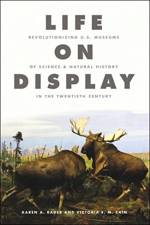
Uses the history of biological exhibitions to analyze museums' shifting roles in twentieth-century American science and society. The authors chronicle profound changes in these exhibitions - and the institutions that housed them - between 1910 and 1990, ultimately offering new perspectives on the history of museums, science, and science education.
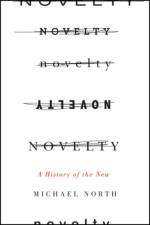
If art and science have one thing in common, it's a hunger for the new - new ideas and innovations, new ways of seeing and depicting the world. The author takes us on a tour of more than two millennia of thinking about the problem of the new, from the puzzles of the pre-Socratics all the way up to the art world of the 1960s and '70s.
In the sink-or-swim world of academia, a great graduate advisor can be a lifesaver. But with university budgets shrinking and free time evaporating, advisors often need a mentor themselves to learn how to best support their advisees. This book demystifies the advisor-student relationship, and provides tips and advice to students and advisors.
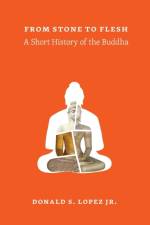
The credit for creating Buddhism goes to the Buddha. But who was this Buddha, and how did he become the Buddha we know and love today? This book follows the twists and turns of Eastern and Western notions of the Buddha, leading finally to his triumph as the founder of a world religion.
Abonner på vårt nyhetsbrev og få rabatter og inspirasjon til din neste leseopplevelse.
Ved å abonnere godtar du vår personvernerklæring.