



Gjør som tusenvis av andre bokelskere
Abonner på vårt nyhetsbrev og få rabatter og inspirasjon til din neste leseopplevelse.
Ved å abonnere godtar du vår personvernerklæring.Du kan når som helst melde deg av våre nyhetsbrev.

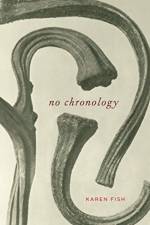
The poems in No Chronology offer lyrical meditations on our shared experiences, illuminating life's deep discomforts and peculiar joys.
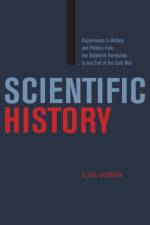
"Increasingly, scholars in the humanities are calling for a re-engagement with the natural sciences. We are experiencing a "scientific turn" in the first decades of the twenty-first century, and against this backdrop, Elena Aronova argues that there was a "scientific turn" in history at every turn, for at least a century. Bigger History maps out the submerged history of historians' continuous engagement with the methods, tools, and values of the natural sciences by examining several waves of experimentation with the scale of history and its method, each of which surged highest at perceived times of trouble, from the crisis-ridden decades around 1900 to the ruptures of the Cold War"--
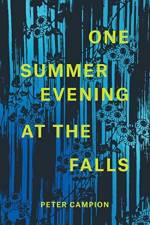
Blending styles, voices, and settings, Campion's poems show how each character and each moment can be worthy of love and that this love both undoes us and makes us who we are.
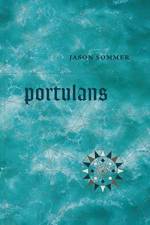
Taking cues from medieval sea charts-portulans-the poems in Jason Sommer's collection bring a fresh variation to the ancient metaphor of life as a journey.
"Measuring innovation is a challenging task, both for researchers and for national statisticians. This task is timely and valuable given that policy and public interest in innovation has become increasingly intense in this era of digital revolution, yet National GDP Accounts and other economic statistics do not fully account for the wide range of innovative activity that is plainly evident in everyday experience. Indeed, innovation has in many ways changed the structure of an increasingly digitized marketplace, from cloud computing to the gig economy. The papers collected in this volume, Measuring and Accounting for Innovation in the Twenty-First Century, address many different dimensions of this challenge, ranging from how to best to define GDP to the fundamental question of what is an innovation and how to collect data at the level of an individual innovation. Taken together, the volume provides a comprehensive overview of the cutting-edge of this widely varied but thematically-connected research that draws on multiple methodologies and data. The editors and authors consider how measurement frameworks could be expanded to enhance our understanding of innovative activity; new approaches and evidence that could account for innovation's economic impact; innovation's effect across the economy, from production processes to labor markets and financial activities; and what practical adjustments could be made to current measurements that would better capture innovation. The distinctive stance of this volume makes clear that the challenge of measuring innovation and understanding its implications has become increasingly complex as the economy has evolved. The editors and authors show that the limitations of our existing measurement system significantly hinder researchers, analysts, and policymakers. Better measures of innovative activity are necessary to interpret the consequences of innovation in daily life and to inform policies that best promote the attendant benefits, including distribution of income, trademark protections, and more. Now, in an era of fake news and alternative facts, it is more important than ever to push for accuracy in basic economic facts"--
This book focuses on the under-explored significance of materials throughout Chinese art. Since the inventions of porcelain and gunpowder, Chinese artists have experimented with unconventional artistic materials and used conventional materials in unorthodox ways. This groundbreaking volume is the first publication to expound the trans-historical importance of materiality in Chinese art by bringing together essays from leading scholars, curators, and conservators. Essayists Anne Feng, Yuhang Li, Wei-Cheng Lin, Catherine Stuer, and Yusen Yu examine how materials including lacquer, crystal, paper, and gold stimulated advances in premodern Chinese art. Alex Burchmore, Orianna Cacchione, Nancy P. Lin, Sara Moy, and Rachel Rivenc analyze several instances of material experimentation in contemporary Chinese art in essays that consider materials as varied as gunpowder, plastic, and water. This book builds upon scholarship originally presented at the Art and Materiality Symposium, held on the occasion of the Smart Museum of Art's exhibition The Allure of Matter: Material Art from China.
Abonner på vårt nyhetsbrev og få rabatter og inspirasjon til din neste leseopplevelse.
Ved å abonnere godtar du vår personvernerklæring.