





Gjør som tusenvis av andre bokelskere
Abonner på vårt nyhetsbrev og få rabatter og inspirasjon til din neste leseopplevelse.
Ved å abonnere godtar du vår personvernerklæring.Du kan når som helst melde deg av våre nyhetsbrev.

Acclaimed American photographer Mary Beth Meehan and Silicon Valley culture expert Fred Turner join forces to give us an unseen view of the heart of the tech world.
"Contemporary Jews variously configure their identity, which is no longer necessarily defined by an observance of the Torah and God's commandments. Indeed, the Jews of modernity are no longer exclusively Jewish. They are affiliated with many communities-vocational, professional, political, and cultural-whose interests may not coincide with that of the community of their birth and inherited culture. In Cultural Disjunctions, Paul Mendes-Flohr explores the possibility of a spiritually and intellectually engaged cosmopolitan Jewish identity for our time. To ground this project, he draws on the sociology of knowledge and cultural hermeneutics to reflect on the need to participate in the life of a community so that it enables multiple relations beyond its borders and allows one to balance a commitment to the local and a genuine obligation to the universal. Over the course of six provocative chapters, Mendes-Flohr lays out what this delicate balance can look like for contemporary Jews, both in the Diaspora and in Israel. Mendes-Flohr takes us through the ghettos of twentieth-century Europe, the differences between the personal libraries of traditional and secular Jews, and the role of cultural memory. Ultimately, the author calls for Jews to remain discontent with themselves (as a check on hubris), but also discontent with the social and political order, and to fight for its betterment"--
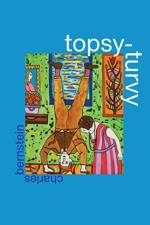
Charles Bernstein presents an original and capacious collection of poems that speak to a world turned upside-down by this time of "covidity."
"In this fourth volume in our Convening Science series with the Marine Biological Laboratory, contributors, including historians, biologists, and philosophers, explore the development of bioengineering. The essays show how engineering is both a means to a functional end and a method of learning about the world. The book is organized around three themes--controlling and reproducing, knowing and making, and envisioning--to chart the increasing sophistication of our engineering of biological systems and to change our sense of the scales at which engineering occurs, to include not just genetics but also ecosystem-level intervention. The volume will attempt to make the case for "the centrality of engineering for understanding and imagining modern life.""--
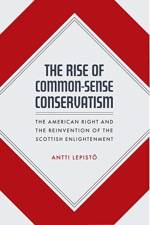
"In considering the lodestars of American neoconservative thought-among them Irving Kristol, Gertrude Himmelfarb, James Q. Wilson, and Francis Fukuyama-Antti Lepistèo makes a compelling case for the centrality of their conception of "the common man" in accounting for the enduring power and influence of their thought. Lepistèo locates the roots of this conception in the eighteenth-century Scottish Enlightenment. Subsequently, the neoconservatives weaponized the ideas of Adam Smith, Thomas Reid, and David Hume to denounce postwar liberal elites, educational authorities, and social reformers-ultimately giving rise to a defining force in American politics: the "common sense" of "the common man.""--
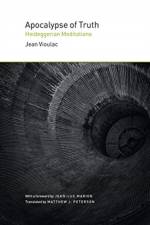
"We inhabit a time of crisis-totalitarianism, environmental collapse, and the unquestioned rule of neoliberal capitalism. Philosopher Jean Vioulac is interested in and worried by all of this, but his main concern is how these phenomena all represent a crisis within-and a threat to-thinking itself. In his first book to be translated into English, Vioulac radicalizes Heidegger's understanding of truth as disclosure through the notion of "the apocalypse of truth." This apocalypse works as an unveiling that reveals the finitude and mystery of truth-a full confrontation with truth-as-absence. Engaging with Heidegger, Marx, and St. Paul, as well as contemporary figures including Agamben, Badiou, and éZiézek, Vioulac's book presents a subtle, masterful exposition of his analysis before culminating in a powerful vision of what he terms "the abyss of the deity." Here, Vioulac articulates a portrait of Christianity as a religion of mourning, waiting for a god (Jesus) who has already died, a form of ever-present eschatology whose end has always already taken place. With a preface by Jean-Luc Marion, Apocalypse of Truth presents a major contemporary French thinker to English-speaking audiences for the first time"--
"In Fragile Finitude, the long-awaited follow-up to Sacred Attunement(2008), Fishbane clears new ground for theological experience and its expressions through a novel reinterpretation of the Book of Job. His reinterpretation is based on the traditional four types of Jewish Scriptural exegesis: the contextual plain sense; the rabbinic legal and theological sense; the figural philosophical and spiritual sense; and the symbolic mystical sense. The first focuses on worldly experience; the second on communal forms of life and thought in the rabbinic tradition; the third on personal development; and the fourth on transcendent and cosmic orientations. Through these four modes, Fishbane manages to transform Jewish theology from within, at once reinvigorating a long tradition and moving beyond it. What he offers is nothing short of a way to reorient our lives in relation to the Divine and our fellow humans"--
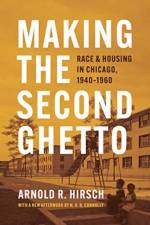
"In this classic and groundbreaking work of urban history, Arnold Hirsch argues that after the Depression, Chicago was a "pioneer in developing concepts and devices" for housing segregation. Moreover, Hirsch shows that the legal framework for the national urban renewal effort was forged in the heat generated by the racial struggles waged on Chicago's South Side. His chronicle of the strategies used by ethnic, political, and business interests in reaction to the great migration of southern blacks in the 1940s describes how the violent reaction of an emergent "white" population combined with public policy to segregate the city-and the nation. The new edition features a visionary afterword by N.D.B. Connolly"--
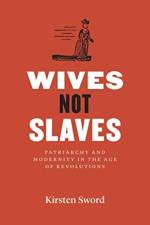
"Is marriage a privilege or a right? A sacrament or a contract? Is it a public or a private matter? Where does ultimate jurisdiction over it lie? And when a marriage goes wrong, how do we adjudicate marital disputes-particularly in the usual circumstance, where men and women do not have equal access to power, justice, or even voice? These questions have long been with us because they defy easy, concrete answers. Kirsten Sword here reveals that contestation over such questions in early America drove debates over the roles and rights not only of women but of all unfree people. Sword shows how and why gendered hierarchies change-and why, frustratingly, they don't"--
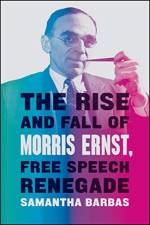
Samantha Barbas presents a long-overdue biography of the legendary civil liberties lawyer-a vital and contrary figure who both defended Ulysses and fawned over J. Edgar Hoover.
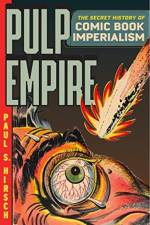
Uncovers the gripping untold story of how the US government used comic books as propaganda tools to help wage World War II and the Cold War.
An unprecedented look at both the ground-level world of the common soldier and a deeply felt rendering of the experience of being a body in war.
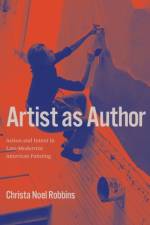
"This is the first extended study of authorship in mid-20th century abstract painting in the US. It describes how artists and critics used the medium of painting to advance their own claims about the role that they believed authorship should play in dictating the value, significance and social impact of the art object .Christa Robbins tracks the subject across two definitive periods: the "New York School" as it was consolidated in the 1950s and "Post Painterly Abstraction" in the 50s-70s. Thanks to many insistent, deep dives into key artist archives, Robbins brings to the page the minds and voices of painters Arshile Gorky, Jack Tworkov, Helen Frankenthaler, Kenneth Noland, Sam Gilliam, and Agnes Martin and of critics Harold Rosenberg, Clement Greenberg, and others. These are all important characters in the polemical histories of American modernism, but this is the first time they are placed together in a single study and treated with equal measure, as peers participating in the shared late modernist moment"--
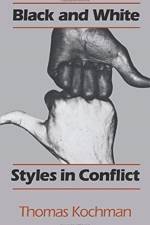
In this book, the author draws attention to a rarely acknowledged problem in inter-ethnic communications: A difference in means (or style) rather than ends (or goals) impedes many attempts at communications among Americans...His thesis is convincing and his demonstrations impress the reader with the range and importance of stylistic conflicts...The potential for conflict and misunderstanding which inheres in these stylistic differences has alarming implications.
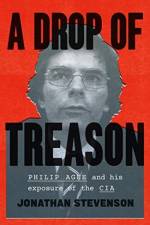
The only biography of CIA whistleblower Philip Agee, A Drop of Treason is a thorough portrait of this contentious, legendary man and his role in US history during the Cold War and beyond.
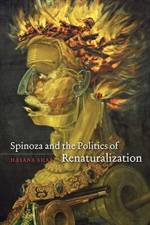
An interpretation of Spinoza's iconoclastic philosophy. It uses Spinoza to outline a practical wisdom of "renaturalization", showing how ideas, actions, and institutions are never merely products of human intention or design, but outcomes of the complex relationships among natural forces beyond our control.
The AUPresses Directory is an essential annual reference for anyone interested in scholarly publishing, and serves as a guide to the world of university presses. Authors, booksellers, librarians, instructors, and publishing professionals across the industry will find this an invaluable resource, featuring editorial programs and publishing details for all 150+ Association members and much more.
Abonner på vårt nyhetsbrev og få rabatter og inspirasjon til din neste leseopplevelse.
Ved å abonnere godtar du vår personvernerklæring.