


Gjør som tusenvis av andre bokelskere
Abonner på vårt nyhetsbrev og få rabatter og inspirasjon til din neste leseopplevelse.
Ved å abonnere godtar du vår personvernerklæring.Du kan når som helst melde deg av våre nyhetsbrev.

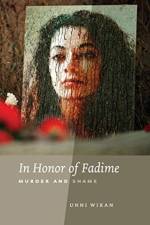
In 2002, young Fadime Sahindal was brutally murdered by her own father, because her relationship with a man outside of their community had deeply dishonored her family. This book narrates her story, along with the testimonies of her father, mother, and two sisters.
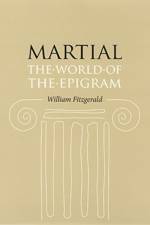
In an age of sound bite, what sort of author could be relevant than a master of epigram? Martial, the influential epigrammatist of classical antiquity, was just such a virtuoso of form, but despite his pertinence to culture, his work has been neglected. This book provides an insightful tour of his works, shedding light on Roman poet's world.
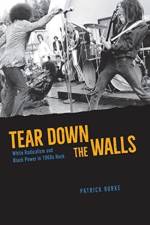
White Radicalism and Black Power in 1960s Rock. Tear Down the Walls is a fresh look at 1960s rock that provides new insight into how popular music both reflects and informs our ideas about race and how white musicians and activists can engage meaningfully with Black political movements.
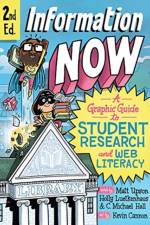
"Since its original publication in 2015, Information Now has helped college students address this fundamental issue in the form of a short, humorous graphic guide. It explains how information is organized, both on the open web and in library resources, and how to navigate those sources to find good, trustworthy answers. But the information landscape has changed dramatically in just a few years, and this revised edition explores new questions about who has access to information and about algorithmic bias in how search engines present results. The book also covers online misinformation and offers simple strategies for fact-checking websites. In addition to this expanded topical coverage, the new edition includes revised critical thinking exercises in every chapter to help students feel more engaged in improving the information landscape"--
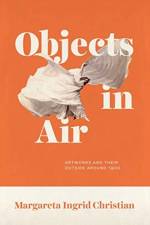
"This beautifully written work unpacks the ways in which, around 1900, art scholars, critics, and-importantly-choreographers-wrote and thought about the artwork as an actual object in real time and space, surrounded and fluently connected to the viewer through the very air we breathe. In other words, they were not thinking about the work of art as a transcendent entity. Theorists such as Aby Warburg, Alois Riegl, Rainer Maria Rilke, and the choreographer Rudolf Laban drew on the science of their time to examine air as the material space surrounding an artwork, establishing its "milieu," atmosphere, "environment." Christian explores how the artwork's external space was seen to work as an aesthetic category in its own right. She starts with Rainer Maria Rilke's observation that Rodin's sculpture "exhales an atmosphere" and that Cezanne's colors create "a calm, silken air" that pervades the empty rooms where the paintings are exhibited. Writers created an early theory of unbounded form that described what Christian calls an artwork's ecstasis or its ability to engender its own space. The book rethinks entrenched narratives of aesthetics and modernism and recuperates alternative ones: thus, from this perspective, art objects complicate the now-fashionable discourse of empathy aesthetics and the attention to self-projecting subjects. Further, the book invites us to historicize the immersive spatial installations and "environments" that have arisen since the 1960s and to consider their origins in turn-of-the-twentieth-century aesthetics"--
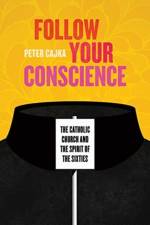
"Within the Catholic Church, conscience was long a powerful internal guide to conduct that worked hand-in-hand with external law and authority. Yet in the 1960s in America, as the morality and fairness of institutions like government and the Church itself came into question, more and more Catholics relied only on their consciences. This turn away from authority had radical effects on American society, influencing other denominations, human rights activists, health-care professionals, lawyers, government employees, and the vocabulary of the greater culture. Today's debates over political power, religious freedom, gay rights, and more are infused by the language and concepts of conscience"--
Voice Music World. At the intersection of sound studies and affect theory, the essays inthis volumeaddressthesoundsand music that surround us in everyday lifeand theresponsestheycan provoke.
Abonner på vårt nyhetsbrev og få rabatter og inspirasjon til din neste leseopplevelse.
Ved å abonnere godtar du vår personvernerklæring.