
















Gjør som tusenvis av andre bokelskere
Abonner på vårt nyhetsbrev og få rabatter og inspirasjon til din neste leseopplevelse.
Ved å abonnere godtar du vår personvernerklæring.Du kan når som helst melde deg av våre nyhetsbrev.

"In Networking Operatic Italy, Francesca Vella explores how networks of opera production and critical discourse shaped Italian cultural identity during the years before and after the country's unification in 1861. Vella sheds light on the vibrancy and complexity of nineteenth-century Italian operatic culture, its engagement with early technologies, and the inherent mobility of operatic productions as they physically traveled across the peninsula. Through a series of case studies, Vella explores musical criticism in the Italian press as well as specific operatic works, singers, and theatrical stagings. She also develops new tools for rethinking nineteenth-century operatic Italy by drawing inspiration from mobility studies and media archaeology. The author traces the politics of movement within and between multiple locations by attending to opera's encounters with technologies of communication and transportation, including the new railway, understood as a medium of operatic dissemination as well as a new part of opera's media infrastructure"--
"Dael Norwood reveals that much of America's early growth and self-definition was shaped by its multifarious relations with China. Correspondingly, he shows that America was not solely the product of its Atlantic engagements; the Pacific always played a critical role in economic, social, and cultural development. Norwood weaves together arguments about commerce, foreign policy, and immigration, connecting the growing US presence in the "China trade" with domestic developments, including Federalist-era debates over political economy and trade policy, the building of the transcontinental railroad, and the looming sectional struggle over slavery"--
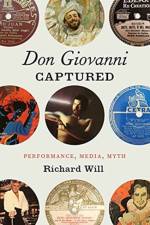
"With "Don Giovanni" Captured, Richard Will takes on the challenge of considering a single opera through engagement with its entire history of recorded performance, encompassing both audio recordings (starting with wax cylinders and 78s) and video recordings, from DVDs, to films, to streaming videos. Recorded opera has become a genre unto itself, connected with actual stage productions but with its own history and conventions. Today, recordings and other forms of mediation inform our experience of live opera as much as the other way around. Seen as a historical record, opera recordings are also a potent reminder of the refusal of works such as Mozart's Don Giovanni to sit still, and the tremendous transformation they undergo from performance to performance, and from generation to generation. By choosing an opera with such a rich and complex tradition of interpretation, Will helps us see Don Giovanni as much more than the tale of a single libertine aristocrat and as a standard-bearer for changing myths about eros and for how we socialize (and represent in performance) sexual and power relations that run the gamut from seduction, to predatoriness, to rape"--
"How did art critics come to speak of light and dark as, respectively, "high in value" and "low in value." In this book, Henry Sayre traces the origins of this usage in one of art history's most famous and racially charged paintings, Manet's Olympia. Masterfully researched and argued, this bold study reveals the extraordinary weight of history and politics that Manet's painting bears, and the presence of slavery at modernism's roots. Sayre shows that it was âEmile Zola who introduced a new "law of values" to art criticism in an 1867 essay on Manet. Unpacking the intricate contexts of Zola's essay and of several related paintings of Manet, Sayre argues that Zola's use of the economic metaphor of "value" was doubly coded. On the one hand, it was a feint that deflected attention away from Olympia's actual subject and toward the painting's formal qualities. On the other, Sayre argues, "value" for Zola was a trope for the political economy of slavery and the Second Empire's complicity in the ongoing slave trade in the Americas. Value in Art is a surprising and necessary intervention in our understanding of modern art's emergence in relation to issues of race"--
"Mathematicians David Fisher, Dmitry Kleinbock, and Gregory Soifer highlight in this edited collection the foundations and evolution of research by mathematician Gregory Margulis. Margulis is unusual in the degree to which his solutions to particular problems have opened new vistas of mathematics. Margulis' ideas were central, for example, to developments that led to the recent Fields Medals of Elon Lindenstrauss and Maryam Mirzhakhani. The broad goal of this volume is to introduce these areas, their development, their use in current research, and the connections between them. The foremost experts on the topic have written each of the chapters in this volume with a view to making them accessible by graduate students and by experts in other parts of mathematics"--
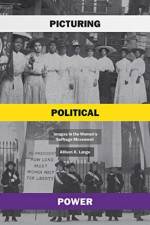
Lange's examination of the fights that led to the ratification of the Nineteenth Amendment in 1920 reveals the power of images to change history.
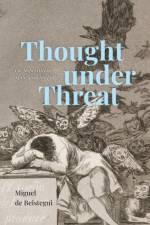
"Thought Under Threat is an attempt to understand the tendencies that threaten thinking from within. These tendencies have always existed, but today they are on the rise and frequently encouraged even in democracies. People "disagree" with science and distrust experts. Political leaders appeal to the hearts and guts of "the people," rather than their critical faculties. Stupidity has become a right, if not a badge of honor; thinking is considered "elitist." For Miguel de Beistegui, however, thinking is intrinsically democratic, a crucial part of exercising freedom. In the book, de Beistegui describes a long philosophical tradition, according to which it is the job of the philosopher to guard against these vices that threaten philosophy from within, with the philosophical life amounting to a form of intellectual care or self-vigilance. For de Beistegui, stupidity is not simply the opposite of intelligence or common sense; spite is not only a moral vice, distinct from the exercise of thought; and superstition is not reducible to a set of false beliefs. Rather, he argues, thoughtlessness grows from within thought itself. Or, put differently, thought needs to engage in a recurring struggle against these vices, which it carries within itself, to thrive. De Beistegui alerts us to the blind-spots in our thinking and shows how thought itself can be used to ward them off, making possible productive dissensus, deliberation, and, ultimately, a thinking community"--
Wallace demystifies the narratives of Beethoven's approach to his hearing loss and instead explores how Beethoven did not "conquer" his deafness; he adapted to life with it.
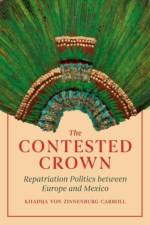
"This book explores the travels and travails of a fabulous headdress reputed to have belonged to Montezuma, the last emperor of the Aztecs. This feather crown was brought to Europe by Hernando Cortez following the conquest of Mexico. Not long after it arrived in Europe, it was placed in the "cabinet of curiosities" at Ambras Castle, the Austrian residence of the author's ancestors. From there the headdress was removed to Vienna's Weltmuseum in the early nineteenth century, where it has been on view ever since. "El Penacho," as the headdress is called, is considered a national treasure by both Austria and Mexico. The crown has long been the center of political and cultural power struggles. The Mexican government wants it back. The Weltmuseum insists El Penacho is too fragile to travel. Austria has tried to placate Mexico by giving it a replica, which is displayed in the National Museum of Anthropology in Mexico City. But Mexico wants the real thing. This is at once the biography of a rare cultural object and a history of political collecting and colonizing. The book analyses claims for postcolonial justice through the repatriation case of the headdress, today among the most contested museum claims between Europe and the Americas"--
"In Sounds Beyond, Kevin C. Karnes illuminates the unofficial and interconnected music and art scenes in the USSR during the second half of the 1970s through the work of Arvo Pèart, one of the most successful and widely known contemporary classical composers with a large international following. Karnes shows how Pèart's work of the 1970s took shape in dialogue with a community of alternative musicians and as part of a vital yet forgotten culture of collective experimentation Karnes calls the 1970s Soviet Underground. Using a combination of archival research and oral history, Karnes carefully situates modes of experimentation in the late socialist contexts out of which they emerged, and he also shows the degree to which experimental scenes in the East and West were in dialogue and shared several common goals. Karnes also unveils the deeply communal nature of experimental projects in music and the visual arts, from John Cage to Morton Feldman, and in dislodging the mythology of the solitary genius cultivated in the official biographies of Pèart and many others; as he writes, his work was impossible without community"--
"Policy-makers often call for expanding public spending on infrastructure, which includes a broad range of investments from roads and bridges to digital networks that will expand access to high-speed broadband. Some point to near-term macro-economic benefits and job creation, others focus on long-term effects on productivity and economic growth. This volume explores the links between infrastructure spending and economic outcomes, as well as key economic issues in the funding and management of infrastructure projects. It draws together research studies that describe the short-run stimulus effects of infrastructure spending, develop new estimates of the stock of U.S. infrastructure capital, and explore the incentive aspects of public-private partnerships (PPPs). A salient issue is the treatment of risk in evaluating publicly-funded infrastructure projects and in connection with PPPs. The goal of the volume is to provide a reference for researchers seeking to expand research on infrastructure issues, and for policy-makers tasked with determining the appropriate level of infrastructure spending"--
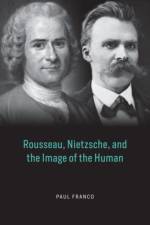
Rousseau and Nietzsche presented two of the most influential critiques of modern life and much can still be learned from their respective analyses of problems we still face.
"Tirthankar Roy and Anand V. Swamy trace India's economic growth since 1947 and the legal reforms that have allowed it to settle in, however unevenly and tenuously, in the shadow of the stagnating effects of colonial rule. Law and the Economy in a Young Democracy portrays a long shadow of Indian "path dependence"-the persistence of colonial-era legal practices and institutions-interrupted by a series of reactive, dramatic departures from colonial inertia aimed at achieving quick or corrective growth and regulation. Roy and Swamy address five principal questions: How have new laws emerged in India? Does the explanation lie with colonialism or with post-independence politics and economic change? How were laws shaped by egalitarian goals in the Indian democracy with its universal adult suffrage? When did laws constrain economic growth? And to what extent did case law and legislation affect the evolution of law, which was also shaped by politics and the quality of legal infrastructure? Each of these questions brings together different threads of India's economic transformation and social/political history, and the format allows the authors to go deep on the country's most important market sectors and their surrounding economic and political histories. These sections include: colonialist influences on laws governing land and natural resources; politics and labor; and the alternating stifling effects of the country's economic policies and legal systems. In Roy and Swamy's telling, inadequate legal infrastructure has often been the country's primary impediment to economic growth during the last century, and it remains a primary reason that India's future may not be as bright as advertised"--
Daniel Albright investigates musical phenomena through the lens of monism, the philosophical belief that things that appear to be two are actually one.
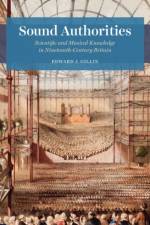
"In Sound Authorities, Edward J. Gillin shows how experiences of music and sound played a crucial role in nineteenth-century scientific inquiry in Britain. Where other studies have focused on vision in Victorian England, Gillin focuses on hearing and aurality, making the claim that the development of the natural sciences in Britain in this era cannot be understood without attending to how the study of sound and music contributed to the fashioning of new scientific knowledge. Gillin's book is about how scientific practitioners attempted to fashion themselves as authorities on sonorous phenomena, coming into conflict with traditional musical elites as well as religious bodies. Gillin pays attention to not only musical sound but also the phenomenon of sound in non-musical contexts, specifically, the cacophony of British industrialization, and he analyzes the debates between figures from disparate fields over the proper account of musical experience. Gillin's story begins with the place of acoustics in early nineteenth-century London, examining scientific exhibitions, lectures, and spectacles, as well as workshops, laboratories, and showrooms. He goes on to explore how mathematicians mobilized sound in their understanding of natural laws and their vision of a harmonious order, as well as the convergence of aesthetic and scientific approaches to pitch standardization. In closing, Gillin delves into the era's religious and metaphysical debates over the place of music (and humanity) in nature, the relationship between music and the divine, and the tension between religious/spiritualist understandings of sound and scientific/materialist ones"--
"In The Culture of Male Beauty in Britain, Paul Deslandes offers the definitive account of how notions of male beauty changed in Britain over the past few centuries. With both fluid prose and 120 carefully selected images, Deslandes traces the sustained and culturally significant, masculine engagement with beauty culture in Britain from the nineteenth century to the present, including considerations of advertising, health, pornography, psychology, sport, and celebrity culture. Deslandes's account chronicles the ebb and flow of certain beauty standards in British male culture, illustrating the slow rise of the cult of youth, the growth of muscularity as both a masculine attribute and a marker of attractiveness, and the falling in and out of fashion of hirsuteness and hairlessness. Along the way, he links discussions of youth, fitness, and beauty to growing concerns about race and empire and fears about degeneracy. With respect to the postwar world, he also highlights the ways expressing what one found attractive became central to the development of modern sexual subjectivities, especially as distinctive gay and heterosexual identities coalesced in British culture. This book shows not only how notions of beauty changed, but also how the British came to understand themselves as a visual people and as sophisticated consumers of theatrical and cinematographic images, photographs, and advertisements"--
Debra Bricker Balken offers the first ever complete biography of Harold Rosenberg's brilliant, fiercely independent life and the five decades in which he played a leading role in US cultural, intellectual, and political history.
Piechocki calls for an examination of the idea of Europe as a geographical concept, tracing its development in the 15th and 16th centuries.
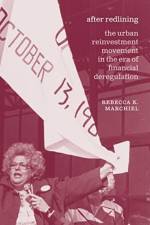
Focusing on Chicago's West Side, After Redlining illuminates how urban activists were able to change banks' behavior to support investment in communities that they had once abandoned.
The frank, funny, and unforgettable autobiography of a living legend of Chicago blues.
Spanning a century, Pushing Cool reveals how the twin deceptions of health and Black affinity for menthol were crafted-and how the industry's disturbingly powerful narrative has endured to this day.
An immersive multigenerational memoir that recounts the hopes, injustices, and triumphs of a Black family fighting for access to the American dream in the twentieth century.
Abonner på vårt nyhetsbrev og få rabatter og inspirasjon til din neste leseopplevelse.
Ved å abonnere godtar du vår personvernerklæring.