







Gjør som tusenvis av andre bokelskere
Abonner på vårt nyhetsbrev og få rabatter og inspirasjon til din neste leseopplevelse.
Ved å abonnere godtar du vår personvernerklæring.Du kan når som helst melde deg av våre nyhetsbrev.

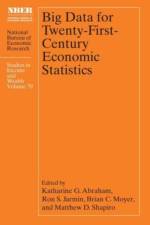
The papers in this volume analyze the deployment of Big Data to solve both existing and novel challenges in economic measurement. The existing infrastructure for the production of key economic statistics relies heavily on data collected through sample surveys and periodic censuses, together with administrative records generated in connection with tax administration. The increasing difficulty of obtaining survey and census responses threatens the viability of existing data collection approaches. The growing availability of new sources of Big Data--such as scanner data on purchases, credit card transaction records, payroll information, and prices of various goods scraped from the websites of online sellers--has changed the data landscape. These new sources of data hold the promise of allowing the statistical agencies to produce more accurate, more disaggregated, and more timely economic data to meet the needs of policymakers and other data users. This volume documents progress made toward that goal and the challenges to be overcome to realize the full potential of Big Data in the production of economic statistics. It describes the deployment of Big Data to solve both existing and novel challenges in economic measurement, and it will be of interest to statistical agency staff, academic researchers, and serious users of economic statistics.
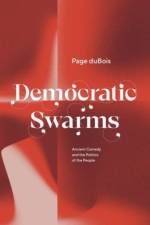
"This book revisits the role of Greek comedy in ancient politics and how it has been overlooked as a political medium by modern theorists and critics. It critiques the neglect that Greek comedy has suffered due to our great affection for tragedy as a model of democracy and offers a remedy. The Greeks loved their comedies as much or even more than their tragedies. The book focuses on the collective aspects of ancient drama, especially comedy, with its swarming choruses that are represented as wielding great if ambivalent power within and beyond the confines of the dramatic setting. DuBois shows how ancient comedy (including, but not limited to, plays by Aristophanes), its laughter, its free speech, its wild swarming animal choruses and rebellious women can be used to establish another model of democracy, one grounded in the collective. DuBois advocates for a broader view that takes into account the resistant communal legacy of comedy, the roar of the demos or the disenfranchised, not just the individual voices of the powerful"--
"The suburbs hold a privileged place in our cultural landscape not just for their wide, manicured lawns and quiet streets, but often for their high-quality schools. These elite enclaves are also historically white, and they have allowed many white Americans to safeguard their privilege by using their kids' public school educations to secure places at top colleges. But nonwhite parents also see the advantages to be had by sending their kids to those excellent suburban schools, and, increasingly, those that can afford to are finding ways to move in, all in hopes of helping their kids get a leg up as they apply to college and prepare for careers. In Getting Ahead, Staying Ahead, Natasha Warikoo takes us into an elite suburban high school in the Northeast she calls Collegiate High, examining the ways that white parents react when Asian American kids start beating their children at the meritocracy game. Asian American kids whose parents have moved into the Collegiate school district are pushed to succeed in the school's top-notch academics, and they often wind up taking spots at the top of the class previously held exclusively by white students. After generations of privilege and success, white parents don't just take this lying down. Instead, they go to the school with complaints that the academic environment has become too rigorous, petitioning the principle to mandate less homework. The academic climate, they declare, is bad for kids' mental health. Above all, they find new ways of gaining advantages, pushing their kids to excel in extracurriculars like sports and theater and diminishing the importance of top academic performance at the school. Even when they are bested, white families in Collegiate work hard to change the rules in their favor so they can still remain the winners in the meritocracy game."--
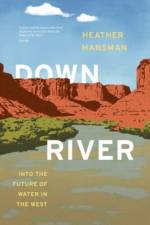
Mixing lyrical accounts of quiet paddling through breathtaking beauty with nights spent camping solo and lively discussions with farmers, city officials, and other people met along the way, Downriver is a foray into the present-and future-of water in the American west.
"If we all agree that our current social-political moment is tenuous and unsustainable (and indeed, that may be the only thing we can agree on right now), then how do markets, governments, and people interact in this next era of capitalist societies? In A Political Economy of Justice, a team of luminary social scientists consider the strained state of our political economy in terms of where it can go from here. "We look squarely at how normative and positive questions about political economy interact with each other," the editors write. "From that beginning, we aspire to chart a way forward to a just economy." Across 14 essays that blister with relevance to our moment as a society and polity, A Political Economy of Justice sketches the boundaries of a new theory of justice: the measures of a just political economy; the role of firms; the roles of institutions and governments. The editors' introduction makes clear that these are no half-effort book chapters from busy luminaries; they are wholly original works born of a set of guiding principles and deeply, communally edited. The result, they hope, is something greater than what is typically achieved by an academic volume"--
"If we all agree that our current social-political moment is tenuous and unsustainable (and indeed, that may be the only thing we can agree on right now), then how do markets, governments, and people interact in this next era of capitalist societies? In A Political Economy of Justice, a team of luminary social scientists consider the strained state of our political economy in terms of where it can go from here. "We look squarely at how normative and positive questions about political economy interact with each other," the editors write. "From that beginning, we aspire to chart a way forward to a just economy." Across 14 essays that blister with relevance to our moment as a society and polity, A Political Economy of Justice sketches the boundaries of a new theory of justice: the measures of a just political economy; the role of firms; the roles of institutions and governments. The editors' introduction makes clear that these are no half-effort book chapters from busy luminaries; they are wholly original works born of a set of guiding principles and deeply, communally edited. The result, they hope, is something greater than what is typically achieved by an academic volume"--
"Through archival work and storytelling synthesis, Music Migration and Imperial New York revises, subverts, and supplements many inherited narratives about experimental music and arts in postwar New York into a sweeping new whole. From the urban street-level via music clubs and arts institutions to the world-making routes of global migration and exchange, this book seeks to redraw the geographies of experimental art and so to reveal the imperial dynamics, as well as profoundly racialized and gendered power relations, that shaped and continue to shape the discourses and practices of modern music in the United States. Beginning with the material conditions of power that structured the cityscape of New York in the early Cold War years (ca. 1957 to 1963), Brigid Cohen's book encompasses a considerably wider range of people and practices than is usual in studies of the music of this period. It looks at a range of artistic practices (concert music, electronic music, jazz, performance art) and actors (Varáese, Mingus, Yoko Ono, and Fluxus founder George Maciunas) as they experimented with new modes of creativity"--
"An authoritative guide to the new economics of our crisis-filled century. The 2008 financial crisis was a seismic event that laid bare how financial institutions' instabilities can have devastating effects on societies and economies. For a generation of economists who have risen to prominence since, the event has defined not only how they view financial instability, but financial markets more broadly. With these economists now representing the vanguard of the field and staffing the world's foremost economic institutions, their work constitutes a new canon of economic thought for the field and public policy. Leveraged brings together these vanguard voices to take stock of what we've learned about the costs and causes of financial fragility. Their message: the origins of financial instability in modern economies run deeper than the dry and technical debates around banking regulation, countercyclical capital buffers, or living wills for financial institutions. Financial crises are not black swans; they're a phenomenon endemic to capitalist economies. Over-optimism, neglected crash risks, or "bad beliefs" about risk and returns more generally, have emerged as an important explanation of recurring credit booms that pose such grave financial stability risks. The essays here mark a new starting point for research in financial economics. They provide a road map and a research agenda for the future. The new economics of debt and credit go to places that were off-limits to neoclassical finance before 2008. Today, as we muddle through the effects of a second financial crisis in this young century, Leveraged offers a sober, evolved approach to the economics we are only just discovering"--
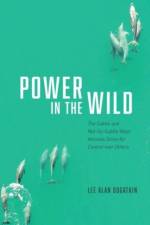
"Hermit crabs might not be the first example that comes to mind when thinking about power in animal relationships, but they are representative of the costs, benefits, assessment, and struggles that animal behaviorist Lee Dugatkin explains in Power in the Wild. Besides learning that researchers can evict all crabs from their shells by tickling their abdomens with paintbrushes, readers discover that attacker crabs can assess both the quality of shells and the ability of competitors to hold onto them- and both attacker and attacked make decisions about how much energy to expend holding onto a good shell. If the attacker looks tough, a target might just give up and flee. That the models for these behaviors mirror game theory for nuclear deterrence is all the more interesting. Dugatkin makes clear that this is not a book about what non-human animal power dynamics can teach us about ourselves, but it is an overview of power in the animal world generally- from the costs of pursuing power, to the role of gender (including a description of a species of fish that changes gender depending on its rank), to new findings on observer animals that watch and assess greater community power relationships without participating in power struggles themselves"--
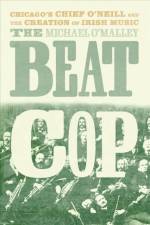
"Francis O'Neill was Chicago's larger-than-life police chief, starting in 1901- and he was an Irish immigrant with an intense interest in his home country's music. In documenting and publishing his understanding of Irish musical folkways, O'Neill became the foremost shaper of what "Irish music" meant. He favored specific rural forms and styles, and as Michael O'Malley shows, he was the "beat cop" -actively using his police powers and skills to acquire knowledge about Irish music and to enforce a nostalgic vision of it"--
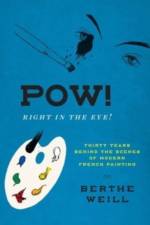
"First published as Berthe Weill, Pan! ... dans l'¶il! ... ou trente ans dans les coulisses de la peinture contemporaine 1900-1930 (Paris: Librairie Lipschutz, 4 place de l'Odâeon. 1933)"--Copyright page.
"Knowing Manchuria places the creation of knowledge about nature at the center of our understanding of one of the world's most contested borderlands. At the intersection of China, Russia, Korea, and Mongolia, Manchuria is known as a site of war and environmental extremes, where projects of political control intersected with projects designed to make sense of Manchuria's multiple environments. Covering over 500,000 square miles (comparable in size to all the land east of the Mississippi) Manchuria's landscapes included temperate rain forests, deserts, prairies, cultivated plains, wetlands, and Siberian taiga. Ruth Rogaski reveals how paleontologists and indigenous shamans, and many others, made sense of the Manchurian frontier. She uncovers how natural knowledge and thus "the nature of Manchuria" itself changed over time, from a sacred "land where the dragon arose" to a global epicenter of contagious disease; from a tragic "wasteland" to an abundant granary that nurtured the hope of a nation"--
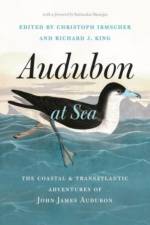
"John James Audubon's paintings of birds are as familiar as they are beautiful. But even among his admirers, many may be surprised to learn that Audubon was a gifted writer. In this one-of-a-kind anthology, Christoph Irmscher and Richard J. King have curated a collection of Audubon's coastal and sea writing, which represent Audubon's most compelling and evocative depictions of the natural world and early nineteenth-century American life. The collection is geographically diverse, bringing to light the variety of people and wildlife Audubon met or observed, pulling from the massive Ornithological Biography (1831-1839) as well as the "Autobiography" and journals. The editors supplement the selections with an instructive introduction and powerful coda, section headnotes, explanatory notes, and an appendix linking Audubon's species to current taxonomy and geographic ranges. The book is lavishly illustrated as well. There is much more in Audubon at Sea than descriptions of birds: we have stories of life aboard ship, of travel in early America and Audubon's work habits, the origins of iconic paintings, and, in the end, the carefully drawn commentary on a flawed and, at best, ambiguous hero."--
"We are far from knowing how and when the present pandemic will end, nor can we know what will be the most enduring stories that writers tell about it. We can, however, turn for guidance to earlier writers who confronted past plagues. Robert Zaretsky spent much of the past year working as a volunteer in a nursing home in south Texas, tending to residents isolated by Covid-19. When not at work, he turned to great novelists, essayists, and historians of the past to help him make sense of everyday, yet often extraordinary experiences at the residence. In this book, Zaretsky adroitly weaves his reflections on the pandemic siege of his nursing home with the experiences of six major writers during their own times of plague: Thucydides, Marcus Aurelius, Michel de Montaigne, Daniel Defoe, Mary Shelley, and Albert Camus. Each of these enduring authors knew mass death firsthand. Thucydides survived the great plague that swept through Athens from 430 to 429 BCE and described it in his History of the Peloponnesian War. Marcus Aurelius was Rome's emperor during the Antonine Plague that raged from 165 to 180 CE. Montaigne was the mayor of Bordeaux when, in 1585, it was battered by the bubonic plague, and several of his greatest essays are marked by that experience. Defoe was, of course, the author of Journal of a Plague Year, which in turn influenced both Mary Shelley in her apocalyptic novel The Last Man and Albert Camus in The Plague. Zaretsky layers accessible discussions of these authors with his own experience of the tragedy that slowly enveloped his Texas nursing home-a tragedy that first took the form of chronic loneliness and then, inevitably, the deaths of many residents whom Zaretsky cared for and whom we come to know. The result is an indelible work of witness and a tribute to the consoling powers of great literature"--
Includes bibliographical references and index.
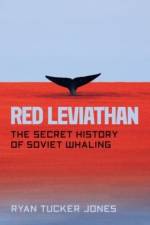
"For whales, the twentieth century was a time of tragedy, with several species nearly completely annihilated by industrial whaleships. The impacts of that history still ripple through today's oceans. In this new account, based on formerly secret Soviet archives and interviews with ex-whalers, environmental historian Ryan Tucker Jones shows the unique role the Soviet Union played in the whales' destruction. As other countries-- especially the United States, Great Britain, Japan, and Norway-- expanded their pursuit of whales to all corners of the globe, Bolshevik leader Josef Stalin determined that the Soviet Union needed to join the hunt. What followed was a spectacularly prodigious, and often wasteful destruction of humpback, fin, sei, right, and sperm whales in the Antarctic and the North Pacific, done in knowing and secret violation of the International Whaling Commission's rules. Soviet recklessness and Cold War intrigue encouraged this destruction, but as Jones shows, there is a more complex history behind this tragedy, one which helps reveal some of the real successes-- and failures-- of the Soviet experiment. Jones also reports, how, ironically, today's cetacean studies benefitted from Soviet whaling, as Russian scientists on whaling vessels made key breakthroughs in understanding whales and whale behavior. Finally, Jones shows the way that the Soviet public began turning against their own country's whaling industry, working in parallel with Western environmentalists such as Greenpeace to help end industrial whaling, not long before the world's whales might have disappeared altogether"--
"Jane Maienschein and Kate MacCord, both researchers at the MBL, begin with a discussion of the meaning of regeneration in biological systems and connect this definition with mythological origins of the concept, historical and philosophical understandings, scientific studies of regenerating organisms, and researchers hopes to inspire similar regeneration in ecological systems and in medicine to heal injuries and fight disease. The authors have worked to make the biological concepts accessible to readers in different related disciplines, creating an essential primer on this important subject"--
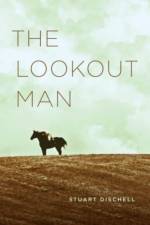
"Sometimes elegiac, sometimes deadly comic, but always vivid and surprising, The Lookout Man embodies the mastery, spirit, and craft that we have come to depend upon in Stuart Dischell's poetry. In a mix of recognizable lyric forms, and set in diverse locales from the middle of the ocean to the summit of Mont Blanc, from America's back yard to the streets of international cities, there is a hesitant, almost encroaching wisdom in The Lookout Man, alternately nostalgic and fierce in nature. The poet doesn't shy away from taking on the big, risky, some would say played-out topics, but the poems never lead us where we expect to go. Rather, Dischell allows messy contradictions to exist in the drama and action of the poems, even while maintaining the beautiful form and music of polished verse. In a wonderful example that closes the book and that typifies Dischell's work, he writes, "I will ask the dogwoods to remind me // "What it means to live along the edges of the woods / To be promiscuous but bear white flowers.""--
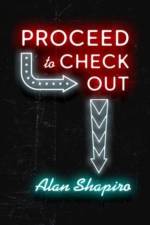
"In this book from award-winning poet Alan Shapiro, the poet, in many ways, is coming to terms not only with his own mortality but also with the finite nature inherent in all human existence. Like the universe, it is full of strange, dark matter in its unflinching look at the unmaking of the self facilitated by our growing reliance on dehumanizing technology, something to which we can all attest in our viral-inflected era of remote living and working, and with so much of our energies focused on screens and keyboards. So much of what we are is being dumped into databases, into collective technological, medical, religious, political, and commercial languages, yet the poet continues to remind us of what's behind all of these technologies: humanity in all its frailties and virtues. Shapiro continues to evolve formally as a poet, as evidenced by the wide variety of prose poems, traditional lyrics, and experimental forms in this book, and although his abiding themes--family, human connection, and relationships--seem to come under a kind of assault in Proceed to Check Out, yet he continues to find the worth and vitality of the human endeavor and the pursuit of art. He remains committed to facing the hypocrisies and denials we'd much prefer to hide, and to exploring the social and psychological ties that bind all of us together in fully lived experience"--
"Peter Balakian's "No Sign," the centerpiece of this book, is the third multi-sequenced long poem in a trilogy begun in "A-Train/Ziggurat/Elegy" (2010) and "Ozone Journal" (2015). The three poems follow a persona whose journey is informed by a series of experiences set in New York and the surrounding Jersey Cliffs from the 1970s to the present. In the mix of a dialogue between two lovers over decades, reminiscent of an eclogue updated via the film Hiroshima Mon Amour (1959), we see an evolution of kaleidoscopic memory-from the haunted history of the Armenian Genocide to the AIDS epidemic, to climate change and the erosion of the planet-that gives the trilogy a unique historical power and psychological depth. The poems in the trilogy are defined by inventive collage-like fragmentation and elliptical, granular language. In the tradition of the American long poem from Walt Whitman and Hart Crane to Charles Olson, Balakian has created something new, what one critic has called, "a panoramic work of contemporary witness...of an unprecedented magnitude of violence and dissociation, as well as transcendent vision." Balakian rounds out this new collection with his signature lyrics and narrative poems, where seemingly minor, personal moments in one life expand into the vastness of our messy, shared history"--
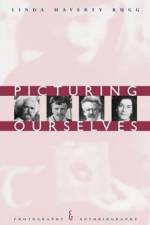
Photography has transformed the way we picture ourselves. This text tracks the impact of photography on the formation of the self-image through the study of four literary autobiographers concerned with the power of photography. All four writers tried to reconcile the image with the self.
A study of Communism and a history of the myth of Communism as perpetuated by its admirers. This book illuminates how the support for Communism and its embodiment, the Soviet Union, became virtually synonymous with "anti-Fascism" and how this strategic arrangement reverberated through the West.
"In Practice, Power, and Forms of Life, philosopher Terry Pinkard interprets Sartre's late work as a fundamental reworking of his earlier work, especially in terms of his understanding of the possibility of communal action as genuinely free, which the French philosopher had previously argued was impossible. Pinkard shows how Sartre figured in contemporary debates about the use of the first-person and how this informed his theory of action. Pinkard reveals how Sartre was led back to Hegel, which itself was spurred on by his newfound interest in Marxism in the 1950s. Pinkard also argues that Sartre took up Heidegger's critique of existentialism, developing a new post-Marxist theory of the way actors exhibit the class relations of their form of life in their actions, and showing how genuine freedom is present only in certain types of "we" relationships. Pinkard argues that Sartre constructed a novel position on freedom that has yet to be adequately taken up and thought through in philosophy and political theory. Through Sartre, Pinkard advances an argument that contributes to the history of philosophy as well as contemporary and future debates on action and freedom"--
A comprehensive and engaging history of a century of Polish immigration and influence in Chicago.
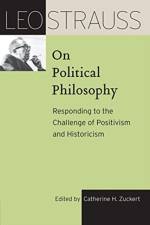
A series of lectures from 1965 in which Strauss laid out his views on political philosophy in the form of an introductory course.
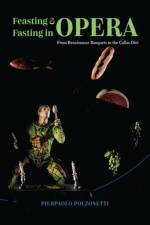
"In this book, opera scholar Pierpaolo Polzonetti shows that the consumption of food and drink is a meaningful, essential component of opera, both on and off the stage. The book explores how convivial culture shaped the birth of opera and its development, especially through the early nineteenth century, when eating at the opera house was still common. Through analyses of convivial scenes in operas from Monteverdi to Verdi and Puccini, the book then shows how food/drink consumption and sharing, or refusal to do so, define the characters' identity and relationships. The first part of the book moves chronologically from around 1480 to the middle of the nineteenth century, when Wagner's operatic reforms put a stop to conviviality at the opera house by banishing refreshments during the performance and mandating a darkened auditorium and absorbed listening. The second part instead focuses on questions of comedy, embodiment, and indulgence in both tragic and comic operas from Monteverdi to Mozart. In the third part, Polzonetti looks at opera characters, their onstage consumption of coffee and chocolate, and what it signifies for their social standing within the opera. The book ends with an illuminating and entertaining discussion of the diet Maria Callas underwent in preparation for her famous performance as Violetta in Verdi's La traviata. Neither food lovers nor opera lovers will want to miss Polzonetti's page-turning and imaginative book"--
Abonner på vårt nyhetsbrev og få rabatter og inspirasjon til din neste leseopplevelse.
Ved å abonnere godtar du vår personvernerklæring.