











Gjør som tusenvis av andre bokelskere
Abonner på vårt nyhetsbrev og få rabatter og inspirasjon til din neste leseopplevelse.
Ved å abonnere godtar du vår personvernerklæring.Du kan når som helst melde deg av våre nyhetsbrev.

Offers a rethinking of Friedrich Nietzsche's crucial notion of the agon. Analyzing an array of primary and secondary sources and synthesizing Nietzsche scholarship, the author shows how the agon, or contest, organized core areas of Nietzsche's philosophy, providing a fresh appreciation of the subtleties of his notorious views about power.
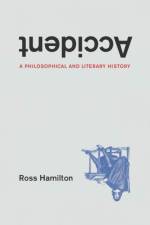
Tells an original history of Western thought from the perspective of Aristotle's remarkably durable categories of accident and substance. This book argues that after the Reformation, the concept of accident began to change places with that of substance: accident became a life-transforming event and effectively a person's essence.
"Few twentieth-century figures have been lionized and vilified in such equal measure as Friedrich Hayek-economist, social theorist, leader of the Austrian school of economics, and champion of classical liberalism. Hayek's erudite arguments in support of individualism and the market economy have attracted a devout following, including many at the levers of power in business and government. Critics, meanwhile, cast Hayek as the intellectual forefather of "neoliberalism" and of all the evils they associate with that pernicious doctrine. In Hayek: A Life, historians of economics Bruce Caldwell and Hansjèorg Klausinger draw on never-before-seen archival and family material to produce an authoritative account of the influential economist's first five decades. This includes portrayals of his early career in Vienna; his relationships in London and Cambridge; his family disputes; and definitive accounts of the creation of The Road to Serfdom and of the founding meeting of the Mont Páelerin Society. A landmark work of history and biography, Hayek: A Life is a major contribution both to our cultural accounting of a towering figure and to intellectual history itself"--
"A Seminar on Plato's Protagoras offers the transcript of Leo Strauss's seminar on Plato's Protagoras edited and introduced by the renowned scholar Robert Bartlett. In this dialogue, Socrates engaged with the sophist Protagoras. In the lectures, Strauss discusses Protagoras and the sophists in relation to the dialogue Gorgias in which Socrates engages with the meaning of rhetoric, all in light of Socrates' pursuit of the question "How ought one to live?" While Strauss regarded himself as a Platonist and published some work on Plato, including his last book, he published little on the dialogues. In these lectures Strauss treats many of the great Platonic and Straussian themes: the difference between the Socratic political science or art and the Sophistic political science or art of Protagoras; the character and teachability of virtue, its relation to knowledge, and the relations among the virtues, courage, justice, moderation, and wisdom; the good and the pleasant; frankness and concealment; the role of myth; and the relation between freedom of thought and freedom of speech"--
In 1239, Pope Gregory IX accused Frederick II, the Holy Roman Emperor, of heresy. The author tracks the course of the book from its origins in 1239 to its most salient episodes in the seventeenth and eighteenth centuries. He also sheds light on the persistence of free thought during a time when the outspoken risked being burned at the stake.
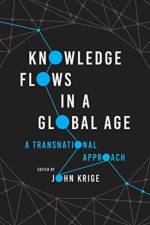
"Viewing knowledge as travelling between sites, rather than flowing like currents through them or diffusing out from them, the contributors to this collection stress the human intention which shapes and drives how knowledge is processed, mobilized, and repurposed to serve differing and uneven interests, constraints, and environments. The chapters consider both what knowledge travels and how it travels across borders of varying permeability. They home in on a vast range of platforms and objects of knowledge, from tangible commodities--like hybrid wheat seeds, penicillin, Robusta coffee, naval weaponry, and high performance computers--to the more conceptual apparatuses of telecommunications, statistics, and food sovereignty. Moreover, this volume decenters the Global North in its focus, tracking how knowledge travels in all directions across the borders of Mexico, India, Portugal, Guinea-Bissau, the Soviet Union, China, Angola, and Palestine and the West Bank, as well as the US and the UK. The variety of kinds of knowledge that are addressed in the chapters brings forth an extraordinary array of state and non-state actors and institutions committed to performing the work needed to move knowledge across national borders"--
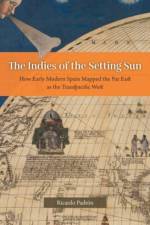
Padrón reveals the evolution of Spain's imagining of the New World as a space in continuity with Asia. Narratives of Europe's westward expansion often tell of how the Americas came to be known as a distinct landmass, separate from Asia and uniquely positioned as new ground ripe for transatlantic colonialism. But this geographic vision of the Americas was not shared by all Europeans. While some imperialists imagined North and Central America as undiscovered land, the Spanish pushed to define the New World as part of a larger and eminently flexible geography that they called las Indias, and that by right, belonged to the Crown of Castile and León. Las Indias included all of the New World as well as East and Southeast Asia, although Spain's understanding of the relationship between the two areas changed as the realities of the Pacific Rim came into sharper focus. At first, the Spanish insisted that North and Central America were an extension of the continent of Asia. Eventually, they came to understand East and Southeast Asia as a transpacific extension of their empire in America called las Indias del poniente, or the Indies of the Setting Sun. The Indies of the Setting Sun charts the Spanish vision of a transpacific imperial expanse, beginning with Balboa's discovery of the South Sea and ending almost a hundred years later with Spain's final push for control of the Pacific. Padrón traces a series of attempts--both cartographic and discursive--to map the space from Mexico to Malacca, revealing the geopolitical imaginations at play in the quest for control of the New World and Asia.
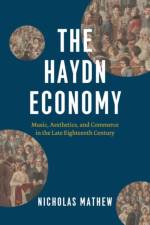
"With this ambitious book, musicologist Nicholas Mathew uses the remarkable career of Joseph Haydn to consider a host of critical issues: how we tell the history of the Enlightenment and Romanticism; the relation of late-eighteenth-century culture to nascent capitalism and European colonialism; and how the modern market and modern aesthetic values were-and remain-inextricably entwined. The Haydn Economy weaves a vibrant material history of Haydn's late career, extending from the sphere of the ancient Esterhâazy court to his frenetic years as an entrepreneur plying between London and Vienna, to his final decade as a venerable musical celebrity, where he witnessed the transformation of his legacy by a new generation of students and acolytes, Beethoven foremost among them. Ultimately, Mathew claims, Haydn's historical trajectory compels us to ask what we might usefully retain from the cultural and political practices of European modernity--whether we can extract and preserve its moral promise from its moral failures. And it demands that we confront the deep economic histories that continue to shape our beliefs about music, sound, and material culture."--
"To Live Peaceably Together is a lively examination of the methods and accomplishments of the American Friends Service Committee (AFSC), a primarily Quaker group that took a unique and influential approach to cultivating cultural acceptance of residential integration in America after World War II. K'Meyer offers a close study of how a social movement develops and wields influence, and how social activists do their work and why. Driven by detailed stories of activists and the obstacles they encountered, the book studies how a mostly white faith-based activist group worked to ally itself to a cause that demanded constant learning and reassessment. K'Meyer details the AFSC members' spiritual and humanist motivations, their understandings of segregation, their visions of integrated neighborhoods, as well as how their strategies changed as they came to better understand structural inequality, and how they were eventually adopted by other groups"--
"This timely collection by a diverse group of humanists challenges undue reverence or skepticism toward quantification and shows how it can be a force for good in our social lives despite its many abuses. The book focuses on quantification in climate, higher education, and health: the role of numerical estimates and targets in explaining and planning for climate change; the quantification of outcomes in teaching and research; and numbers representing health, the effectiveness of medical interventions, and well-being more broadly. One might assume that quantification would be a force for good in climate science, a force for bad in higher education, and a mixed bag in healthcare contexts. The authors complicate those narratives, uncovering, for example, epistemic problems with some core numbers in climate science. But their theme is less the problems revealed by case studies than the methodological issues common to them all. Only by stepping outside quantitative frameworks, they argue, can one appreciate what those frameworks do, how they do it, and whether they do it badly or well"--
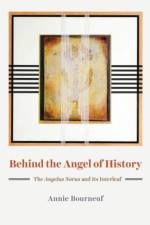
"This short book offers a dazzling new interpretation of Paul Klee's most famous work: his Angelus Novus (1920), which was purchased by Walter Benjamin and became the model for his Angel of History, a figure saturated with Jewish mysticism that he introduces in his "Theses on the Philosophy of History." In 2014 the celebrated American artist R. H. Quaytman made a surprising discovery about Klee's work when she examined it at the Jewish Museum in Israel. She realized that Klee had carefully pasted the Angelus down over another image, a face, leaving just a finger's breadth of it showing. Through forensic science and lots of sleuthing it was determined that face belonged to Martin Luther. Behind the Angel of History tells the story of how Quaytman solved the mystery of who lurks behind Klee's angel. It then plunges into questions about why a face long hidden beneath another picture might matter. The book travels through a tangle of loaded conversations among images-from Klee's Angelus to Benjamin's own drawing of a crucified angel, from Klee's Angelus to Quaytman's own layered panels meditating on its secret"--
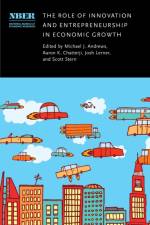
"Innovation and entrepreneurship are ubiquitous today, both as fields of study and as starting points for conversations among experts in government and economic development. But while these areas on continue to attract public and private investments, many measurements of their resulting economic growth-including productivity growth and business dynamism-have remained modest. Why this difference? Because not all business sectors are the same, and the transformative gains of some industries have been offset by stagnation or contraction in others. Accordingly, a nuanced understanding of the economy requires a nuanced understanding of where innovation and entrepreneurship occur and where they matter. Answering these questions allows for strategic public investment and the infrastructure for economic growth.The Role of Innovation and Entrepreneurship in Economic Growth, the latest entry in the NBER conference series, seeks to codify these answers. The editors leverage industry studies to identify specific examples of productivity improvements enabled by innovation and entrepreneurship, including those from new production technologies, increased competition, new organizational forms, and other means. Taken together, the volume illuminates whether the contribution of innovation and entrepreneurship to economic growth is likely to be concentrated, be it selected sectors or more broadly"--
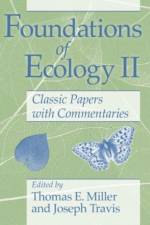
"For three decades, Foundations of Ecology, edited by Leslie A. Real and James H. Brown, has served as an essential primer for graduate students and practicing ecologists, giving them access to the classic papers that laid the foundations of modern ecology alongside commentaries by noted ecologists. Ecology has continued to evolve, and ecologists Thomas E. Miller and Joseph Travis offer here a freshly edited guide for a new generation of researchers. The period of 1970 to 1995 was a time of tremendous change in all areas of this discipline-from an increased rigor for experimental design and analysis and the reevaluation of paradigms to new models for understanding, to theoretical advances. Foundations of Ecology II includes facsimiles of forty-six papers from this period alongside expert commentaries that discuss a total of fifty-three key studies, addressing topics of diversity, predation, complexity, competition, coexistence, extinction, productivity, resources, distribution, and abundance. The result is more than a catalog of historic firsts; this book offers diverse perspectives on the foundational papers that led to today's ecological work"--
Though they yearned for liberation, the French in Normandy nonetheless had to steel themselves for war, knowing that their homes and land and fellow citizens would have to bear the brunt of the attack. In this book, the author turns the usual stories of D-Day around, taking readers across the Channel to view the invasion anew.
A fascinating natural history of an incredibly curious substance. "Preternaturally hardened whale dung" is not the first image that comes to mind when we think of perfume, otherwise a symbol of glamour and allure. But the key ingredient that makes the sophisticated scent linger on the skin is precisely this bizarre digestive by-product--ambergris. Despite being one of the world's most expensive substances (its value is nearly that of gold and has at times in history been triple it), ambergris is also one of the world's least known. But with this unusual and highly alluring book, Christopher Kemp promises to change that by uncovering the unique history of ambergris. A rare secretion produced only by sperm whales, which have a fondness for squid but an inability to digest their beaks, ambergris is expelled at sea and floats on ocean currents for years, slowly transforming, before it sometimes washes ashore looking like a nondescript waxy pebble. It can appear almost anywhere but is found so rarely, it might as well appear nowhere. Kemp's journey begins with an encounter on a New Zealand beach with a giant lump of faux ambergris--determined after much excitement to nothing more exotic than lard--that inspires a comprehensive quest to seek out ambergris and its story. He takes us from the wild, rocky New Zealand coastline to Stewart Island, a remote, windswept island in the southern seas, to Boston and Cape Cod, and back again. Along the way, he tracks down the secretive collectors and traders who populate the clandestine modern-day ambergris trade. Floating Gold is an entertaining and lively history that covers not only these precious gray lumps and those who covet them, but presents a highly informative account of the natural history of whales, squid, ocean ecology, and even a history of the perfume industry. Kemp's obsessive curiosity is infectious, and eager readers will feel as though they have stumbled upon a precious bounty of this intriguing substance.
"What happens to a society--and a planet--when capitalism outgrows democracy? The tensions between democracy and capitalism are longstanding, and they have been laid bare by the social effects of COVID-19. The narrative of "essential workers" has provided thin cover for the fact that society's lowest paid and least empowered continue to work risky jobs that keep our capitalism humming. Democracy has been subjugated by the demands of capitalism. For many, work has become unfair. In Democratize Work, essays from a dozen social scientists--all women--articulate the perils and frustrations of our collective moment, while also framing the current crisis as an opportunity for renewal and transformation. Amid mounting inequalities tied to race, gender, and class-and with huge implications for the ecological fate of the planet--the authors detail how adjustments in how we organize work can lead to sweeping reconciliation. By treating workers as citizens, treating work as something other than an asset, and treating the planet as something to be cared for, a better way is attainable. Building on cross-disciplinary research, Democratize Work is both a rallying cry and an architecture for a sustainable economy that fits the democratic project of our societies"--
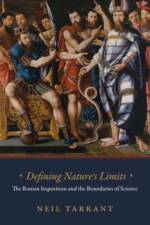
"Neil Tarrant challenges conventional thinking by looking at the longer history of censorship, considering a five-hundred-year continuity of goals and methods stretching from the late eleventh century to well into the sixteenth. Unlike earlier studies, Defining Nature's Limits engages the history of both learned and popular magic. Tarrant explains how the church developed a program that sought to codify what was proper belief through confession, inquisition, and punishment and prosecuted what they considered superstition or heresy that stretched beyond the boundaries of religion. These efforts were continued by the Roman Inquisition, established in 1542. Although it was designed primarily to combat Protestantism, from the outset the new institution investigated both practitioners of "illicit" magic and inquiries into natural philosophy, delegitimizing certain practices and thus shaping the development of early modern science. Describing the dynamics of censorship that continued well into the post-Reformation era, Defining Nature's Limits is revisionist history that will interest scholars of the history science, the history of magic, and the history of the church alike"--
""One only ever asks forgiveness for what is unforgivable." From this contradiction begins Perjury and Pardon, a two-year series of seminars given by Jacques Derrida at the âEcole des Hautes âEtudes en Sciences Sociales in Paris in the late 1990s. In these sessions, Derrida focuses on the philosophical, ethical, juridical, and political stakes of the concept of responsibility. His primary goal is to develop what he calls a "problematic of lying" by studying diverse forms of betrayal: infidelity, denial, false testimony, perjury, unkept promises, desecration, sacrilege, and blasphemy. Although forgiveness is a notion inherited from multiple traditions, the process of forgiveness eludes those traditions, disturbing the categories of knowledge, sense, history, and law that attempt to circumscribe it. Derrida insists on the unconditionality of forgiveness and shows how its complex temporality destabilizes all ideas of presence and even of subjecthood. For Derrida, forgiveness cannot be reduced to repentance, punishment, retribution, or salvation, and it is inseparable from, and haunted by, the notion of perjury. Through close readings of Kant, Kierkegaard, Shakespeare, Plato, Jankelâevitch, Baudelaire, and Kafka, as well as biblical texts, Derrida explores diverse notions of the "evil" or malignancy of lying while developing a complex account of forgiveness across different traditions"--
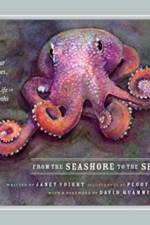
"Field Museum Associate Curator of Zoology and specialist in cephalopod mollusks, Janet Voight, has partnered with Peggy Macnamara, Artist-in-Residence at the Museum, to provide readers with an understanding of the ocean and its animals from the seashore to the seafloor. This book combines rich scientific descriptions of the animals that inhabit rocky and sandy shores, the fragility of coral reefs, and the ingenuity of creatures that must search for food in the ocean's depths, where light and heat are rare. The book includes beautiful watercolors of all these ecosystems and other scenes experienced by Voight during research cruises in the ocean's depths using the submersible Alvin, operated by the Woods Hole Oceanographic Institution. A foreword by award-winning science writer David Quammen situates the importance of Voight's work, including her studies of octopuses. The book also includes a series of artist's notes that allows readers to understand the techniques that Macnamara developed to create the book's stunning visual effects"--
"This timely collection by a diverse group of humanists challenges undue reverence or skepticism toward quantification and shows how it can be a force for good in our social lives despite its many abuses. The book focuses on quantification in climate, higher education, and health: the role of numerical estimates and targets in explaining and planning for climate change; the quantification of outcomes in teaching and research; and numbers representing health, the effectiveness of medical interventions, and well-being more broadly. One might assume that quantification would be a force for good in climate science, a force for bad in higher education, and a mixed bag in healthcare contexts. The authors complicate those narratives, uncovering, for example, epistemic problems with some core numbers in climate science. But their theme is less the problems revealed by case studies than the methodological issues common to them all. Only by stepping outside quantitative frameworks, they argue, can one appreciate what those frameworks do, how they do it, and whether they do it badly or well"--
Abonner på vårt nyhetsbrev og få rabatter og inspirasjon til din neste leseopplevelse.
Ved å abonnere godtar du vår personvernerklæring.