















Gjør som tusenvis av andre bokelskere
Abonner på vårt nyhetsbrev og få rabatter og inspirasjon til din neste leseopplevelse.
Ved å abonnere godtar du vår personvernerklæring.Du kan når som helst melde deg av våre nyhetsbrev.

Bringing together cultural history, visual studies, and media archaeology, Bruno considers the interrelations of projection, atmosphere, and environment. Projection has long been transforming space, from shadow plays to camera obscuras and magic lantern shows. Our fascination with projection is alive on the walls of museums and galleries and woven into our daily lives. Giuliana Bruno explores the histories of projection and atmosphere in visual culture and their continued importance to contemporary artists who are reinventing the projective imagination with atmospheric thinking and the use of elemental media. To explain our fascination with projection and atmosphere, Bruno traverses psychoanalysis, environmental philosophy, architecture, the history of science, visual art, and moving image culture to see how projective mechanisms and their environments have developed over time. She reveals how atmosphere is formed and mediated, how it can change, and what projection can do to modify a site. In so doing, she gives new life to the alchemic possibilities of transformative projective atmospheres. Showing how their "environmentality" produces sites of exchange and relationality, this book binds art to the ecology of atmosphere.
"International migrants compose more than three percent of the world's population, and internal migrants-those migrating within countries-are more than triple that number. Population migration has long been, and remains today, one of the central demographic shifts shaping the world around us. The world's history--and its health--is shaped and colored by stories of migration patterns, the policies and political events that drive these movements, and narratives of individual migrants. Migration and Health offers the most expansive framework to date for understanding and reckoning with human migration's implications for public health and its determinants. It interrogates this complex relationship by considering not only the welfare of migrants, but also that of the source, destination, and ensuing-generation populations. The result is an elevated, interdisciplinary resource for understanding what is known-and the considerable territory of what is not known--at an intersection that promises to grow in importance and influence as the century unfolds"--
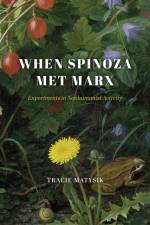
"How did Baruch Spinoza, the seventeenth-century Dutch-Jewish philosopher, become a nineteenth-century German Marxist? It is on its face an unlikely development. Karl Marx was a fiery revolutionary theorist who heralded the imminent demise of capitalism, while Spinoza was a contemplative philosopher who preached rational understanding and voiced skepticism about open rebellion. Further, Spinoza criticized all teleological ideas as anthropomorphic fantasies, while Marxism came to be associated expressly with teleological historical development. Yet socialists of the German nineteenth century were consistently drawn to Spinoza as their philosophical guide. Tracie Matysik shows how the metaphorical meeting of Spinoza and Marx arose out of an intellectual conundrum about the meaning of activity. How is it, exactly, that humans can be fully determined creatures - creatures in nature and governed by causal laws of nature - and also able to change their world? To address this seeming paradox, many revolutionary theorists scrapped the idea of activity as something autonomous humans do when they assert themselves against nature and its causal laws. Thinking with Spinoza, they came to think of activity instead as relating - as the state of relations between humans and between humans and the non-human world. Matysik follows these Spinozist-socialist intellectual experiments in the meaning of activity that unfolded across the nineteenth century, drawing lessons from them that may be meaningful for the environmental-justice issues confronting the contemporary world"--
A biography of composer Sergei Rachmaninoff, published in collaboration with the Bard Music Festival. One of the most popular classical composers of all time, Sergei Rachmaninoff (1873-1943) has often been dismissed by critics as a conservative, nostalgic holdover of the nineteenth century and a composer fundamentally hostile to musical modernism. The original essays collected here show how he was more responsive to aspects of contemporary musical life than is often thought, and how his deeply felt sense of Russianness coexisted with an appreciation of American and European culture. In particular, the essays document his involvement with intellectual and artistic circles in prerevolutionary Moscow and how the form of modernity they promoted shaped his early output. This volume represents one of the first serious explorations of Rachmaninoff's successful career as a composer, pianist, and conductor, first in late Imperial Russia, and then after emigration in both the United States and interwar Europe. Shedding light on some unfamiliar works, especially his three operas and his many songs, the book also includes a substantial number of new documents illustrating Rachmaninoff's celebrity status in America.
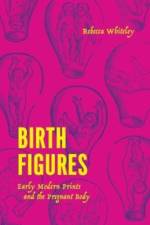
"The first full study of "birth figures," a set of illustrations which were widely reproduced in early modern books on childbirth and midwifery. Birth figures are printed images of the pregnant uterus, always shown in series, that depict the variety of ways in which a fetus can present for birth. Historian Rebecca Whiteley coined the term and here offers the first systematic analysis of the images' creation, use, and impact. Whiteley reveals their origins in ancient medicine and explores their inclusion in many medieval gynecological manuscripts, focusing on their explosion in printed midwifery and surgical books from the mid-sixteenth to the mid-eighteenth century in Western Europe. During this period, birth figures formed a key part of the visual culture of medicine and midwifery and were widely produced. They reflected and shaped how the pregnant body was known and treated. And by providing crucial bodily knowledge to midwives and surgeons, birth figures were also deeply entangled with wider cultural preoccupations with generation and creativity, female power and agency, knowledge and its dissemination, and even the condition of the human in the universe. Birth Figures studies how different kinds of people understood childbirth and engaged with midwifery manuals, from learned physicians to midwives to illiterate listeners. Rich and detailed, this vital history reveals the importance of birth figures in how midwifery was practiced and in how people, both medical professionals and lay readers, envisioned and understood the mysterious state of pregnancy. "--
"This remarkable volume brings together texts that reveal a unique perspective on Foucault's work on the interrelated topics of madness, language, and literature in the second half of the 1960s. Not only do these texts develop analyses and concepts that cannot be found anywhere else in Foucault's oeuvre, but they also show that Foucault's relation to structuralism in those years was far more complex and rich than he himself was ready to acknowledge. They show, more precisely, that between The Order of Things and The Archaeology of Knowledge, and specifically in relation to madness, literature, and literary criticism, Foucault turned to structuralism not only to challenge the central role attributed to the human subject, but also to analyze language and human experience as in a way detached from the historical conditions of their emergence and production. Madness, Language, Literature is organized around three main issues: the status and place of the madman in our societies; the relationship between madness, language, and literature in Baroque theater, the theater of cruelty by Antonin Artaud, and the work of Raymond Roussel; and the evolution of literary criticism in the 1960s. A study of the "absence of a work" in Balzac and of the relationship between desire and knowledge in Flaubert completes this ensemble, presenting a side of Foucault somewhat different from the one we know from the texts he published during this time"--
"In the seventeenth century some of the most advanced painting in Europe was produced in the Netherlands. Rembrandt dominated the radical progress of painting in Amsterdam, and Vermeer did so in Delft. Frans Hals led the vanguard in Haarlem where he painted some of the most animated, individualized portraits of the era, or of any era, for that matter. Now, Steven Nadler has produced the first biography of this elusive Dutch artist to be published in many years. Hals left behind no letters or other personal papers, though luckily a wealth of other sources offer details of his life and personality. Nadler has fleshed out Hals's biography by casting it against the drama of Holland's revolution against Spanish rule, the acute struggles between Protestantism and Catholicism in the Low Countries, and the rise of Holland as a colonial power and center of industry and commerce. The result is an authoritative picture of Hals and life in his studio and a robust work of seventeenth-century social and cultural history. Nadler serves up the sights, smells, and sounds of life in Haarlem. He takes us into cloth factories, taverns, busy studios, and bustling markets. He takes us behind the scenes of the picture trade. He leads us along the newly invented shorelines where weavers laid out large, billowing lengths of cloth to bleach in the sun. He takes us into new Protestant churches and into old Catholic ones. We witness the bloody politics of the long Reformation and the 1635 plague that devastated the Dutch Republic. What emerges is a deftly written story of a complex artist and the tumultuous world he inhabited. Accented with images of life in seventeenth-century Holland and a color gallery of works by Hals and his peers, The Portraitist is a work of great charm and importance and will stand as the first full biography of one of Europe's most important artists for many years"--
"Lateness and Longing explores the ongoing nostalgia and cultural longing for traditional photography--the kind that captures a fleeting moment in somebody's life in emulsion and lives on long after that person is gone. With digital innovations, many scholars are apt to declare traditional photography "dead," not just in terms of the documentary and emotional functions it has served but in its materiality as well. But the analog has never gone away, Baker argues, rooted as it is in our understanding of time, history, home, mortality. This book examines the renewed curiosity about the material photograph through the work of four contemporary artists, all women: Tacita Dean, Moyra Davey, Zoe Leonard, and Sharon Lockhart. Baker draws on their practices to build a meditation on photography and its kin as aesthetic instruments for reflection, loss, nostalgia, desire, history, and "lateness.""--
A collection of twenty-three studies that explore the latest developments in the analysis of income and wealth distribution and mobility. Economic research is increasingly focused on inequality in the distribution of personal resources and outcomes. One aspect of inequality is mobility: are individuals locked into their respective places in this distribution? To what extent do circumstances change, either over the lifecycle or across generations? Research not only measures inequality and mobility, but also analyzes the historical, economic, and social determinants of these outcomes and the effect of public policies. This volume explores the latest developments in the analysis of income and wealth distribution and mobility. The collection of twenty-three studies is divided into five sections. The first examines observed patterns of income inequality and shifts in the distribution of earnings and in other factors that contribute to it. The next examines wealth inequality, including a substantial discussion of the difficulties of defining and measuring wealth. The third section presents new evidence on the intergenerational transmission of inequality and the mechanisms that underlie it. The next section considers the impact of various policy interventions that are directed at reducing inequality. The final section addresses the challenges of combining household-level data, potentially from multiple sources such as surveys and administrative records, and aggregate data to study inequality, and explores ways to make survey data more comparable with national income accounts data.
"When Darwin returned to Britain from the Beagle voyage in 1836, the most talked-about scientific books were the Bridgewater Treatises. This series of eight books was funded by a bequest of the last Earl of Bridgewater, and they were authored by leading men of science, appointed by the President of the Royal Society, and intended to explore "the power, wisdom, and goodness of God, as manifested in the creation." Securing public attention beyond all expectations, the series gave Darwin's generation a range of approaches to one of the great questions of the age: how to incorporate the newly emerging disciplinary sciences into Britain's overwhelmingly Christian culture. Drawing on a wealth of archival and published sources, including many unexplored by historians, Jonathan R. Topham examines how and to what extent the series contributed to a sense of congruence between Christianity and the sciences in the generation before the infamous Victorian "conflict between science and religion." He does so by drawing on the distinctive insights of book history, using close attention to the production, circulation, and use of the books to open up new perspectives not only on aspects of early Victorian science but also on the whole subject of science and religion. Its innovative focus on practices of authorship, publishing, and reading helps us to understand the everyday considerations and activities through which the religious culture of early Victorian science was fashioned. And in doing so, Reading the Book of Nature powerfully reimagines the world in which a young Charles Darwin learned how to think about the implications of his theory"--
"An accessible, illustrated introduction to statistics and sports analytics for fanatics and newcomers alike. On February 27, 2013, NBA shooter Steph Curry wowed crowds when he sunk eleven out of thirteen three-pointers-only seven other players, including the likes of Michael Jordan and Kobe Bryant, had scored more in the history of games at Madison Square Garden. Four years later, the University of Connecticut women's basketball team won their 100th straight game, defeating South Carolina 66-55. And in 2010, one sports forecaster-an octopus named Paul-correctly predicted the outcome of all of Germany's matches in the World Cup. These are surprising events. Are they truly improbable? Mathematician and sports analytics expert Tim Chartier shows readers how to answer that question-condensing complex data modeling down to coin tosses and dice throws to give readers an introduction to statistics and a new way to enjoy sporting events. Chartier leads readers through modeling experiments with accessible tools and few formulas to develop an intuitive sense of the improbable. For example, to see how likely you are to beat Curry's three-pointer feat, take into account Curry's 45.3 percent three-point shooting average in 2012-2013. Take a coin and assume heads is making the shot (slightly better than Curry at a 50 percent chance). Can you imagine getting heads eleven out of thirteen times? We soon get a sense of the improbability of Curry's feat. The book includes exercises for sports experimentation and engaging illustrations in comic book-style by illustrator Ansley Earle. The result allows all readers to predict and examine the likelihood of sports events for those who have never encountered formal statistics, who don't have the programming skills to run simulations, and may have never heard of sports analytics, but enjoy watching sports"--
"The Doctor who wasn't there traces the long arc of enthusiasm for-and skepticism of-electronic media for health and medicine, showing that the same challenges now facing telehealth and the use of electronic medical records can be found in the medical reception of the telephone in the late nineteenth century and the radio, television, and mainframe computer across the twentieth. Wielding a rich trove of archival materials, physician/historian Jeremy Greene explores the role that new electronic media play, for better and for worse, in the past, present, and future of American health. Today's telehealth devices are far more sophisticated than the hook-and-ringer telephones that became widespread by the 1920s, the FM radio technologies used to broadcast health information in the 1940s, the televisions used to pioneer telemedical evaluation in the 1950s, or the first full-scale attempts to establish electronic medical records in the mid-1960s. But the ethical, economic, and logistical concerns they raise are prefigured in these earlier episodes, as are the gaps between what was promised and what was delivered. Each of these platforms produced subtle transformations in health and healthcare that we have learned to forget, displaced by promises of ever newer communications platforms to take their place. When is telemedicine good enough, and when is it not? And how do the uses of telemedical technologies shape patient relationships with health care providers? Who benefits and who suffers when new technologies are adopted? And what do these communication technologies, whose promised revolutions have all failed, bring to our understanding of health and disease?"--
"A holistic reading of Nietzsche's distinctive thought beyond the "death of God." In Nietzsche's Kind of Philosophy, Richard Schacht provides a holistic interpretation of Friedrich Nietzsche's distinctive thinking, developed over decades of engagement with the philosopher's work. For Schacht, Nietzsche's overarching project is to envision a "philosophy of the future" attuned to new challenges facing Western humanity after the "death of God," when monotheism no longer anchors our understanding of ourselves and our world. Schacht traces the developmental arc of Nietzsche's philosophical efforts across Human, All Too Human, Daybreak, Joyful Knowing (The Gay Science), Thus Spoke Zarathustra, Beyond Good and Evil, and On the Genealogy of Morality. He then shows how familiar labels for Nietzsche-nihilist, existentialist, individualist, free spirit, and naturalist-prove insufficient individually but fruitful if refined and taken together. The result is an expansive account of Nietzsche's kind of philosophy"--
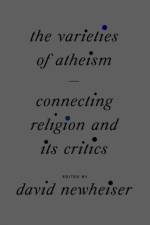
"The conversation around atheism is still dominated by the strident and combative voices of figures like Sam Harris, Richard Dawkins, Daniel Dennett, and the now-deceased Christopher Hitchens. In bestselling books, prominent columns, and widely viewed lectures, these commentators have claimed that religion is irrational, unscientific, morally corrosive, and something that must be actively opposed. Those who have tried to defend religion against these criticisms have tended to reproduce the idea that religion and atheism are competing theories about belief in divine beings. But defining atheism narrowly in terms of belief makes it into an abstraction that misrepresents atheism as it actually exists. There are other ways to imagine atheism, and The Varieties of Atheism performs that imaginative work. This collection offers an expansive account of atheism's diversity, exploring what it has meant in the past and what it can mean in the future. The essays highlight the contingency and ambivalence of basic categories like "atheism" and "religion," which are marked by the history of post-Enlightenment debates over Judaism and Christianity. The essays in this collection trace key themes and figures in these debates in conversation with early modern philosophy, medieval theology, and contemporary theory. By clarifying the complex lines of affinity and tension between particular atheists and particular religious traditions, The Varieties of Atheism opens new avenues for the study of secularity"--
"The conversation around atheism is still dominated by the strident and combative voices of figures like Sam Harris, Richard Dawkins, Daniel Dennett, and the now-deceased Christopher Hitchens. In bestselling books, prominent columns, and widely viewed lectures, these commentators have claimed that religion is irrational, unscientific, morally corrosive, and something that must be actively opposed. Those who have tried to defend religion against these criticisms have tended to reproduce the idea that religion and atheism are competing theories about belief in divine beings. But defining atheism narrowly in terms of belief makes it into an abstraction that misrepresents atheism as it actually exists. There are other ways to imagine atheism, and The Varieties of Atheism performs that imaginative work. This collection offers an expansive account of atheism's diversity, exploring what it has meant in the past and what it can mean in the future. The essays highlight the contingency and ambivalence of basic categories like "atheism" and "religion," which are marked by the history of post-Enlightenment debates over Judaism and Christianity. The essays in this collection trace key themes and figures in these debates in conversation with early modern philosophy, medieval theology, and contemporary theory. By clarifying the complex lines of affinity and tension between particular atheists and particular religious traditions, The Varieties of Atheism opens new avenues for the study of secularity"--
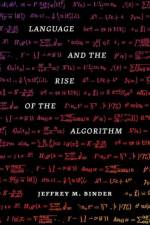
"A wide-ranging history of the intellectual developments that produced the modern idea of the algorithm. Bringing together the histories of mathematics, computer science, and linguistic thought, Language and the Rise of the Algorithm reveals how recent developments in artificial intelligence are reopening an issue that troubled mathematicians long before the computer age. How do you draw the line between computational rules and the complexities of making systems comprehensible to people? Here Jeffrey M. Binder offers a compelling tour of four visions of universal computation that addressed this issue in very different ways: G. W. Leibniz's calculus ratiocinator; a universal algebra scheme Nicolas de Condorcet designed during the French Revolution; George Boole's nineteenth-century logic system; and the early programming language ALGOL, whose name is short for algorithmic language. These episodes show that symbolic computation has repeatedly become entangled in debates about the nature of communication. To what extent can meaning be controlled by individuals, like the values of a and b in algebra, and to what extent is meaning inevitably social? By attending to this long-neglected question, we come to see that the modern idea of the algorithm is implicated in a long history of attempts to maintain a disciplinary boundary separating technical knowledge from the languages people speak day to day. Machine learning, in its increasing dependence on words, now places this boundary in jeopardy, making its stakes all the more urgent to understand. The idea of the algorithm is a levee holding back the social complexity of language, and it is about to break. This book is about the flood that inspired its construction. "--
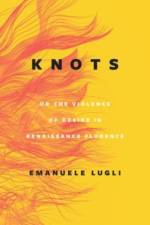
"An interdisciplinary study of hair through the art, philosophy, and science of fifteenth-century Florence. In this innovative cultural history, hair is the portal through which Emanuele Lugli accesses the cultural production of Lorenzo il Magnifico's Florence. Lugli reflects on the ways writers, doctors, and artists expressed religious prejudices, health beliefs, and gender and class subjugation through alluring works of art, in medical and political writings, and in poetry. He considers what may have compelled Sandro Botticelli, the young Leonardo da Vinci, and dozens of their contemporaries to obsess over braids, knots, and hairdos by examining their engagement with scientific, philosophical, and theological practices. By studying hundreds of fifteenth-century documents that engage with hair, Lugli foregrounds hair's association to death and gathers insights about human life at a time when Renaissance thinkers redefined what it meant to be human and to be alive. Lugli uncovers overlooked perceptions of hair when it came to be identified as a potential vector for liberating culture, and he corrects a centuries-old prejudice that sees hair as a trivial subject, relegated to passing fashion or the decorative. He shows hair, instead, to be at the heart of Florentine culture, whose inherent violence Lugli reveals by prompting questions about the entanglement of politics and desire. "--
"International migrants compose more than three percent of the world's population, and internal migrants-those migrating within countries-are more than triple that number. Population migration has long been, and remains today, one of the central demographic shifts shaping the world around us. The world's history--and its health--is shaped and colored by stories of migration patterns, the policies and political events that drive these movements, and narratives of individual migrants. Migration and Health offers the most expansive framework to date for understanding and reckoning with human migration's implications for public health and its determinants. It interrogates this complex relationship by considering not only the welfare of migrants, but also that of the source, destination, and ensuing-generation populations. The result is an elevated, interdisciplinary resource for understanding what is known-and the considerable territory of what is not known--at an intersection that promises to grow in importance and influence as the century unfolds"--
Examines how and why religion matters in the history of modern American art. Andy Warhol is one of the best-known American artists of the twentieth century. He was also an observant Catholic who carried a rosary, went to mass regularly, kept a Bible by his bedside, and depicted religious subjects throughout his career. Warhol was a spiritual modern: a modern artist who appropriated religious images, beliefs, and practices to create a distinctive style of American art. Spiritual Moderns centers on four American artists who were both modern and religious. Joseph Cornell, who showed with the Surrealists, was a member of the Church of Christ, Scientist. Mark Tobey created pioneering works of Abstract Expressionism and was a follower of the Bahá'í Faith. Agnes Pelton was a Symbolist painter who embraced metaphysical movements including New Thought, Theosophy, and Agni Yoga. And Warhol, a leading figure in Pop art, was a lifelong Catholic. Working with biographical materials, social history, affect theory, and the tools of art history, Doss traces the linked subjects of art and religion and proposes a revised interpretation of American modernism.
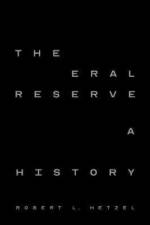
"A new and critical history of one of America's most important institutions In The Federal Reserve System: A New History, Robert Hetzel draws on a 43-year career as an economist in the central bank to trace the influence of the Fed on the American economy. Hetzel compares period in which the Fed stabilized the economy and period in which it destabilized the the economy. He draws lessons about what monetary rule is stabilizing. Recast through this lens and enriched with archival materials, Hetzel's sweeping history offers new understanding of the bank's watershed moments since 1913. They include critical accounts of the Great Depression, the Great Inflation, and the Great Recession, all of which were avoidable. The Federal Reserve System: A New History arrives as a critical history for a critical moment. It promises to recast our understanding of the central bank in its second century"--
"This is a book about Vienna in 1815, at the close of the Napoleonic era and the Napoleonic wars, and on the verge of the Congress of Vienna, which would redraw national boundaries and reconfigure the European community for a full century. Beethoven and Schubert were both citizens of Vienna at this time, Beethoven half-way through his composing career and socially withdrawn because of his almost total deafness; Schubert not yet twenty years-old and in the middle of one of his most prolific periods, with 140 songs and a symphony composed over the course of 1815 alone. Seemingly oblivious to the momentous events and deeply immersed in their own world, they each seemed to be composing 'against' something, in Richard Kramer's compelling reading: 'against the Enlightenment' in Beethoven's case, for whom only a sense of stripped-down nostalgia remained of the optimistic spirit of the 1790s; 'against Beethoven' in Schubert's case, who felt the looming presence of the older composer even as his own musical imagination bloomed. In taking his readers through a carefully chosen selection of works dating from 1815-songs, string quartets, piano sonatas, and more-Kramer insightfully unearths previously undetected resonances and associations and illuminates the two composers' 'lonely and singular journeys' through the 'rich solitude of their music'"--
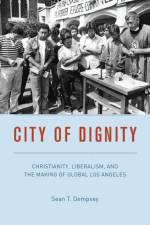
City of Dignity illuminates how liberal Protestants quietly, yet indelibly, shaped the progressive ethics of postwar Los Angeles. Contemporary Los Angeles is commonly seen as an American bulwark of progressive secular politics, a place that values immigration, equity, diversity, and human rights. But what accounts for the city's embrace of such staunchly liberal values, which are more hotly contested in other parts of the country? The answer, Sean Dempsey reveals, lies not with those frequent targets of credit and blame--Democrats in Hollywood--but instead with liberal Protestants and other steadfast religious organizations of the postwar era. As the Religious Right movement emerged in the 1970s, progressive religious activists quietly began promoting an ethical vision that made waves worldwide but saw the largest impact in its place of origin: metropolitan Los Angeles. At the center of this vision lay the concept of human dignity--entwining the integral importance of political and expressive freedom with the moral sanctity of the human condition--which suffused all of the political values that arose from it, whether tolerance, diversity, or equality of opportunity. The work of these religious organizations birthed such phenomena as the Sanctuary Movement--which provided safe haven for refugees fleeing conflict-torn Central America--and advocacy for the homeless, both of which became increasingly fraught issues amid the rising tides of neoliberalism and conservatism. City of Dignity explores how these interwoven spiritual and theological strands found common ground--and made common impacts--in the humanitarian ecosystem of one of America's largest and most dynamic metro areas.
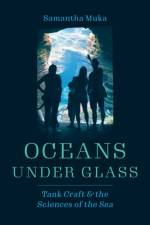
"A welcome dive into the world of aquarium craft that offers much-needed knowledge about undersea environments. Atlantic coral is rapidly disappearing in the wild. To save the species, they will have to be reproduced quickly in captivity, and so for the last decade conservationists have been at work trying to preserve their lingering numbers and figure out how to rebuild once-thriving coral reefs from a few survivors. Captive environments, built in dedicated aquariums, offer some hope for these corals. This book examines these specialized tanks, charting the development of tank craft throughout the twentieth century to better understand how aquarium modeling has enhanced our knowledge of the marine environment. Aquariums are essential to the way we understand the ocean. Used to investigate an array of scientific questions, from animal behavior to cancer research and climate change, they are a crucial factor in the fight to mitigate the climate disaster already threatening our seas. To understand the historical development of this scientific tool and the groups that have contributed to our knowledge about the ocean, Samantha Muka takes up specialty systems-including photographic aquariums, kriesel tanks (for jellyfish), and hatching systems-to examine the creation of ocean simulations and their effect on our interactions with underwater life. Lively and engaging, Oceans under Glass offers a fresh history about how the aquarium has been used in modern marine biology and how integral it is to knowing the marine world"--
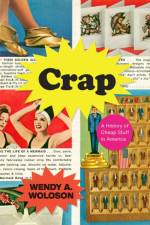
Crap. We all have it. Filling drawers. Overflowing bins and baskets. Proudly displayed or stuffed in boxes in basements and garages. Big and small. Metal, fabric, and a whole lot of plastic. So much crap. Abundant cheap stuff is about as American as it gets. And it turns out these seemingly unimportant consumer goods offer unique insights into ourselves--our values and our desires. In Crap: A History of Cheap Stuff in America, Wendy A. Woloson takes seriously the history of objects that are often cynically-made and easy to dismiss: things not made to last; things we don't really need; things we often don't even really want. Woloson does not mock these ordinary, everyday possessions but seeks to understand them as a way to understand aspects of ourselves, socially, culturally, and economically: Why do we--as individuals and as a culture--possess these things? Where do they come from? Why do we want them? And what is the true cost of owning them? Woloson tells the history of crap from the late eighteenth century up through today, exploring its many categories: gadgets, knickknacks, novelty goods, mass-produced collectibles, giftware, variety store merchandise. As Woloson shows, not all crap is crappy in the same way--bric-a-brac is crappy in a different way from, say, advertising giveaways, which are differently crappy from commemorative plates. Taking on the full brilliant and depressing array of crappy material goods, the book explores the overlooked corners of the American market and mindset, revealing the complexity of our relationship with commodity culture over time. By studying crap rather than finely made material objects, Woloson shows us a new way to truly understand ourselves, our national character, and our collective psyche. For all its problems, and despite its disposability, our crap is us.
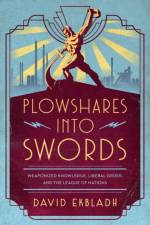
"David Ekbladh focuses on the economic analyses pioneered by the League of Nations in Geneva and how, after the League's demise, they came to be developed at the Institute for Advanced Study in Princeton. In an era when information did not flow as freely as today, who specifically abetted this move and why? This transplantation came amid a growing consciousness about the global economy and its centrality to worldwide political stability. Information and analysis were becoming crucial currencies in the creation and sustenance of a modern, liberal global order, requiring the cooperation of people across an interconnected international society that the United States sought increasingly to shape"--
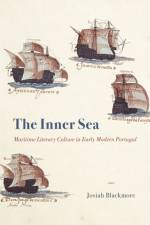
"This book is about how the sea and seafaring shaped literary creativity in early modern Portugal during the most active, consequential decades of European overseas expansion. Josiah Blackmore understands "literary" in a broad sense, including a diverse archive spanning genres and disciplines: epic and lyric poetry, historical chronicles, nautical documents, ship logs and diaries, shipwreck narratives, geographic descriptions, and reference to texts of other seafaring powers and literatures of the period (including works from Spain, Italy, Galician-Portugal, and Catalan). The centerpiece of the book, the great Luâis de Camäoes, is arguably the sea poet par excellence of early modernity, not only of Portugal and Iberia, but of Europe more generally. Blackmore shows that the sea and nautical travel for Camäoes and his contemporaries were not merely historical realities in early modern Iberia during the age of discovery; they were also principles of cultural creativity that connect to larger critical debates in the widening field of the maritime humanities. For Blackmore, the sea, ships, and nautical travel unfold into a variety of empirical, metaphoric, and symbolic dimensions, and the oceans across the globe that were traversed in the fifteenth and sixteenth centuries correspond to oceans within the literary self, vast reaches and depths of emotion, consciousness, memory, and identity. Thus the sea and seafaring were not merely themes in textual culture but were also principles that created individual and collective subjects according to oceanic modes of perception, nautical modes of thought: a "maritime subject" that was one of the consequences of the sustained practice of navigation and imaginative engagements with the sea throughout the period. Blackmore concludes with a discussion of depth and sinking in shipwreck narratives as metaphoric and discursive dimensions of the maritime subject, foreshadowing empire's decline. The book will be welcomed by students of Iberian literature and culture, the maritime humanities, and those interested in maritime poetics beyond early modernity"--
"At the dawn of this century, it seemed that while the culture wars around religion might continue, battles over history education were winding down. Jonathan Zimmerman forecast as much in his 2002 book, Whose America? Twenty years later, Zimmerman has reconsidered: arguments over what American history is, what it means, and how it is taught have literally and figuratively exploded, with special force since the arrival of the 1619 Project. These have encompassed conflicts over Confederate monuments; the naming of buildings and institutions; the definition of patriotism; and much more. In this substantially expanded new edition, Zimmerman meditates on the history of the culture wars in the classroom-and on what our inability to find common ground might mean for our future"--
"Jessa Crispin melds personal narrative with history and current events to explore the dark side of Kansas, where she grew up. She meditates on why the American Midwest still enjoys an esteemed position in the US's imagination about itself, why its foundational myths are the myths of what it means to be "American." And while we may romanticize aspects of Midwestern life-the nuclear family, the pioneering attitude, the small town friendliness-the realities, she argues, are harsher: so-called Midwestern values cover up a long history of oppression and control over Native Americans, over women, over the economically disadvantaged. Her subjects range from The Wizard of Oz to the White race, from chastity to rape, from radical militias and recent terrorist plots to Utopian communities; from the murders of the Clutter family made famous in Truman Capote's In Cold Blood, to her own horror when a beloved art teacher inexplicably one night slaughtered his wife and three daughters and killed himself. Her pursuit takes her back to the Civil War, John Brown, and the immigration of German religious communities to the Midwest; she then ferries across the Atlantic Ocean to Amsterdam to visit a lay seminary for women where, since the Reformation, they have found sanctuary from violence and domestic abuse. Yet, despite the darkness, which is Crispin's stock in trade, there is a kind of bleak redemption at the heart of this project, the insight that, no matter where you go, no matter how far from home you roam, the place you came from is always with you, "like it or not.""--
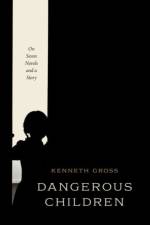
"Ranging from Victorian to modern examples-Lewis Carroll's Alice in Wonderland, Carlo Collodi's Pinocchio, Henry James's What Maisie Knew, J. M. Barrie's Peter and Wendy, Franz Kafka's "The Cares of a Family Man," Richard Hughes's A High Wind in Jamaica, Elizabeth Bowen's The Death of the Heart, and Vladimir Nabokov's Lolita-Kenneth Gross's book explores stories that center around the figure of a strange and dangerous child. Whether written for adults or child readers, or both at once, these stories all show us odd, even frightening visions of innocence. We see these children's uncanny powers of speech, knowledge, and play, as well as their nonsense and violence. And, in the tales, these child-lives keep changing shape. These are children who are often endangered as much as dangerous, haunted as well as haunting. In looking at these narratives, Gross traces the reader's thrill of companionship with these unpredictable, often solitary creatures-children curious about the adult world, who while not accommodating its rules, fall into ever more troubling conversations with adult fears and desires. This book asks how such imaginary children, often depicted as objects of wonder, challenge our ways of seeing the world, our measures of innocence and experience, and our understanding of time and memory"--
From The Horse That, Trotting The horse that, trotting with open heartAgainst the wind, achieves bend and flow>But they never do, until too late, Bend properly and time spreads from>Of their spines, circles their tossing necks, Falls from their teeth like rejected oats, >This is where we come in, where the dropOf time congeals the air and someone >Tricks of the Light explores the often fraught relationships between domestic animals and humans through mythological figurations, vibrant thought, and late-modern lyrics that seem to test their own boundaries. Vicki Hearne (1946-2001), best known and celebrated today as a writer of strikingly original poetry and prose, was a capable dog and horse trainer, and sometimes controversial animal advocate. This definitive collection of Hearne's poetry spans the entirety of her illustrious career, from her first book, Nervous Horses (1980), to never-before-published poems composed on her deathbed. But no matter the source, each of her meditative, metaphysical lyrics possesses that rare combination of philosophical speculation, practical knowledge of animals, and an unusually elegant style unlike that of any other poet writing today. Before her untimely death, Hearne entrusted the manuscript to distinguished poet, scholar, and long-time friend John Hollander, whose introduction provides both critical and personal insight into the poet's magnum opus. Tricks of the Light--acute, vibrant, and deeply informed--is a sensuous reckoning of the connection between humans and the natural world. Praise for The Parts of Light "Hearne . . . strives to capture exactly what she knows she can't--the intense immediacy of animal consciousness, a consciousness free of the moral vagaries and intellectual preoccupations that pockmark human experience. Her style, smooth in some places, choppy in others, reflects both the wholeness of animal presence and the jarring, fragmentary nature of human reason and reflection. Hearne's poems demand participation, refuse passive enjoyment; she dares the reader to stay in the saddle."--Publishers Weekly
Abonner på vårt nyhetsbrev og få rabatter og inspirasjon til din neste leseopplevelse.
Ved å abonnere godtar du vår personvernerklæring.