













Gjør som tusenvis av andre bokelskere
Abonner på vårt nyhetsbrev og få rabatter og inspirasjon til din neste leseopplevelse.
Ved å abonnere godtar du vår personvernerklæring.Du kan når som helst melde deg av våre nyhetsbrev.

"While the sabermetrics revolution in baseball is now fully institutionalized, other sports have embraced data analysis more slowly-especially American football. Yet thirty-five years ago, Bob Carroll, John Thorn, and Pete Palmer were laying the groundwork for the transformation of the sport when they wrote The Hidden Game of Football. Readers in 1988 found this book to be staggering, with myths and misconceptions 'left strewn in the wake of their analysis like the Columbia University secondary after a running play' (Allen Barra). Today, with statistical analysis becoming more widely accepted across the NFL, the book seems prescient and influential--as Aaron Schatz notes in his new foreword"--
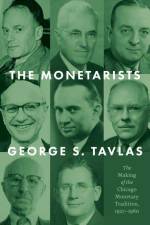
"An essential origin story of modern society's most influential economic doctrine. The Chicago School of economic thought has been widely generalized-and caricaturized-in contemporary debate. What is often portrayed as a monolithic obsession with markets is, in fact, a nuanced set of economic theories born of decades of research and debate. The Monetarists is a deeply researched history of the monetary policies-and personalities-that codified the Chicago School of monetary thought from the 1930s through the 1960s. These policies can be characterized broadly as monetarism: the belief that prices and interest rates can be kept stable by controlling the amount of money in circulation. As economist George Tavlas makes clear, these ideas were more than just the legacy of Milton Friedman; they were a theory tradition brought forth by a crucible of minds and debates along the Midway. Through unprecedented mining of archival material, The Monetarists offers the first complete history of one of the twentieth century's most formative intellectual periods and places. It promises to elevate our understanding of this doctrine and its origins for generations to come"--
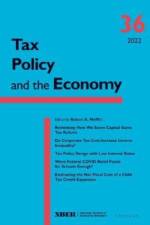
This volume presents five new studies on current topics in taxation and government spending. Natasha Sarin, Lawrence Summers, Owen Zidar, and Eric Zwick study how investors respond to taxes on capital gains, whether their incentives to invest are affected by those taxes, and whether that responsiveness has changed over time. Ethan Rouen, Suresh Nallareddy, and Juan Carlos Suárez Serrato revisit the question of whether cuts to corporate taxes increase income inequality, bringing new data and new statistical techniques to generate fresh findings. Alan Auerbach and William Gale investigate whether the advantages and disadvantages of different types of taxation are affected when interest rates stay low for long periods, as has been the case in the U.S. for many years. Nora Gordon and Sarah Reber study the distributional impact of emergency subsidies to schools made by the federal government during the recent COVID pandemic and whether those subsidies were sufficient to cover the increased school costs induced by the pandemic. Jacob Goldin, Elaine Maag, and Katherine Michelmore investigate the fiscal cost of an expansion of the U.S. child tax credit, which has been discussed extensively in policy circles recently. They take into account not only the direct expenditure on the allowance but how cost is affected by the existence of work incentives and by possible beneficial effects on childrens' adult earnings.
King lays bare the background to Moby-Dick by moving through the voyage of the Pequod, exploring topics in marine biology, oceanography, and the science of navigation as Ishmael raises them in the novel.
Does the ease with which one can now participate in online petitions or conversations about current events seduce some away from civic activities into "slacktivism?" Drawing on a diverse body of theory, from Hannah Arendt to Anthony Appiah, this book offers a range of visions for a political ethics to guide citizens in a digitally connected world.
Looking beyond the arguments over how universities should be financed, how they should be run, and what their contributions to the economy are, the contributors to this book set their sights on higher issues: ones of moral and political value. What are the proper aims of the university? What role do the liberal arts play in fulfilling those aims?
Through the first half of the twentieth century, emotions were a legitimate object of scientific study across a variety of disciplines. After 1945, however, in the wake of Nazi irrationalism, emotions became increasingly marginalized and postwar rationalism took central stage. This book chronicles the curious resurgence of emotion studies.
Abonner på vårt nyhetsbrev og få rabatter og inspirasjon til din neste leseopplevelse.
Ved å abonnere godtar du vår personvernerklæring.