






Gjør som tusenvis av andre bokelskere
Abonner på vårt nyhetsbrev og få rabatter og inspirasjon til din neste leseopplevelse.
Ved å abonnere godtar du vår personvernerklæring.Du kan når som helst melde deg av våre nyhetsbrev.

"A sweeping new history of the American origins of modern money. Economists debate endlessly the nature of fiat monetary systems-coins and bills whose value is guaranteed by a government or other authority. But the actual origins of these fiat currencies have received little attention. With Easy Money, economic historian Dror Goldberg tells the origin story for fiat currency in North America (and maybe beyond): the little-known example of the Massachusetts colony at the end of the 17th century. As the young colony grew into passive self-governance, and as its economy became increasingly complex, the need to formalize a smooth exchange emerged. Printing local money followed. Goldberg's story illustrates how colonial Americans invented modern money by shifting money's foundation from intrinsically valuable goods to the authority of the state. Whereas other governments had tied currencies unit to gold (and would continue to do so until the Great Depression and beyond), Massachusetts tied its local money to the assurance of a government: This money came from the state treasury, and it's the only currency you can use to pay for x things, so use this money. Goldberg's narrative traces how this happy accident has grown into a worldwide monetary system in which, monetarily, we are all Massachusetts. As Goldberg illustrates, the road to fiat currency has not been linear. Weaving monetary economics and American history, Easy Money is a new, highly novel starting square for the modern history of monetary systems"--
"One of the most enduring American urban myths concerns the death of the Red Car Trolley, an extensive and equitable system in Los Angeles County that some say was weakened and then eradicated by US car manufacturers. Yet as Nicholas Dagen Bloom shows, an array of larger yet less tangible forces together interacted to practically murder public transportation of all kinds in cities nationwide. Most centrally, public transit collapsed because essentially we wanted it to-no conspiracy necessary. Detailing the histories of transportation in Atlanta, Baltimore, Boston, Chicago, Detroit, and San Francisco, Bloom seeks to set all of our transit myths to rest for the sake not only of accuracy but in order to enrich our conversations about public transportation funding today"--
"Drawing on the writings of scientists, foresters, surveyors, and settlers, Joseph Giacomelli shows that climate uncertainty infused Gilded Age thinking about economic growth and national development. He details a multivalent discourse on climate that infused both practical concerns and overarching political themes, not least Manifest Destiny. Giacomelli makes it clear that uncertainty drew together concerns about human-induced climate change and cultural worries about the sustainability of capitalist expansionism. A rising belief in scientific positivism was matched by a growing awareness of the illusory nature of scientific certainty; faith in society's power to improve landscapes tussled with persistent fears of environmental catastrophe"--
"A sweeping intellectual history of the welfare state's policy-in-waiting From Thomas More to Thomas Paine, Milton Friedman to Mark Zuckerberg, centuries of public figures have hailed the power of government payments as a tool for advancing social justice. For some advocates, basic income is a moral imperative, a policy with potential to upend structural inequalities; for others, it's a market-friendly version of the welfare state that doesn't constrain capitalism. By appealing differently to different political sensibilities, basic income has persisted in the political imagination for centuries. In this deeply erudite and original work, Anton Jèager and Daniel Zamora offer the first historical examination of basic income as a policy of convenience--and, critically, as an intellectual backstop for the shortcomings of capitalism. With modern origins in works of neoliberals like Friedrich Hayek, basic income was conceived as a form of market-friendly welfare state-a safety net around capitalism that wouldn't impinge on capitalism. Although neoliberals failed to make the idea a reality, they succeeded in seeding a fascination that would permeate all corners of late-century capitalism, from supply-side Democrats to neoclassical economists and barons of Silicon Valley. Basic income, Jèager and Zamora show, is no mere political sideshow. Amid societies' ongoing search for market-friendly utopianism, it may be a policy whose time has finally come"--
"This book explores what art can tell us about "the self," or the sense of interiority that each of us, as separate individuals, experience. Today the "self" is often dismissed because it seems to ignore the ways in which we are all defined by structures and categories of identity (from capitalism and the family to constructs of gender and race). Yet, as Rachel Haidu observes, our feelings that we are singular and individuated--regardless of the structures we belong to--can be intensified, deepened, and negotiated by art. Artworks not only elicit feelings in the viewer that she is profoundly herself, but some even examine how interior lives come to feel private and unique. Haidu investigates this sense of interiority through the work of six contemporary artists who consciously want to provoke the experience in viewers: painters Philip Guston and Amy Sillman; film/media artists James Coleman and Steve McQueen; and contemporary dancers/choreographers Anne Teresa De Keersmaeker and Yvonne Rainer"--
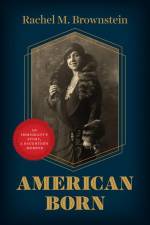
"American Born is Rachel Brownstein's incisive memoir of a seemingly quintessential Jewish Mother-her own-who lived life as the heroine of her own story. When she arrived alone in New York at age eighteen, in 1924, Reisel Thaler resembled the other Yiddish-speaking immigrants from Eastern Europe who accompanied her. Yet she already had an American passport tucked in her scant luggage. She was, as she would boast to the end of her days, "American-born." Reisel Thaler had drawn her first breath on the Lower East Side of Manhattan in 1905, then was taken back to Galicia (in what is now Poland) by her father before she turned two. So it was that Reisel could truly say, when she immigrated years later, that she was American-born. That proud insistence, Brownstein writes, "was about citizenship and status as well as birthplace. Also, it seems to me now, about talent. She was born an American the way another girl might be born a figure-skater." Brownstein began writing about her mother during the Trump years, dwelling on the stories she told about her life and on the questions they raised about nationalism and immigration and stories generally. For most of the twentieth century, Brownstein's mother gracefully balanced her identities as an American and a Jew. Her values, her language and her sense of timing, inform the imagination of the daughter who recalls her in her own old age. The memorializing daughter interrupts, interprets, and glosses, sifting through alternate versions of the same stories. Cousins from the old world and other more and less American Jews fill out the picture. But the central character of this book is Reisel, who eventually becomes Grandma Rose, watching and judging, singing, baking, and bustling"--
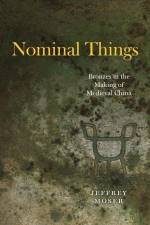
"Eleventh-century scholars living in China were the first people in world history to systematically excavate, illustrate, and document ancient artifacts. The methods they developed to record these "traces" of the past-the most celebrated being bronze ritual vessels that had been cast nearly two thousand years earlier-laid the foundations for the empirical systems that scholars throughout early modern East Asia would use to make sense of the world. Nominal Things explains how the scholars who studied these bronzes struggled to understand the relationship between their complex shapes and dâecor and the ancient glyphs inscribed into their bodies. As they deciphered these glyphs, they came to realize that the bronzes were "nominal things"--objects inscribed with the names of the categories to which they belonged: cauldrons inscribed with the word "cauldron" (ding), ewers inscribed with the word "ewer" (yi), and so forth. The scholars knew those names from hallowed Confucian writings that had been passed down through the centuries, but shockingly, the things they thought those names referred to looked nothing like the bronzes upon which the names were found. Nominal Things traces the process whereby a distinctive East Asian tradition of empiricism was nurtured by this discrepancy between the complex, "garrulous" materiality of the bronzes and the solemn, written liturgies into which Confucian ritualists sought to inscribe them"--
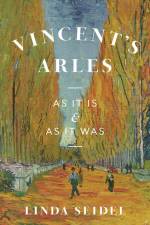
"This is a travel adventure set in the legendary French city of Arles. Founded in Roman times, Arles is a UNESCO World Heritage Site located in scenic Provence in the south of France. For the last hundred years it has been an important destination for the countless tourists who arrive in pursuit of the great Dutch painter Vincent van Gogh, who famously spent an intense fourteen months in Arles, painting the most brilliant works of his career (all those sunflowers and quivering landscapes), squabbling with fellow artist Paul Gauguin, guzzling absinthe, and famously cutting off the lobe of his ear, which landed him in the local hospital in the throes of a mental breakdown. Linda Seidel has visited Arles many times, initially to study the splendid medieval church of Saint-Trophime, but eventually to follow in the long shadow of Vincent's passage, which he recorded in numerous paintings and drawings. Together, they make a pair of charming guides, sharing with us the wonders of Arles's Roman amphitheater, which seats 20,000 people and has been in continuous use for two thousand years; the Alyscamps, a Roman cemetery featuring paths still lined with ancient sarcophagi; the Church of St. Trophime with its astonishing Romanesque portal; the Arles Hospital, which has been converted into a museum about Vincent; the cafes and bars where he hung out; new buildings such as the tower by Frank Gehry; and of course the Provenðcal countryside with its dazzling wildflowers and quaint farms. Ultimately, this is Vincent's story, told as never before through an engagement with the mysterious, culturally rich town that transformed his life and, indeed, the entire course of modern art"--
"The Science of Reading is the surprisingly unsung history of scientific research into reading practices, from the origin of the field in German psychophysics to its current extension into digital and online areas. Starting in the late nineteenth century and continuing through to the present, the practice of reading has been made the subject of extensive scientific investigation, and historian Adrian Johns here explores the questions that motivated this research program, the technologies that enabled it, the ambitions that drove it, and the consequences it produced as it was carried out. Its champions' ambitions extended far beyond the laboratory: psychological experimenters were keen to point out that everything in a modern society depended on the population's ability to read, and to read well. These scientists sought to reconstruct mass education, and the childhood experiences of millions of Americans were reshaped according to their maxims. They sought to transform mass capitalism, and, following a national campaign to boost "reading efficiency," the workplace experiences of millions of American adults shifted as well. They sought to place the defense of the nation on a secure footing, and so servicemen and spies were subjected to their science, from the heart of the Pentagon to the decks of aircraft carriers in the Pacific. By the end of the twentieth century, Johns argues, it would not be an exaggeration to say that modernity itself had been substantially shaped by the conscious application of the scientific study of reading"--
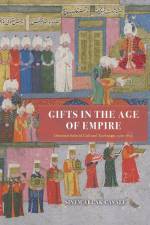
"When the Safavid dynasty, founded in 1501, built a state that championed Iranian identity and Twelver Shi'ism, it prompted the more established Ottoman empire to align itself definitively with Sunni legalism. The political, religious, and military conflicts that arose have since been widely studied, but little attention has been paid to their diplomatic relationship. Sinem Arcak Casale here sets out to explore these two major Muslim empires through a surprising lens: gifts. Countless treasures-such as intricate carpets, gilded silver cups, and ivory-tusk knives-flowed from the Safavid to the Ottoman empire throughout the sixteenth century. While only a handful now survive, records of these gifts exist in court chronicles, treasury records, poems, epistolary documents, ambassadorial reports, and travel narratives. Tracing this elaborate archive, Casale treats gifts as representative of the complicated Ottoman-Safavid coexistence, demonstrating how their rivalry was shaped as much by culture and aesthetics as it was by religious or military conflict. Gifts in the Age of Empire explores how gifts were no mere accessories to diplomacy, but functioned as a mechanism of competitive interaction between these early modern Muslim courts"--
"Both medieval panel painters and those working in the fifteenth century created works that evoke the glow of precious stones, the sheen of polished gold and silver, and the colorful radiance of stained glass. Yet their approach to rendering these materials is markedly different. Marjolijn Bol explores some of the reasons behind this radical transformation by telling the history of the two oil painting techniques used to depict everything that glistens and glows-the varnish and the glaze. For more than a century after his death, the fifteenth century painter Jan van Eyck was widely credited with the invention of varnish and oil paint, on account of his unique visual realism. This was a myth, however, and after it was revealed as such, the remarkable verisimilitude of his work was attributed instead to a new translucent painting technique, a technique the artist could have only innovated with oil paint already at his disposal: the glaze. Today, most theories about how Van Eyck achieved his visual realism revolve around this idea: that he was the first to discover or refine the glazing technique. Bol, however, argues that, rather than being a fifteenth-century refinement, varnishing and glazing began centuries before and, moreover, that these two techniques were not only explored by painters but were developed by a variety of artisans as part of the medieval material culture of splendor. Artisans embellished metalwork and wood with varnishes and glazes to imitate gems and enamel; infused rock crystal with oil, resin, and colorants to imitate more precious minerals; and oiled parchment to transform it into the appearance of green glass. Likewise, medieval panel painters used varnishes and glazes to create the look of water, silk, and more. What's more, Bol shows how the explorations of materials and their optical properties by these artists stimulated natural philosophers to come up with theories about transparent and translucent materials produced by nature"--
"The caricature of Friedrich Nietzsche as a proto-Nazi is still with us. Behind this caricature sits a long history of misreading and deception, including the well-known story of Nietzsche's Nazi sister, Elisabeth Fèorster, who took over Nietzsche's work when he became catatonic and systematized a disparate set of texts as The Will to Power. Despite much remarkable work by scholars to debunk the idea that Nietzsche was a racist, or an anti-Semite, or both, this view continues to influence much of the popular perception of Nietzsche and his work. In Nietzsche and Race, Marc de Launay, editor of the Plâeiade edition of Nietzsche's writings, deftly counters this persistent narrative in a series of concise and highly accessible reflections on the concept of "race" in Nietzsche's published writings, notebooks, and correspondence. De Launay relates these discussions of race to the central themes of Nietzsche's philosophical project, definitively showing how Nietzsche's use of the term "race" simply does not map onto "racism" in any of the ways his detractors have claimed"--
"Admirably clear, concise, down-to-earth, and powerful-all too often, legal writing embodies none of these qualities. Its reputation for obscurity and needless legalese is widespread. Since 2001, Bryan A. Garner's Legal Writing in Plain English has helped address this problem by providing lawyers, judges, paralegals, law students, and legal scholars with sound advice and practical tools for improving their written work. Now the leading guide to clear writing in the field, this indispensable volume encourages legal writers to challenge conventions and offers valuable insights into the writing process: how to organize ideas, create and refine prose, and improve editing skills. Accessible and witty, Legal Writing in Plain English draws on real-life writing samples that Garner has gathered through decades of teaching experience. Trenchant advice covers all types of legal materials, from analytical and persuasive writing to legal drafting, and the book's principles are reinforced by sets of basic, intermediate, and advanced exercises in each section. For this third edition, Garner has retained the structure of the previous versions, with updates and new material throughout. There are new sections on making your writing vivid and concrete and on using graphics to enhance your argument. The coverage and examples of key topics such as achieving parallelism, avoiding legalese, writing effective openers and summaries, and weaving quotations into your text have also been expanded. And the sample legal documents and exercises have been updated, while newly added checklists provide quick summaries of each section. Altogether, this new edition will be the most useful yet for legal professionals and students seeking to improve their prose"--
"The freedoms established by the Bill of Rights are celebrated as a part of America's national identity. But are they everything? Do freedoms from government persecution offer enough to live the American Dream? In Freedom Is Not Enough, economist Mark Paul considers the history of American rights and freedoms as determinants of American economic well-being. The failed promise of FDR's New Deal and LBJ's Great Society programs to secure positive rights for all Americans-the right to a decent education, a good job, adequate health care, and a greater capacity for economic flourishing-have left the country fractured by inequality and stifled in social mobility. Paul traces this shift not only to the unrealized promise of the twentieth-century reforms, but to the simultaneous rise of neoliberalism-the conflation of freedom and markets, the vilification of government intervention in public life-as a persisting source of American injustice. Building on the history of this trend, he offers policy prescriptions to reinvigorate American equality and mobility, including economic prescriptions for the most American question of all: how do you pay for it? A trenchant and deeply researched synthesis of economics, history, and public policy, Freedom Is Not Enough is a new case for one of America's founding promises. It promises to serve as a blueprint for positive change in a challenging time"--
"Danielle Allen revisits Rawls' landmark A Theory of Justice to make the case that justice, which she defines as the necessary conditions for human flourishing, requires the protection of political equality or the ability of all people who wish to participate in the political process, to do so on an equal footing. She argues that Rawls, and other thinkers in his wake who focused on protection of individuals from intrusion of the state, as well as many economists with their focus on utilitarian approaches to public policy, have neglected political equality which has led to the denial of justice to many in our society. At a time when economic and political inequality have increased dramatically, and political inequality is threatened by efforts to limit the ability of many to engage in the most basic political right, voting, this book could not be timelier. This book builds on Allen's Berlin Lectures on COVID that we just published in arguing that policymaking fails when it excludes whole communities from participation in the political process. This manuscript is based on the Berlin Lectures that Allen originally intended to deliver in 2020. Allen substituted the lectures on policymaking for COVID given the urgency of the pandemic"--
"The French writer Albert Camus is best known for his novels and philosophical works, which are among the most influential of the twentieth century. But his journals, which he kept from 1935 to 1959, offer an intimate glimpse into his thinking at its most personal. Beautifully retranslated by Ryan Bloom and supplemented by an introduction by Alice Kaplan, Travels in the Americas presents the journals that Camus wrote during his eventful visits to the United States in 1946 and to South America in 1949. When Camus sailed to the US in 1946, he was virtually unknown to American audiences. All that was about to change-The Stranger, his first book translated into English, was about to be published, and he would soon be a literary star. By 1949, when he set out for South America, Camus was an international celebrity. Camus's journals from these two trips record his impressions, frustrations, and longings. Here are his vivid first impressions of New York City, his encounters with publishers and critics and assorted shipmates. Camus appears unguarded, his fallibility on full display. He is irritated by mediocrity and frustrated by his health. Yet he is also moved to rapture by landscapes, by women, or simply by the bounty of his own philosophical imagination. Long unavailable in English and now freshly translated and annotated, these journals let readers walk beside the existentialist thinker as he experiences the changes in his own life and in the world around him, openly describing his passions and preoccupations on the way, all in his inimitable style"--
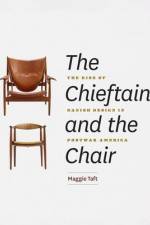
"In this lively book, Maggie Taft tells the story of how Danish modern furniture emerged in the wake of WWII and became all the rage in the US. By the 1950s Danish Modern furniture was everywhere-in living rooms and on the political stage. A Danish Modern chair was chosen for the first televised presidential debate, in 1960, between JFK and Richard Nixon. When the broadcast began, there were Nixon and Kennedy, sleekly seated in Hans Wegner's "Round Chair." Thanks to that broadcast, an international star, nicknamed simply "the Chair," was born. The story of Danish Modern that Taft tells is anchored in the biographies of two notable chairs: "the Chair" and another one known rather grandly as "The Chieftain" (based on Viking folklore) designed by Finn Juhl. Like Nixon and Kennedy, like Buckley and Vidal, like Elvis and the Beatles, these chairs and their designers and manufacturers duked it out for the hearts and minds and rumps of Americans sitting in front of their TV sets, drinking cocktails, getting frisky on the Danish sofas in their living rooms (and, yes, Mad Men fans, in their offices). These chairs serve as the opportunity for Taft to tell the broader tale of our love affair with Danish Modern-and with our continuing admiration for the innovative style of the early postwar period"--
"In Don't Forget to Live, the final book penned before his death in 2010, renowned French philosopher Pierre Hadot focuses our attention on Goethe and the long tradition of spiritual exercises. As Hadot explains, the term "spiritual exercise" has nothing to do with religion as we might assume. Instead, spiritual exercises are acts of the intellect, imagination, or will that are characterized by their purpose. Thanks to these exercises, a person strives to transform how they see the world, the self, and the relationship between the two. The exercises do not work to inform, but to form. Hadot begins his remarkable study of Goethe with the spiritual exercise of concentrating on the present moment. This exercise was dear to Goethe and allows us to experience each moment intensely without being distracted by the weight of the past or the mirage of the future. Hadot then explores another exercise, the view from above, in which we actively take a distance from things so as to help us see them in perspective. He then turns our attention to Goethe's poem "Urworte" in which the focus is on hope, a figure who represents a fundamental attitude we should cultivate. Through Hadot's masterful treatment of these three exercises we clearly grasp Goethe's deep love for life despite its pains and fears, and this deep love serves as a powerful reminder for us to live as well"--
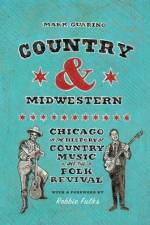
"Chicago is recognized around the world for its place in the history of jazz, gospel, and the blues. Far less known is the surprisingly important role Chicago played in country music and the folk revival. Drawing on hundreds of interviews and deep archival research, Mark Guarino tells a forgotten story of music in Chicago and reveals how the city's institutions and personalities influenced sounds we today associate with regions further south. It is a story of migration and of the ways that rural communities became tied to growing urban centers through radio, the automobile, and the railroad. As the biggest city in the agricultural Midwest, Chicago became a place where rural folk could reinvent themselves and shape their music for the new commercial possibilities the city offered. Years before Nashville emerged as the commercial and spiritual center of country music, Chicago was the most active city for the genre's musicians and record labels. In the mid-1920s, the stars of WLS radio's Barn Dance modernized the sounds of country fiddlers and polished the mountain tunes of Appalachia for contemporary ears. By the 1940s, Chicago had the greatest concentration of country musicians in the US. Bill Monroe, The Carter Family, and Gene Autry all recorded some of their most legendary music in Chicago. When the larger recording industry drifted to the coasts after World War II, Chicago became known for working folk musicians who could freely experiment, collaborate, and perform at a distance from the sometimes stifling star structure of Nashville's Music Row. Guarino tells the stories of the Chicago hustlers who evolved new strains of country music in the city's bars, punk clubs, classrooms, and auditoriums. The College of Complexes, The Gate of Horn, the Earl of Old Town, the Old Town School of Folk Music, Club Lower Links, and Lounge Ax served as creative incubators for different generations of music. Country and Midwestern is a story as vital as the city itself, a celebration of the colorful characters who kept country and folk moving forward, and of the music itself, which even today is still kicking down doors"--
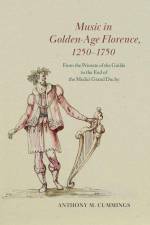
"Florence is justly celebrated as one of the world's most important cities. It enjoys mythic status and occupies an enviable place in the historical imagination. But its music-historical importance is less well understood than it should be. If Florence was the city of Dante, Michelangelo, and Galileo, it was also the birthplace of the madrigal, opera, and the piano. This is the only book of its kind, a comprehensive account of music in Florence from the late Middle Ages until the end of the Medici dynasty in the mid-eighteenth century. It recounts the principal developments in the history of Florence's contributions to music and how music was heard and cultivated in the city, from civic and religious institutions to private patronage and the academies. Scholars from sister disciplines and a general readership interested in the history and culture of Florence will find this book an invaluable complement to studies of the art, literature, and political thought of the late-medieval and early-modern eras and the quasi-legendary figures in the Florentine cultural pantheon"--
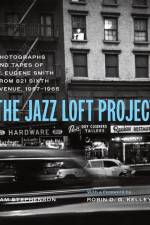
"Originally published by Alfred A. Knopf, 2009, with the participation of the Collection and W. Eugene Smith Archive at the Center for Creative Photography, The University of Arizona."
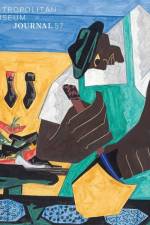
The latest volume in the Metropolitan Museum Journal series. Founded in 1968, the Metropolitan Museum Journal is a blind, peer-reviewed scholarly journal published annually that features original research on the history, interpretation, conservation, and scientific examination of works of art in the Museum's collection. Its scope encompasses the diversity of artistic practice from antiquity to the present day. The Journal encourages contributions offering critical and innovative approaches that will further our understanding of works of art.
Abonner på vårt nyhetsbrev og få rabatter og inspirasjon til din neste leseopplevelse.
Ved å abonnere godtar du vår personvernerklæring.