




Gjør som tusenvis av andre bokelskere
Abonner på vårt nyhetsbrev og få rabatter og inspirasjon til din neste leseopplevelse.
Ved å abonnere godtar du vår personvernerklæring.Du kan når som helst melde deg av våre nyhetsbrev.

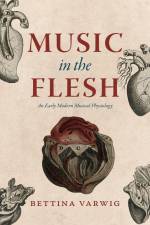
"Music in the Flesh reimagines the lived experiences of music-making subjects (composers, musicians, listeners) in the long European seventeenth century. There are countless historical testimonies of the powerful effects of music upon early-modern bodies, described as moving, ravishing, painful, dangerous, curative, miraculous, and encompassing "the circulation of the humors, purification of the blood, dilation of the vessels and pores. In asking what this all meant at the time, the author considers musical scores and their surrounding texts as "somatic scripts" that afford a range of somatic actions and reactions and can give us a glimpse into the historical embodied experience of organized sound. Starting from the Lutheran hymns and their accompanying intellectual traditions and ritual practices in German-speaking lands, the book moves with ease across repertories and regions, sacred and vernacular musics, domestic and public settings in order to sketch a "physiology of music" that is as historically illuminating as it is relevant for present-day performing practices and that sheds unprecedented light on how subjectivity was embodied through sound in early-modern Europe"--
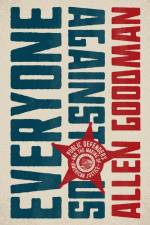
"In the American judicial system, even accused murderers, rapists, arsonists, and child abusers have voices and rights; and as the Miranda warning says, if they cannot afford a lawyer, one will be appointed to represent them. Enter the public defender, who must try to help people who have done reprehensible things--no matter their personal assessment of the client and situation. Former PD Allen Goodman draws upon a deep understanding of that milieu, conveying its complexities and dilemmas, reveling in great moral victories, enduring administrative inanity, and staggering from defeats. It is an intensely idealistic job, but also one that breeds corrosive cynicism. Goodman limns the difficulties of remaining a good human being while defending the worst of them."--
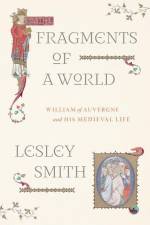
"It has been 140 years since a full biography of William of Auvergne (1180?-1249), which may come as a surprise, given that William was an important gateway of Greek and Arabic thought and philosophy to western Europe in the thirteenth century, and one of the earliest writers in the medieval Latin west on demonology. Lesley Smith's aims in this book are two-fold: first, to take a closer look at William, the human being, how he saw the world and his place in it; and to uncover William's interactions with his Parisian congregation through the nearly 600 sermons he left after his death. Smith has mined these writings, unremarked in previous scholarship, to give us a different perspective on the schoolmaster, bishop of Paris, and strict theologian we have come to know: a preacher who spoke and ministered not just to the powerful and elite, but also to commoners, to the poor, and to the less fortunate. Through a study of the sermons, Smith creates a broader landscape of William's thought and life, highlighting his attention to the importance--and limits--of language, and his attempts to find a way to address the concerns of the larger populace. In his preaching, we get a sense of the balance William achieved, in the way he communicated religious teachings, in his understanding of the concerns of ordinary Parisians, and in his awareness of the ebb and flow of daily life in a medieval city. The book will interest scholars of intellectual history and philosophy, religion, and literary studies more broadly for Smith's innovative method of excavating the sermons in pursuit of William the person, and his humanity. An altogether "new" William for the twenty-first century"--
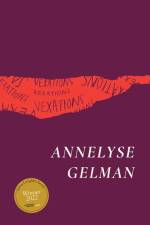
"Viewed from a distance, interdisciplinary artist and poet Annelyse Gelman's Vexations could be described as a long poem-a book-length narrative work in the tradition of epic or romance. Vexations is fragmentary and dreamlike, however, chipping away over time at the very foundation on which such a narrative tradition typically rests. The central drama of Vexations is centered around the journey of a mother and her daughter through a speculative world that seems utterly contemporary and, at the same time, indexical of alternative unsettling futures. Threats and anxieties are inextricable here: environmental disaster, medical treatments, medication, motherhood, grasshoppers, horses, shopping malls, evolution, inheritance, advertising. "There was no other world to bring a child into," Gelman writes. Endlessly, intoxicatingly inventive, nearly every line of Vexations is worthy of independent attention, even as the work as a whole advances its tragic narrative on multiple fronts. As the work traverses scales from the dramatic scope of its quest narrative, on one hand, to the miniaturist phenomenological precision of its lyric progression on the other, Vexations balances affective intimacies with dystopian political vision, and the result is a singular, genre-warping work of contemporary poetry"--
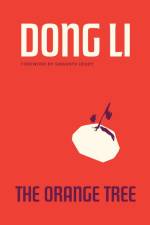
"Comprised of a series of long, lyrical narrative poems, Dong Li's debut collection of poetry braids forgotten histories, family sorrows, and political upheavals into a panoramic view of China and the people who embody it across generations. The Orange Tree navigates the personal and the political, grounding its abstract meditations in the raw, worldly experience in characters whose lives bear striking affinities across disparate eras. Cycling between mythological time, ancient history, and modern memory, Li offers unexpected perspectives on epochs that resemble our own-not the least of which are the poems' unflinching meditations on the brutality of war. Throughout the book, images and phrases are compressed into portmanteaus of premonition, signaling as nouns the metaphoric inventions that one will come to find-"the anguishednight," "the farawayorangetree," "the launderedyears," "the drifteddream." Like the legend of a map or the runes on a relic, these puzzles invite us to parse the words of The Orange Tree, breaking them apart and creating entrances that lead deeper into the elaborate architecture of Li's poetic world-building"--
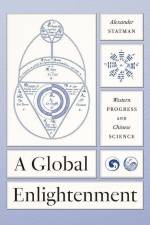
"A Global Enlightenment is a book about the idea of Western progress, told through a series of conversations about Chinese science. Its protagonists - an ex-Jesuit missionary, a French statesman, a Manchu prince, Chinese literati, European savants, and other figures of the late Enlightenment world - exchanged ideas across cultures. In telling their stories here, Alexander Statman shows how Chinese science shaped a signature legacy of the European Enlightenment: the idea of Western progress. By focusing on the orphans of the Enlightenment, those who sought to vindicate ancient wisdom as others left it behind, Statman reveals that ideas about the uniqueness of the West - and the mystery, inscrutability, or otherness of the East - did not follow from the Enlightenment idea of progress but had to be invented. The orphans of the Enlightenment believed that the knowledge of the past and the East still had value for modern Europe, and their efforts to recover and explain it, in turn, uncover an unknown story of European engagement with Chinese science. In contrast to the common view, that over the course of the Enlightenment non-Western ideas were banished from European thought, Statman found that the opposite is true. Toward the end of the Enlightenment, Europeans only grew more interested in Chinese science, and this has had lasting effects, from the eighteenth century to today"--
""One only ever asks forgiveness for what is unforgivable." From this contradiction begins Perjury and Pardon, a two-year series of seminars given by Jacques Derrida at the âEcole des Hautes âEtudes en Sciences Sociales in Paris in the late 1990s. In these sessions, Derrida focuses on the philosophical, ethical, juridical, and political stakes of the concept of responsibility. His primary goal is to develop what he calls a "problematic of lying" by studying diverse forms of betrayal: infidelity, denial, false testimony, perjury, unkept promises, desecration, sacrilege, and blasphemy. Although forgiveness is a notion inherited from multiple traditions, the process of forgiveness eludes those traditions, disturbing the categories of knowledge, sense, history, and law that attempt to circumscribe it. Derrida insists on the unconditionality of forgiveness and shows how its complex temporality destabilizes all ideas of presence and even of subjecthood. For Derrida, forgiveness cannot be reduced to repentance, punishment, retribution, or salvation, and it is inseparable from, and haunted by, the notion of perjury. Through close readings of Kant, Kierkegaard, Shakespeare, Plato, Jankelâevitch, Baudelaire, and Kafka, as well as biblical texts, Derrida explores diverse notions of the "evil" or malignancy of lying while developing a complex account of forgiveness across different traditions"--
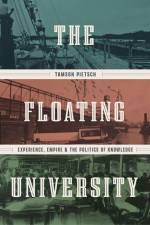
"In 1926, New York University's Floating University sailed 500 American collegians around the globe, hoping to make them better citizens of the world and demonstrate a new educational model. It didn't go well. Tamson Pietsch here excavates a rich picture of this folly, its origins, and the insights it affords into an America that was being defined increasingly by both imperialism and the professionalization of higher education. For Pietsch, the voyage traced the expanding tentacles of US power, even as it tried to somehow model a new kind of cultural expertise-with an all-white student body and crew, traveling under the implicit protection of American hegemony"--
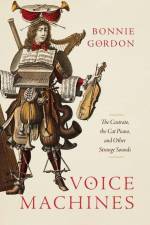
"The castrato phenomenon stretched from the late sixteenth century, when castrati first appeared in Italian courts and churches, through the eighteenth century, when they occupied a celebrity status on the operatic stage. Throughout this time, the voice of the castrato--hailed as uniquely strong, flexible and expressive--contributed to a dramatic expansion of the musical vocabulary and to finding new ways to embody the poetic text. For us today, the castrato also highlights the porous relationship of voices and instruments/machines and the inherent materiality of sound. In her revealing study, Bonnie Gordon asks what it meant that the early-modern period produced a caste of technologically altered male singers and she uses the castrato as a critical provocation for asking questions about the interrelated histories of music, technology, sound, the limits of the human body, and what counts as human"--
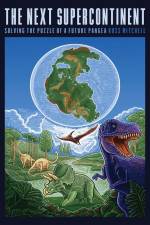
"You have heard of Pangea, the single landmass that broke apart some 175 million years ago to give us our current continents. What about its previous iterations, Rodinia or Columbia? These "supercontinents" from Earth's past provide evidence that continents repeatedly join and divorce. Scientists debate exactly what that next supercontinent will look like (and what to name it), but they agree that one is coming. In this book, Ross Mitchell, a geophysicist who researches the supercontinent cycle, offers a tour of past supercontinents; introduces readers to the phenomena that will lead to the next one; and presents the case for a particular future supercontinent, called Amasia, that will form over the North Pole. Mitchell uses compelling stories of fieldwork and accessible descriptions of current science to introduce readers to the nuances of plate tectonic theory. He considers convection deep in Earth's mantle to explain the future formation Amasia (defined by the joining of North America and Asia) and to show how this developing theory can explain other planetary mysteries. He ends the book by asking if humans will live to see Amasia. He recognizes the chances of our species surviving the necessary 50 to 200 million years are vanishingly small, but the exercise gives readers a chance to imagine this landscape and to understand mimics for the geological processes required, for example in the form of geoengineering. An internationally recognized authority on the supercontinent cycle, Mitchell offers a compelling and updated introduction that offers readers a front-row seat to an ongoing scientific debate"--
"In 1927, at the age of twenty-three, George Melâendez Wright conceptualized and eventually funded the first wildlife survey of western National Parks, radically changing how the National Park Service (NPS) would manage natural resources under its charge. By the time Wright arrived in Yosemite National Park to work as a ranger naturalist-the first Hispanic person to occupy a professional position in the NPS-he had already visited every national park in the Western United States. At a time when national parks routinely fed bears garbage as part of "shows" and killed "bad" predators such as wolves and coyotes, Wright's new ideas for conservation set the stage for modern scientific management of parks and other public lands. Before his revolutionary ideas began to influence Park Service policy, however, Wright faced persistent pushback by an entrenched culture that disregarded wildlife apart from the role that fauna played as a tourist attraction. Nonetheless, he prevailed. Wright died tragically in a car accident in 1936, while working to establish parks and wildlife refuges on the US-Mexico border, and yet, to this day, he remains a celebrated figure among conservationists, wildlife experts, and park managers. Jerry Emory, a writer connected to Wright's family, draws on hundreds of letters, field notes, interviews, and other primary documents to offer both a biography of Wright and a historical account of a crucial period in the evolution of our parks. Including a foreword by former National Park Service director Jonathan Jarvis, the book explores and celebrates Wright's vision for science-based wildlife management and his vocal support of wilderness in our parks and asks if current practices have achieved his goals"--
Abonner på vårt nyhetsbrev og få rabatter og inspirasjon til din neste leseopplevelse.
Ved å abonnere godtar du vår personvernerklæring.