













Gjør som tusenvis av andre bokelskere
Abonner på vårt nyhetsbrev og få rabatter og inspirasjon til din neste leseopplevelse.
Ved å abonnere godtar du vår personvernerklæring.Du kan når som helst melde deg av våre nyhetsbrev.

A consideration of the role of clothes in establishing personality, and the influence and significance of changing fashion as a social and cultural phenomenon.
It is a widespread prejudice of modern, scientific society that "magic" is merely a ludicrous amalgam of recipes and methods derived from primitive and erroneous notions about nature. "Eros and Magic in the Renaissance" challenges this view, providing an in-depth scholarly explanation of the workings of magic and showing that magic continues to exist in an altered form even today. Renaissance magic, according to Ioan Couliano, was a scientifically plausible attempt to manipulate individuals and groups based on a knowledge of motivations, particularly erotic motivations. Its key principle was that everyone (and in a sense everything) could be influenced by appeal to sexual desire. In addition, the magician relied on a profound knowledge of the art of memory to manipulate the imaginations of his subjects. In these respects, Couliano suggests, magic is the precursor of the modern psychological and sociological sciences, and the magician is the distant ancestor of the psychoanalyst and the advertising and publicity agent. In the course of his study, Couliano examines in detail the ideas of such writers as Giordano Bruno, Marsilio Ficino, and Pico della Mirandola and illuminates many aspects of Renaissance culture, including heresy, medicine, astrology, alchemy, courtly love, the influence of classical mythology, and even the role of fashion in clothing. Just as science gives the present age its ruling myth, so magic gave a ruling myth to the Renaissance. Because magic relied upon the use of images, and images were repressed and banned in the Reformation and subsequent history, magic was replaced by exact science and modern technology and eventually forgotten. Couliano's remarkablescholarship helps us to recover much of its original significance and will interest a wide audience in the humanities and social sciences.
Tracing the history of mesmerism, this text explores the contested territory between science and pseudoscience and society and science. Examining who was entranced, who did the entrancing, why it was so compelling and how it became equally powerful evidence of fraud and "unscientific" behaviour.
Cynthia Moss has studied the elephants in Kenya's Amboseli National Park for over 27 years. Her research has revealed much of what we now know about these animals. Here she chronicles the lives of the members of the T families led by Matriarchs Teresia, Slit Ear, Torn Ear, Tania, and Tuskless.
In this work, Hadot examines Plotinus' views on the self, existence, love, virtue, gentleness and solitude. He shows that Plotinus, like other philosophers of his day, believed that Plato and Aristotle had already articulated the essential truths, and so his purpose was to live philosophically.
This work sounds an early warning about an environmental catastrophe that has become all too familiar today - the invasion of nonnative species. The author explains the devastating effects that invasive species can have on local ecosystems.
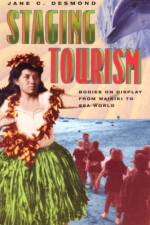
Provides an account of US tourism in Waikiki from 1900 to 1999. The book juxtaposes cultural tourism with "animal tourism", suggesting that the relationship between the viewer and the viewed is ultimately based on concepts of physical difference harking back to the 19th century.
Chicago is a city dedicated to the modern - from the skyscrapers that punctuate its skyline to the spirited style that inflects many of its dwellings and institutions. Staging the city as a laboratory for some of our most heralded cultural experiments, this work reimagines the modern as a space of self-realization and social progress.
This text reflects the design of the world which deserves attention as a professional practice and a subject of social, cultural and philosophic scrutiny. These 11 essays are contributed by scholars with backgrounds in psychology and political theory to technology studies, and philosophy.
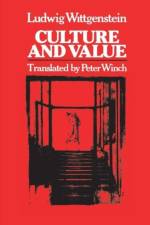
Peter Winch's translation of Wittgenstein's remarks on culture and value presents all entries chronologically, with the German text alongside the English and a subject index for reference. "It was Wittgenstein's habit to record his thoughts in sequences of more or less closely related 'remarks' which he kept in notebooks throughout his life. The editor of this collection has gone through these notebooks in order to select those 'remarks' which deal with Wittgenstein's views abou the less technical issues in his philosophy. So here we have Wittgenstein's thoughts about religion, music, architecture, the nature of philosophy, the spirit of our times, genius, being Jewish, and so on. The work is a masterpiece by a mastermind."-Leonard Linsky
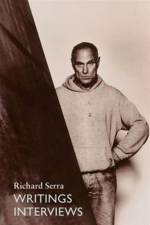
From essays like "Extended Notes from Sight Point Road" to Serra's extended commentary on the "Tilted Arc" fiasco, the pieces in this volume comprise a document of one artist's engagement with the practical, philosophical and political problems of art.
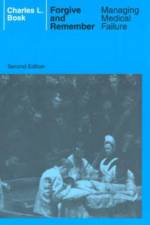
"Forgive and Remember" is a work about errors in the practice of surgery, written by a sociologist who spent 18 months with the surgical service of a major American teaching hospital.
This text examines the role played by the mass media and public opinion in the development of United States foreign policy in the Gulf War. It explores the prewar media debate, news coverage during and after the war, and the media's effect on public opinion and decision-makers.
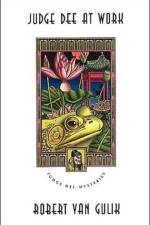
Judge Dee presided over his Imperial Chinese court with a brand of Confucian justice. A near-mythic figure in China, he distinguished himself as a tribunal magistrate, inquisitor, and public avenger. This book contains eight short stories which cover a decade during which the judge served in four different provinces of the Tang Empire.
There is a popular and romantic myth about Rembrandt and the Jewish people. One of history's greatest artists, we are often told, had a special affinity for Judaism. With so many of Rembrandt's works devoted to stories of the Hebrew Bible, and with his apparent penchant for Jewish themes and the sympathetic portrayal of Jewish faces, it is no wonder that the myth has endured for centuries."Rembrandt's Jews" puts this myth to the test as it examines both the legend and the reality of Rembrandt's relationship to Jews and Judaism. In his elegantly written and engrossing tour of Jewish Amsterdam--which begins in 1653 as workers are repairing Rembrandt's Portuguese-Jewish neighbor's house and completely disrupting the artist's life and livelihood--Steven Nadler tells us the stories of the artist's portraits of Jewish sitters, of his mundane and often contentious dealings with his neighbors in the Jewish quarter of Amsterdam, and of the tolerant setting that city provided for Sephardic and Ashkenazic Jews fleeing persecution in other parts of Europe. As Nadler shows, Rembrandt was only one of a number of prominent seventeenth-century Dutch painters and draftsmen who found inspiration in Jewish subjects. Looking at other artists, such as the landscape painter Jacob van Ruisdael and Emmanuel de Witte, a celebrated painter of architectural interiors, Nadler is able to build a deep and complex account of the remarkable relationship between Dutch and Jewish cultures in the period, evidenced in the dispassionate, even ordinary ways in which Jews and their religion are represented--far from the demonization and grotesque caricatures, the iconography of the outsider, so often found in depictions ofJews during the Middle Ages and the Renaissance.Through his close look at paintings, etchings, and drawings; in his discussion of intellectual and social life during the Dutch Golden Age; and even through his own travels in pursuit of his subject, Nadler takes the reader thr
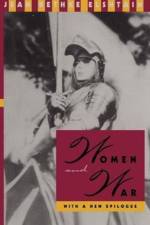
This study examines how the myths of man as "Just Warrior" and woman as "Beautiful Soul" serve to recreate/secure women's social position as noncombatants and men's identity as warriors. It demonstrates how these myths are undermined by the reality of female bellicosity and sacrificial male love.
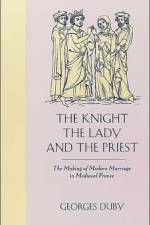
This study sets out to discover what marriage meant in the daily lives of the nobles of the 10th, 11th, and 12th centuries. Through anecdotes and family dramas, the author aims to increase the understanding of the motives and conflicts of those who inhabited the distant past.
This work employs detailed historical narrative to argue about the establishment of factual knowledge both in science and in everyday practice. Accounts of gentlemen-philosophers are used to illustrate the study's claim that trust is imperative for constituting every kind of knowledge.
Shows how the interwar exhibitions heralded the arrival of modern America - a new empire of abundance built on old foundations of inequality. Rydell demonstrates how the fairs reached their height of popularity following the crash of 1929 by offering a vision of recovery from the Depression.
This is a book about the things people say about images. It is not primarily concerned with specific pictures and the things people say about them, but rather with the way we talk about the idea of imagery, and all its related notions of picturing, imagining, perceiving, likening, and imitating. It is a book about images, therefore, that has no illustrations except for a few schematic diagrams, a book about vision written as if by a blind author for a blind reader. If it contains any insight into real, material pictures, it is the sort that might come to a blind listener, overhearing the conversation the sighted speakers talking about images. My hypothesis is that such a listener might see patterns in these conversations that would be invisible to the sighted participant.
The age of the baroque - a time of great strides in science and mathematics - also saw the construction of some of the world's most magnificent buildings. Hersey explores the interrelations of the two developments and how they cross-fertilised.
Veronica Franco was a 16th-century Venetian beauty, poet, and protofeminist. This collection presents the eroticism and eloquence that set her apart from the chaste, silent woman prescribed by Renaissance gender ideology.
"The art historian after Erwin Panofsky and Ernst Gombrich is not only participating in an activity of great intellectual excitement; he is raising and exploring issues which lie very much at the centre of psychology, of the sciences and of history itself. Svetlana Alpers's study of 17th-century Dutch painting is a splendid example of this excitement and of the centrality of art history among current disciples. Professor Alpers puts forward a vividly argued thesis. There is, she says, a truly fundamental dichotomy between the art of the Italian Renaissance and that of the Dutch masters. . . . Italian art is the primary expression of a 'textual culture,' this is to say of a culture which seeks emblematic, allegorical or philosophical meanings in a serious painting. Alberti, Vasari and the many other theoreticians of the Italian Renaissance teach us to 'read' a painting, and to read it in depth so as to elicit and construe its several levels of signification. The world of Dutch art, by the contrast, arises from and enacts a truly 'visual culture.' It serves and energises a system of values in which meaning is not 'read' but 'seen,' in which new knowledge is visually recorded."-George Steiner, Sunday Times"There is no doubt that thanks to Alpers's highly original book the study of the Dutch masters of the seventeenth century will be thoroughly reformed and rejuvenated. . . . She herself has the verve, the knowledge, and the sensitivity to make us see familiar sights in a new light."-E. H. Gombrich, New York Review of Books
Abonner på vårt nyhetsbrev og få rabatter og inspirasjon til din neste leseopplevelse.
Ved å abonnere godtar du vår personvernerklæring.