









Gjør som tusenvis av andre bokelskere
Abonner på vårt nyhetsbrev og få rabatter og inspirasjon til din neste leseopplevelse.
Ved å abonnere godtar du vår personvernerklæring.Du kan når som helst melde deg av våre nyhetsbrev.

Due to its proximity to the Water Palace, the summer residence of the Emperor's favorite daughter, Riverton lies within a Special Area administered by the military. To Judge Dee, returning to his district of Poo-yang, the peaceful town promises a few days' fishing and relaxation. But it is not to be. A chance meeting with a Taoist recluse, a gruesome body fished out of the river, strange guests at the Kingfisher Inn, a princess in distress--before long the judge is facing one of the most intricate and baffling mysteries of his career.
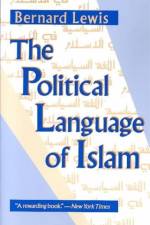
Discuss the Islamic Scriptures that form the basis for its political language, looks at the changes in modern Islamic politics, and analyzes the transformation of political terms.
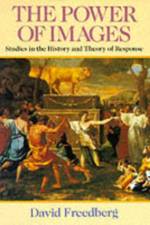
An evocative symbol of the 1960s was its youth counterculture. This study reveals that the youthful revolutionaries were augmented by such unlikely allies as the advertising industry and the men's clothing business. The ad industry celebrated irrepressible youth and promoted defiance and revolt.
The essays in this collection question the viability of Nietzsche's thought in the modern world, critiquing his philosophy of history as obsessed with hierarchy, his views on religion and art as myopic and irrational, and his stance on science as hopelessly reactionary.
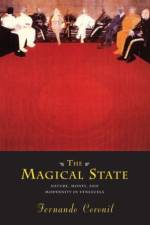
In 1935 Venezuela consolidated its position as the world's major oil exporter, establishing South America's longest-lasting democratic regime. This text examines key transformations in Venezuela's polity, culture and economy, recasting theories of development for other postcolonial nations.
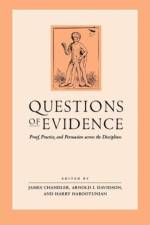
A collection of essays and rejoinders about what constitutes evidence in research and scholarship. They examine not only the constitution and "blurring" of disciplinary boundaries, but also the configuration of the fact-evidence distinctions made in different disciplines and historical moments.
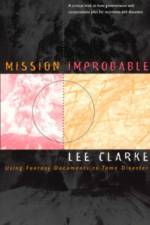
This text examines actual attempts to "prepare" for catastrophes and finds that the policies adopted by corporations and government agencies are fundamentally rhetorical: the plans have no chance to succeed, yet they serve both the organizations and the public as symbols of control and stability.
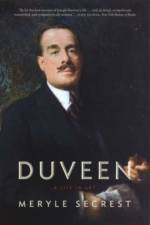
Tells about Joseph Duveen (1869-1939) and his humble beginnings running his father's business to knighthood and eventually a peerage. The eldest of eight sons of Jewish-Dutch immigrants, he inherited an uncanny ability to spot a hidden treasure from his father, proprietor of a prosperous antiques business.
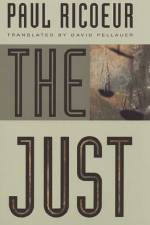
The essays in this collection grew out of a series of invited lectures given in France on the nature of justice and the law. They represent a reflection on the relationship of the juridical and the philosophical concept of right, situated between moral philosophy and politics.
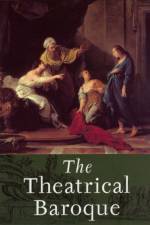
This volume investigates the dialogue between the newly-invigorated European theatre of the late 16th and 17th centuries, and the plastic arts. The interactions between the spectator and the spectacle, social performance and the staging of the individual are discussed.
An examination of the cultural context in which theological pluralism emerged. Analyzing models of theology, this work formulates a "revisionist" model and applies it to questions in contemporary theology including the meanings of religion, theism, and of Christology.
Although bats and dolphins live in very different environments and are vastly different in size, both groups have evolved similar sonar systems, known as echolocation to locate food and navigate seas and skies. This volume compares each group and indentifies future areas of research.
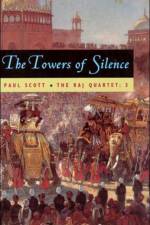
This volume follows the fate of the Laytons and the retired missionary techer, who can forsee the end of the Raj, and both welcome and lament its passing.
Downtown America transcends the archetypal story of downtown's rise and fall and offers a dynamic new story of urban development in the United States. Moving beyond conventional narratives, Alison Isenberg shows-that downtown's trajectory was not dictated by inevitable free market forces or natural life-and-death cycles.
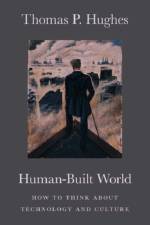
In Human-Built World, Thomas P. Hughes restores to technology the richness and depth it deserves by writing its intellectual history.
A study of how investment in an individual's education and training is similar to business investments in equipment. This edition has four new chapters, covering topics including: human capital, fertility and economic growth, the division of labour and economic considerations within the family.
"Strong religion" draws on the results of the Fundamentalism Project to answer questions on the future of fundamentalism, the turn to violence and the threats posed to human rights, security and democratic forms of government.
Examines the reciprocal relationship between remembering and forgetting, revealing how this symbiosis influences both the perception of historical experience and the production of historical narrative.
Considers the crucial question of how armies adapt to changing circumstances during the course of conflicts for which they are initially unprepared. This book is a timely examination of the lessons of previous counterinsurgency campaigns that will be hailed by both military leaders and interested civilians.
At the foot of the Mount of Mercy in southeastern Persia, Darius the Great built his capital, Persepolis-symbol of Persian glory for two centuries. At its height the Achaemenid Empire, with its power centered in this city, reached from the Nile and Greece eastward to India. Dominating the major travel routes between East and West, it was the meeting ground of the great cultures of the ancient world.
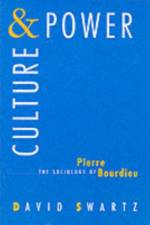
A study of the social theorist Pierre Bourdieu's work, this work focuses on a central theme, the complex relationship between culture and power, and explains that sociology for Bourdieu is a mode of political intervention. The book aims to clarify Bourdieu's concepts and correct misinterpretations.
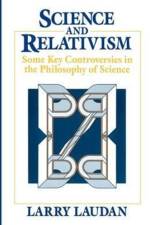
Why have many members of the intellectual community embraced a radical relativism where knowledge in general and scientific knowledge in particular are concerned? Have Kuhn, Quine, and Feyerabend knocked the traditional picture of scientific knowledge into a cocked hat? Is philosophy of science, or mistaken impressions of it, responsible for the rise of relativism? In Science and Relativism, Larry offers a trenchant, wide-ranging critique of cognitive relativism and a thorough introduction to majorissues in the philosophy of knowledge.
Abonner på vårt nyhetsbrev og få rabatter og inspirasjon til din neste leseopplevelse.
Ved å abonnere godtar du vår personvernerklæring.