
























Gjør som tusenvis av andre bokelskere
Abonner på vårt nyhetsbrev og få rabatter og inspirasjon til din neste leseopplevelse.
Ved å abonnere godtar du vår personvernerklæring.Du kan når som helst melde deg av våre nyhetsbrev.

Giordano Bruno (1548-1600) is one of the great figures of early modern Europe, and one of the least understood. This biography establishes him once and for all as a peer of Erasmus, Shakespeare, and Galileo - a thinker whose vision of the world prefigures ours.
Explores language and interaction within a contemporary Native American legal system. This work explains how Hopi notions of tradition and culture shape and are shaped by processes of Hopi jurisprudence. It shows that Hopi jurists and litigants have called for their courts to develop a jurisprudence that better reflect Hopi culture and traditions.
In 1630s, the Netherlands was gripped by tulipmania: a speculative fever unprecedented in scale and, as history would have it, folly. The author lays waste to the legends, revealing that while the 1630s did see a speculative bubble in tulip prices, neither the height of bubble nor its bursting were anywhere near as dramatic as we tend to think.
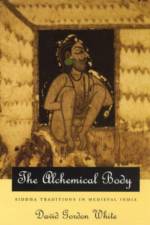
David Gordon White excavates and seeks to centre within its broader Indian context the lost tradition of the medieval Siddhas.
This work focusses exclusively on juvenile primates, presenting original research covering all the major divisions of primates, from prosimians to humans. Contributors explore the evolutionary history of the juvenile stage, gender differences and preparation for adulthood.
A diary describing the experience of the author in Andhra Pradesh. It reflects on daily events - from explorations of crumbling temples to battles with ineradicable bugs to joyous dinners with friends. It also considers the ancient poetry and myths that remain such an inextricable part of life in contemporary India.
Drawing on his experience as a linguistic anthropologist, this author parses how political leaders have used historical references, religious associations, and the mythology of evil to inflame their own citizens against the foreign country and proposes a way out of this debacle.
Suitable for students and scholars, this title presents an introduction to one of the richest texts in the history of religious thought, Qur'an. It unravels the Qur'an's complexities with the deep attachment of a Muslim educated in Islamic schools and the clarity of a scholar who taught for decades in the West.
This introduction to the philosophy of technology discusses its sources and uses. Tracing the changing meaning of "technology" from ancient times to the modern day, it identifies two important traditions of critical analysis of technology: the engineering approach and the humanities approach.
In this study, Joseph Koerner establishes the character of Renaissance art in Germany and examines how artists such as Albrecht Durer and Hans Baldung Grien reflected in their masterworks the changing status of the self in 16th-century Germany.
With radical formal innovations that scandalized the European art world, cubism revolutionized modern art and opened the path toward pure abstraction. Documenting the heady first years of this profoundly influential movement, this work presents a comprehensive collection of cubist primary sources.
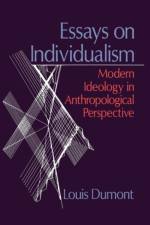
Louis Dumont's Essays on Individualism is an ambitious attempt to place the modern ideology of individualism in a broad anthropological perspective. The result of twenty years of scholarship and inquiry, the interrelated essays gathered here not only trace the genesis and growth of individualism as the dominant force in Western philosophy, but also analyze the differences between this modern system of thought and those of other, nonmodern cultures. The collection represents an important contribution to Western society's understanding of itself and its place in the world.
Explores how knowledge was obtained and demonstrated in Europe when standard methods of inquiry took shape across several fields of intellectual pursuit. This book looks at production and consumption of knowledge as a social process. It focuses on how various methods came to interact with practices of craftspeople to create new ways of knowing.
Presents an approach to combat that emphasizes constant adaptation and learning, importance of decentralized decision making, the need to understand local politics and customs, and the role of intelligence in winning the support of the population. This manual emphasizes the paradoxical and counterintuitive nature of counterinsurgency operations.
In this study of the cognitive paradigm, De Mey applies the study of computer models of human perception to the philosophy and sociology of science.
There are two kinds of knowledge law school teaches: legal rules on the one hand and tools for thinking about legal problems on the other. This work brings together various tools for thinking about law. It is suitable for law students, practitioners seeking a one-stop guide to legal principles, or those with an interest in the law.
This volume offers bracing new translations of two precursors to the modern detective novel by Friedrich Durrenmatt, whose genre-bending mysteries recall the work of Alain Robbe-Grillet and anticipate the postmodern fictions of Paul Auster and other contemporary neo-noir novelists. Both mysteries follow Inspector Barlach as he moves through worlds in which the distinction between crime and justice seems to have vanished. In "The Judge and His Hangman," Barlach forgoes the arrest of a murderer in order to manipulate him into killing another, more elusive criminal. And in "Suspicion," Barlach pursues a former Nazi doctor by checking into his clinic with the hope of forcing him to reveal himself. The result is two thrillers that bring existential philosophy and the detective genre into dazzling convergence.
Exploring the struggles of the American elites as they tried to maintain a democratic, modern mass society, this text reveals the limits of a system ultimately benefiting an abstract "average" consumer. It exposes the internal contradictions that would undermine Americans' belief in their ideology.
Bucharest, 1938: while Hitler gains power in Germany, the Romanian police start arresting students they suspect of belonging to the Iron Guard. Meanwhile, a man who has spent his life studying languages, poetry, and history - a man who thought his life was over - lies in a hospital bed, inexplicably alive and miraculously healthy.
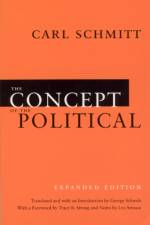
Argues that liberalism's basis in individual rights cannot provide a reasonable justification for sacrificing one-self for the state. This edition highlights the author's intellectual journey through the turbulent period of German history leading to the Hitlerian one-party state.
Abonner på vårt nyhetsbrev og få rabatter og inspirasjon til din neste leseopplevelse.
Ved å abonnere godtar du vår personvernerklæring.