

















Gjør som tusenvis av andre bokelskere
Abonner på vårt nyhetsbrev og få rabatter og inspirasjon til din neste leseopplevelse.
Ved å abonnere godtar du vår personvernerklæring.Du kan når som helst melde deg av våre nyhetsbrev.

Leo Strauss argued that the most visible fact about Machiavelli's doctrine is also the most useful one: Machiavelli seems to be a teacher of wickedness. In his critical appreciation of "The Prince" and the "Discourses on the First Ten Books of Livy", Strauss explains his thoughts.
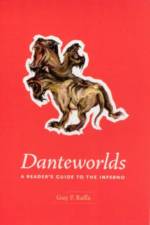
Takes readers on a geographic journey through Dante's underworld circle by circle - from the Dark Wood down to the ninth circle of Hell - in much the same way Dante and Virgil proceed in their infernal descent. Each chapter of this book begins with a summary of the action, followed by entries, significant verses, and useful study questions.
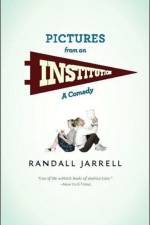
Beneath the unassuming surface of a progressive women's college lurks a world of intellectual pride and pomposity awaiting devastation by the pens of two brilliant and appalling wits.
Founded in 1965, the Association for the Advancement of Creative Musicians (AACM) is an American institution with an international reputation. This work establishes the full importance and vitality of the AACM. It uncovers a vibrant, multicultural universe and reveals a major piece of the history of avant-garde music and art.
Revealing the unique significance of the concentration camp photographs, this text shows how they have become the basis of our memory of the Holocaust and how they have affected our presentations and perceptions of contemporary history's subsequent atrocities.
This study explores the different ways people view the law. It identifies three common narratives: one is based on the idea of the law as magisterial and remote; another views the law as a game to be played; and a third narrative describes the law as an arbitrary power to be actively resisted.
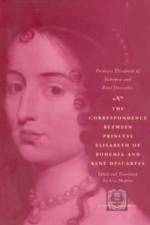
Between the years 1643 and 1649, Princess Elisabeth of Bohemia (1618-80) and Rene Descartes (1596-1650) exchanged fifty-eight letters - thirty-two from Descartes and twenty-six from Elisabeth. These letters are suitable for those interested in Descartes' philosophy, in particular his account of the human being as a union of mind and body.
Dahlhaus examines a single music-aesthetical idea from various historical and philosophical viewpoints.
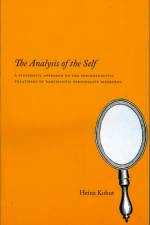
Establishes the industry standard of the treatment of personality disorders for a generation of analysts. This volume, known for its analysis of narcissism, is suitable for scholars and practitioners seeking to understand human personality in its many incarnations.
What does it mean to be in the studio? What is the space of the studio in the artist's practice? How do studios help artists envision their agency and, beyond that, their own lives? This title locates the studio both spatially and conceptually - at the center of an art world that careens across institutions, markets, and disciplines.
This standard textbook on battered children updates and adds to the previous editions, while retaining their multidisciplinary, comprehensive approach. It contains chapters on the current treatment and prevention of child abuse, covering paediatrics, psychiatry, and social and legal studies.
The second largest order of mammals, Chiroptera comprises more than one thousand species of bats. Because of their mobility, bats are often the only native mammals on isolated oceanic islands, where more than half of all bat species live. This book focuses on the evolution, ecology, and conservation of bats living in the world's island ecosystems.
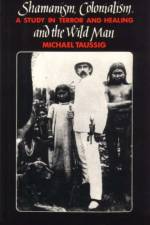
Looks at the interaction between civilized and primitive people in Colombia, examines the role of the shaman, and discusses healing practices in the jungle.
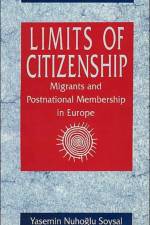
In this work, Yasemin Soysal compares the different ways in which European nations incorporate immigrants, how these policies evolved and how they are influenced by international human rights discourse. She focuses on post-war international migration, paying particular attention to "guestworkers".
"Nature" has published news about the history of life ever since its first issue in 1869. This work brings together 19 review articles written for "Nature" over the past decade. Topics include major extinction events, homeotic genes and body plans and the origin and evolution of the primates.
Parker works with a group of professional con men on his biggest job yet - robbing an entire town in North Dakota.
Presents an intellectual historical critique of the Fundamentalist movement in America. This work argues that our understanding of this movement has been grievously distorted by the Fundamentalist-Modernist debate of the 1920s, as symbolized by William Jennings Bryan and the Scopes trial.
How has bioethics evolved into a legitimate specialty? When is such expertise necessary? How do bioethicists make their decisions? And whose interests do they serve? This book addresses these questions while reflecting on the ethical dilemmas that the author's ethnographic research among surgeons and genetic counselors has provoked.
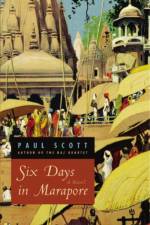
In this swiftly paced and lyrical novel about British expatriates at the time of Indian independence, Paul Scott grapples with the themes of race, possession, and history that dominate all four novels of his masterpiece, "The Raj Quartet," especially "The Jewel in the Crown." As always, Scott fills his book with vivid characters: the seductive, bigoted war widow; the sophisticated, wily Hindu politician; and the athletic young American who only gradually begins to understand the legacy of pain and hatred veiling the woman he has come to rescue. Set against the backdrop of a nation in violent transition--a climate of exhilaration and shifting loyalties--"Six Days in Marapore" unfolds amidst the possibility of reconciliation, freedom, and healing."Scott's brief characterizations are as important to "Six Days in Marapore "as the basic plot . . . This is not primarily a novel of India, but rather more of frightened foreigners living there at the end of their era."--"New York Times""Intense, abrasive, the many conflicts and telltale stigmata of Hindu and Moslem, white and off white, give this its uncertain temper and certain suspense."--"Kirkus Reviews"
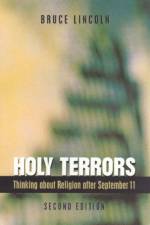
Beginning with a dissection of the instruction manual given to each of the 9/11 hijackers, this book talks about the September 11 and serves as a study on the character of religion. It shows how the terrorists justified acts of destruction and mass murder "in the name of God, the most merciful, the most compassionate."
Tracing the history of republican governments, this study moves from the Hebrew Bible, Solon's Athens and Brutus' Rome to the impeachment trial of Andrew Johnson, the Watergate proceedings and the Clinton impeachment. He builds up a definition of "republic" on the way.
What role does ritual play in the lives of modern Africans? How are "traditional" cultural forms deployed by people seeking empowerment in a world where "modernity" has failed to deliver. In this collection of essays, the authors address such concepts as modernity, ritual, power and history.
Cambridge graduate Roy Kerr solved the mathematical code - represented by six interlocking equations - of Albert Einstein's theory of general relativity in 1963. This title offers an account of the events leading up to Kerr's great discovery. It reveals the history behind the search for the real world solution to Einstein's field equations.
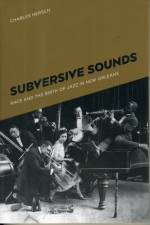
Probes New Orleans' history, uncovering a web of racial interconnections and animosities that was instrumental to the creation of a vital American art form - jazz. This book shows how musicians such as Jelly Roll Morton, Nick La Rocca, and Louis Armstrong negotiated New Orleans' complex racial rules to pursue their craft.
This study of how 282 men in the United States found their jobs demonstrates the importance of social connections and emphasizes how social activity influences labour markets. The importance of networking as a link between labour mobility and individual motivation is also studied.
Presents an extended case study of the 20th-century AIDS epidemic and the cultural circumstances from which it emerged. The book brings together anthropology, demography and epidemiology to explain how the Chagga people of Tanzania in Africa experience AIDS.
Abonner på vårt nyhetsbrev og få rabatter og inspirasjon til din neste leseopplevelse.
Ved å abonnere godtar du vår personvernerklæring.