

















Gjør som tusenvis av andre bokelskere
Abonner på vårt nyhetsbrev og få rabatter og inspirasjon til din neste leseopplevelse.
Ved å abonnere godtar du vår personvernerklæring.Du kan når som helst melde deg av våre nyhetsbrev.

From 1945 to 1960, the University of Chicago was home to a group of students whose work has come to define a second "Chicago School" of sociology. In this book, sociologists critically confront this legacy and discuss the internal conflicts that call into question the idea of a unified "school".
An analysis of the complex relationship between the structure of Nazareth's quarters and the relations between its ethnic communities. Based on interviews and a survey of 300 families, this book examines both the positive and negative effects of Nazareth's residential patterns.
The religions of ancient China, Brahmanism and Hinduism, Buddha and his contemporaries, Roman Religion, Celtic and German religions, Judaism, the Hellenistic period, the Iranian syntheses, and the birth of Christianity-all are encompassed in this volume.
This exploration of the work of nurses and other caregivers in nursing homes is set in the context of wider political, economic and cultural forces that influence, both positively and negatively, the quality of care for America's elderly.
Examining various museums, this text argues that Americans built the institutions with the confidence that they could collect, organize, and display the sum of the world's knowledge. It discovers how they gave definition to different bodies of knowledge and how that knowledge was presented.
This volume collects the entirety of Horace's lyric poetry, comprising all 103 odes, the "Carmen Saeculare" and the earlier epodes.
This text traces popular music back to its roots in jazz, blues, and country through the rise of rock 'n' roll and the emergence of heavy metal, punk, and rap. The author argues that despite the balance of these origins, something has gone seriously wrong with the sound and sensibility of music.
A history of the meaning of property, this text aims to uncover in American legal writing a competing vision of property which has existed alongside the traditional conception. It argues that property has also been understood as propriety, a method for creating and maintaining an organized society.
Takes us around the world in search of one of the most colorful characters in history - the court jester. This work includes anecdotes, jokes, quotations, epigraphs, and illustrations that shed light on little-known jesters, highlighting their humanizing influence on the head honchos of history.
Arranged to tell both the story of the library as an institution and its collecting history, this title covers topics such as: American culture throughout the ages, the history of Chicago and the Midwest, maps and exploration, religion, music and dance, medieval and Renaissance studies, and the indigenous people of the Americas.
Historians of British colonial rule in India have noted both the place of military might and the imposition of new cultural categories in the making of Empire. In this book, the author uncovers a lesser-known story of power: the power of bureaucracy.
This work explores what it meant to be Greek during the classical period of Greek civilization. Looking at a variety of social classes in regions such as Athens, Sparta, Arcadia and various Greek colonies, the text analyzes what made the Greek "different" in ways of acting, thinking and feeling.
Examining the complex confrontation between Jewish fundamentalism and Israeli political sovereignty, this study discusses Orthodoxy's divergent positions on Zionism, which range from radical condemnation to virtual beatification.
Paying special attention to the fertile boundaries between terrestrial, freshwater, and marine ecosystems, this work shows not only what this new methodology means for ecology, conservation, and agriculture but also serves as a fitting tribute to Gary Polis and his major contributions to the field
Challenges 'the limits of classical analytic theory' and the Freudian orthodoxy. This book proposes a 'psychology of the self' as a theory in its own right. It explores issues such as the role of narcissism in personality, when a patient can be considered cured, and the oversimplifications and social biases that unduly influenced Freudian thought.
This bilingual edition contains an introduction to the three major periods of the troubadours - their beginning, rise, and decline - as well as headnotes that briefly put each poet in context. Lark in the Morning will become an essential collection for those interested in learning about and teaching the origins of Western vernacular poetry.
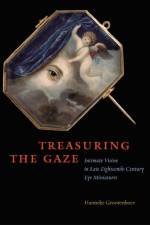
The end of the eighteenth century saw the start of a new craze in Europe: tiny portraits of single eyes that were exchanged by lovers or family members. Unearthing these portraits, the author proposes that the rage for eye miniatures - and their abrupt disappearance - reveals a knot in the unfolding of the history of vision.
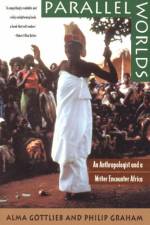
A memoir of Africa recounting the experiences of Alma Gottlieb, an anthropologist, and Philip Graham, a fiction writer, as they lived in two remote villages in the rain forest of Cote d'Ivoire.
When looking at how trauma is represented in literature and the arts, we tend to focus on the weight of the past. In this book, author suggests that this retrospective gaze has trapped us in a search for reason in the madness of the twentieth century's catastrophes at the expense of literature's prospective vision.
The first public orphanage in America, the Charleston Orphan House saw to the welfare and education of thousands of children from poor white families in the urban South. This book provides an illuminating look at social welfare provision in the antebellum South.
Mount Vesuvius has been famous ever since its eruption in 79 CE, when it destroyed and buried the Roman cities of Pompeii and Herculaneum. In this title, the author argues that this investigation and engagement with Vesuvius was paramount to the development of modern volcanology.
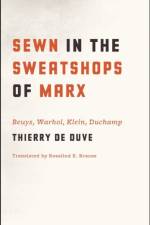
"Joseph Beuys", "Andy Warhol", "Yves Klein", and "Marcel Duchamp" form an unlikely quartet, but they each played a singular role in shaping a avant-garde for the 1960s and beyond. The author binds these artists through another connection: the mapping of the aesthetic field onto political economy.
As television emerged as a major cultural and economic force, many imagined that the medium would enhance civic education for topics like science. This title examines the content of shows and explores audience and advertiser responses, the role of news in engaging the public in science, and the making of scientific celebrities.
Abonner på vårt nyhetsbrev og få rabatter og inspirasjon til din neste leseopplevelse.
Ved å abonnere godtar du vår personvernerklæring.