















Gjør som tusenvis av andre bokelskere
Abonner på vårt nyhetsbrev og få rabatter og inspirasjon til din neste leseopplevelse.
Ved å abonnere godtar du vår personvernerklæring.Du kan når som helst melde deg av våre nyhetsbrev.

The celebrated economist Zvi Griliches' entire career can be viewed as an attempt to advance the cause of accuracy in economic measurement. This collection of papers from an NBER conference held in Griliches' honor, is a tribute to his many contributions to modern economic thought.
Maps the 169 fish families that swim in fresh water around the world. This book includes the class, subclass, and order; a pronunciation guide to the family name; life cycle information; and various natural history facts. It acts as a reference for students, a research support for professors, and a guide for tropical fish hobbyists and anglers.
Two out of the three novellas here have never before been published in English and they contain all the touchstones of Bernhard's work - illness and madness, isolation, tragic friendships, and dark humour.
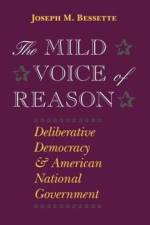
Drawing on original research, case studies of policy-making in Congress and portraits of American law-makers, this book argues that the institutional framework created by the founding fathers continues to foster a government that is both democratic and deliberative.
Reading Zen in the Rocks is a handsome addition to the library of anyone interested in gardening, Eastern philosophy, and the combination of the two that the karesansui so superbly represents.
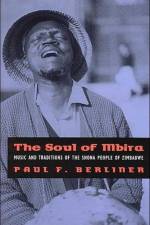
A scholarly portrayal of Shona musicians and the African Musical tradition. l Berliner provides the complete cultural context for the music and an intimate, precise account of the meaning of the instrument and its music.
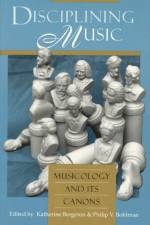
Confronting a topic that has sparked considerable debate in recent years: how do musicians and music scholars "discipline" music in their efforts to confer order and meaning on it? This collection of essays addresses this issue by formulating questions about music's canons.
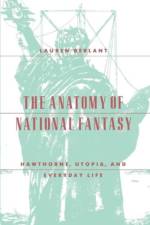
Examining the complex relationships between the political, popular, sexual, and textual interests of Nathaniel Hawthorne's work, Lauren Berlant argues that Hawthorne mounted a sophisticated challenge to America's collective fantasy of national unity. She shows how Hawthorne's idea of citizenship emerged from an attempt to adjudicate among the official and the popular, the national and the local, the collective and the individual, utopia and history. At the core of Berlant's work is a three-part study of "The Scarlet Letter," analyzing the modes and effects of national identity that characterize the narrator's representation of Puritan culture and his construction of the novel's political present tense. This analysis emerges from an introductory chapter on American citizenship in the 1850s and a following chapter on national fantasy, ranging from Hawthorne's early work "Alice Doane's Appeal" to the Statue of Liberty. In her conclusion, Berlant suggests that Hawthorne views everyday life and local political identities as alternate routes to the revitalization of the political and utopian promises of modern national life.
From Yellowstone's elk and wolves to rhinos living with African lions and moose coexisting with tigers and bears in Asia, this book tracks cultures of fear in animals across continents and climates, engaging readers with a stimulating combination of natural history, personal experience, and conservation.
Examines the relationships between human resource practices and productivity, changing ownership and production methods, and expanding trade patterns and firm competitiveness.
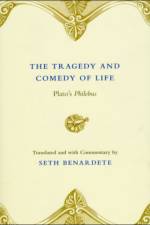
Focuses on the idea of the good in what is widely regarded as one of Plato's most challenging and complex dialogs, the Philebus. This title is suitable for classicists, philosophers, and political theorists.
Barbara M. Benedict draws on the texts of the early modern period to discover the era's attitudes toward curiosity, a trait which was often depicted as an unsavoury form of transgression or cultural ambition.
The popular perception of the lawyer, both within the legal community and beyond, is no longer the Abe Lincoln of American mythology, but is often a greedy, cynical manipulator of access and power. This book explores why lawyers are losing their profession and what it will take to bring it back.
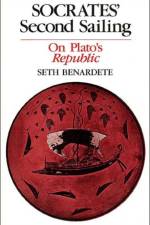
In this section-by-section commentary, Benardete argues that Plato's Republic is a holistic analysis of the beautiful, the good, and the just. This book provides a fresh interpretation of the Republic and a new understanding of philosophy as practised by Plato and Socrates.
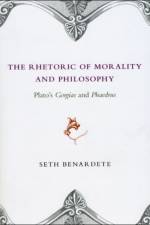
Interprets and pairs two important Platonic dialogs, the Gorgias and the Phaedrus, illuminating Socrates' notion of rhetoric and Plato's conception of morality and eros in the human soul. This book features a novel interpretation that addresses numerous issues in Plato studies.
An account which compares the contemporary anorexic teenager, counting every calorie in her single-minded pursuit of thinness, and the ascetic medieval saint, examining her every desire.
This work shows 16th-century Italy from an alternative perspective: through advice manuals which were staples in the households of middlebrow Italians just trying to lead a better life.
A history of the postwar avant-garde in America. The book integrates diverse moments in American culture, such as bebop jazz, gestalt therapy, beat poetry, Jungian psychology and Zen Buddhism and argues that all of these movements have a unifying theme: spontaneous improvization.
In this volume many of the world's leading conservation and population biologists evaluate what has become a key tool in estimating extinction risk and evaluating potential recovery strategies - population viability analysis, or PVA.
Gail Bederman investigates the connection between powerful manhood and racial dominance as it was debated, promoted and resisted during the decades around the turn of this century.
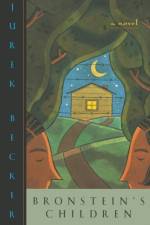
An 18-year-old Jew discovers that his father's friends are holding prisoner a former Nazi concentration camp guard. They are interrogating and torturing him in an attempt to get him to admit his crimes. This novel illustrates the tensions between the holocaust generation and their children.
Recognizing that the humanities have engaged many of the important intellectual currents of the last twenty-five years in ways that sociology has not, the contributors to this volume fully acknowledge that the boundary between the social sciences and the humanities has begun to dissolve. This challenging volume explores that border area.
Abonner på vårt nyhetsbrev og få rabatter og inspirasjon til din neste leseopplevelse.
Ved å abonnere godtar du vår personvernerklæring.