















Gjør som tusenvis av andre bokelskere
Abonner på vårt nyhetsbrev og få rabatter og inspirasjon til din neste leseopplevelse.
Ved å abonnere godtar du vår personvernerklæring.Du kan når som helst melde deg av våre nyhetsbrev.

An interactive dictionary that offers an original approach for understanding and working with the most central concepts in political science. It provide readers with fresh critical insights about what informs these political concepts, as well as a method by which readers - and especially students - can unpack and reconstruct them on their own.
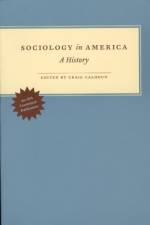
Though the word sociology was coined in Europe, the field of sociology grew most dramatically in America. Despite that disproportionate influence, American sociology has never been the subject of an extended historical examination. To remedy that situation--and to celebrate the centennial of the American Sociological Association--Craig Calhoun assembled a team of leading sociologists to produce Sociology in America. Rather than a story of great sociologists or departments, Sociology in America is a true history of an often disparate field--and a deeply considered look at the ways sociology developed intellectually and institutionally. It explores the growth of American sociology as it addressed changes and challenges throughout the twentieth century, covering topics ranging from the discipline's intellectual roots to understandings (and misunderstandings) of race and gender to the impact of the Depression and the 1960s. Sociology in America will stand as the definitive treatment of the contribution of twentieth-century American sociology and will be required reading for all sociologists.
This study focuses on the use and meaning of grammatical markers of tense, aspect and modality, and identifies a universal set of grammatical categories. It argues that the same paths of change occur in languages in different phyla and that movement along these paths is in one direction only.
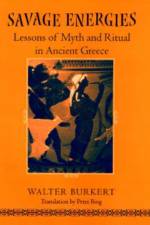
We often think of classical Greek society as a model of rationality and order. Yet, in this text, Walter Burkert demonstrates that there were archaic, savage forces, with potentially violent and destructive energies, surging beneath the outwardly calm face of classical Greece,
Burchfield charts the enormous impact made by Lord Kelvin's application of thermodynamic laws to the question of the earth's age and the heated debate his ideas sparked among British Victorian physicists, astronomers, geologists, and biologists.
In this remarkable history of one of the most popular symphonic works of the modern period, Esteban Buch traces the complex and contradictory uses - and abuses - of Beethoven's Ninth Symphony since its premiere in 1824.
Drawing on hundreds of operas, sing-spiels, ballets, and plays with supernatural themes, this book argues that the tension between fantasy and Enlightenment-era rationality shaped some of the most important works of eighteenth-century musical theater and profoundly influenced how audiences and critics responded to them.
Can ordinary people really gather together and make laws that are binding on themselves and their communities? Frank M. Bryan discusses this with particular reference to the New England town meeting which provides a model of such a pure form of democracy.
As the US went to war in 1941, "Time" magazine founder Henry Luce coined a term for what was rapidly becoming the establishment view of America's role in the world: the twentieth century, he argued, was the American Century. But an important concentration of Midwestern historians actively dissented. This book tells their story of opposition.
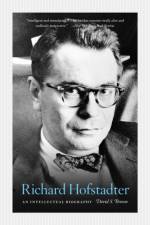
Richard Hofstadter (1916-70) was America's most distinguished historian of the twentieth century. The author of several books, including The American Political Tradition, he was a champion of the liberal politics that emerged from the New Deal. This biography explores his life within the context of the rise and fall of American liberalism.
This book is an invitation to think about why children chew pencils; why we talk to our cars, our refrigerators, our computers; rosary beads and worry beads; Cuban cigars; why we no longer wear hats that we can tip to one another and why we don't seem to long to; and what has been described as bourgcois longing.
In this text Bernadette Brooten examines female homoeroticism and the role of women in the ancient Roman world. She establishes the fact that condemnations of female homoerotic practices were based on widespread awareness of sexual love between women.
Using courtly song as a window, this work examines the culture of the French royal court. It considers the role of the "air de cour" in defining patronage hierarchies at court, and the relationship to the world beyond its own confines.
This text juxtaposes cases from law and literature to view the kinds of truth we associate with confessions, and why we both rely on them and regard them with suspicion. By questioning the truths of confession, Brooks challenges us to reconsider how we demand confessions and what we do with them.
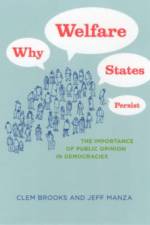
The world's richer democracies all provide such public benefits as pensions and health care, but why are some far more generous than others? Analyzing data on sixteen countries, this work finds that the preferences of citizens profoundly influence the welfare policies of their governments and the behavior of politicians in office.
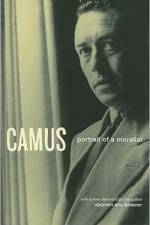
Decades after his death, Albert Camus (1913-60) is still regarded as one of the most influential and fascinating intellectuals of the twentieth century. This biography explores the connections between his literary work, his philosophical writings, and his politics. It also highlights the contemporary relevance of an extraordinary man.
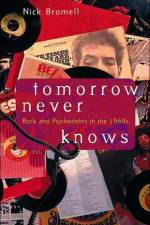
This work takes us back to the primal scene of the 1960s and asks: what happened when young people got high and listened to rock as if it really mattered - as if it offered meaning and sustenance, not just escape and entertainment?
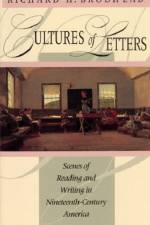
Using a variety of historical sources, Brodhead reconstructs the institutionalized literary worlds that coexisted in nineteenth-century America: the domestic culture of letters; mass-produced cheap reading; the culture of post-emancipation black education. He describes how these socially structured worlds shaped literary practice for writers.
This collection of 18 articles shows how conceptions of the political are expanded and revised when viewed through the lens of gender. It re-examines such basic notions as citizenship, collectivity, political resistance and the state.
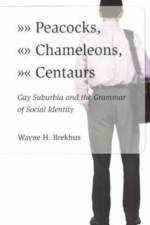
In this ethnography of American gay suburbanites, Wayne H. Brekhus demonstrates that who one is depends at least in part on where and when one is. He shows that lifestyling, and integrating occurs not only among gay men but across a broad range of social categories.
Abonner på vårt nyhetsbrev og få rabatter og inspirasjon til din neste leseopplevelse.
Ved å abonnere godtar du vår personvernerklæring.