























Gjør som tusenvis av andre bokelskere
Abonner på vårt nyhetsbrev og få rabatter og inspirasjon til din neste leseopplevelse.
Ved å abonnere godtar du vår personvernerklæring.Du kan når som helst melde deg av våre nyhetsbrev.

Intended as a sequel to "Primate Societies", this book compiles thirty-one chapters that review the state of knowledge regarding the behavior of nonhuman primates. It includes chapters that are organized around four major adaptive problems primates face as they strive to grow, maintain themselves, and reproduce in the wild.
Takes us through the social processes by which shock incites terror, terror invites war, war invokes emergency, and emergency supports unchecked power. This title reveals how the domestic political culture created by the cold war has driven these developments forward since 9/11.
Leonard Meyer proposes a theory of style and style change that relates the choices made by composers to the constraints of psychology, cultural context, and musical traditions. The latter part of this book contains a sketch-history of 19th-century music.
A great and universal book....one of my all-time favorites.....The fascinating details build out to profound statements, with light touches about the deepest issues that concern us all: creativity, originality, the social context of discovery, to name just a few.'-Stephen Jay Gould
In this text nine leading academics consider the problems confronting the American university in terms of their effect on the future of academic freedom.
While the modern world has largely dismissed the figure of the saint as a throwback, we remain fascinated by excess, marginality, transgression, and porous subjectivity - categories that define the saint. This collection examines how modernity returns to the lure of saintly grace, energy, and charisma.
Elucidates three origins, or geneses, of life - bacteria, cells, and multicellular organisms - and shows how evolution has sculpted life to its biodiversity through four main events: mutation, recombination, natural selection, and geologic cataclysm. This book emphasizes the role of unions in organizing life.
This text presents the biological and political horror story of the algae in the Mediterranean. This work - part detective story and part bureaucratic object lesson - presents a classic case of a devastating ecological invasion and how "not" to deal with it.
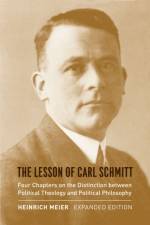
In 1928, German philosopher Carl Schmitt published "The Concept of the Political." It quickly became one of the most influential works of political philosophy published and remains a classic. In 1932, a young student of political theory named Leo Strauss published a critique of "Concept" and over the next two years, wrote several letters to Schmitt questioning aspects of his argument. Schmitt never answered Strauss's letters, but in his revision of the book, he changed a number of passages in response to Strauss's criticisms without even acknowledging them. In this volume, Heinrich Meier shows what this remarkable "hidden dialogue" reveals about the development of these two seminal thinkers. At the center of the dialogue, Meier argues, was the mutual attempt to define exactly what politics is and how it relates to the philosophical tradition and to modern society. Taking Hobbes's "war of all against all" as his inspiration, Schmitt challenged contemporary liberal society's unwillingness to admit that politics was literally "a matter of life and death." Meier's book insightfully reveals how Strauss's critique forced Schmitt to see that the Hobbesian state was, instead, the very foundation of the liberalism he so despised. "Heinrich Meier's treatment of Schmitt's writings is morally analytical without moralizing, a remarkable feat in view of Schmitt's past. He wishes to understand what Schmitt was after rather than to dismiss him out of hand or bowdlerize his thoughts for contemporary political purposes."--Mark Lilla, "New York"" Review of Books "
Clarifies the difference between political philosophy and Carl Schmitt's political theology and relates the religious dimension of his thought to his support for National Socialism and his continuing anti-Semitism. This title includes essays that address the correspondence of Schmitt, and the light it sheds on his conception of political theology.
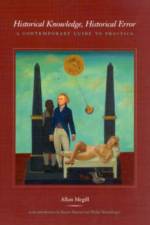
Historians have chronicled language, madness, gender, and sexuality and have experimented with fresh forms of presentation. This work suggests that there is confusion among historians about what counts as a justified account of the past. It dispels some of the confusion, and also discusses issues of narrative, objectivity, and memory.
Reveals why the US differs from comparable democracies that routinely elect far more women to their national governing bodies and chief executive positions. Explaining that equal rights alone do not ensure equal access to political office, this title shows that electoral gender parity also requires public policies that represent maternal traits.
Now, from the sweet fragrance of roses, bitterness stings our nostrils. The bay's withdrawn from us, the beach is littered with broken things - splintered oars, bits of old clay pipe from a long ago shipwreck, fragments of china plates. Enchanting, those days my townspeople scavenged rare cargo, furnishing their long winters with random wares.
Federico Garcia Lorca (1898-1936) had an enormous impact on the generation of American poets who came of age during the cold war, from Robert Duncan and Allen Ginsberg to Robert Creeley and Jerome Rothenberg. This book offers an exploration of the afterlife of this Spanish writer in the poetic culture of the United States.
Presents a document from the last months of the Holocaust. This book tells the story of the Terezin camp and how the author and her family fared while imprisoned there.
Provides a treatment of algebraic topology that reflects the enormous internal developments within the field and retains the classical presentations of various topics where appropriate. Most chapters end with problems that further explore and refine the concepts presented.
With firm foundations dating only from the 1950s, algebraic topology is a relatively young area of mathematics. This title addresses the course material, such as fundamental groups, covering spaces, the basics of homotopy theory, and homology and cohomology. It covers topics that are useful for algebraic topologists.
In this work, the author departs from the traditional Western view that moral responsibility is limited to the consequences of overt individual action. He argues that individuals share responsibility for various harms perpetrated by their communities.
Abonner på vårt nyhetsbrev og få rabatter og inspirasjon til din neste leseopplevelse.
Ved å abonnere godtar du vår personvernerklæring.