












Gjør som tusenvis av andre bokelskere
Abonner på vårt nyhetsbrev og få rabatter og inspirasjon til din neste leseopplevelse.
Ved å abonnere godtar du vår personvernerklæring.Du kan når som helst melde deg av våre nyhetsbrev.

This study of power/knowledge in France, from the 1830s through the 1930s, uses the tools of anthropology, philosophy, and cultural criticism to examine how the social environment was described. It aims to show how modernity was revealed in urban planning, architecture, and social legislation.
A standard track gauge - the distance between the two rails - enables connecting railway lines to exchange traffic. This book offers a global history of railway track gauges, examining early choices and the dynamic process of diversity and standardization that resulted.
Race is a factor in government efforts to control dangerous drugs, but the precise ways that race affects drug laws remain difficult to pinpoint. Illuminating this relationship, this book lays out how decades of racism helped shape a punitive US drug policy whose onerous impact on racial minorities has been ignored by Congress and the courts.
Examines literary evidence and government and scientific documents to uncover the history of changing attitudes towards wetlands in the American Midwest. This text charts the changes brought about in scientific research agendas, government policies, and farmers' strategies for managing their land.
Suitable for those interested in popular science, this title focuses on the popular reception of relativity in Britain and demonstrates how abstract science came to be entangled with class politics, media technology, changing sex relations, crime, cricket, and cinematography in the British imagination during the 1920s.
What is so "primitive" about primitive art? And how do we dare to use our standards to judge? Drawing on a mixture of sources, this text explores the cultural arrogance implicit in Westerners' appropriation of non-Western art.
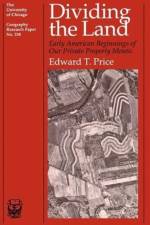
Many property lines drawn in early America still survive today and continue to shape the landscape and character of the United States. This study examines the process by which land was divided into private property and distributed to settlers from the beginning of colonization to early nationhood.
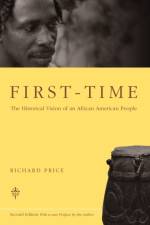
"First Time" traces the shape of historical thought among peoples who had previously been denied any history at all. Each page of the book presents s transcript of oral histories told by living Saramakas about their 18th century ancestors, with additional commentary.
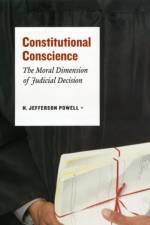
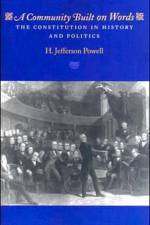
Advocating a different approach - one that eschews ideology but still values personal perspective, this work makes a case for the centrality of individual conscience in constitutional decision making. It argues that almost every controversial decision has more than one constitutionally defensible resolution.
H. Jefferson Powell offers a powerful new approach to one of the central issues in American constitutional thinking today: the many ways in which constitutional arguments and outcomes are shaped both by historical circumstances and by political goals - including those of judges.
Jean-Antoine Houdon (1741-1826) has long been recognized as the greatest European portrait sculptor of the late eighteenth century, flourishing during both the American and French Revolutions as well as during the Directoire and Empire in France.
This collection features essays that consider the role of anti-semitism in the recounting of the Holocaust; the place of the catastrophe in the narrative of twentieth century history;the questions of agency and victimhood that the Holocaust inspires.
The author here examines eighteen farming communities of Tanga Region, Tanzania, an area of rural poverty with a long history of drought, floods, food shortages, famine, and social and economic disruption to understand what the farmers there know about their environment and which historical and economic factors play into the lack of food security.
Historians' autobiographies, Popkin shows, reveal how scholars arrive at their vocations, the difficulties of writing about modern professional life, and the ways in which personal stories can add to our understanding of historical events such as war, political movements, and the traumas of the Holocaust.
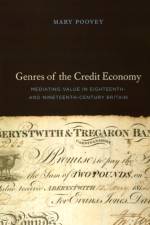
How did banking, borrowing, investing, and even losing money - in other words, participating in the modern financial system - come to seem like routine activities of everyday life? This title addresses this question by examining the history of financial instruments and representations of finance in eighteenth- and nineteenth-century Britain.
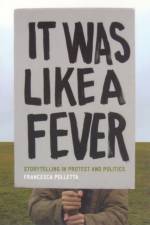
Sets out to account for the power of storytelling in mobilizing political and social movements. Analysing storytelling in courtrooms, newsrooms, public forums, and the United States Congress, this title offers fresh insights into the dynamics of culture and contention.
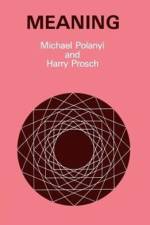
Published very shortly before his death in February 1976, Meaning is the culmination of Michael Polanyi's philosophic endeavors. With the assistance of Harry Prosch, Polanyi goes beyond his earlier critique of scientific "objectivity" to investigate meaning as founded upon the imaginative and creative faculties. Establishing that science is an inherently normative form of knowledge and that society gives meaning to science instead of being given the "truth" by science, Polanyi contends here that the foundation of meaning is the creative imagination. Largely through metaphorical expression in poetry, art, myth, and religion, the imagination is used to synthesize the otherwise chaotic and disparate elements of life. To Polanyi these integrations stand with those of science as equally valid modes of knowledge. He hopes this view of the foundation of meaning will restore validity to the traditional ideas that were undercut by modern science. Polanyi also outlines the general conditions of a free society that encourage varied approaches to truth, and includes an illuminating discussion of how to restore, to modern minds, the "possibility for the acceptance of religion.
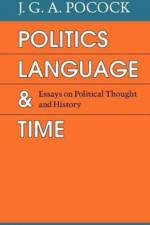
In his first essay, "Languages and Their Implications," J. G. A. Pocock announces the emergence of the history of political thought as a discipline apart from political philosophy. Traditionally, "history" of political thought has meant a chronological ordering of intellectual systems without attention to political languages; but it is through the study of those languages and of their changes, Pocock claims, that political thought will at last be studied historically. Pocock argues that the solution has already been approached by, first, the linguistic philosophers, with their emphasis on the importance of language study to understanding human thought, and, second, by Thomas Kuhn's "The Structure of Scientific Revolutions," with its notion of controlling intellectual paradigms. Those paradigms within and through which the scientist organizes his intellectual enterprise may well be seen as analogous to the worlds of political discourse in which political problems are posed and political solutions are proffered. Using this notion of successive paradigms, Pocock demonstrates its effectiveness by analyzing a wide range of subjects, from ancient Chinese philosophy to Machiavelli, Hobbes, and Burke.
Abonner på vårt nyhetsbrev og få rabatter og inspirasjon til din neste leseopplevelse.
Ved å abonnere godtar du vår personvernerklæring.