













Gjør som tusenvis av andre bokelskere
Abonner på vårt nyhetsbrev og få rabatter og inspirasjon til din neste leseopplevelse.
Ved å abonnere godtar du vår personvernerklæring.Du kan når som helst melde deg av våre nyhetsbrev.

The heist of a college football game goes sour, and the take is stolen by a crazed, violent amateur. Parker must outrun the cops - and the killer - to retrieve his cash.
Uses the figure of A S Eddington (1882-1944) - a pioneer in astrophysics, relativity, and the popularization of science, and a devout Quaker - to show how religious and scientific values can interact without compromising the integrity of either. This book questions many common assumptions about the relationship between science and spirituality.
Firebreak takes Parker to a palatial Montana "hunting lodge" where a dot-com millionaire hides a gallery of stolen old masters - which will fetch Parker a pretty penny if his team can get it past the mansion's tight security.
Includes the essays - from Frank Echenhofer's foray into shamanist hallucinogenic visions to David Bashwiner's analysis of emotion and danceability - that develop a common language for implementing programmatic and institutional change.
Exploring eighteenth century concerns about privacy, this examination of scrutiny and social pressure looks at diaries, autobiographies, poems and works of pornography in order to show the possibilities of privacy, and its social repercussions.
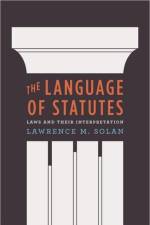
Pulling the rug out from under debates about interpretation, this title joins together learning from law, linguistics, and cognitive science to illuminate the fundamental issues and problems in this highly contested area.
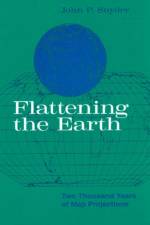
Cartographers have long grappled with the impossibility of portraying the earth in two dimensions. To solve this problem, mapmakers have created map projections. This work discusses and illustrates the known map projections from before 500BC to the present, with facts on their origins and use.
From Tuscaloosa west to Mississippi then north to Memphis through country as unmusical as I was unloved by the decorous ardor of the South and the voice of one whose griefs were Cherokee, absentee, left in the Chevy and secret. She didn't love my love like Shiva's everywhere and blue and many-handed, some with knives and some with billet-doux.
Who gets to say what counts as contemporary art? Artists, critics, curators, gallerists, auctioneers, collectors, or the public? Revealing how these groups have shaped multifaceted definition, this title shows that a historical approach offers the best answer to the question: What Is Contemporary Art?
This study provides an analysis of the commitments, beliefs and concerns of American evangelicals and examines how they interact with and influence secular society, the text argues that traditional, orthodox evangelicalism endures because of the challenges of our modern pluralistic environment.
Blending physiology and psychology with historical examples of social change and a model of social systems, this work examines how societies are made possible. The influences of love relationships, attachments, and addictive behaviours in society are also discussed here.
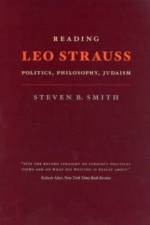
Shows that Leo Strauss' defense of liberal democracy was closely connected to his skepticism of both the extreme Left and extreme Right. It assesses Strauss's attempt to direct teaching of political science away from examination of mass behavior and interest-group politics and toward study of philosophical principles on which politics are based.
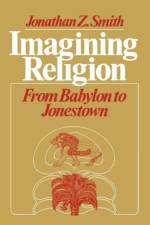
One of the most influential theorists of religion, Jonathan Z. Smith is best known for his analyses of religious studies as a discipline and for his advocacy and refinement of comparison as the basis for the history of religions. "Relating Religion" gathers seventeen essays--four of them never before published--that together provide the first broad overview of Smith's thinking since his seminal 1982 book, "Imagining Religion."Smith first explains how he was drawn to the study of religion, outlines his own theoretical commitments, and draws the connections between his thinking and his concerns for general education. He then engages several figures and traditions that serve to define his interests within the larger setting of the discipline. The essays that follow consider the role of taxonomy and classification in the study of religion, the construction of difference, and the procedures of generalization and redescription that Smith takes to be key to the comparative enterprise. The final essays deploy features of Smith's most recent work, especially the notion of translation.Heady, original, and provocative, "Relating Religion" is certain to be hailed as a landmark in the academic study and critical theory of religion.
From Shakespeare's 'green-eyed monster' to the 'green thought in a green shade' in Andrew Marvell's "The Garden," the color green was curiously prominent and resonant in English culture during the 16th and 17th centuries. This title considers the significance of the color in the literature, visual arts, and popular culture of early modern England.
Among the most influential and enigmatic thinkers of the modern age, Nietzsche and Heidegger have become pivotal in the struggle to define postmodernism. This work offers an examination of the writings of these philosophers.
A collection of articles by 26 leading professionals that survey the theoretical, historical, methodological, empirical and clinical aspects of repression and the repressive personality style. The text examines various topics from both psychoanalytic and cognitive psychological perspectives.
Abonner på vårt nyhetsbrev og få rabatter og inspirasjon til din neste leseopplevelse.
Ved å abonnere godtar du vår personvernerklæring.