


























Gjør som tusenvis av andre bokelskere
Abonner på vårt nyhetsbrev og få rabatter og inspirasjon til din neste leseopplevelse.
Ved å abonnere godtar du vår personvernerklæring.Du kan når som helst melde deg av våre nyhetsbrev.

Charts the Anglophilia that emerged after the American Revolution and remains in the character of US society and class, the style of academic life, and the idea of American intellectualism. This work traces the wideranging effects of Anglophilia on American literature, art, and intellectual life in the early nineteenth century.
Ann Swidler's work is an attempt to discover how people find and sustain real love in the midst of that talk, and how the culture of love shapes their expectations and behaviour.
Presents thirty-four traditional stories about the Buddha in his previous incarnations, both human and animal. This book paints a vivid picture of life at a high point in ancient Indian culture, city life in ordinary households or at the royal court, and country life against a backdrop of mountain, desert, and jungle.
Seeks to understand why French literature of the period celebrated the very characters who were so persecuted in society at large. This book explores the relation between orthodoxy and deviance, authority and innovation, and will fascinate historians of ideas and literature as well as scholars of religion, critical theory, and philosophy.
Chinese-Western comparative literature has been recognized as a formal academic discipline, but little has been done to develop a viable, common basis for comparison between these disparate literatures. This book establishes repetition as the ideal perspective from which to compare the poetry and poetics from these two traditions.
"Tiger Moon" is the powerful, poetic story of the Sunquists' two years studying tigers in Nepal. A new afterword tells the story of promising efforts to reconnect fractured Nepalese tiger habitats.
Traces the relationships between disease, hygiene, politics, geography, and nationalism in British Mandatory Palestine between the world wars. Taking up the case of malaria control in Jewish-held lands, this book illustrates how efforts to thwart the disease were intimately tied to the project of Zionist nation-building.
How have our conceptions of primate behaviour and society changed since primatology came into its own after World War II? This work studies this question, and reflects on primatology and science in general, and on the relations of both to broader cultural, historical and social issues.
Offers a views of rhetoric through the lens of modality, arguing that rhetoric's guiding interest in what is possible makes it a suitable tool for understanding politics. This title examines rhetoric's role in the history of modernity and to makes connections between thinkers from the classical, early modern, and modern periods.
Published posthumously, this book offers insight into Plato's text "Laws".
In this text Leo Strauss articulates the conflict between reason and revelation as he explores Spinoza's scientific, comparative, and textual treatment of the Bible.
Blending ethnographic description with social analysis, Stoller shows how West African entrepreneurs have built cohesive and effective multinational trading networks in New York. Their stories illuminate ongoing debates about globalisation.
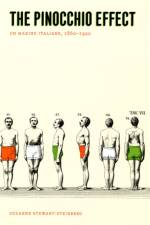
Soon after the disparate states of the Italian peninsula unified in the 1860s to create a single nation, the nationalist Massimo D'Azeglio is said to have remarked, "We have made Italy, now we have to make Italians." This work draws on a broad array of sources to trace this making of a modern national identity in Italy.
In this introduction to philosophy of biology, Kim Sterelny and Paul E. Griffiths present both the science and the philosophical context necessary for a critical understanding of the debates shaping biology at the end of the 20th century.
This work argues that a number of devout Christians, including trained theologians, displayed an uncanny preoccupation with the topic of witches having sex with demons during the centuries of the "witch craze". It analyzes the first treatises on witchcraft to discover why.
Germany's overseas colonial empire was relatively short-lived, lasting from 1884 to 1918. During this period, dramatically different policies were enacted in the colonies. Why did the same colonizing power act in such differing ways? This work tackles this question through a cross-cultural analysis of German colonialism.
Our era is defined by the model. From Victoria's Secret and America's Next Top Model to the snapshots we post on Face-book and Twitter, our culture is fixated on the pose, the state of existing simultaneously as artifice and the real thing. The author shows us the very meaning of the arts in the process of transformation.
Abonner på vårt nyhetsbrev og få rabatter og inspirasjon til din neste leseopplevelse.
Ved å abonnere godtar du vår personvernerklæring.