













Gjør som tusenvis av andre bokelskere
Abonner på vårt nyhetsbrev og få rabatter og inspirasjon til din neste leseopplevelse.
Ved å abonnere godtar du vår personvernerklæring.Du kan når som helst melde deg av våre nyhetsbrev.

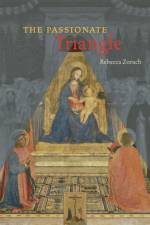
Triangles abounded in the intellectual culture of early modern Europe - the Christian Trinity was often mapped as a triangle, for instance, and perspective, a characteristic artistic technique, is based on a triangular theory of vision. This book takes us on a hunt for the triangle's embedded significance.
This volume brings to the study of China the theoretical concerns and methods of contemporary critical cultural studies. Contributors investigate problems of bodiliness, engendered subjectivities and discourses of power through written texts, paintings, buildings, interviews and observations.
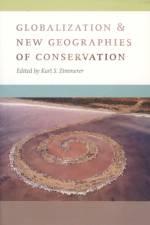
Examining the geographical dimensions of environmental management and conservation activities implemented on landscapes worldwide, this title collects case studies to explore the interaction of humans and their environment. Bridging the gap between geography and life science, it is of interest to students of the environment.
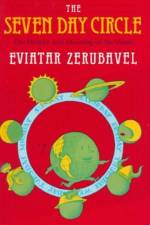
Because new nations need new pasts, they create new ways of commemorating and recasting select historic events. In this volume Yael Zerubavel illuminates this dynamic process by examining the construction of Israeli national tradition.
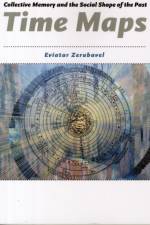
Who were the first people to inhabit North America? Does the West Bank belong to the Arabs or the Jews? Why are racists so obsessed with origins? Is a seventh cousin still a cousin? Why do some societies name their children after dead ancestors? As Eviatar Zerubavel demonstrates in Time Maps, we cannot answer burning questions such as these without a deeper understanding of how we envision the past. In a pioneering attempt to map the structure of our collective memory, Zerubavel considers the cognitive patterns we use to organize the past in our minds and the mental strategies that help us string together unrelated events into coherent and meaningful narratives, as well as the social grammar of battles over conflicting interpretations of history. Drawing on fascinating examples that range from Hiroshima to the Holocaust, from Columbus to Lucy, and from ancient Egypt to the former Yugoslavia, Zerubavel shows how we construct historical origins; how we tie discontinuous events together into stories; how we link families and entire nations through genealogies; and how we separate distinct historical periods from one another through watersheds, such as the invention of fire or the fall of the Berlin Wall. Most people think the Roman Empire ended in 476, even though it lasted another 977 years in Byzantium. Challenging such conventional wisdom, Time Maps will be must reading for anyone interested in how the history of our world takes shape.
If Kant had never made the "critical turn" of 1773, would he be worth more than a paragraph in the history of philosophy? Most scholars think not. But this text challenges that view by revealing a precritical Kant who was immensely more influential than the one philosophers think they know.
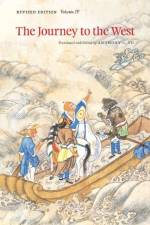
Written in the sixteenth century, this book tells the story of the fourteen-year pilgrimage of the monk Xuanzang, one of China's most famous religious heroes, and his four supernatural disciples, in search of Buddhist scriptures.
Written in the sixteenth century, this book tells the story of the fourteen-year pilgrimage of the monk Xuanzang, one of China's most famous religious heroes, and his four supernatural disciples, in search of Buddhist scriptures.
The notion of the disposable camera permeates the entire book, where the author considers the instabilities in even our deepest attachments. Here gulfs expand, for instance, between twins, between the musician and his instrument, between the recluse and his inconsolable solitude.
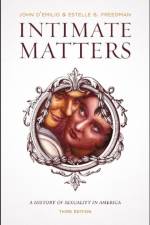
Gives us an understanding of how sexuality has dramatically influenced politics and culture throughout our history. Hailed by critics for its comprehensive approach and noted by the US Supreme Court in the Lawrence v Texas ruling, this book details the changes in sexuality and the ongoing growth of individual freedoms in the United States.
Deals with the author's journeys in the Levant, the exotic land that stands at the crossroads of western Asia, the eastern Mediterranean, and northeast Africa. Part travelogue, part field guide, and part literary appreciation, this title assembles six interlinked essays that explore the seaboard of the Levant and its deserts.
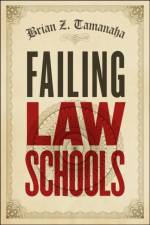
On the surface, law schools today are thriving. Enrollments are on the rise, and their resources are often the envy of every other university department. Yet behind the flourishing facade, law schools are failing abjectly. This resource is suitable for assessing what's wrong with law schools and figuring out how to fix them.
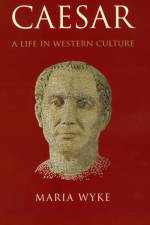
"Caesar" is not so much about Caesar the man as all the many versions of him in poetry, literature, opera, and drama. . . . A lively and thought-provoking read which skips lightly across the centuries.--Adrian Goldsworthy, "Spectator"
Analyzes the events in 1993 that led to the death of 74 men, women and children in the Waco religious community in Texas. Examining topics such as the media's role and the relation between religion and violence, the book discusses why the tragedy took place and whether it could have been avoided.
Until the nineteenth century, the Russian legal system was subject to an administrative hierarchy headed by the tsar, and the courts were expected to enforce, not interpret the law. This title traces the first professional class of legal experts who emerged during the reign of Nicholas I (1826-56).
Treats the period from 1450 to 1650, long considered the most important in the history of European mapping. Presenting histories of mapping in such well-documented regions as Italy and Spain, this volume looks at Renaissance Europe. It also provides essays on the technological, scientific, cultural, and social aspects of cartography.
Although they are often rendered in forms unfamiliar to Western eyes, maps have existed in most cultures. In this text contributors from a variety of disciplines collaborate to describe and address the significance of traditional cartographies.
Cartographers know that maps are more than just representations of the world; rather, every map reflects the agendas and intentions of its creators. Employing several nature maps, this book explores the different aspects of maps' self-presentation: from place names to titles and legends.
Abonner på vårt nyhetsbrev og få rabatter og inspirasjon til din neste leseopplevelse.
Ved å abonnere godtar du vår personvernerklæring.