















Gjør som tusenvis av andre bokelskere
Abonner på vårt nyhetsbrev og få rabatter og inspirasjon til din neste leseopplevelse.
Ved å abonnere godtar du vår personvernerklæring.Du kan når som helst melde deg av våre nyhetsbrev.

Thus far, we have succeeded in preventing a nuclear war, and this is partly due to the various treaties signed in the 1960s forswearing the use of nuclear technology for military purposes. The author seeks to understand why some nations agreed to these limitations of their sovereign will - and why others decidedly did not.
Haydn's music has been performed continuously for more than two hundred years. But what do we play, and what do we listen to, when it comes to Haydn? This book delves deeply into eighteenth-century history and musicology to help us hear a properly complex Haydn.
Ever since Kant and Hegel, the notion of autonomy - the idea that we are beholden to no law except one we impose upon ourselves - has been considered the truest philosophical expression of human freedom. This book uncovers dangers in the notion of autonomy as it was originally conceived by Kant.
Rather than a stark, unbroken line dividing East and West in Cold War Europe, the Iron Curtain was instead made up of distinct landscapes. This book traces a genealogy of one such landscape - the woods between Czechoslovakia and West Germany - to debunk our misconceptions about the iconic partition.
One of the most memorable Shakespearean characters is Edgar in King Lear. The author asks us to rethink all those received ideas - and thus to experience King Lear as never before. He argues that Edgar is Shakespeare's most radical experiment in characterization - and also his most exhaustive model of both human and theatrical possibility.
While Marco Polo's writings would go on to inspire the likes of Christopher Columbus, scholars have long debated their veracity. Now, there's new evidence: a collection of fourteen little-known maps and related documents said to have belonged to the family of Marco Polo himself. The author offers an analysis of these artifacts.
The landscapes of Madagascar have long delighted zoologists, who have discovered, in and among the island's baobad trees and thickets, a dizzying array of animals, including something approaching one hundred species of lemur. This book helps you explore these land animal extinctions.
Among those institutions most in need of an impressive creation account is the state: it's one of the primary ways states attempt to legitimate themselves. Using the story of how Harald Fairhair unified Norway in the ninth century, the author illuminates the way a state's foundation story blurs the distinction between history and myth.
Presents a fresh approach to how traditional art mediums - painting, sculpture, and drawing - changed in the twentieth century as a result of photography, film, and other technologies. Thsi book challenges some of the most respected and entrenched criticism of the past several decades - and allows us to think about these artists anew.
In recent years, evolutionary psychology and behavioral genetics have emerged as prominent theoretical perspectives within the social sciences. This book brings together contributors who shed light on the potential that behavioral genetics and evolutionary psychology offer for studies of organizational behavior.
Over the course of a fifty-year career, Donald E Westlake published nearly one hundred books, including not one but two long-running series, starring the hard-hitting Parker and the hapless John Dortmunder. This book offers a clear picture of the man behind the books - including his background, experience, and thoughts on his own work.
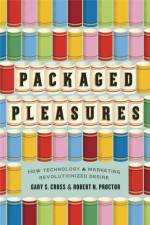
From the candy bar to the cigarette, records to roller coasters, a technological revolution during the last quarter of the nineteenth century precipitated a colossal shift in human consumption and sensual experience. This book sheds new light on the origins of modern consumer culture and how technologies have transformed human sensory experience.
Illustrating that product marketing, patent litigation, and even ghostwriting pervaded natural history and medicine - the "big sciences" of the early modern era, this book argues that the growth of global trade during the Dutch Golden Age gave rise to an entrepreneurial network of transnational science.
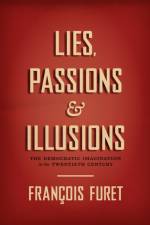
With strokes at once broad and incisive, this book examines the many different trajectories that nations of the West have followed over the past hundred years. It features a testament to the crucial role of the historian, a reflection on how history is made and lived, and how the imagination is a catalyst for political change.
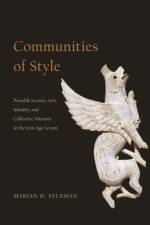
Examines the production and circulation of portable luxury goods throughout the Levant in the early Iron Age (1200-600 BCE). In particular, this book focuses on how societies in flux came together around the material effects of art and style, and their role in collective memory.
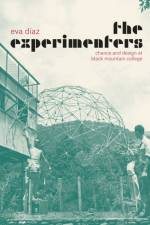
Practically every major artistic figure of the mid-twentieth century spent some time at Black Mountain College: Harry Callahan, Merce Cunningham, Walter Gropius, Willem and Elaine de Kooning, Robert Motherwell, Robert Rauschenberg, Aaron Siskind, Cy Twombly - the list goes on and on. This book reveals the influence of Black Mountain College.
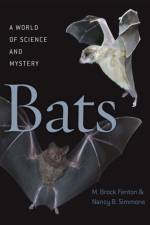
There are more than 1,300 species of bats - or almost a quarter of the world's mammal species. But before you shrink in fear from these furry "creatures of the night," consider the bat's fundamental role in our ecosystem. A single brown bat can eat several thousand insects in a night. This book presents these nocturnal creatures in a new light.
Considers how foreign-exchange intervention was affected by changing economic and institutional circumstances - most notably the abandonment of the international gold standard - and how political and bureaucratic factors affected this aspect of public policy.
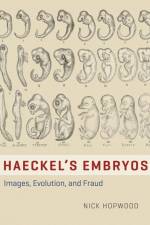
Emphasizing the changes worked by circulation and copying, interpretation and debate, this book uses the case to explore how pictures succeed and fail, gain acceptance and spark controversy. It reveals how embryonic development was made a process that we can see, compare, and discuss, and how copying - usually dismissed as unoriginal.
For biologists, 2009 was an epochal year: the bicentennial of Charles Darwin's birth and the 150th anniversary of the publication of a book now known simply as The Origin of Species. This book investigates flowers from Darwin's home in England, through the southern hemisphere, and on to North America and China.
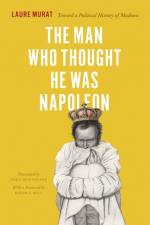
The Man who thought he was Napoleon is built around a bizarre historical event and an off-hand challenge. The event? In December 1840, nearly twenty years after his death, the remains of Napoleon were returned to Paris for burial - and the next day, the director of a Paris hospital for the insane admitted fourteen men who claimed to be Napoleon.
Vladimir Jankelevitch was one of the most distinctive voices in twentieth-century philosophy. In The Bad Conscience, Vladimir lays the foundations for his later work, Forgiveness, grappling with the conditions that give rise to the moral awareness without which forgiveness would make no sense. This is an English-language translation of his work.
Moving chronologically and thematically through the complex history of the conflict, the author interweaves his own vivid memories of soldiering in the Pacific - from the look on a Japanese fighter pilot's face as he bombed Pearl Harbor, so close that Jones could see him smile and wave, to hitting the beach under fire in Guadalcanal.
The chronicle of a family-owned restaurant in Buffalo, this book recalls the pre-war days when 'George and Eddie's' was a Polish tavern, through the swinging forties when it became a swank nightspot, to its eventual demise amid the changing social scene of modern America.
Otto Toeplitz did not teach calculus as a static system of techniques and facts to be memorized. Instead, he drew on his knowledge of history of mathematics and presented calculus as an organic evolution of ideas. Through this approach, Toeplitz elucidated mathematical advances that contributed to modern calculus. This work deals with this topic.
The first volume of "Late Editions" presents conversations between American scholars, most of whom are anthropologists, and individuals situated amidst political and social upheaval with whom they share affinities. The cast is primarily but not exclusively from Eastern Europe.
Behind the innocent face of Victorian fairy tales such as "Through the Looking Glass", lurks the spectre of an intense gender debate about the very nature of childhood. The author considers the relationships between adults and children, and adults and their own childhood selves.
George Inness (1825-94) is considered one of America's greatest landscape painters. A complicated artist and thinker, he painted stunning, evocative views of the American countryside. This title demonstrates how the artistic, spiritual, and scientific aspects of Inness' art found expression in his landscapes.
Abonner på vårt nyhetsbrev og få rabatter og inspirasjon til din neste leseopplevelse.
Ved å abonnere godtar du vår personvernerklæring.