










Gjør som tusenvis av andre bokelskere
Abonner på vårt nyhetsbrev og få rabatter og inspirasjon til din neste leseopplevelse.
Ved å abonnere godtar du vår personvernerklæring.Du kan når som helst melde deg av våre nyhetsbrev.

Providing historical context to help us reevaluate the current furor over homosexuality in the Church, this book brings to light the myriad ways that modern churches and openly gay men and women can learn from the wealth of each other's cultural and spiritual experience.
Faced with widespread reports of religious persecution, public and private actors around the world have responded with laws and policies designed to promote freedom of religion. What are the cultural and epistemological assumptions underlying this response, and what forms of politics are enabled in the process?
Faced with widespread reports of religious persecution, public and private actors around the world have responded with laws and policies designed to promote freedom of religion. What are the cultural and epistemological assumptions underlying this response, and what forms of politics are enabled in the process?
Taking its cue from social critics and historians who have long looked toward Detroit to understand twentieth-century urban transformations, the author tells the story of Jews leaving the city while retaining a deep connection to it. He argues convincingly that though most Jews moved to the suburbs, urban abandonment, disinvestment, and more.
Explores the relationships between empiricism and theory, human and animal. The author reveals how anatomy and natural history were connected through animal dissection and vivisection. She tell the story of Joseph-Guichard Duverney, who performed violent, riot-inducing dissections of both animal and human bodies before the king at Versailles.
Throughout the Great Recession American artists and public art endowments have had to fight for government support to keep themselves afloat. This book outlines the successes, shortcomings, and lessons of the golden age of government funding for the arts.
The comparative physiology of seemingly disparate organisms often serves as a pathway to biological enlightenment. The author reveals, survival in conditions such as those faced by seals is often not about running for cover or coming up for air, but rather about working within the confines of an environment and suppressing normal bodily function.
William Hyde Wollaston made an astonishing number of discoveries in an astonishingly varied number of fields. This book features length study of Wollaston, his science, and the environment in which he thrived. It will help to reinstate Wollaston in the history of science and the pantheon of its great innovators.
Offers a collection of fifty-three essays. This book reveals, the question of whether laughter is acceptable to the god of the Old and New Testaments is a dangerous one. It shows that Renaissance thinkers revived ancient ideas about what inspires laughter and whether it could ever truly be innocent.
A mountain of chairs piled between buildings. Shoes sewn behind animal membranes into a wall. A massive crack running through the floor of Tate Modern. This title includes, over one hundred color illustrations by sculptor Doris Salcedo. It is a testament to the power of one of today's most important international artists.
Founded around 1700 by a group of German Lutherans known as Pietists, the Halle Orphanage became the institutional headquarters of a universal seminar that still stands largely intact today. The author reveals, those teaching and training in Halle Orphanage contributed to the transformation of scientific observation and its related activities.
Carrying his story into the twentieth century, the author mounts an argument for freeing fairy tales from their bland contemporary forms, and reinvigorating your belief that we still can find new, powerfully transformative ways of telling these stories.
Why are Kazakhstan and Montana the same place?" This book narrates the histories of locales that have been silenced, broken, or contaminated. It also examines the making and unmaking of place, and the lives of the people who remain in the fragile landscapes that are left behind.
Long before Moneyball became a sensation, or Nate Silver turned the knowledge he'd honed on baseball into electoral gold, the authors were using statistics to shake the foundations of the game. In this book, they argue in favor of more subtle measurements that correlated much more closely to the ultimate goal: winning baseball games.
Drawing on an array of artworks and chroniclers' accounts, to reassess the medieval visual culture in which banquets were staged, this book shows the ways of appreciating artistic skill and attending to their own processes of perception, thereby forging a court culture that delighted in the exercise of fine aesthetic judgment.
In the digital age, photography confronts its future under the competing signs of ubiquity and obsolescence. By examining the medium as articulated in literature, film, and the graphic novel, this book demonstrates how photography secures identity for figures with an unstable sense of self.
Gathering together the reflections of twenty-three prominent little magazine editors whose literary journals have flourished over the past thirty-five years, this book highlights the creativity and innovation behind this medium, contributors offer insights into how their publications sometimes succeeded, and more.
Examines different kinds of emptiness essential to American Christianity, such as the emptiness of deep longing, the emptying of the body through fasting or weeping, the emptiness of the wilderness, and the emptiness of historical time itself. This book expands your understanding of historical and contemporary Christian practices.
Work is changing. Speed and flexibility are more in demand than ever before thanks to an accelerating knowledge economy and communication networks. The author offers for the first time a comprehensive framework for understanding how these new groups function and thrive. His analysis tackles both the pros and cons of this evolving workflow.
What does it mean to be free? The author shows that individual agency is best conceived as a non-sovereign experience because our ability to act and affect the world depends on how other people interpret and respond to what we do. It enables us to see human action, personal responsibility, and the meaning of liberty in a totally new light.
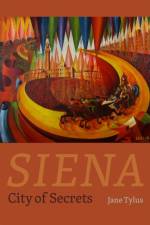
A practical guide for tourists and armchair travelers. It features Siena's artistic and architectural past, hidden behind centuries of painting and rebuilding. It takes the reader on a quest of discovery through the well- and not-so-well-traveled roads and alleys of a town both medieval and modern.
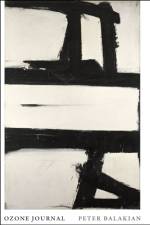
Features a sequence of fifty-four short sections, each a poem in itself. This book recounts the speaker's memory of excavating the bones of Armenian genocide victims in the Syrian desert with a crew of television journalists.
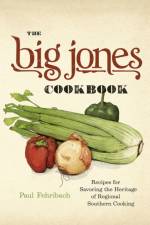
You expect to hear about restaurant kitchens in Charleston, New Orleans, or Memphis perfecting plates of the finest southern cuisine. But who would guess that one of the most innovative chefs cooking heirloom, regional southern food is based not in the heart of biscuit country, but in the grain-fed Midwest - in Chicago, no less?
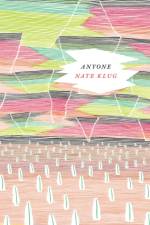
Using a variety of forms and achieving a range of musical effects, this book traces the unraveling of astonishment upon small scenes-natural and domestic, political and religious - across America's East and Midwest.
Explores our species role as a source of both discord and balance in Serengeti ecosystem dynamics. This book shows how the people and landscapes surrounding crucial protected areas like Serengeti National Park can and must contribute to Serengeti conservation.
Explores our species role as a source of both discord and balance in Serengeti ecosystem dynamics. This book shows how the people and landscapes surrounding crucial protected areas like Serengeti National Park can and must contribute to Serengeti conservation.
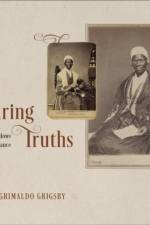
Runaway slave Sojourner Truth gained fame in the nineteenth century as an abolitionist, feminist, and orator and earned a living partly by selling cartes de visite of herself at lectures and by mail. This book explores how she used her image, the press, the postal service, and copyright laws to support her activism and herself.
Ask anyone to picture a bird or a fish and a series of clear images will immediately come to mind. Ask the same person to picture plankton and most would have a hard time conjuring anything beyond a vague squiggle or a greyish fleck. This book explains the biological underpinnings of each species while connecting them to the larger living world.
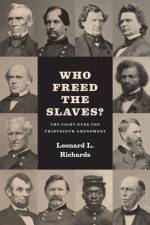
Presents a story of the battle over the Thirteenth Amendment, and of James Ashley, the unsung Ohio congressman who proposed the amendment and steered it to passage. This book takes you to the floor of Congress and to the back rooms where deals were made. It brings to life the messy process of legislation and more.
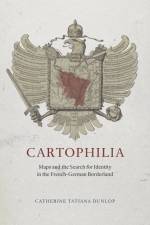
In focusing on the power of "bottom-up" maps to transform modern European identities, the author argues that the history of cartography must expand beyond the study of elite maps and shift its emphasis to the democratization of cartography in the modern world.
Abonner på vårt nyhetsbrev og få rabatter og inspirasjon til din neste leseopplevelse.
Ved å abonnere godtar du vår personvernerklæring.