













Gjør som tusenvis av andre bokelskere
Abonner på vårt nyhetsbrev og få rabatter og inspirasjon til din neste leseopplevelse.
Ved å abonnere godtar du vår personvernerklæring.Du kan når som helst melde deg av våre nyhetsbrev.

Differences among religious communities have motivated - and continue to motivate - many of the deadliest conflicts in human history. But how did political power and organized religion become so thoroughly intertwined? This book focuses on the "big three monotheisms" - Judaism, Islam, and Christianity - to consider such questions.
On Thursday, July 13, 1995, Chicagoans awoke to a blistering day on which the temperature would eventually climb to 106 degrees. This book reveals how in coming decades the effects of climate change will intensify the social and environmental pressures in urban areas around the world.
Chronicles the ascendance of the once - maligned science of paleontology to the vanguard of a field. This title includes contributions and overviews from historians and philosophers of science.
With a glimpse of the daily life of European art and artists during the fertile last decades of the nineteenth century, this book is suitable for anyone passionate about opera.
From art to city planning, from epidemiology to poetry, this book challenges the conventional wisdom about both Mexico City and the turn-of-the-century world to which it belonged. It engages directly with the rise of modernism and the cultural experiences of such personalities as Hart Crane, Mina Loy, and Diego Rivera, and more.
Treating issues of language, aesthetics, semiotics, and cognition, this book offers an evaluation and an original theory of the ways our cultural values have informed the metaphors we use to address music.
Presents a historical account of the origin, rise, and importance of paleobiology. The author shows how the movement was conceived and promoted by a group of paleontologists and examines the intellectual, disciplinary, and political dynamics involved in the ascendency of paleobiology. It offers insight on data-driven approaches in recent science.
From Superman and Batman to the Fantastic Four and the X-Men, these pop-culture juggernauts, with their "powers and abilities far beyond those of mortal men," thrilled readers and audiences. The author shows how creators turned to science fiction to convey the reality of the paranormal they experienced in their lives.
Lauded for providing discussion of the Courts' significant decisions, this volume keeps at the forefront of the reforms and interpretations of American law. It considers issues such as post-9/11 security, the 2000 presidential election, cross burning, federalism and state sovereignty, failed Supreme Court nominations, and more.
Integrates gender analysis with the global history of science and medicine from the late Middle Ages to the present by focusing on masculinity. In exploring scientific masculinities, this book asks: how has masculinity been defined, and what are the mechanisms by which it operates in science?
Because of their enormous size, elephants have long been irresistible for kings as symbols of their eminence. The author traces the history of the war elephant in India and the spread of the institution to the West, where elephants took part in some of the greatest wars of antiquity.
Takes readers into the lives of three - and four-year-old Head Start students during their first year of school and focuses on the centerpiece of their school day: story acting. In this activity, students act out stories from high-quality children's literature as well as stories dictated by their peers.
On August 20, 1940, Marxist philosopher, politician, and revolutionary Leon Trotsky was attacked with an ice axe in his home in Coyoacan, Mexico. He died the next day. The author offers his account of Trotsky's assassination as witnessed through the eyes of an array of characters: the young American student, the Mexican police chief, and more.
Skittering figures of urban legend - and a ubiquitous reality - cockroaches are nearly as abhorred as they are ancient. This book shows that, while some species of these evolutionary superstars do indeed plague our kitchens and restaurants, exacerbate our asthma, and carry disease, our belief in their total villainy is ultimately misplaced.
Brings together a consortium of voices comprised of renowned scientists, historians, philosophers, environmental writers, activists, policy makers, and land managers to negotiate the incredible challenges that environmentalism faces.
Brings together a consortium of voices comprised of renowned scientists, historians, philosophers, environmental writers, activists, policy makers, and land managers to negotiate the incredible challenges that environmentalism faces.
Offers an argument that the study of historical figures is not only an interpretation of their views, but can be understood as a form of philosophy itself. Examining a number of philosophers to explore the nature of this interanimation, this book presents an assortment of thoughtful examples of historical commentary that enact philosophy.
Presenting a conversation among leading scholars in the areas of international legal standards, counter-terrorism strategy, humanitarian law, and the ethics of force, this book takes an account of American drone campaigns and the developing legal, ethical, and strategic implications of way of warfare.
Up until the end of the eighteenth century, the way Ottomans used their clocks conformed to the inner logic of their own temporal culture. This book unravels the complexity of Ottoman temporal culture and tells the story of its transformation. It presents us with a new understanding of the relationship between time and modernity.
Taking up policies and experiences as objects of research and analysis, the essays here seek a rigorous inquiry into a sound conceptualization of uncertainty in order to better confront contemporary problems. This book offers different ways of thinking about danger, risk, and uncertainty from an analytical and anthropological perspective.
Organizing contributions from various anthropological subfields, including economics, security and environment, the authors offer tools which consider uncertainty, its management, and the differing modes of subjectivity appropriate to it. The also present ways of thinking about danger and risk from an analytical and anthropological perspective.
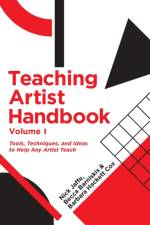
Based on the premise that teaching artists have the ability to engage students as fellow artists, this book includes a collection of essays, stories, lists, examples, dialogues, and ideas, all offered with the aim of helping artists create and implement effective teaching based on their own expertise and strengths.
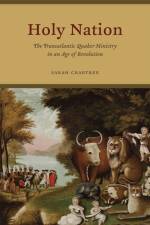
Shows how Quakers forged a paradoxical sense of their place in the world as militant warriors fighting for peace. The author argues that during the turbulent Age of Revolution and Reaction, the Religious Society of Friends forged a "holy nation," a transnational community of like-minded believers committed to divine law and to one another.
Drawing on a variety of sixteenth-century sources, including household inventories, epigrams, dedications, catalogs, travel books, and advice manuals, this book studies how individuals displayed different maps in their homes as deliberate acts of self-fashioning.
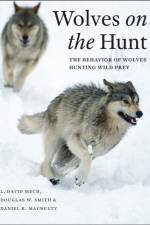
By describing and analyzing the behaviors wolves use to hunt and kill various wild prey - including deer, moose, caribou, elk, Dall sheep, mountain goats, bison, muskoxen, arctic hares, beavers, and others, this book provides a revelatory portrait of one of nature's greatest hunters.
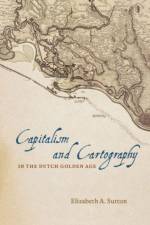
Explores the neglected history of corporate cartography during the Dutch Golden Age, from circa 1600 to 1650. The author examines how maps were used as propaganda tools for the Dutch West India Company in order to encourage the commodification of land and an overall capitalist agenda.
Explores the resonance American conservatives felt with the defeat of Chiang Kai-Shek and his exile to Taiwan, which they lamented as the loss of China to communism and the corrosion of traditional values.
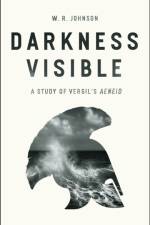
With an approach to the text that is both grounded in scholarship and intensely personal, and in a style both rhetorically elegant and passionate, this book offers readings of specific passages that are nuanced and suggestive as it focuses on the "somber and nourishing fictions" in Vergil's poem.
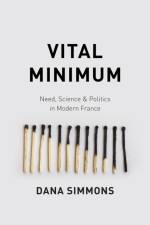
What constitutes a need? Who gets to decide what people do or do not need? The author traces the history of this concept, revealing the intersections between technologies of measurement, such as calorimeters and social surveys, and technologies of wages and welfare, such as minimum wages, poor aid, and welfare programs.
In a cemetery on the southern outskirts of Paris lie the bodies of nearly a hundred of what some have called the first casualties of global climate change. This book tells the stories of these victims and the catastrophe that took their lives. It explores the multiple narratives of disaster-the official story of the crisis and its aftermath.
Abonner på vårt nyhetsbrev og få rabatter og inspirasjon til din neste leseopplevelse.
Ved å abonnere godtar du vår personvernerklæring.