
























Gjør som tusenvis av andre bokelskere
Abonner på vårt nyhetsbrev og få rabatter og inspirasjon til din neste leseopplevelse.
Ved å abonnere godtar du vår personvernerklæring.Du kan når som helst melde deg av våre nyhetsbrev.

How did flying birds evolve from running dinosaurs, terrestrial trotting tetrapods from swimming fish, and whales return to swim in the sea? These are some of the great transformations in the history of life; events that have captured the imagination of scientists and the general public alike. At first glance, these major evolutionary events seem utterly impossible. The before and after look so fundamentally different that the great transformations of the history of life not only seem impossible, but unknowable. The 500 million year history of vertebrates is filled with change and, as a consequence, every living species contains within its structure, DNA, and fossil record, a narrative of them. A battery of new techniques and approaches, from diverse fields of inquiry, are now being marshaled to explore classic questions of evolution. These approaches span multiple levels of biological organization, from DNA sequences, to organs, to the physiology and ecology of whole organisms. Analysis of developmental systems reveals deep homologies of the mechanisms that pattern organs as different as bird wings and fish fins. Whales with legs are one of a number of creatures that tell us of the great transformations in the history of life. Expeditions have discovered worms with a kind of head, fishes with elbows, wrists, and necks; feathered dinosaurs, and human precursors to name only a few. Indeed, in the last 20 years, paleontologists have discovered more creatures informative of evolutionary transitions than in the previous millennium. "The Great Transformations "captures the excitement of these new discoveries by bringing diverse teams of renowned scientists together to attack particular transformations, and to do so in a contents organized by body part--head, neck, fins, limbs, and then the entire bauplan. It is a work that will transform evolutionary biology and paleontology."
Papers of the conference "Enterprising America: businesses, banks, and credit markets in historical perspective," held at Vanderbilt University, Nashville TN, on December 14, 2013.
In this historical tour de force, Simon Reid-Henry rewrites the usual story of globalization and development as a story of the management of inequality. Reaching back to the eighteenth century and around the globe, Reid-Henry foregrounds the political turning points and decisions behind the making of today's uneven societies.
Police, the press, and the public all see the kind of violence that besets the inner city today as irrational and basically about turf, revenge, or drugs. Renowned criminologist and expert on gangs, John Hagedorn here tells a very different and little-known story centered on the dramatic rise and fall of a Mafia-like Latino organization in Chicago called "Spanish Growth & Development." Hagedorn's main informant is 'Sal Martino, ' an Italian Mafioso who became intimately involved with the "In$ane Family," one of the factions of Spanish Growth & Development. Through Sal's first-hand account, Hagedorn shows that the violence was not a result of "disorganized crime" but rather the outcome of SGD's prolonged demise. He gives us for the first time a detailed the history of SGD-the reasons for its creation, the uneasy alliances between gang families, the organization's reliance on bottom-up police corruption, and its ultimate collapse in a pool of blood at a 1999 "peace" conference. Revealing the hidden and riveting stories of Chicago gangs' efforts to build structures ostensibly to reduce violence and to organize crime, of the integration of gang and mafia history, and of the central role of police corruption in Chicago's gangland, "The In$ane Chicago Way" makes a powerful argument for the need to regard corruption as the bedrock of gang power. It dispels the notion that gang violence can be explained solely by ecological, neighborhood-based processes and sheds light on the current gang situation in Chicago by laying bare its history while raising disturbing questions for researchers, policy-makers, and the public.
The concept of biopower was popularized by French philosopher Michel Foucault in the late 20th century and employed by him throughout the latter part of his career. "Bio-pouvoir "describes a power bent on generating forces, making them grow, and ordering them, rather than one dedicated to impeding them, making them submit, or destroying them. This revolutionary concept of power marked, to greater and lesser degrees, Foucault s published and unpublished works throughout the remainder of his life. Biopower, however, is not a strictly Foucaultian motif; it has been a pervasive theme in much of 20th-century thought, found in the philosophies of Hannah Arendt, Jacques Derrida, Gilles Deleuze, Giorgio Agamben, Michael Hardt, and Antonio Negri. Though much work has been done with the concept of biopower by various figures since Foucault, little has been done to unify the disparate themes and motifs currently being explored through the use of this concept. On display in this volume is the diversity of the uses of the concept as top scholars work here each in a unique way with the notion of biopower."
A story of alienation, love, suspense, and imagination set on the streets of San Juan, Puerto Rico, SIMONE describes a self-educated Chinese immigrant student stalking (and courting) a disillusioned writer. The novel begins with the writer's frustrated, satiric observations on his native city and the life of the university where he teaches. It progresses to the cat-and-mouse game he enters into with his mystery stalker; finally it describes his recognition of the plight of Chinese immigrant workers in Puerto Rico. Traumatized and lonely, the characters move towards bitter-sweet collaborations in passion, grief, literature and art. Longing to escape his isolation and his native city, the writer ends by embracing both.
"Published in collaboration with The Center for Humans and Nature"--Title page verso.
"Originally published as L'origine de l'hermaeneutique de soi: confaerences prononcaees aa Dartmouth College, 1980. Librairie Philosophique J. Vrin, Paris, 2013."
The Chicago Housing Authority s Plan for Transformation repudiated the city s large-scale housing projects and the paradigm that produced them. The Plan seeks to normalize public housing and its tenants, eliminating physical, social, and economic barriers among populations that have long been segregated from one another. But is the Plan an ambitious example of urban regeneration or a not-so-veiled effort at gentrification? Is it resulting in integration or displacement? What kinds of communities are emerging from it? Chaskin and Joseph s book is the most thorough examination of the Plan to date. Drawing on five years of field research, in-depth interviews, and data, Chaskin and Joseph examine the actors, strategies, and processes involved in the Plan. Most important, they illuminate the Plan s limitations which has implications for urban regeneration strategies nationwide."
This book takes on the American artist Arthur Dove's life in the studio, working away with the radio crackling, records playing, thermometers and barometers on the wall spiking and plunging, clocks ticking, telephones ringing. DeLue is particularly interested in Dove's later work--the art he produced starting in the 1920s--when he became fascinated with scientific and technological advances that were becoming commonplace. For example, sound technology was rapidly evolving in the shape of commercial radio broadcasting, talkies, records, and music itself. Dove was obsessed with the science, the materiality, of sound, and he used it as a tool in developing many paintings.
The Serengeti is one of the world's most renowned ecosystems, and at its apex prowls the Serengeti Lion. These majestic mammals are iconic, and integral, and also in constant danger from encroaching humans. Craig Packer is among the unique species that has spent a lifetime ensuring the study and perpetuity of these dark maned cats. He has dedicated countless research hours and dollars to the coexistence of humans and wildlife in the Serengeti. He has even proposed ways of using lion hunting to ensure their value, and hence their protection. "Lions in the Balance "takes us into the red-in-tooth-and-claw world of lion conservation. It is an incredibly candid, entertaining, and at points alarming look at what the future of the Serengeti lions entails, and how the politics of conservation require survival strategies far more creative and powerful than what animals (humans included) on the savannas must possess. A sequel to Mr. Packer's "Into Africa, "this diary based chronicle of the past decade draws readers along the dusty trails and into the spectacular sunsets of the Serengeti. Through his experiences we learn that female lions prefer their male manes dark and long, that lion attacks on humans most commonly occur during the full moon cycles, and that citizen science is shaping the world--Packer's initiative Snapshot Serengeti has helped engage globally, and locally, and has identified thousands of images of the Serengeti. The narrative moves from Arusha to the Serengeti to Washington DC, and with some temporal hopping, as often the stories are as rich and multilayered as the Serengeti ecosystem. And Mr. Packer demonstrates that he possesses himself a bit of cat, having needed nearly nine lives to persist in the ever dynamic and vexed world of conservation in Africa.
Miles of shelf space in contemporary Japanese bookstores and libraries are devoted to travel guides, walking maps, and topical atlases. Young Japanese children are taught how to properly map their classrooms and schoolgrounds. Elderly retirees pore over old castle plans and village cadasters. Pioneering surveyors are featured in popular television shows, and avid collectors covet exquisite scrolls depicting sea and land routes. Today, Japanese people are zealous producers and consumers of cartography, and maps are an integral part of daily life. But this was not always the case: a thousand years ago, maps were solely a privilege of the ruling elite in Japan. Only in the past four hundred years has Japanese cartography truly taken off, and between the dawn of Japan's cartographic explosion and today, the nation's society and landscape have undergone major transformations. At every point, maps have documented those monumental changes. Cartographic Japan offers a rich introduction to the resulting treasure trove, with close analysis of one hundred maps from the late 1500s to the present day, each one treated as a distinctive window onto Japan's tumultuous history. Forty-seven distinguished contributors--hailing from Japan, North America, Europe, and Australia--uncover the meanings behind a key selection of these maps, situating them in historical context and explaining how they were made, read, and used at the time. With more than one hundred gorgeous full-color illustrations, Cartographic Japan offers an enlightening tour of Japan's magnificent cartographic archive.
In medicine today, public health and medical interventions are largely risk reducing and risk controlling rather than treating symptoms or curing disease. In several cases risk factors have almost become diseases in themselves. As Robert Aronowitz vividly depicts, we are experiencing a convergence of risk and disease, and a market-driven expansion of risk interventions. We increasingly understand and accept that many medical interventions are efficacious because they reduce risk. It is often the case, however, that little science supports risk interventions that have become commonplace. "Risky Medicine" wrestles with the problems associated with the conflation of risk and traditional notions of disease. It explores not only how we got to this point but what the implications are for our health care system and our personal dealings with doctors. The subject is hugely important for patients and doctors, and it matters enormously in health care policy going forward.
"I address you across more than three thousand years, you who live at the conjunction of the Fish and the Water-carrier," speaks Daedalus, an artisan, inventor, and designer born into an utterly alien family of heroes who value acts of war above all else, a world where his fellow Greeks seem driven only to destroy--an existence he feels compelled to escape. In this fictional autobiography of the father of Icarus, "Apollo's creature," a brilliant but flawed man, writer and sculptor Michael Ayrton harnesses the tales of the past to mold a myth for our times. We learn of Daedalus's increasingly ambitious artifacts and inventions; his fascination with Minoan culture, commerce, and religion, and his efforts to adapt to them; how he comes to design the maze of the horned Minotaur; and how, when he decides that he must flee yet again, he builds two sets of wax wings--wings that will be instruments of his descent into the underworld, a place of both purgatory and rebirth. A compelling mix of history, fable, lore, and meditations on the enigma of art, The Maze Maker will ensnare classicists, artists, and all lovers of story in its convolutions of life and legend. "I never understood the pattern of my life," writes Daedalus, "so that I have blundered through it in a maze."
Since the 1960s social scientists have been reluctant to discuss the cultural dimensions of racial inequality - not wanting to "blame the victim" for having "wrong values". This text employs cultural analysis toward an understanding of how cultural structures articulate the black/white problem.
Looking at the history of the United States with a focus on three diseases - smallpox, typhoid fever, and yellow fever, this book shows how constitutional rules and provisions that promoted individual liberty and economic prosperity also influenced the country's ability to eradicate infectious disease.
Documents cultural and religious sites across the Tibetan Plateau and its bordering regions from the Paleolithic and Neolithic times all the way up to today. This book ranges through the five periods in Tibetan history, offering introductory maps of each followed by details of western, central, and eastern regions.
Every year, about 25,000 new products are introduced in the United States. Most of these products fail - at considerable expense to the companies that produce them. This book brings the insights of marketing and organizational behavior to bear on the attitudes and behaviors of the remaining 80 percent who resist innovation.
Examining a variety of works, from revenge plays to Shakespeare's first history tetralogy and beyond, the author explores how this title not only exposed the faultlines of society on stage but also provoked playgoers in the audience to acknowledge all the differences they shared with one another.
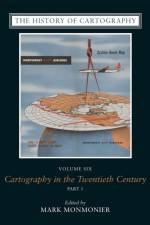
The twentieth century is a pivotal period in map history. Geographic information systems radically altered cartographic institutions and reduced the skill required to create maps. This volume features expert contributors who provide both original research, and interpretations of larger trends in cartography.
In eighteenth - and nineteenth-century Britain, books of travel and exploration were much more than simply the printed experiences of intrepid authors. This book takes readers on a journey into the nature of exploration.
Abonner på vårt nyhetsbrev og få rabatter og inspirasjon til din neste leseopplevelse.
Ved å abonnere godtar du vår personvernerklæring.