






















Gjør som tusenvis av andre bokelskere
Abonner på vårt nyhetsbrev og få rabatter og inspirasjon til din neste leseopplevelse.
Ved å abonnere godtar du vår personvernerklæring.Du kan når som helst melde deg av våre nyhetsbrev.

"In this early and seminal novella, Thomas Bernhard raises many of the themes he will elaborate on in later work: madness, death, suicide, the fragility of identity, and his hatred for his native Austria. The story takes the form of a conversation between the narrator and his friend Oehler, walking together and talking about their mutual friend Karrer, who has gone mad. Oehler does most of the talking. He often quotes Karrer, and he repeats phrases in rhythmic patterns, providing the text with fugue-like complexity. Brian Evenson calls this "In some respects the most overtly philosophical text in Bernhard's highly philosophical oeuvre."
Theodore Roosevelt first set foot into the field as a very young man, started a natural history museum at 8 years old, and reveled in expeditions in the field throughout his life. His adventures defined him--his policies and his persona--and are wonderfully chronicled in his journals and notebooks. TR's constant quest and passion for the outdoors influenced his experiences from the Spanish American War, to negotiations with Cuba, to hikes through Yellowstone with John Muir. Michael Canfield uses the notebooks to illuminate the force of nature in TR's life. He isolates the elements that drove Roosevelt-- his love of science and nature, his need to express manliness, his drive for empire--all of which share a common thru line, that of a propelling wish to act these out in the field. The outdoors to Roosevelt was like a perfect field jacket, which had a specific purpose, and yet which he donned for many pursuits--hunting, fishing, hiking, natural history study. This work invites readers to join TR on his adventures, with Canfield as a guide, and in the pages of his writings unearth a better understanding of what drove one of history's most remarkable characters.
What should parents expect during their child's first year of college? Roger Martin, double president emeritus of two colleges, spent a year visiting five diverse colleges--public and private, large and small, elite and non-elite--in order to offer the parents of college-bound seniors a comprehensive overview of the first-year college experience. In addition to a stint with dorm life and time with students and professors, Martin draws from conversations with a wide variety of campus administrators and staff members--in financial aid, campus police, sports, health care, and disabilities accommodations. We join Martin, for example, as he and a campus safety officer walk around campus on a busy Saturday night. While "Off to College "deals with more traditional topics such as the financial challenges of college, homesickness, and time management, it also tackles more complex, contemporary issues that college freshman may encounter. There are sections devoted to date rape, drinking, campus shootings, and depression, as well as chapters targeted at athletes, minorities, and first generation students. We can boast in this book not only a most appropriate and uniquely positioned author, but also one full of information and good advice from campus sources. "Off to College" promises to be an encouraging and extremely well-informed guide for any parent sending their child off to a four-year residential college.
Connie Voisine's third book of poems, "Calle Florista," centers on the border between the US and Mexico and celebrates the stunning, if severe, desert landscape. Southern New Mexico's proximity to Mexico (indeed, it was "still" a part of Mexico until 167 years ago) is also an occasion for Voisine to explore themes of splitting and friction in both human and political contexts. Through a combination of directness and excision, the poems in this book oscillate between describing complex, private sensibilities, on the one hand, and, on the other, cracking the private self open (and vulnerable) to the wider world. The focus on the Mexico-US border is also a way for Voisine to experiment with the speaking voice in the poems: whose space is this border, she asks, and what voice can properly tell the story of this place?
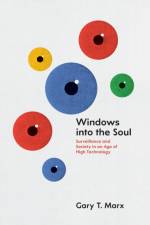
There is more third-party reading of email correspondence being done now than ever before: cybertools like algorithms may allow Google s gmail service to place ads on your screen, but this immediately conjures less savory possibilities lurking in the wings. The same holds for smartphones, a trove of your photo album, record library, personal journal, and correspondence desk, all vulnerable to surveillance, not to mention software cookies that allow Viacom and other big brothers to track your actions across the internet. As the Supreme Court prepares to hear cases about digital privacy, Gary Marx s book will serve as a touchstone for discussions of how extractive technologies like computers, spectrographs, video lenses, and the like can troll through our personal lives. This book provides a language and a conceptual guide to the understanding of surveillance structures and processes. Windows into the Soul touches on themes such as the public and the private, secrecy, anonymity, confidentiality, accountability, trust and distrust, the social bond, the self and social control, and power and democracy. As one of our ms. readers says, nobody in this expanding field of surveillance studies has read as much, reflected on its meaning, and written about these trends with so much insight, wisdom, and humor. Here, Marx sums up a lifetime of careful thinking and research on the concepts, technologies, and themes of surveillance. The account is richly laced with examples, many of them up-to-date (drones, anyone?), and, cumulatively, all of them useful fodder for anyone interesting in grappling with newer issues such as social media surveillance as well more traditional initiatives. Marx shows how surveillance penetrates social and personal lives in profound ways."
Earning praise from scientists, journalists, faculty, and students, this book helps writers to communicate data clearly. It draws on a decade of additional experience and research, expanding author's advice on reaching everyday audiences and further integrating non-print formats.
Jessa Crispin s first book--a work of literary nonfiction about drifters. Crispin s own peregrinations and rootlessness are legendary to the blogger s many fans and readers. As Crispin sees it, the problem with most books about drifters is that they do not understand, or really get at, the longing of someone without a permanent address. Crispin investigates the energy created between person and place, using her own search for a new home and a string of fascinating personalities that have always captured her fancy. Together with her dead ladies Crispin visits the places that were important to them (Paris, Berlin, Trieste, London, Moscow, Sarajevo), and that become important to her, too. These chapters, each devoted to a single person, are filled with ghosts and literature and history, but they are equally alive with the sights and smells and sounds of today."
One of the unquestioned assumptions of the culture wars gripping our country is the gulf between the social and moral values of each side. And since those values--on at least one side--are often rooted in religious beliefs and doctrines, the chances of finding lasting common ground are thought to be slim. Mark A. Smith's timely book provocatively takes a contrary view: religion is not nearly the unchanging, conservative influence in American politics that we have come to think it is. In fact, in the long run, religion is best understood as responding to changing political and cultural values rather than shaping them. To make his case, Smith explores five contentious issues in America's history: slavery, divorce, homosexuality, abortion, and women's rights. In every instance he shows how the political views of even very conservative Christians have evolved in the same direction as the rest of society. Over time, the doctrines and policies of America's Christian religious traditions shift to conform to contemporary societal norms and culture. He also uncovers the various coping strategies America's churches and clergy have adopted when their doctrines are no longer in step with the views of their congregations. While it is true that during periods of cultural transition religious leaders often will resist prevailing values and behaviors, those same leaders just as often acquiesce once their positions become no longer tenable. And when they do, secular ideas and influences often shape how they revise their biblical interpretations. Ultimately, the strongest predictors of people's moral beliefs are not their religious convictions, or lack of them, but rather when and where they were born. Christians in America today hold more in common morally and politically with their atheist neighbors than with the Christians of earlier centuries.
Abonner på vårt nyhetsbrev og få rabatter og inspirasjon til din neste leseopplevelse.
Ved å abonnere godtar du vår personvernerklæring.