

























Gjør som tusenvis av andre bokelskere
Abonner på vårt nyhetsbrev og få rabatter og inspirasjon til din neste leseopplevelse.
Ved å abonnere godtar du vår personvernerklæring.Du kan når som helst melde deg av våre nyhetsbrev.

This comprehensive analysis of the complex relationships between black political thought and black political identity and behaviour illuminates the history and role of this plays in shaping political debate in America.
Presents a guide for archaeologists and anthropologists worldwide. This edition features archaeological and ethnographic study of pottery. It begins with a summary of the origins and history of pottery in different parts of the world, then examines the raw materials of pottery and their physical and chemical properties.
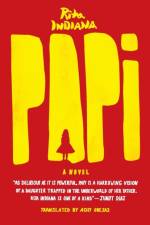
Jazzy, intense, and witty, "Papi" is told in the voice of a little girl waiting in Santo Domingo, Dominican Republic, for her father to return from New York City to shower her with gifts and fame. When he arrives, (less like a prince charming and more like Jason from the "Friday the 13th" movies), dangerous, and completely unreliable, the child/narrator tries to understand her own cravings for fame, money, and security, and to reconcile her blind admiration for a father too "monstrous" for Santo Domingo, but too weak for his role as an international drug-dealer. Drawing on her own past in the D.R. and her visits with her own absentee father in New York, Rita Indiana mixes satire with fantasy, horror, science fiction, and devastating memories. One reviewer called this a novel "so fast-paced that it must be swallowed whole; to set it aside is as dangerous as jumping from a speeding motorcycle."
The history of Islamic mapping is one of the new frontiers in the history of cartography. This book offers the first in-depth analysis of a distinct tradition of medieval Islamic maps known collectively as the Book of Roads and Kingdoms (Kitab al-Masalik wa al-Mamalik, or KMMS). Created from the mid-tenth through the nineteenth century, these maps offered Islamic rulers, scholars, and armchair explorers a view of the physical and human geography of the Arabian peninsula, the Persian Gulf, the Mediterranean, Spain and North Africa, Syria, Egypt, Iraq, the Iranian provinces, present-day Pakistan, and Transoxiana. Historian Karen C. Pinto examines around 100 examples of these maps retrieved from archives across the world from three points of view: iconography, context, and patronage. By unraveling their many symbols, she guides us through new ways of viewing the Muslim cartographic imagination.
Reveals the origins and development of political theory as it is presently understood. Tracing the evolution of the field from the 19th century to the present, the author shows how controversies current in modern political theory are actually the unresolved legacy of a forgotten past.
Nine essays from scholars representing a variety of disciplines, cover themes of love, sexuality, gender and anxiety to comparisons with Ibsen and Kierkegaard. The text explores the meanings of Munch's imagery, his sources in Symbolist art, and his legacy for German Expressionism.
The original publication of The Challenger Launch Decision occurred on January 28th, 1996, the 10th anniversary of that catastrophe. That very morning, a Sunday, the book was features in the New York Times front page story while its author was talking about the book on Good Morning America. While everyone knew that faulty O rings were directly responsible, Vaughan s book revealed how and why this problem was both known and ultimately discounted by NASA prior to greenlighting the flight. It quickly went on to become, and still is, the definitive account of the organizational origins of the accident and a model for understanding how complex organizations work more generally. So much so that when space shuttle Columbia disintegrated coming back itno the atmosphere seven years later, Vaughan was asked to consult for the Columbia Accident Investigation Board and then to write a chapter for their formal report. This edition of the book contains a very substantial, new preface offering an insider s perspective on that investigation as well as explaining how the same organizational problems responsible for the Challenger disaster were also at the root of what happened to Columbia."
John Boswell s National Book Award winning study of the history of attitudes toward homosexuality in the early Christian West was a groundbreaking work that challenged preconceptions about the Church s past relationship to its gay members among them priests, bishops, and even saints when it was first published thirty-five years ago. The historical breadth of Boswell s research (from the Greeks to Aquinas) and the variety of sources consulted make this one of the most extensive treatments of any single aspect of Western social history. Now in this thirty-fifth anniversary edition with a new foreword by leading queer and religious studies scholar Mark D. Jordan, Christianity, Social Tolerance, and Homosexuality is still fiercely relevant. This landmark book helped form the disciplines of gay and gender studies, and it continues to illuminate the origins and operations of intolerance as a social force."
North in the World presents 121 poems by Rolf Jacobsen (1907-1994), one of Norway's greatest modern poets. Garnering the highest praise of critics, Jacobsen won many of Norway's and Sweden's most prestigious literary awards, including the Swedish Academy's Dobloug Prize and the Grand Nordic Prize, also known as the Little Nobel. But he also has earned a wide popular audience, because ordinary readers can understand and enjoy the way he explores the complex counterpoint of nature and technology, progress and self-destruction, daily life and cosmic wonder. Drawing from all twelve of his books, and including one poem collected posthumously, North in the World offers award-winning English translations of Jacobsen's poems, accompanied by the original Norwegian texts. The translator, the American poet Roger Greenwald, worked with Jacobsen himself to correct errors that had crept into the Norwegian texts over the years. An in-depth introduction by Greenwald highlights the main features of Jacobsen's poetry, and extensive endnotes, as well as indexes to titles and first lines in both languages, enhance the usefulness of the book for general readers and scholars alike. The result is the definitive bilingual edition of Jacobsen's marvelous poetry.
This books presents Dave Hickey doing what he does best: writing about art. These essays amount to his finest work on contemporary women artists. As he says, there exist numerous books about individual female artists, but hardly a one that presents women in multiple--in their full, rich diversity. Dedicated to the late museum director Marcia Tucker, the book journeys across the planet to engage with artists from the late Joan Mitchell, to Vija Celmins, Alexis Smith, Sarah Charlesworth, Bridget Riley, and Lynda Benglis and on to younger artists Pia Fries, Roni Horn, Elizabeth Peyton. Jennifer Steinkamp, and many more. A complement of color images rounds out the volume. Hickey also provides an introduction written especially for the volume.
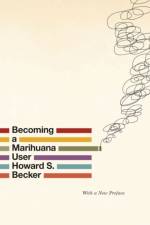
Among Howard Becker s favorite quotes is one he coined management is a one-word oxymoron and another uttered by Ambrose Bierce I think I think, therefore I think I am. His distrust of authority and convention is already apparent from the first, and his belief that things (or facts ) don t carry their meaning on their faces, but are relative to an observer and the observer s community, comes through in the second. His reputation as a maverick was firmly established more than 60 years ago when he published, in The American Journal of Sociology, Becoming a Marihuana User. He gets fan mail about this piece even now, six decades later (e.g., from a British manager of a criminal justice/drug rehab center, who insists that his volunteers and new employees read the article, even though a good few years have past and patterns of drug use have greatly changed, [but] this chapter like the vast majority of your work remains relevant and highly useful ). Smoking marijuana, still against the law in most places, is therefore deviant, and instead of asking why do they break universally accepted rules, for Becker marijuana is simply a substance whose use someone has outlawed. The question of how a choice is made to use it thus becomes a focus of study. And so, smoking marijuana is an experience one learns to enjoy: The taste for such experience is a socially acquired one, not different in kind from acquired tastes for oysters or dry martinis. The user acquires a stable set of categories for registering the drug s effects. Becker shows the steps by which the user acquires these categories from others in his marijuana-smoking world. Becker s new preface addresses the fact that marihuana over the past 60 years has become more accepted, thus more widely used, and that the cultivation of the plant has resulted in increased potency. Do people still have to learn how to get high? Yes, but there are some intricacies. And there are ironies; in some quarters, people think the 1953 article is the beginning point of the gradual revolution in acceptance of pot smoking (Becker knows better), and he wryly observes that people at first didn t know what to make of the article or of his conference presentations until, thanks to a police bust of several Northwestern students a decade or so later (where he was teaching), Becker all of a sudden became an expert. Nowadays, he is being celebrated as the Voice of Sociology, thanks to a wonderful write-up in The New Yorker magazine of his life as a jazz musician, scholar, and Chicagoan (at least for his first 50 years), and of his fame in French circles as the anti-Bourdieu and avatar of empiricism."
"The GED and the Role of Character in American Life "offers in-depth historical and analytical explorations of how the GED came to be used on such a grand scale and why our reliance on it is so pernicious. For example, the main organization that administers the test, the American Council on Education, has for decades prevented the US Census from distinguishing GEDs from high-school graduates, and thus prevented honest evaluations of the GED s effectiveness. Also, due to a reliance on achievement tests and programs like No Child Left Behind, schools were given an incentive to encourage low-performing students to drop out and take the GED to get them off the books without penalty. So the GED program creates problems by inducing students to drop out of school, and it conceals major social problems by passing off GEDs as high-school graduates. The essays in this book definitively establish that, as a group, GEDs are not the equivalents of high-school graduates. The book explains statistically how most GEDs perform at the level of high-school dropouts in the labor market, in marriage, in the military, and in society at large. "
Galileo Galilei's Sidereus Nuncius is arguably the most dramatic scientific book ever published. It announced new and unexpected phenomena in the heavens, "unheard of through the ages," revealed by a mysterious new instrument. Galileo had ingeniously improved the rudimentary "spyglasses" that appeared in Europe in 1608, and in the autumn of 1609 he pointed his new instrument at the sky, revealing astonishing sights: mountains on the moon, fixed stars invisible to the naked eye, individual stars in the Milky Way, and four moons around the planet Jupiter. These discoveries changed the terms of the debate between geocentric and heliocentric cosmology and helped ensure the eventual acceptance of the Copernican planetary system. Albert Van Helden's beautifully rendered and eminently readable translation is based on the Venice 1610 edition's original Latin text. An introduction, conclusion, and copious notes place the book in its historical and intellectual context, and a new preface, written by Van Helden, highlights recent discoveries in the field, including the detection of a forged copy of Sidereus Nuncius, and new understandings about the political complexities of Galileo's work.
There are many similarities between Australia and the US. Both are vast, had similar origins, and are examples of super-consuming, over-developed rich, literate countries. There are also, of course, striking distinctions between Australia and the United States, perhaps most notable in the environmental arena. The floras and faunas are as different as koalas and grizzlies. But the use of the environments is even more distinct. Although comparable in size, the US is about ten times as densely populated as Australia, and two Americans consume the same amount of resources as three Australians. Australia's more fragile environment, with high proportions of endemic species, has resulted in the highest number of recently extinct mammals compared to every other country in the world. And yet the pace of land use change in the US has been significantly higher over the last several decades. The most fundamental of issues each of these countries is facing at present, and in the immediate future, is how to manage their environments in the face of climate change. Each country needs to extract resources, lower its energy footprint, and grapple with dynamic climate patterns that threaten even the most developed of countries. Ehrlich and Bradshaw, renowned ecologists, invite readers to join a conversation about the ways in which Australia and the US can benefit from modelling environmental decisions and actions on each other's most successful policies, and learn from each country's failures as well. They weave in these pages a comparative story of their two countries, and create a blueprint for what needs to change to avoid the worst environmental and political crises from invading the shores of each of these countries.
Welcome to "East Hudson," an elite private school in New York where the students are attentive, the colleagues are supportive, and the tuition would make the average person choke on its string of zeroes. You might think a teacher here would have little in common with most other teachers in America, but as this veteran educator--writing anonymously--shows in this refreshingly honest account, all teachers are bound by a common thread. Stripped of most economic obstacles and freed up by anonymity, he is able to tell a deeper story about the universal conditions, anxieties, foibles, generosities, hopes, and complaints that comprise every teacher's life. The results are sometimes funny, sometimes scandalous, but always recognizable to anyone who has ever walked into a classroom, closed the door, and started their day. This is not a how-to manual. Rather, the author explores the dimensions of teaching that no one else has, those private thoughts few would dare put into a book but that form an important part of the day-to-day experience of a teacher. We see him ponder the clothes that people wear, think frankly about money (and the imbalance of its distribution), get wrangled by parents, provide on-the-fly psychotherapy, drape niceties over conversations that are actually all-out warfare, drop an f-bomb or two, and deal with students who are just plain unlikeable. We also see him envy, admire, fear, and hope; we see him in adulation and uncertainty, and in energy and exhaustion. We see him as teachers really are: human beings with a complex, rewarding, and very important job. There has been no shortage of commentary on the teaching profession over the decades, but none quite like this. Unflinching, wry, and at times laugh-out-loud funny, it's written for every teacher out there who has ever scrambled, smirked, or sighed--and toughed it out nonetheless.
Abonner på vårt nyhetsbrev og få rabatter og inspirasjon til din neste leseopplevelse.
Ved å abonnere godtar du vår personvernerklæring.