























Gjør som tusenvis av andre bokelskere
Abonner på vårt nyhetsbrev og få rabatter og inspirasjon til din neste leseopplevelse.
Ved å abonnere godtar du vår personvernerklæring.Du kan når som helst melde deg av våre nyhetsbrev.

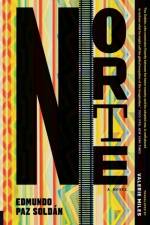
Three unconnected people travel north, each passing in isolation over one of the most troubled and controversial dividing lines in the world: the Mexico?US border. But in a melee of language and blood, their stories and the stories of those they meet--of a young serial killer, a waitress and graphic novelist and her lover (and former professor), and an outsider artist in a mental institution--gradually begin to coalesce. Daring in both its protagonists and its structure, Edmundo Paz Soldán's Norte is a fast-paced, vivid, and operatic blending of distinct voices. Together, they lay bare the darkness of the line over which these souls--like so many others--have passed. A prominent member of a new generation of Latin American writers, Paz Soldán stands in defiant opposition to the magical realism of the past century, instead grounding his work in political, economic, and historical realities. Norte is no exception; it is a tale of displacement and the very human costs of immigration. Shocking with its violence even as it thrills with its language, confounding rather than cowering under the cliché of the murderous, drug-dealing immigrant, Norte is a disquieting, imperative work--an undeniable reflection of our fragmented modern world.
Assembles 13 key essays in art history and cultural theory by Russian-language writers. The essays erase boundaries between high and low, official and dissident, avant-garde and socialist realism. Everything visual is deemed worthy of analysis, from painting to architecture.
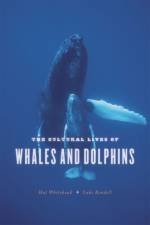
In the songs of humpback whales, the bubble feeding of others, in the nurturing behavior of adult killer whales teaching their young innovative ways of removing a seal from an ice floe, exist wonderful examples of the transmission of information among cetaceans. The information, and its transmission, is shaped by the incredibly unique environmentthat in which a 150 ton blue whale can move with utter grace, and in which the vertical expanse is as vast a range as the horizontal. Does this blend of environment, adaptation, and sociality yield an Ocean Culture of its own? Ocean Culture navigates deftly an exploration of the culture of the whales and dolphins. What is it? Does it even exist? If it does, why? What might it mean? Ocean Culture is also about our evolving understanding of non-human societies, and through them what it means to be human, carried by rafts of insights hard won from the oceans by scientists all over the world. Mr. Whitehead and Mr. Rendell, captain a remarkable cultural and evolutionary voyage in the pages of this work drawing on their own research, and as well on a literature as vast as the ocean, from fields of evolution, behavior, ecology, anthropology, psychology, and neuroscience."
As the US National Park Service marks its centennial in 2016, parks and protected areas worldwide are under increasing threat from a variety of factors, including storms and fires of greater severity, plant and animal extinctions, the changing attitudes of a public that has become more urbanized, and the political pressures of narrow special interest groups. In the face of such rapid environmental and cultural changes, Science, Conservation, and National Parks gathers a group of renowned scholars--including Edward O. Wilson, Jane Lubchenco, Thomas Dietz, and Monica Turner, among many others--who seek to address these problems and, in so doing, to secure a future for protected areas that will push forward the frontiers of biological, physical, and social science in and for parks. Examining the major challenges of parks and protected areas throughout the world, contributors provide answers to a number of key conservation questions, such as: How should stewardship address climate change, urban encroachment and pollution, and invasive species? How can society, especially youth, become more engaged with nature and parks, and are there models to guide interactions between parks and their neighbors? What are appropriate conservation objectives for parks in the Anthropocene? Charting a course for the parks of the next century, Science, Conservation, and National Parks is certain not only to catalyze the continued evolution of US park conservation policy, but also to be an inspiration for parks, conservation, and management worldwide.
Abonner på vårt nyhetsbrev og få rabatter og inspirasjon til din neste leseopplevelse.
Ved å abonnere godtar du vår personvernerklæring.