

















Gjør som tusenvis av andre bokelskere
Abonner på vårt nyhetsbrev og få rabatter og inspirasjon til din neste leseopplevelse.
Ved å abonnere godtar du vår personvernerklæring.Du kan når som helst melde deg av våre nyhetsbrev.

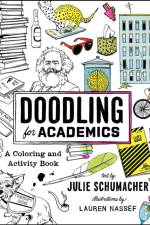
Coloring books have come to the aid of stressed out people the world over, and academic life is one full of stresses. This activity book invites us into a day in the life of an academic, and with authorial wit and clever original illustrations immerses its users, through coloring and other activities, to the unique experiences and challenges of academic life. Intended as an interactive satire, the combination of humor and activities can settle any mind, and also bring into entertaining relief the lives of campus academics.
In the years spanning from 1800 to 1824, Ludwig van Beethoven completed nine symphonies, now considered among the greatest masterpieces of Western music. Yet despite the fact that this time period, located in the wake of the Enlightenment and at the peak of romanticism, was one of rich intellectual exploration and social change, the influence of such threads of thought on Beethoven's work has until now remained hidden beneath the surface of the notes. Beethoven's Symphonies presents a fresh look at the great composer's approach and the ideas that moved him, offering a lively account of the major themes unifying his radically diverse output. Martin Geck opens the book with an enthralling series of cultural, political, and musical motifs that run throughout the symphonies. A leading theme is Beethoven's intense intellectual and emotional engagement with the figure of Napoleon, an engagement that survived even Beethoven's disappointment with Napoleon's decision to be crowned emperor in 1804. Geck also delves into the unique ways in which Beethoven approached beginnings and finales in his symphonies, as well as his innovative use of particular instruments. He then turns to the individual symphonies, tracing elements--a pitch, a chord, a musical theme--that offer a new way of thinking about each work and will make even the most devoted fans of Beethoven admire the symphonies anew. Offering refreshingly inventive readings of the work of one of history's greatest composers, this book shapes a fascinating picture of the symphonies as a cohesive oeuvre and of Beethoven as a master symphonist.
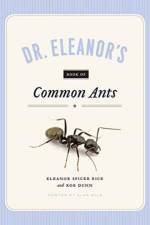
Did you know that for every human on earth, there are about one million ants? They are among the longest-lived insects--with some ant queens passing the thirty-year mark--as well as some of the strongest. Fans of both the city and countryside alike, ants decompose dead wood, turn over soil (in some places more than earthworms), and even help plant forests by distributing seeds. But while fewer than thirty of the nearly one thousand ant species living in North America are true pests, we cringe when we see them marching across our kitchen floors. No longer! In this witty, accessible, and beautifully illustrated guide, Eleanor Spicer Rice, Alex Wild, and Rob Dunn metamorphose creepy-crawly revulsion into myrmecological wonder. Emerging from Dunn's ambitious citizen science project Your Wild Life (an initiative based at North Carolina State University), Dr. Eleanor's Book of Common Ants provides an eye-opening entomological overview of the natural history of species most noted by project participants--and even offers tips on keeping ant farms in your home. Exploring species from the spreading red imported fire ant to the pavement ant, and featuring Wild's stunning photography, this guide will be a tremendous resource for teachers, students, and scientists alike. But more than this, it will transform the way we perceive the environment around us by deepening our understanding of its littlest inhabitants, inspiring everyone to find their inner naturalist, get outside, and crawl across the dirt--magnifying glass in hand.
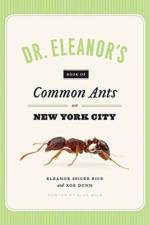
Did you know that for every human on earth, there are about one million ants? They are among the longest-lived insects--with some ant queens passing the thirty-year mark--as well as some of the strongest. Fans of both the city and countryside alike, ants decompose dead wood, turn over soil (in some places more than earthworms), and even help plant forests by distributing seeds. But while fewer than thirty of the nearly one thousand ant species living in North America are true pests, we cringe when we see them marching across our kitchen floors. No longer! In this witty, accessible, and beautifully illustrated guide, Eleanor Spicer Rice, Alex Wild, and Rob Dunn metamorphose creepy-crawly revulsion into myrmecological wonder. Emerging from Dunn's ambitious citizen science project Your Wild Life (an initiative based at North Carolina State University), Dr. Eleanor's Book of Common Ants of New York City provides an eye-opening entomological overview of the natural history of New York's species most noted by project participants--and even offers insight into the ant denizens of the city's subways and Central Park. Exploring species from the honeyrump ant to the Japanese crazy ant, and featuring Wild's stunning photography as well as tips on keeping ant farms in your home, this guide will be a tremendous resource for teachers, students, and scientists alike. But more than this, it will transform the way New Yorkers perceive the environment around them by deepening their understanding of its littlest inhabitants, inspiring everyone to find their inner naturalist, get outside, and crawl across the dirt--magnifying glass in hand.
Did you know that for every human on earth, there are about one million ants? They are among the longest-lived insects--with some ant queens passing the thirty-year mark--as well as some of the strongest. Fans of both the city and countryside alike, ants decompose dead wood, turn over soil (in some places more than earthworms), and even help plant forests by distributing seeds. But while fewer than thirty of the nearly one thousand ant species living in North America are true pests, we cringe when we see them marching across our kitchen floors. No longer! In this witty, accessible, and beautifully illustrated guide, Eleanor Spicer Rice, Alex Wild, and Rob Dunn metamorphose creepy-crawly revulsion into myrmecological wonder. Emerging from Dunn's ambitious citizen science project Your Wild Life (an initiative based at North Carolina State University) and the work of Brian Fisher with the California Academy of Sciences, Dr. Eleanor's Book of Common Ants of California provides an eye-opening entomological overview of the natural history of California's species most noted by project participants--and even offers tips on keeping ant farms in your home. Exploring species from the high noon and harvester ants to the honeypot and acrobat ants, and featuring Wild's stunning photography, this guide will be a tremendous resource for teachers, students, and scientists alike. But more than this, it will transform the way Californians perceive the environment around them by deepening their understanding of its littlest inhabitants, inspiring everyone to find their inner naturalist, get outside, and crawl across the dirt--magnifying glass in hand.
For many years Chicago's looming large-scale housing projects defined the city, and their demolition and redevelopment-via the Chicago Housing Authority's Plan for Transformation-has been perhaps the most startling change in the city's urban landscape in the last twenty years. The Plan, which reflects a broader policy effort to remake public housing in cities across the country, seeks to deconcentrate poverty by transforming high-poverty public housing complexes into mixed-income developments and thereby integrating once-isolated public housing residents into the social and economic fabric of the city. But is the Plan an ambitious example of urban regeneration or a not-so-veiled effort at gentrification? In the most thorough examination of mixed-income public housing redevelopment to date, Robert J. Chaskin and Mark L. Joseph draw on five years of field research, in-depth interviews, and volumes of data to demonstrate that while considerable progress has been made in transforming the complexes physically, the integrationist goals of the policy have not been met. They provide a highly textured investigation into what it takes to design, finance, build, and populate a mixed-income development, and they illuminate the many challenges and limitations of the policy as a solution to urban poverty. Timely and relevant, Chaskin and Joseph's findings raise concerns about the increased privatization of housing for the poor while providing a wide range of recommendations for a better way forward.
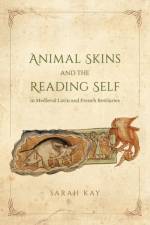
Sarah Kay s interests in this book are, first, to examine how medieval bestiaries depict and challenge the boundary between humans and other animals; and second, to register the effects on readers of bestiaries by the simple fact that parchment, the writing support of virtually all medieval texts, is a refined form of animal skin. Surveying the most important works created from the ninth through the thirteenth centuries, Kay connects nature to behavior to Christian doctrine or moral teaching across a range of texts. As Kay shows, medieval thought (like today) was fraught with competing theories about human exceptionalism within creation. Given that medieval bestiaries involve the inscription of texts about and images of animals onto animal hides, these texts, she argues, invite readers to reflect on the inherent fragility of bodies, both human and animal, and the difficulty of distinguishing between skin as a site of mere inscription and skin as a containing envelope for sentient life. It has been more than fifty years since the last major consideration of medieval Latin and French bestiaries was published. Kay brings us up to date in the archive, and contributes to current discussions among animal studies theorists, manuscript studies scholars, historians of the book, and medievalists of many stripes."
Published in 2010 and with over 8,700 copies sold, Calavita s book has already established itself as the leading introduction to the field of law and society. Everyone has some idea of what lawyers do. And most people have at least heard of criminologists. But, who knows what law and society is? It is, in fact, a rapidly-growing interdisciplinary field which turns on its head the conventional, idealized view of Law as a magisterial abstraction. Rather than look at law-on-the-books, the field focuses on law-in-action how law both shapes and manifests itself in the institutions and interactions of human society. This formative theme runs through Kitty Calavita s engagingly and concisely written book. Intended to introduce students and curious outsiders alike to the field, the book uses a conversational style to survey the field s prominent issues and distinctive approaches, from the ubiquity of law in everyday life to its potential and limits in effecting social change. For the second edition, Calavita has made changes throughout the book. updating the many illustrations and anecdotes used to clarify concepts and theories, so they may more directly resonate with the contemporary reader. There is also an entirely new chapter introducing the reader to the law and cultural studies movement that has become increasingly prominent in the field."
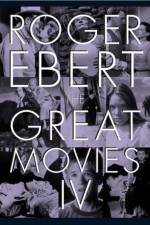
No film critic has ever been as influential--or as beloved-- as Roger Ebert. Over more than four decades, he built a reputation writing reviews for the Chicago Sun-Times and, later, arguing onscreen with rival Chicago Tribune critic Gene Siskel and later Richard Roeper about the movies they loved and loathed. But Ebert went well beyond a mere "thumbs up" or "thumbs down." Readers could always sense the man behind the words, a man with interests beyond film and a lifetime's distilled wisdom about the larger world. Although the world lost one of its most important critics far too early, Ebert lives on in the minds of moviegoers today, who continually find themselves debating what he might have thought about a current movie.The Great Movies IV is the fourth--and final--collection of Roger Ebert's essays, comprising sixty-two reviews of films ranging from the silent era to the recent past. From films like The Cabinet of Caligari and Viridiana that have been considered canonical for decades to movies only recently recognized as masterpieces to Superman, The Big Lebowski, and Pink Floyd: The Wall, the pieces gathered here demonstrate the critical acumen seen in Ebert's daily reviews and the more reflective and wide-ranging considerations that the longer format allowed him to offer. Ebert's essays are joined here by an insightful foreword by film critic Matt Zoller Seitz, the current editor-in-chief of the official Roger Ebert website, and a touching introduction by Chaz Ebert. A fitting capstone to a truly remarkable career, The Great Movies IV will introduce newcomers to some of the most exceptional movies ever made, while revealing new insights to connoisseurs as well.
Arthur M. Melzer makes this experiment in The Natural Goodness Of Man. The first two parts of the book restore the original, revolutionary significance of this now time-worn principle and examine the arguments Rousseau offers in proof of it. The final section unfolds and explains Rousseau's programmatic thought, especially the Social Contract, as a precise solution to the human problem as redefined by the principle of Natural Goodness.
During the past decade, armed drones have entered the American military arsenal as a core tactic for countering terrorism. When coupled with access to reliable information, they make it possible to deploy lethal force accurately across borders while keeping one's own soldiers out of harm's way. The potential to direct force with great precision also offers the possibility of reducing harm to civilians. At the same time, because drones eliminate some of the traditional constraints on the use of force-like the need to gain political support for full mobilization-they lower the threshold for launching military strikes. The development of drone use capacity across dozens of countries increases the need for global standards on the use of these weapons to assure that their deployment is strategically wise and ethically and legally sound. Presenting a robust conversation among leading scholars in the areas of international legal standards, counterterrorism strategy, humanitarian law, and the ethics of force, Drones and the Future of Armed Conflict takes account of current American drone campaigns and the developing legal, ethical, and strategic implications of this new way of warfare. Among the contributions to this volume are a thorough examination of the American government's legal justifications for the targeting of enemies using drones, an analysis of American drone campaigns' notable successes and failures, and a discussion of the linked issues of human rights, freedom of information, and government accountability.
For more than forty years, Paul Cantor's Shakespeare's Rome has been a foundational work in the field of politics and literature. While many critics assumed that the Roman plays do not reflect any special knowledge of Rome, Cantor was one of the first to argue that they are grounded in a profound understanding of the Roman regime and its changes over time. Taking Shakespeare seriously as a political thinker, Cantor suggests that his Roman plays can be profitably studied in the context of the classical republican tradition in political philosophy. In Shakespeare's Rome, Cantor examines the political settings of Shakespeare's Roman plays, Coriolanus and Antony and Cleopatra, with references as well to Julius Caesar. Cantor shows that Shakespeare presents a convincing portrait of Rome in different eras of its history, contrasting the austere republic of Coriolanus, with its narrow horizons and martial virtues, and the cosmopolitan empire of Antony and Cleopatra, with its "immortal longings" and sophistication bordering on decadence.
Where does religion come from? Evolving God examines the origins of religion in prehistory and how the evolution of primates gave rise to behaviors that we identify as spiritual. As a biological anthropologist, King has studied monkey and ape behavior in Africa and approaches the topic from her observations of individuals and their connections to each other and to their larger group. Researchers have reported reconciliation behavior, rituals, and meaning-making among apes. King suggests a religious imagination emerged out of a sense of belonging to a group and cognitive empathy. She presents a wide array of examples drawn from archeology, biology, and anthropology from prehistoric hominids to the first evidence of human religion. The overviews of the historical record and opposing positions about the origins of religion are a very useful introduction to evolution and religion in prehistory. This Second Edition includes a 25-page Afterword on recent studies relating to King s work and how her own ideas have evolved."
Since its appearance in 1992, Barth David Schwartz's biography of Pier Paolo Pasolini (1922-1975) has been the standard reference and starting point for anyone embarking on a study of Pasolini in English, situating the multimedia artist within twentieth-century Italian and world culture. Pasolini was unique among his contemporaries--Federico Fellini, for example, didn't write novels, Giorgio Bassani did not direct films, and Eugenio Montale did not write popular journalism. Although Pasolini excelled at all of these genres, he was first and foremost a poet (see Chicago's bilingual edition of his selected poems from 2014). Whatever he was doing, Pasolini's poetry informed all aspects of his creative life, from his plays to his visual art, from his films to his political essays. In this second edition, which includes a new Afterword that contains material that has come to light since the early 1990s and revelations about Pasolini's last days, Schwartz introduces this multimedia artist to a new generation of scholars and students trying to negotiate the complexities of the Italian cultural landscape. As Susan Sontag wrote, Pasolini is "indisputably the most remarkable figure to have emerged in Italian Arts and letters since the Second World War." This new edition, revised and updated throughout, is a natural companion to our volume of poetry and, with the poems, will be a perennial seller for years to come.
This thoughtful and stimulating work boldly takes on the task of assessing the thought of both Hegel and Heidegger. Gillespie seeks to explain how these two philosophers have tried to understand what history means when takes as a whole, and what significance history has for illuminating our essential characteristics, goals and limits.
For more than fifteen years, the manuscript editing department of the Press has overseen online publication of the monthly "Chicago Manual of Style" Q&A, choosing interesting questions from a steady stream of publishing-related queries from "Manual" users and providing thoughtful and/or humorous answers in a smart, direct, and occasionally cheeky voice. More than 28,000 followers have signed up to receive e-mail notification when new Q& A content is posted monthly, and the site receives well over half a million visitors annually. "But Can I Start a Sentence with But ? "culls from the extensive Q&A archive a small collection of the most helpful and humorous of the postings and provides a brief foreword and chapter introductions. The material is organized into seven chapters that cover matters of editorial style, capitalization, punctuation, grammar and usage, citation and quotation, formatting and other non-language issues, and a final chapter of miscellaneous items. Together they offer an informative and amusing read for editors, other publishing professionals, and language lovers of all stripes."
John Corbett has written a tiny pocket guide to aid novices and devotees alike in listening to and understanding free, improvised music. The term improvised music can mean many things: but in this book the focus is on experimental music that does not have a structured song or tune, and that operates mainly in the vein of jazz or a jazz hybrid (blues, etc.). There are elegant discussions of music fundamentals (rhythm, duration, interaction dynamics, transitions, personal vocabulary), advanced techniques for listening and watching in live concerts, excellent analysis grounded in anecdote about the role of the audience, ambiguity, as well as historical anecdotes and thoughts on what it means to be a listener and what role music might have in our lives. The tone is light, with a serious undertone. "
"First published by Auckland University Press, 2007."--Title page verso.
Helen Lefkowitz Horowitz explains how Provencewhich a mid-twentieth-century tour guide called mostly dry, scrubby, rocky, arid land became a land of desire associated with a slower, richer way of life. Horowitz reveals the social forces and individuals who created the idea of Provence both in France and, critically, in the United States. Horowitz demystifies Provence and the perpetuation of its image today, even as she revels in its atmospheric, cultural, and culinary allures. Answering her key question-- What did Americans know about Provence and when did they know it? --takes us back to Thomas Jefferson s travels there and through to the mid-20th-century construction of it as a light-filled, relaxing idyll."
Abonner på vårt nyhetsbrev og få rabatter og inspirasjon til din neste leseopplevelse.
Ved å abonnere godtar du vår personvernerklæring.