













Gjør som tusenvis av andre bokelskere
Abonner på vårt nyhetsbrev og få rabatter og inspirasjon til din neste leseopplevelse.
Ved å abonnere godtar du vår personvernerklæring.Du kan når som helst melde deg av våre nyhetsbrev.

This book takes readers into the latest discoveries about early microbial life, where findings from the earth's furthest extremes are seeking to reshape the future of our planet and ourselves. As scientists take the next step in applying the lessons of popular and controversial research, the world's tiniest, and sometimes most dangerous, microorganisms are being tapped as allies in achieving better health and sustainable energy, while revealing fundamental clues to the mystery of where we came from.--Provided by publisher.
A collection of essays by American art critic Dave Hickey, nicknamed "The Bad Boy of Art Criticism." When Dave Hickey was twelve, he rode the surfer's dream: the perfect wave. And, like so many things in life we long for, it didn't quite turn out--he shot the pier and dashed himself against the rocks of Sunset Cliffs in Ocean Beach, which nearly killed him. Hickey went on to develop a career as one of America's foremost critical iconoclasts, a trusted no-nonsense voice commenting on the worlds of art and culture. Perfect Wave brings together essays on a wide range of subjects from throughout Hickey's career, displaying his breadth of interest and powerful insight into what makes art work, or not, and why we care. With Hickey as our guide, we travel to Disneyland and Vegas, London and Venice. We discover the genius of Karen Carpenter and Waylon Jennings, learn why Robert Mitchum matters more than Jimmy Stewart, and see how the stillness of Antonioni speaks to us today. Never slow to judge--or to surprise us in doing so--Hickey relates his wincing disappointment in the later career of his early hero Susan Sontag and shows us the appeal to our commonality that we've been missing in Norman Rockwell. Bookended by previously unpublished personal essays that offer a new glimpse into Hickey's own life--including the aforementioned conclusion to his surfing career--Perfect Wave is a welcome addition to the Hickey canon.
The seventeenth century witnessed some of the most important jurisprudential changes in England s history, yet it is relatively untouched territory in the rich field of literature and law. Alison Chapman s book fills this gap by situating the poet and polemicist John Milton in the center of late-seventeenth-century legal history. One of England s greatest poets, Milton was arguably also the most litigious, and he had an exceptionally wide and deep knowledge of law and judicial processes. While this book ranges widely across Milton s life and work, its primary focus is on the role that law plays in "Paradise Lost." Throughout "Paradise Lost," Chapman shows, Milton invites his readers to judge the ways of God both according to the dictates of reason and conscience and also according to prevailing ideas about legal justice. Law, Chapman argues, forms a crucial albeit unrecognized part of Milton s attempt in" Paradise Lost" to justify the ways of God to men. "
Supersizing Urban America reveals how the US government has been, and remains, a major contributor to America s obesity epidemic. Government policies, targeted food industry advertising, and other factors helped create and reinforce fast food consumption in America s urban communities. Historian Chin Jou uncovers how predominantly African-American neighborhoods went from having no fast food chains to being deluged. She lays bare the federal policies that helped to subsidize the expansion of the fast food industry in America s cities and explains how fast food companies have deliberately and relentlessly marketed to urban, African-American consumers. These developments are a significant factor in why Americans, especially those in urban, low-income, minority communities, have become disproportionately affected by the obesity epidemic."
This moving prose poem tells the story of an aged man who suffers a prolonged and ultimately fatal illness. From initial diagnosis to remission to relapse to death, the experience is narrated by the man's son, a practicing doctor. Charles Bardes, a physician and poet, draws on years of experience with patients and sickness to construct a narrative that links myth, diverse metamorphoses, and the modern mechanics of death. We stand with the doctors, the family, and, above all, a sick man and his disease as their voices are artfully crafted into a new and powerful language of illness.
"Published in Association with the Field Museum."
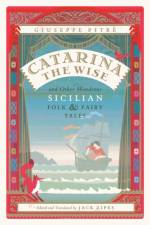
Well, gentlemen, here's a tale that people have told time and again . . . . So begins the title story in this collection of fifty Sicilian folk and fairy tales edited and translated by noted folklore scholar Jack Zipes. But while some of the stories may sound as if they've been told time and again--such as variations on Cinderella and Puss in Boots--many will enchant English-language readers and storytellers for the first time. From "The Pot of Basil" to "The Talking Belly," "The Little Mouse with the Stinky Tail" to "Peppi, Who Wandered out into the World," the stories in Catarina the Wise range from simple tales of getting a new dress or something good to eat to fantastical plots for outwitting domineering husbands, rescuing impoverished fathers, or attracting wealthy suitors (frequently the Prince of Portugal). Many feature strong, clever women (usually daughters who become queen). Many are funny; many are wise. Some are very, very strange. As Zipes relates, the true story of their origins is as extraordinary as the tales themselves. Born to a poor family of sailors in Palermo, Giuseppe Pitrè would go on to serve with Garibaldi, become a traveling country doctor, and gather one of the most colossal collections of folk and fairy tales of the nineteenth century. But while his work as a folklorist rivaled that of the Brothers Grimm, Pitrè remains a relative unknown. Catarina the Wise highlights some of the most delectable stories at the heart of his collection. Featuring new, original illustrations, this book is a beautiful, charming treasure for any fan of story, storytelling, and heroines and heroes living happily ever after--sometimes.
It has been seventeen years since Lloyd Schwartz has published a book of original poems, so there is much anticipation from his fans. In "Little Kisses," Schwartz takes his characteristic tragi-comic view of life to some unexpected and sometimes disturbing places. Here we find heart-breaking and comic poems about personal loss (the mysterious disappearance of his oldest friend, for example, or his mother s failing memory, or a precious gold ring gone missing); uneasy love poems and poems about family; and poems about identity, travel, and art with all their potentially recuperative powers. The book also contains some memorable translations, jokes, and wordplay, as well as formal surprises, all of which Schwartz s readers have come to relish in his verse. His books have been all too few and far between; this new one after so very long is sure to be greeted by an eager readership."
Cicero remains little known even among political theorists and political philosophers. This book will change that, and do so forcefully: Gary Remer has recovered a vibrant tradition of political morality, associated with Cicero, that guides the thought and behavior of many statesmen and political commentators today, to wit, politicians ought to be governed by a standard of morality that is, at times, distinct from the ordinary morality that the rest of use to regulate our own lives. Remer sets this Ciceronian tradition up in bold contrast to the doctrines of Machiavelli and Aristotle and others (e.g., Burke, Mill, Habermas). The elements of Cicero s position, drawing from rhetoric, ethics, and political theory, converge in a single complex idea of political morality. This is in notable contrast to Aristotle, who splits off rhetoric as an art from the science of politics, whereas Cicero united them and further merges politics/rhetoric with morality. The pivot around which these mergers rotate is the idea of decorum, the ability of orators to accommodate themselves to circumstances, with a morality based on communal standards. Contemporary politics and world community can benefit from the example of the prophetic orator, the aspirational figure for bringing disparate groups together in the absence of an eternal moral standard or natural law. Remer has therefore set up his book as a kind of dialogue between thinkers ancient and modern, shedding new light on the wisdom of the broad Ciceronian tradition. There is a contemporary revival of Cicero in political theory, and Gary Remer is leading the way."
The book of Genesis records the fiery fate of Sodom and Gomorrah--a storm of fire and brimstone was sent from heaven and, for the wickedness of the people, God destroyed the cities "and all the plains, and all the inhabitants of the cities, and that which grew upon the ground." According to many Protestant theologians and commentators, one of the Sodomites' many crimes was homoerotic excess. In Visions of Sodom, H. G. Cocks examines the many different ways in which the story of Sodom's destruction provided a template for understanding homoerotic desire and behaviour in Britain between the Reformation and the nineteenth century. Sodom was not only a marker of sexual sins, but also the epitome of false--usually Catholic--religion, an exemplar of the iniquitous city, a foreshadowing of the world's fiery end, an epitome of divine and earthly punishment, and an actual place that could be searched for and discovered. Visions of Sodom investigates each of these ways of reading Sodom's annihilation in the three hundred years after the Reformation. The centrality of scripture to Protestant faith meant that Sodom's demise provided a powerful origin myth of homoerotic desire and sexual excess, one that persisted across centuries, and retains an apocalyptic echo in the religious fundamentalism of our own time.
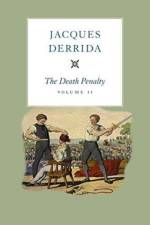
In the first volume of his extraordinary analysis of the death penalty, Jacques Derrida began a journey toward an ambitious end: the first truly philosophical argument against the death penalty. Exploring an impressive breadth of thought, he traced a deeply entrenched logic throughout the whole of Western philosophy that has justified the state's right to take a life. He also marked literature as a crucial place where this logic has been most effectively challenged. In this second and final volume, Derrida builds on these analyses toward a definitive argument against capital punishment. Of central importance in this second volume is Kant's explicit justification of the death penalty in the Metaphysics of Morals. Thoroughly deconstructing Kant's position--which holds the death penalty as exemplary of the eye-for-an-eye Talionic law--Derrida exposes numerous damning contradictions and exceptions. Keeping the current death penalty in the United States in view, he further explores the "anesthesial logic" he analyzed in volume one, addressing the themes of cruelty and pain through texts by Robespierre and Freud, reading Heidegger, and--in a fascinating, improvised final session--the nineteenth-century Spanish Catholic thinker Donoso Cortés. Ultimately, Derrida shows that the rationality of the death penalty as represented by Kant involves an imposition of knowledge and calculability on a fundamental condition of non-knowledge--that we don't otherwise know what or when our deaths will be. In this way, the death penalty acts out a phantasm of mastery over one's own death. Derrida's thoughts arrive at a particular moment in history: when the death penalty in the United States is the closest it has ever been to abolition, and yet when the arguments on all sides are as confused as ever. His powerful analysis will prove to be a paramount contribution to this debate as well as a lasting entry in his celebrated oeuvre.
The work of German sculptor Isa Genzken is brilliantly receptive to the ever-shifting conditions of modern life. In this first book devoted to the artist, Lisa Lee reflects on Genzken's tendency to think across media, attending to sculptures, photographs, drawings, and films from the entire span of her four-decade career, from student projects in the mid-1970s to recent works seen in Genzken's studio. Through penetrating analyses of individual works as well as archival and interview material from the artist herself, Lee establishes four major themes in Genzken's oeuvre: embodied perception, architecture and built space, the commodity, and the body. Contextualizing the sculptor's engagement with fellow artists, such as Joseph Beuys and Bruce Nauman, Lee situates Genzken within a critical and historical framework that begins in politically fraught 1960s West Germany and extends to the globalized present. Here we see how Genzken tests the relevance of the utopian aspirations and formal innovations of the early twentieth century by submitting them to homage and travesty. Sure to set the standard for future studies of Genzken's work, Isa Genzken is essential for anyone interested in contemporary art.
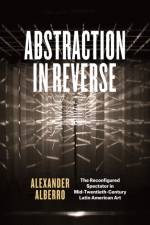
Most of the books about modern art in South America have focused on particular artists or nations. There has been no book-length history of the movement as it evolved across the continent until now. Alexander Alberro has written that book. Profusely illustrated and beautifully written, it explores how artists working in several cities (Buenos Aires, Montevideo, Caracas, Sao Paulo, and Rio de Janeiro) in the mid-twentieth century altered the nature of modernist art. Its thesis is as radical as the art of the time: in breaking with the core dictums of European and US abstract art, these artists re-imagined the relationship of art to its public, granting the spectator a greater role in the realization of the artwork. In this new conceptualization the artwork was no longer considered a thing made in advance of the context in which it is shown, but rather a dynamic force or event that can only be produced at the site where the art object and the spectator meet. Ahead of its time, this art anticipated Happenings in NYC and Europe in the late 1950s and early 1960s."
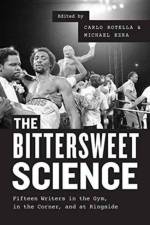
Weighing in with a balance of the visceral and the cerebral, boxing has attracted writers for millennia. Yet few of the writers drawn to it have truly known the sport--and most have never been in the ring. Moving beyond the typical sentimentality, romanticism, or cynicism common to writing on boxing, The Bittersweet Science is a collection of essays about boxing by contributors who are not only skilled writers but also have extensive firsthand experience at ringside and in the gym, the corner, and the ring itself. Editors Carlo Rotella and Michael Ezra have assembled a roster of fresh voices, ones that expand our understanding of the sport's primal appeal. The contributors to The Bittersweet Science--journalists, fiction writers, fight people, and more--explore the fight world's many aspects, considering boxing as both craft and business, art form and subculture. From manager Charles Farrell's unsentimental defense of fixing fights to former Golden Glover Sarah Deming's complex profile of young Olympian Claressa Shields, this collection takes us right into the ring and makes us feel the stories of the people who are drawn to--or sometimes stuck in--the boxing world. We get close-up profiles of marquee attractions like Bernard Hopkins and Roy Jones Jr., as well as portraits of rising stars and compelling cornermen, along with first-person, hands-on accounts from fighters' points of view. We are schooled in not only how to hit and be hit, but why and when to throw in the towel. We experience the intimate immediacy of ringside as well as the dim back rooms where the essentials come together. And we learn that for every champion there's a regiment of journeymen, dabblers, and anglers for advantage, for every aspiring fighter, a veteran in painful decline. Collectively, the perspectives in The Bittersweet Science offer a powerful in-depth picture of boxing, bobbing and weaving through the desires, delusions, and dreams of boxers, fans, and the cast of managers, trainers, promoters, and hangers-on who make up life in and around the ring. Contributors: Robert Anasi, Brin-Jonathan Butler, Donovan Craig, Sarah Deming, Michael Ezra, Charles Farrell, Rafael Garcia, Gordon Marino, Louis Moore, Gary Lee Moser, Hamilton Nolan, Gabe Oppenheim, Carlo Rotella, Sam Sheridan, and Carl Weingarten.
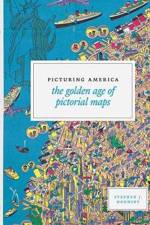
Maps illustrated are drawn primarily from the Fair and Parry collections at the Library of Congress, Geography and Map Division.
Spiders have a problem, and it's us. Despite their magnificent talents for crafting webs, capturing mosquitoes, and camouflage, for millennia arachnophobia has hampered our ability to appreciate these eight-legged and -eyed marvels. No longer! In this witty, accessible, and beautifully illustrated guide, Christopher M. Buddle and Eleanor Spicer Rice metamorphose creepy-crawly revulsion into spider wonder. Emerging from ambitious citizen science project Your Wild Life (an initiative based at North Carolina State University), Dr. Eleanor's Book of Common Spiders provides an eye-opening arachnological overview of the natural history of species most noted by project participants, showcasing some of the fascinating spiders found in our attics and tents, front lawns and forests--and even introducing us to spiders that fish. Exploring species from the tiny (but gymnastic) zebra jumping spider to the naturally shy and woefully misunderstood black widow, this guide will be a tremendous resource for teachers, students, and scientists alike. But more than this, it will transform the way we perceive the environment around us by deepening our understanding of its littlest inhabitants, inspiring all of us to find our inner naturalist, get outside, and crawl across the dirt--magnifying glass in hand.
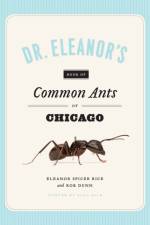
Did you know that for every human on earth, there are about one million ants? They are among the longest-lived insects--with some ant queens passing the thirty-year mark--as well as some of the strongest. Fans of both the city and countryside alike, ants decompose dead wood, turn over soil (in some places more than earthworms), and even help plant forests by distributing seeds. But while fewer than thirty of the nearly one thousand ant species living in North America are true pests, we cringe when we see them marching across our kitchen floors. No longer! In this witty, accessible, and beautifully illustrated guide, Eleanor Spicer Rice, Alex Wild, and Rob Dunn metamorphose creepy-crawly revulsion into myrmecological wonder. Emerging from Dunn's ambitious citizen science project Your Wild Life (an initiative based at North Carolina State University), Dr. Eleanor's Book of Common Ants of Chicago provides an eye-opening entomological overview of the natural history of Chicago's species most noted by project participants--and even offers tips on keeping ant farms in your home. Exploring species from the hobbit ant to the tiny trapjaw ant, and featuring contributions from E. O. Wilson and Field Museum ant scientist Corrie Moreau as well as Wild's stunning photography, this guide will be a tremendous resource for teachers, students, and scientists alike. But more than this, it will transform the way Chicagoans perceive the environment around them by deepening their understanding of its littlest inhabitants, inspiring everyone to find their inner naturalist, get outside, and crawl across the dirt--magnifying glass in hand.
If you were an independent, adventurous, liberated American woman in the 1920s or 1930s where might you have sought escape from the constraints and compromises of bourgeois living? Paris and the Left Bank quickly come to mind. But would you have ever thought of Russia and the wilds of Siberia? This choice was not as unusual as it seems now. As Julia L. Mickenberg uncovers in American Girls in Red Russia, there is a forgotten counterpoint to the story of the Lost Generation: beginning in the late nineteenth century, Russian revolutionary ideology attracted many women, including suffragists, reformers, educators, journalists, and artists, as well as curious travelers. Some were famous, like Isadora Duncan or Lillian Hellman; some were committed radicals, though more were just intrigued by the "Soviet experiment." But all came to Russia in search of social arrangements that would be more equitable, just, and satisfying. And most in the end were disillusioned, some by the mundane realities, others by horrifying truths. Mickenberg reveals the complex motives that drew American women to Russia as they sought models for a revolutionary new era in which women would be not merely independent of men, but also equal builders of a new society. Soviet women, after all, earned the right to vote in 1917, and they also had abortion rights, property rights, the right to divorce, maternity benefits, and state-supported childcare. Even women from Soviet national minorities--many recently unveiled--became public figures, as African American and Jewish women noted. Yet as Mickenberg's collective biography shows, Russia turned out to be as much a grim commune as a utopia of freedom, replete with economic, social, and sexual inequities. American Girls in Red Russia recounts the experiences of women who saved starving children from the Russian famine, worked on rural communes in Siberia, wrote for Moscow or New York newspapers, or performed on Soviet stages. Mickenberg finally tells these forgotten stories, full of hope and grave disappointments.
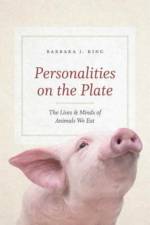
Human attitudes towards other species are inevitably complex. We love the dog and eat the pig, or, we love the bison and eat the bison. Who exactly are these fellow creatures? The newest science from anthropology, psychology, and zoology can help us figure out some answers to that question by showing us how the animals we eat-- for some the octopus or the chimpanzee, for many others the chicken and the goatthink, feel, and act as distinct individual beings. Who are we eating? In this insightful exploration of the animals that humans consume, Barbara King does not tell us what or whom we should be eating, but rather she invites us to a smorgasbord of thought and reflection on the sentience and behaviors of the consumed. By getting to know these animals better, we can begin to taste the different ways they experience the world with awareness and intention, and it brings greater connection between us and those animals than we encounter in shrink-wrapped grocery-store products. This book shows us how valuable it is to understand who we eat, no matter how varied that consumption is. From octopi to crickets to chimpanzees, the animals we consume deserve a better appreciation from all who encounter them in a culinary experience, and there is no host of this scientific and behavioral feast than Barbara King. "
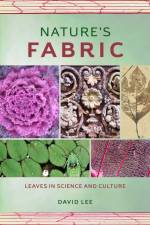
Leaves are all around us--in backyards, cascading from window boxes, even emerging from small cracks in city sidewalks given the slightest glint of sunlight. Perhaps because they are everywhere, it's easy to overlook the humble leaf, but a close look at them provides one of the most enjoyable ways to connect with the natural world. A lush, incredibly informative tribute to the leaf, Nature's Fabric offers an introduction to the science of leaves, weaving biology and chemistry with the history of the deep connection we feel with all things growing and green. Leaves come in a staggering variety of textures and shapes: they can be smooth or rough, their edges smooth, lobed, or with tiny teeth. They have adapted to their environments in remarkable, often stunningly beautiful ways--from the leaves of carnivorous plants, which have tiny "trigger hairs" that signal the trap to close, to the impressive defense strategies some leaves have evolved to reduce their consumption. (Recent studies suggest, for example, that some plants can detect chewing vibrations and mobilize potent chemical defenses.) In many cases, we've learned from the extraordinary adaptations of leaves, such as the invention of new self-cleaning surfaces inspired by the slippery coating found on leaves. But we owe much more to leaves, and Lee also calls our attention back to the fact that that our very lives--and the lives of all on the planet--depend on them. Not only is foliage is the ultimate source of food for every living thing on land, its capacity to cycle carbon dioxide and oxygen can be considered among evolution's most important achievements--and one that is critical in mitigating global climate change. Taking readers through major topics like these while not losing sight of the small wonders of nature we see every day--if you'd like to identify a favorite leaf, Lee's glossary of leaf characteristics means you won't be left out on a limb--Nature's Fabric is eminently readable and full of intriguing research, sure to enhance your appreciation for these extraordinary green machines.
Behind every great man stands a great woman. And behind that great woman stands a slave. Or so it was in the households of the Founding Fathers from Virginia, where slaves worked and suffered throughout the domestic environments of the era, from Mount Vernon, Monticello, and Montpelier to the nation's capital. American icons like Martha Washington, Martha Jefferson, and Dolley Madison were all slaveholders. And as Marie Jenkins Schwartz uncovers in Ties That Bound, these women, as the day-to-day managers of their households, dealt with the realities of a slaveholding culture directly and continually, even in the most intimate of spaces. Unlike other histories that treat the stories of the First Ladies' slaves as separate from the lives of their mistresses, Ties That Bound closely examines the relationships that developed between the First Ladies and their slaves. For elite women and their families, slaves were more than an agricultural workforce; slavery was an entire domestic way of life that reflected and reinforced their status. In many cases slaves were more constant companions to the white women of the household than were their husbands and sons, who often traveled or were at war. By looking closely at the complicated intimacy these women shared, Schwartz is able to reveal how they negotiated their roles, illuminating much about the lives of slaves themselves, as well as class, race, and gender in early America. By detailing the prevalence and prominence of slaves in the daily lives of women who helped shape the country, Schwartz makes it clear that it is impossible to honestly tell the stories of these women while ignoring their slaves. She asks us to consider anew the embedded power of slavery in the very earliest conception of American politics, society, and everyday domestic routines.
Roots are good to think with indeed most of us use them as a metaphor every day. A root can signify the hiddenness of our beginnings, or, in its bifurcating structure, the various possibilities in the life of an individual or a collective. This book looks at rootedness as a metaphor for the genealogical origins of people and their attachment to place and how this metaphor transformed so rapidly in twentieth-century Europe. Christy Wampole s case study is France, with its contradictory legacies of Enlightenment universalism, anti-Semitism, and colonialism. At one time, French nationalist rhetoric portrayed the Jews as unrooted and thus unrighteous people. After the two world wars, the root metaphor figured in the new French philosophy (notably Deleuze and Guattari). And recently, Caribbean thinkers in Haiti, Guadeloupe, and Martinique have debated whether their roots were in Africa, France, the Caribbean, or in some pan-national network that could not be identified on a map. Walpole argues that while the metaphor was perhaps once useful in the establishment of communities and identities, that usefulness has expired. The longer we remain attached to the figure of rootedness, the more discord it sows. Giving up on the metaphor of rootedness, Wampole urges, allows us to see at last that we are in fact unbound by the land we inhabit."
Abonner på vårt nyhetsbrev og få rabatter og inspirasjon til din neste leseopplevelse.
Ved å abonnere godtar du vår personvernerklæring.