




















Gjør som tusenvis av andre bokelskere
Abonner på vårt nyhetsbrev og få rabatter og inspirasjon til din neste leseopplevelse.
Ved å abonnere godtar du vår personvernerklæring.Du kan når som helst melde deg av våre nyhetsbrev.

Through countless retellings, from the Talmud to Archibald MacLeish and since, the story of Job has become a fixture in the cultural imagination of the West. In this study, Susan E. Schreiner analyzes interpretations of the Book of Job by Gregory the Great, Maimonides, Thomas Aquinas, and particularly John Calvin. Reading Calvin's interpretation of Job against the background of his most important medieval predecessors, Schreiner shows how central Job is to Calvin's struggles with issues of creation, the problem of evil, the meaning of history, and the doctrine of providence. For Calvin and his predecessors, Schreiner argues, the concept of intellectual perception is the key to an understanding of Job. The texts she examines constantly raise questions about the human capacity for knowledge: What can the sufferer who stands within history perceive about the self, God, and reality? Can humans truly perceive the workings of providence in their personal lives or in the tumult of history? Are evil and injustice a reality that we must confront before finding wisdom? In her final chapter, Schreiner turns to the wide array of twentieth-century interpretations of Job, including modern biblical commentaries, the work of Carl Jung, and literary transfigurations by Wells, MacLeish, Wiesel, and Kafka. The result is a compelling demonstration of how the history of exegesis can yield vital insights for contemporary culture.
The Gift of Death, Jacques Derrida's most sustained consideration of religion, explores questions first introduced in his book Given Time about the limits of the rational and responsible that one reaches in granting or accepting death, whether by sacrifice, murder, execution, or suicide. Derrida analyzes Czech philosopher Jan Patocka's Heretical Essays in the Philosophy of History and develops and compares his ideas to the works of Heidegger, Lévinas, and Kierkegaard. One of Derrida's major works, The Gift of Death resonates with much of his earlier writing, and this highly anticipated second edition is greatly enhanced by David Wills's updated translation. This new edition also features the first-ever English translation of Derrida's Literature in Secret. In it, Derrida continues his discussion of the sacrifice of Isaac, which leads to bracing meditations on secrecy, forgiveness, literature, and democracy. He also offers a reading of Kafka's Letter to His Father and uses the story of the flood in Genesis as an embarkation point for a consideration of divine sovereignty. "An important contribution to the critical study of ethics that commends itself to philosophers, social scientists, scholars of religion . . . [and those] made curious by the controversy that so often attends Derrida."-Booklist, on the first edition
In Becoming a New Self, Moshe Sluhovsky examines the diffusion of spiritual practices among lay Catholics in early modern Europe. By offering a close examination of early modern Catholic penitential and meditative techniques, Sluhovsky makes the case that these practices promoted the idea of achieving a new self through the knowing of oneself. Practices such as the examination of conscience, general confession, and spiritual exercises, which until the 1400s had been restricted to monastic elites, breached the walls of monasteries in the period that followed. Thanks in large part to Franciscans and Jesuits, lay urban elites--both men and women--gained access to spiritual practices whose goal was to enhance belief and create new selves. Using Michel Foucault's writing on the hermeneutics of the self, and the French philosopher's intuition that the early modern period was a moment of transition in the configurations of the self, Sluhovsky offers a broad panorama of spiritual and devotional techniques of self-formation and subjectivation.
A thorough rethinking of a field deserves to take a shape that is in itself new. Interacting with Print delivers on this premise, reworking the history of print through a unique effort in authorial collaboration. The book itself is not a typical monograph--rather, it is a "multigraph," the collective work of twenty-two scholars who together have assembled an alphabetically arranged tour of key concepts for the study of print culture, from Anthologies and Binding to Publicity and Taste. Each entry builds on its term in order to resituate print and book history within a broader media ecology throughout the eighteenth and nineteenth centuries. The central theme is interactivity, in three senses: people interacting with print; print interacting with the non-print media that it has long been thought, erroneously, to have displaced; and people interacting with each other through print. The resulting book will introduce new energy to the field of print studies and lead to considerable new avenues of investigation.
"China's long history is one of the richest and most complex in the known world, and the Cyrus Tang Hall of China [in Chicago's Field Museum] offers visitors a ... survey of it through some 350 artifacts on display, spanning from the Paleolithic period to present day. Now, with [this book], anyone can experience the marvels of this exhibition ... Readers will gain deeper insight into The Field Museum's important East Asian collections, the exhibition development process, and research on key aspects of China's fascinating history"--Dust jacket flap.
"Published on the occasion of the exhibition 'There was a whole collection made: Photography from Lester and Betty Gutman, ' curated by Laura Letinksy and Jessica Moss, organized by the Smart Museum of Art, the University of Chicago, and presented September 22-December 30, 2016"--Copyright page.
Most current fishing practices are not sustainable, either biologically or economically. Much of the fish that have been caught were discarded and wasted. Globally, countries spend $80 billion buying fish that cost $105 billion dollars to catch. At the same time, continued heavy fishing places more pressure on stocks as they contend with a warmer and more acidic environment. How did we manage to set up a process that wastes so many fish, and why is it so difficult to change the trajectory of continuing to manage stocks into biological extinction? The answer is in the role of governments in enacting subsidies that make it impossible to create sustainable fisheries. Governments poured money into expanding fisheries after World War II, essentially trying to colonizing the oceans. Fishing provided many tangible economic benefits, it also constituted a territorial claim on the last frontier on the planet, the seas. Fishing has been incentivized as an imperial strategy for centuries by nation states as they struggled for ocean supremacy. Being a sea-faring empire required a range of enterprises and fishing was often just a step towards securing other, more desirable objectives. The boats have made world trade profitable. And in the 20th century, the concept created the conditions for the expansion of fishing from a coastal, in-shore activity to a global enterprise, one that has been so technologically successful there is literally no place left in the oceans for fish to hide. All The Boats in the Ocean looks at how and why governments established subsidies to expand fisheries, leading to the drastic overfishing of many stocks and the collapse of ecosystems and and economies alike.
Sexual selection, or the struggle for mates, was of considerable strategic importance to Darwin s theory of evolution as he first outlined it in the "Origin of Species," and later, in the "Descent of Man," it took on a much wider role. There, Darwin s exhaustive elaboration of sexual selection throughout the animal kingdom was directed to substantiating his view that human racial and sexual differences, not just physical differences but certain mental and moral differences, had evolved primarily through the action of sexual selection. It was the culmination of a lifetime of intellectual effort and commitment. Yet even though he argued its validity with a great array of critics, sexual selection went into abeyance with Darwin s death, not to be revived until late in the twentieth century, and even today it remains a controversial theory. In unfurling the history of sexual selection, Evelleen Richards brings to vivid life Darwin the man, not the myth, and the social and intellectual roots of his theory building."
Natural history curators oversee the worlds libraries of life, and themselves are full of life and colorful characters. As museums evolve from dusty collections to centers of edutainment, curators remain the drivers and innovators, and Curators offers us a behind the scenes tour of some of the world s finest specimens of curators and collections alike. In these pages, readers will get to experience time in the field collecting and identifying, and the magic that happens back at home, as collections are curated, exhibits are mounted, and museum curators engage the public. A renowned curator himself, Lance Grande here shares his own experiences, and drawers of those of colleagues and curators at natural history museums the world over. Curators illuminates the halls of natural history museums and puts on display the personalities that drive these cathedrals of science and discovery. It is a work for all interested in what it is really like to spend days and nights at the museum. "
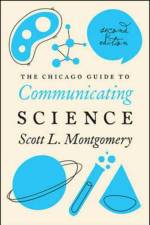
This book is a comprehensive guide to scientific communication that has been used widely in courses and workshops as well as by individual scientists and other professionals since its first publication in 2002. This revision accounts for the many ways in which the globalization of research and the changing media landscape have altered scientific communication over the past decade. With an increased focus throughout on how research is communicated in industry, government, and non-profit centers as well as in academia, it now covers such topics as the opportunities and perils of online publishing, the need for translation skills, and the communication of scientific findings to the broader world, both directly through speaking and writing and through the filter of traditional and social media. It also offers advice for those whose research concerns controversial issues, such as climate change and emerging viruses, in which clear and accurate communication is especially critical to the scientific community and the wider world.
Montesquieu is rightly famous as a tireless critic of despotism, which he associates in his writings overtly with Asia and the Middle East and not with the apparently more moderate Western models of governance found throughout Europe. However, a careful reading of Montesquieu reveals that he recognizes a susceptibility to despotic practices in the West--and that the threat emanates not from the East, but from certain despotic ideas that inform such Western institutions as the French monarchy and the Roman Catholic Church. Nowhere is Montesquieu's critique of the despotic ideas of Europe more powerful than in his enormously influential The Spirit of the Laws, and Vickie B. Sullivan guides readers through Montesquieu's sometimes veiled, yet sharply critical accounts of Machiavelli, Hobbes, Aristotle, and Plato, as well as various Christian thinkers. He finds deleterious consequences, for example, in brutal Machiavellianism, in Hobbes's justifications for the rule of one, in Plato's reasoning that denied slaves the right of natural defense, and in the Christian teachings that equated heresy with treason and informed the Inquisition. In this new reading of Montesquieu's masterwork, Sullivan corrects the misconception that it offers simple, objective observations, showing it instead to be a powerful critique of European politics that would become remarkably and regrettably prescient after Montesquieu's death when despotism wound its way through Europe.
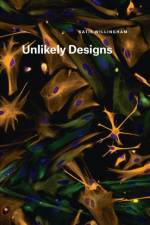
A collection intent on worrying the boundaries between natural and unnatural, human and not, Unlikely Designs draws far-ranging source material from the back channels of knowledge making: the talk pages of Wikipedia, the personal writings of Charles Darwin, the love advice doled out by chatbots, and the eclectic inclusions on the Golden Record time capsule. It is here we discover the allure of the index, what pleasure there is in bending it to our own devices. At the same time, these poems also remind us that logic is often reckless, held together by nothing more than syntactical short circuits--well, I mean, sorry, yes--prone to cracking under closer scrutiny. Returning us again and again to these gaps, Katie Willingham reveals how any act of preservation is inevitably an act of curation, an outcry against the arbitrary, by attempting to make what is precious also what survives.
This is the first study of the importance of class in Andy Warhol's artwork. During the early 1960s, as the idea advanced that fixed classes were a mirage and status an individual achievement, Warhol's Pop art appropriated images, techniques, and technologies that have long been described as generically "American" or "middle-class." Grudin, however, demonstrate that these images and techniques--soup cans, comic book ads, and silk screening, for example--were in fact closely associated with the American working class. Having propelled himself from an impoverished childhood in Pittsburgh to the top of the advertising industry in New York City, Warhol understood and exploited the intense appeal that popular culture held for aspiring audiences. Grudin traces Warhol's sensitivity to this tension by examining his diverse output: how he used mass-cultural signs (Coca-Cola, paint-by-numbers, popular dance steps) to produce paintings and photographs as well as films, writing, performance, and music.
"This is a book about nature and culture," Eric T. Freyfogle writes, "about our place and plight on earth, and the nagging challenges we face in living on it in ways that might endure." Challenges, he says, we are clearly failing to meet. Harking back to a key phrase from the essays of eminent American conservationist Aldo Leopold, Our Oldest Task spins together lessons from history and philosophy, the life sciences and politics, economics and cultural studies in a personal, erudite quest to understand how we might live on--and in accord with--the land. Passionate and pragmatic, extraordinarily well read and eloquent, Freyfogle details a host of forces that have produced our self-defeating ethos of human exceptionalism. It is this outlook, he argues, not a lack of scientific knowledge or inadequate technology, that is the primary cause of our ecological predicament. Seeking to comprehend both the multifaceted complexity of contemporary environmental problems and the zeitgeist as it unfolds, Freyfogle explores such diverse topics as morality, the nature of reality (and the reality of nature), animal welfare, social justice movements, and market politics. The result is a learned and inspiring rallying cry to achieve balance, a call to use our knowledge to more accurately identify the dividing line between living in and on the world and destruction. "To use nature," Freyfogle writes, "but not to abuse it."
Visual anatomy books have been a staple of medical practice and study since the mid-sixteenth century. But the visual representation of diseased states followed a very different pattern from anatomy, one we are only now beginning to investigate and understand. With Visualizing Disease, Domenico Bertoloni Meli explores key questions in this domain, opening a new field of inquiry based on the analysis of a rich body of arresting and intellectually challenging images reproduced here both in black and white and in color. Starting in the Renaissance, Bertoloni Meli delves into the wide range of figures involved in the early study and representation of disease, including not just men of medicine, like anatomists, physicians, surgeons, and pathologists, but also draftsmen and engravers. Pathological preparations proved difficult to preserve and represent, and as Bertoloni Meli takes us through a number of different cases from the Renaissance to the mid-nineteenth century, we gain a new understanding of how knowledge of disease, interactions among medical men and artists, and changes in the technologies of preservation and representation of specimens interacted to slowly bring illustration into the medical world.
"A biographical reference book about two hundred of the most influential cooks and restaurateurs from 1790 to 1919"--Publisher.
"The exhibition is organized by the National Gallery of Art, Washington"--Title page verso.
In 2012, to celebrate the centennial of Poetry, the Press published The Open Door:100 Poems,100 Years of Poetry Magazine, edited by Share and Wiman; that is the model for this new anthology of fifty essays about reading poetry. All were commissioned by Poetry for a column called The View From Here, in which people "from outside the world of poetry" are invited to describe when and why they read poetry. The editors sought contributions from philosophers and journalists, musicians and artists, doctors and soldiers, an iron-worker, a lawyer, anthropologist, economist, and politician. Contributors include Neko Case, Roger Ebert, Richard Rorty, Rhymefest, Lynda Barry, Daniel Handler, and Alex Ross. They have arranged the essays in groups and pulled out quotes to open each of the eight sections as a way to suggest themes without trying to prescribe how the pieces should be read. Each essay retains its own voice, and many are surprising, provocative, touching, or funny.
Nietzsche has recently enjoyed much scrutiny from the nouveaux critiques. Jacques Derrida, the leader of that movement, here combines in his strikingly original and incisive fashion questions of sexuality, politics, writing, judgment, procreation, death, and even the weather into a far-reaching analysis of the challenges bequeathed to the modern world by Nietzsche. Spurs, then, is aptly titled, for Derrida's deconstructions of Nietzsche's meanings will surely act as spurs to further thought and controversy. This dual-language edition offers the English-speaking reader who has some knowledge of French an opportunity to examine the stylistic virtuosity of Derrida's writing--of particular significance for his analysis of the question of style.
The publication of The Dramatic Writer's Companion in 2009 cemented Will Dunne's reputation as a master teacher of playwrights, screenwriters, and anyone working on dramatic scripts. Divided into three major sections on character, scene, and story, the book consists of more than 60 exercises to help writers zero in on and solve specific problems in their scripts. The success of that book has led Dunne to write a sequel, with new workshop-tested exercises that address additional issues in script development. This new edition of The Dramatic Writer's Companion is fully linked to the sequel and allows readers to find related exercises of interest in the new volume, though it can also still be used as a stand-alone resource.
"When the Nazis came, aEtienne Boltanski divorced his wife and walked out the front door, never to be seen again during the war. So far as the outside world knew, the Jewish doctor had fled. The truth was that he had sneaked back to hide in a secret crawl space at the heart of the house. There he lived for the duration of the war. With the Liberation, aEtienne finally emerged, but he and his family were changed--anxious, reclusive, yet proudly eccentric"--Amazon.com.
Even in this most partisan and dysfunctional of eras, we can all agree on one thing: Washington is broken. Politicians take increasingly inflexible and extreme positions, leading to gridlock, partisan warfare, and the sense that our seats of government are nothing but cesspools of hypocrisy, childishness, and waste. The shocking reality, though, is that modern polarization was a deliberate project carried out by Democratic and Republican activists. In The Polarizers, Sam Rosenfeld details why bipartisanship was seen as a problem in the postwar period and how polarization was then cast as the solution. Republicans and Democrats feared that they were becoming too similar, and that a mushy consensus imperiled their agendas and even American democracy itself. Thus began a deliberate move to match ideology with party label--with the toxic results we now endure. Rosenfeld reveals the specific politicians, intellectuals, and operatives who worked together to heighten partisan discord, showing that our system today is not (solely) a product of gradual structural shifts but of deliberate actions motivated by specific agendas. Rosenfeld reveals that the story of Washington's transformation is both significantly institutional and driven by grassroots influences on both the left and the right. The Polarizers brilliantly challenges and overturns our conventional narrative about partisanship, but perhaps most importantly, it points us toward a new consensus: if we deliberately created today's dysfunctional environment, we can deliberately change it.
Abonner på vårt nyhetsbrev og få rabatter og inspirasjon til din neste leseopplevelse.
Ved å abonnere godtar du vår personvernerklæring.