






Gjør som tusenvis av andre bokelskere
Abonner på vårt nyhetsbrev og få rabatter og inspirasjon til din neste leseopplevelse.
Ved å abonnere godtar du vår personvernerklæring.Du kan når som helst melde deg av våre nyhetsbrev.

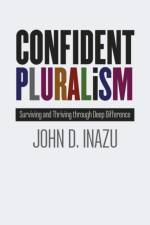
Inazu mounts a rousing case for the importance of pluralism as a cornerstone value of American (and international) society, arguing that we really can live peaceably together despite our differences and that we can and should reorient our legal and political system to acknowledge difference while still valuing social cohesion.
An expansive political drama from 1956, The Last Hurrah depicts an Irish-American politician in Boston, Frank Skeffington, as described by the nephew he persuades to observe him during his contested reelection campaign. Skeffington is an expert at balancing the claims of the various Boston-area ethnic groups. Cynical and corrupt, he also provides for his constituents. This was a best-seller and made into a great film starring Spencer Tracy. At the time of publication, many pointed out the similarities between Skeffington and Boston mayor James Michael Curley. Jack Beatty who wrote an award-winning biography of Curley called The Rascal King (1993, reprinted in 2000); has written a wonderful introduction for our edition.
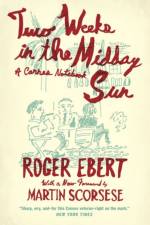
A paragon of cinema criticism for decades, Roger Ebertâ¿with his humor, sagacity, and no-nonsense thumbâ¿achieved a renown unlikely ever to be equaled. His tireless commentary has been greatly missed since his death, but, thankfully, in addition to his mountains of daily reviews, Ebert also left behind a legacy of lyrical long-form writing. And with Two Weeks in the Midday Sun, we get a glimpse not only into Ebert the man, but also behind the scenes of one of the most glamorous and peculiar of cinematic rituals: the Cannes Film Festival. More about people than movies, this book is an intimate, quirky, and witty account of the parade of personalities attending the 1987 festivalâ¿Ebertâ¿s twelfth, and the fortieth anniversary of the event. A wonderful raconteur with an excellent sense of pacing, Ebert presents lighthearted ruminations on his daily routine and computer troubles alongside more serious reflection on directors such as Fellini and Coppola, screenwriters like Charles Bukowski, actors such as Isabella Rossellini and John Malkovich, the very American press agent and social maverick Billy âSilver Dollarâ? Baxter, and the stylishly plunging necklines of yore. He also comments on the trajectory of the festival itself and the âenormous happinessâ? of sitting, anonymous and quiet, in an ordinary French café. And, of course, he talks movies. Illustrated with Ebertâ¿s charming sketches of the festival and featuring both a new foreword by Martin Scorsese and a new postscript by Ebert about an eventful 1997 dinner with Scorsese at Cannes, Two Weeks in the Midday Sun is a small treasure, a window onto the mind of this connoisseur of criticism and satire, a man always so funny, so un-phony, so completely, unabashedly himself.
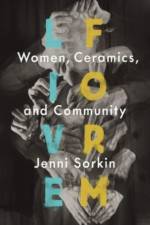
There has been a recent move in art history to reconsider craft practices in light of their relationships to the twentieth-century artistic avant-garde. This book focuses on (1) how ceramics culture evolved in the US when Bauhaus artists and designers emigrated from Europe during the run-up to WWII and (2) the understudied role of women artists in establishing ceramics as a sophisticated medium in the post-War years. No surprise: Black Mountain College is at the heart of much of it. Throughout, Sorkin s concern is how ceramics came to influence what is today called process art and performance (for example, Martha Rosler s video Semiotics of the Kitchen, 1975). In both, the act of making or producing dominates as art over any resulting object. The book centers on three case studies of women who advanced ceramics as an artistic medium in this country: Marguerite Wildenhain, a Bauhaus artist who taught briefly at Black Mountain before starting an important pottery in California called Pond Farm and writing several influential books; M.C. Richards, who taught English at the University of Chicago and then literature and ceramics at Black Mountain College and who collaborated with Robert Rauschenberg, Merce Cunningham, and their coterie; and Susan Peterson, famous for teaching a ceramics class on TV in the 1960s, but who also taught in New York and then at Chinouard where she established their distinguished ceramics program and trained artists John Mason and Ken Price. Mason and Price went on to work almost exclusively in ceramics, but they used the material to make sculpture rather than functional pottery"
Demonstrates that ethical and religious concerns inform even the most technical writings on logic and language. This text also shows that, for Wittgenstein, the need to establish clear limitations is both a logical and an ethical demand, revealing a religious view of the world in his philosophy.
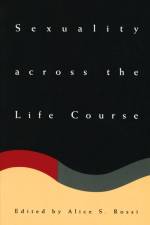
A collection of 14 essays on sexual behaviour, from adolescence to old age, and covering such groups as singles, married couples, homosexuals and African-American men and women. This volume also looks at topics such as the effects of chronic disease and medication on sexual functioning.
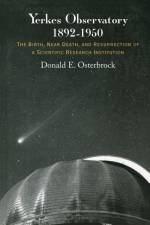
A centennial study of Yerkes Observatory, built a century ago by the University of Chicago as one of America's first big science centres. This text describes the changing fortunes of the Observatory under its first three directors, and is illustrated with many archival photographs.
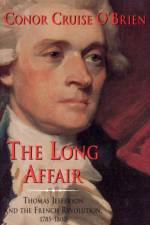
This is an examination of Thomas Jefferson as both man and icon through the critical lens of the French Revolution. The book offers a provocative analysis of the supreme symbol of American history and political culture and challenges the traditional perceptions of both Jefferson and his legacy.
Abonner på vårt nyhetsbrev og få rabatter og inspirasjon til din neste leseopplevelse.
Ved å abonnere godtar du vår personvernerklæring.