












Gjør som tusenvis av andre bokelskere
Abonner på vårt nyhetsbrev og få rabatter og inspirasjon til din neste leseopplevelse.
Ved å abonnere godtar du vår personvernerklæring.Du kan når som helst melde deg av våre nyhetsbrev.

A polemic against the provision of the US tax code that prohibits political speech on the part of nonprofits-and, specifically, in this case, churches-arguing that it is an unconstitutional infringement of speech that has been deliberately used to suppress the views and power of religious activists.
Strauss's lectures that led up to his most important work, Natural Right and History.
A final book from the late scholar, this one on the idea of the island in the imagination of eighteenth-century France.
With Inadvertent Images, Peter Geimer explores all kinds of photographic irritation from throughout the history of the medium, as well as accidental images that occur through photo-like means, such as the image of Christ on the Shroud of Turin, brought into high resolution through photography.
Retired fighter pilot and English professor combines lifelong interests in war and literature in essays on how writers struggled to comprehend warfare.
A biography of the early years of Descartes, which reveal a very active man in Europe's complicated political and social scene-a courtier, teacher, thinker, and possibly even a spy.
In Beasts at Bedtime, scientist (and father) Liam Heneghan examines the environmental underpinnings of children's stories.
Taking up the common objections raised by both right and left, Posner argues that future bailouts will occur. Acknowledging that inevitability, we can and must look ahead and carefully assess our policy options before we need them.
An analysis of the state of philosophy today, how it got there, and how it can be adjusted to have a more immediate relationship to daily life and the events of the world.
An account of the rise of physical sciences in Berlin in the nineteenth century, and the role played by the larger cultural flowering occurring at the time-the ways that ideas cross-fertilized.
When viewed from space, the Korean Peninsula is crossed by a thin green ribbon. On the ground, its mix of dense vegetation and cleared borderlands serves as home to dozens of species that are extinct or endangered elsewhere on the peninsula. This is Korea's demilitarized zone--one of the most dangerous places on earth for humans, and paradoxically one of the safest for wildlife. Although this zone was not intentionally created for conservation, across the globe hundreds of millions of acres of former military zones and bases are being converted to restoration areas, refuges, and conservation lands. David G. Havlick has traveled the world visiting these spaces of military-to-wildlife transition, and in Bombs Away he explores both the challenges--physical, historical, and cultural--and fascinating ecological possibilities of military site conversions. Looking at particular international sites of transition--from Indiana's Big Oaks National Wildlife Refuge to Cold War remnants along the former Iron Curtain--Havlick argues that these new frontiers of conservation must accomplish seemingly antithetical aims: rebuilding and protecting ecosystems, or restoring life, while also commemorating the historical and cultural legacies of warfare and militarization. Developing these ideas further, he shows that despite the ecological devastation often wrought by military testing and training, these activities need not be inconsistent with environmental goals, and in some cases can even complement them--a concept he calls ecological militarization. A profound, clear explication of landscapes both fraught and fecund, marked by death but also reservoirs of life, Bombs Away shows us how "military activities, conservation goals, and ecological restoration efforts are made to work together to create new kinds of places and new conceptions of place."
On Descartes' Passive Thought is the culmination of a life-long reflection on the philosophy of Descartes by one of the most important living French philosophers. In it, Jean-Luc Marion examines anew some of the questions left unresolved in his previous books about Descartes, with a particular focus on Descartes's theory of morals and the passions. Descartes has long been associated with mind-body dualism, but Marion argues here that this is a historical misattribution, popularized by Malebranche and popular ever since both within the academy and with the general public. Actually, Marion shows, Descartes held a holistic conception of body and mind. He called it the meum corpus, a passive mode of thinking, which implies far more than just pure mind--rather, it signifies a mind directly connected to the body: the human being that I am. Understood in this new light, the Descartes Marion uncovers through close readings of works such as Passions of the Soul resists prominent criticisms leveled at him by twentieth-century figures like Husserl and Heidegger, and even anticipates the non-dualistic, phenomenological concepts of human being discussed today. This is a momentous book that no serious historian of philosophy will be able to ignore.
A collection that explores all the current legal, ethical, and cultural thinking about torture and its effects today.
Michelangelo's Sculpture is the first in a series of volumes of Steinberg's selected writings and unpublished lectures, edited by his longtime associate Sheila Schwartz.
In this book, distinguished philosopher Stephen R. L. Clark shows that they form a vital set of spiritual exercises by which individuals can achieve one of Plotinus's most important goals: self-transformation through contemplation. Clark examines a variety of Plotinus's myths and metaphors within the cultural and philosophical context of his time.
The US Army executed seventy of its own soldiers between 1943 and 1946 - almost all of them black. This work narrates two different trials: one of a white officer, one of a black soldier, both accused of murder. Both they were court-martialed in the same room, yet the outcomes could not have been more different.
Lost feminist classic from one of Renaissance Italy's most accomplished female writers
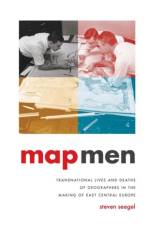
This book is a group intellectual biography of five prominent geographers from East Central Europe and the United States between the 1870s and the 1950s: Albrecht Penck of Germany; Eugeniusz Romer of Poland; Stepan Rudnyts'kyi of Ukraine; Isaiah Bowman of the United States; and Count Pal Teleki of Hungary.
Drawing on history, anthropology, and politics, and bringing to bear examples ranging from the murder of Theo van Gogh to the French ban on headscarves, this book argues that the West must overcome its fear of Islam if it is to avoid betraying the values it claims to protect.
Just as today's embrace of the digital has sparked interest in the history of print culture, so in eighteenth-century Britain the dramatic proliferation of print gave rise to urgent efforts to historicize different media forms and to understand their unique powers. And so it was, Paula McDowell argues, that our modern concepts of oral culture and print culture began to crystallize, and authors and intellectuals drew on older theological notion of oral tradition to forge the modern secular notion of oral tradition that we know today. Drawing on an impressive array of sources including travel narratives, elocution manuals, theological writings, ballad collections, and legal records, McDowell re-creates a world in which everyone from fishwives to philosophers, clergymen to street hucksters, competed for space and audiences in taverns, marketplaces, and the street. She argues that the earliest positive efforts to theorize "oral tradition," and to depict popular oral culture as a culture (rather than a lack of culture), were prompted less by any protodemocratic impulse than by a profound discomfort with new cultures of reading, writing, and even speaking shaped by print. Challenging traditional models of oral versus literate societies and key assumptions about culture's ties to the spoken and the written word, this landmark study reorients critical conversations across eighteenth-century studies, media and communications studies, the history of the book, and beyond.
While there is enormous public interest in biodiversity, food sourcing, and sustainable agriculture, romantic attachments to heirloom seeds and family farms have provoked misleading fantasies of an unrecoverable agrarian past. The reality, as Courtney Fullilove shows, is that seeds are inherently political objects transformed by the ways they are gathered, preserved, distributed, regenerated, and improved. In The Profit of the Earth, Fullilove unearths the history of American agricultural development and of seeds as tools and talismans put in its service. Organized into three thematic parts, The Profit of the Earth is a narrative history of the collection, circulation, and preservation of seeds. Fullilove begins with the political economy of agricultural improvement, recovering the efforts of the US Patent Office and the nascent US Department of Agriculture to import seeds and cuttings for free distribution to American farmers. She then turns to immigrant agricultural knowledge, exploring how public and private institutions attempting to boost midwestern wheat yields drew on the resources of willing and unwilling settlers. Last, she explores the impact of these cereal monocultures on biocultural diversity, chronicling a fin-de-siècle Ohio pharmacist's attempt to source Purple Coneflower from the diminishing prairie. Through these captivating narratives of improvisation, appropriation, and loss, Fullilove explores contradictions between ideologies of property rights and common use that persist in national and international development--ultimately challenging readers to rethink fantasies of global agriculture's past and future.
Individuals are things that everybody knows-or thinks they do. Yet even scholars who practice or analyze the biological sciences often cannot agree on what an individual is and why. One reason for this disagreement is that the many important biological individuality concepts serve very different purposes-defining, classifying, or explaining living structure, function, interaction, persistence, or evolution. Indeed, as the contributors to Biological Individuality reveal, nature is too messy for simple definitions of this concept, organisms too quirky in the diverse ways they reproduce, function, and interact, and human ideas about individuality too fraught with philosophical and historical meaning. Bringing together biologists, historians, and philosophers, this book provides a multifaceted exploration of biological individuality that identifies leading and less familiar perceptions of individuality both past and present, what they are good for, and in what contexts. Biological practice and theory recognize individuals at myriad levels of organization, from genes to organisms to symbiotic systems. We depend on these notions of individuality to address theoretical questions about multilevel natural selection and Darwinian fitness; to illuminate empirical questions about development, function, and ecology; to ground philosophical questions about the nature of organisms and causation; and to probe historical and cultural circumstances that resonate with parallel questions about the nature of society. Charting an interdisciplinary research agenda that broadens the frameworks in which biological individuality is discussed, this book makes clear that in the realm of the individual, there is not and should not be a direct path from biological paradigms based on model organisms through to philosophical generalization and historical reification.
Language shapes and reflects how we think about the world. It engages and intrigues us. Our everyday use of language is quite effortless--we are all experts on our native tongues. Despite this, issues of language and meaning have long flummoxed the judges on whom we depend for the interpretation of our most fundamental legal texts. Should a judge feel confident in defining common words in the texts without the aid of a linguist? How is the meaning communicated by the text determined? Should the communicative meaning of texts be decisive, or at least influential? To fully engage and probe these questions of interpretation, this volume draws upon a variety of experts from several fields, who collectively examine the interpretation of legal texts. In The Nature of Legal Interpretation, the contributors argue that the meaning of language is crucial to the interpretation of legal texts, such as statutes, constitutions, and contracts. Accordingly, expert analysis of language from linguists, philosophers, and legal scholars should influence how courts interpret legal texts. Offering insightful new interdisciplinary perspectives on originalism and legal interpretation, these essays put forth a significant and provocative discussion of how best to characterize the nature of language in legal texts.
Whether referring to a place, a nonhuman animal or plant, or a state of mind, wild indicates autonomy and agency, a will to be, a unique expression of life. Yet two contrasting ideas about wild nature permeate contemporary discussions: either that nature is most wild in the absence of a defiling human presence, or that nature is completely humanized and nothing is truly wild. This book charts a different path. Exploring how people can become attuned to the wild community of life and also contribute to the well-being of the wild places in which we live, work, and play, Wildness brings together esteemed authors from a variety of landscapes, cultures, and backgrounds to share their stories about the interdependence of everyday human lifeways and wildness. As they show, far from being an all or nothing proposition, wildness exists in variations and degrees that range from cultivated soils to multigenerational forests to sunflowers pushing through cracks in a city alley. Spanning diverse geographies, these essays celebrate the continuum of wildness, revealing the many ways in which human communities can nurture, adapt to, and thrive alongside their wild nonhuman kin. From the contoured lands of Wisconsin's Driftless region to remote Alaska, from the amazing adaptations of animals and plants living in the concrete jungle to indigenous lands and harvest ceremonies, from backyards to reclaimed urban industrial sites, from microcosms to bioregions and atmospheres, manifestations of wildness are everywhere. With this book, we gain insight into what wildness is and could be, as well as how it might be recovered in our lives-and with it, how we might unearth a more profound, wilder understanding of what it means to be human. Wildness: Relations of People and Place is published in association with the Center for Humans and Nature, an organization that brings together some of the brightest minds to explore and promote human responsibilities to each other and the whole community of life. Visit the Center for Humans and Nature's Wildness website for upcoming events and a series of related short films.
Abonner på vårt nyhetsbrev og få rabatter og inspirasjon til din neste leseopplevelse.
Ved å abonnere godtar du vår personvernerklæring.