
















Gjør som tusenvis av andre bokelskere
Abonner på vårt nyhetsbrev og få rabatter og inspirasjon til din neste leseopplevelse.
Ved å abonnere godtar du vår personvernerklæring.Du kan når som helst melde deg av våre nyhetsbrev.

This book brings together political scientists to argue about the meaning of representative democracy and how we should interpret and apply it today.
"We frequently see one idea appear in one discipline as if it were new, when it migrated from another discipline, like a mole that had dug under a fence and popped up on the other side." Taking note of this phenomenon, John Goldsmith and Bernard Laks embark on a uniquely interdisciplinary history of the genesis of linguistics, from nineteenth-century currents of thought in the mind sciences through to the origins of structuralism and the ruptures, both political and intellectual, in the years leading up to World War II. Seeking to explain where contemporary ideas in linguistics come from and how they have been justified, Battle in the Mind Fields investigates the porous interplay of concepts between psychology, philosophy, mathematical logic, and linguistics. Goldsmith and Laks trace theories of thought, self-consciousness, and language from the machine age obsession with mind and matter to the development of analytic philosophy, behaviorism, Gestalt psychology, positivism, and structural linguistics, emphasizing throughout the synthesis and continuity that has brought about progress in our understanding of the human mind. Arguing that it is impossible to understand the history of any of these fields in isolation, Goldsmith and Laks suggest that the ruptures between them arose chiefly from social and institutional circumstances rather than a fundamental disparity of ideas.
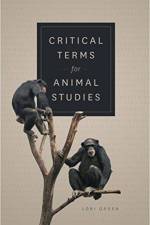
A new critical terms volume addressing the growing, vigorously interdisciplinary field of animal studies.
Spanning four decades, from his early days to his last despatch , the writings in this collection reflect a radically changing America as seen by a man whose keen sense of justice and humour never faltered.
Celebrated prison reformer Miriam Van Waters made history with her sensational battle to retain the superintendency of the Massachusetts Reformatory for Women in 1949. This biography of the early lesbian activist moves beyond the controversy to tell the story of a remarkable woman.
This study of group travel examines the social, cognitive and ecological processes that underlie patterns and strategies of group travel. It uses field studies of a wide range of human and non-human primate groups as well as hyenas, birds, dolphins and bees.
This book brings together political scientists to argue about the meaning of representative democracy and how we should interpret and apply it today.
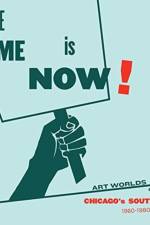
Exhibition catalog that covers African American art on Chicago's south side in the 1960s and '70s.
The third in a series of collections of brief lives of prominent scientists, this one focuses on the life sciences and thus features some major names, from Darwin to Crick to Goodall.
Throughout the history of European modernism, philosophers and artists have been fascinated by madness. Something different happened in Brazil, however, with the "art of the insane" that flourished within the modernist movements there. From the 1920s to the 1960s, the direction and creation of art by the mentally ill was actively encouraged by prominent figures in both medicine and art criticism, which led to a much wider appreciation among the curators of major institutions of modern art in Brazil, where pieces are included in important exhibitions and collections. Kaira M. Cabañas shows that at the center of this advocacy stood such significant proponents as psychiatrists Osório César and Nise da Silveira, who championed treatments that included painting and drawing studios; and the art critic Mário Pedrosa, who penned Gestaltist theses on aesthetic response. Cabañas examines the lasting influence of this unique era of Brazilian modernism, and how the afterlife of this "outsider art" continues to raise important questions. How do we respect the experiences of the mad as their work is viewed through the lens of global art? Why is this art reappearing now that definitions of global contemporary art are being contested? Learning from Madness offers an invigorating series of case studies that track the parallels between psychiatric patients' work in Western Europe and its reception by influential artists there, to an analogous but altogether distinct situation in Brazil.
A handbook of mammals that gathers the most up-to-date knowledge of how they are classified and related.
An accessible history of the sad and hilarious history of attempts to make it rain, snow, or hail on command
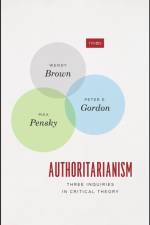
This collection turns the emphasis of political history away from its traditional focus on moments of crisis and toward the underlying structures of state power instead.
Bernstein takes art as its theme, reflecting on a number of paintings-which are reproduced here in color.
From one of the leading figures in the Israeli peace movement comes a very personal handbook to keeping the fight going. When you're in a struggle that you lose day after day, but that you know has to be waged, how do you keep going? The lessons are drawn from Israel, but they're applicable for activists universally.
Science and Capitalism Entangled Histories.
Does it make sense to refer to bird song - a complex vocalization, full of repetitive and transformative patterns that are carefully calculated to woo a mate - as art? What about a pack of wolves howling in unison or the cacophony made by an entire rain forest? Redefining music as "the art of possibly animate things," Musical Vitalities charts a new path for music studies that blends musicological methods with perspectives drawn from the life sciences. In opposition to humanist approaches that insist on a separation between culture and nature--approaches that appear increasingly untenable in an era defined by human-generated climate change--Musical Vitalities treats music as one example of the cultural practices and biotic arts of the animal kingdom rather than as a phenomenon categorically distinct from nonhuman forms of sonic expression. The book challenges the human exceptionalism that has allowed musicologists to overlook music's structural resemblances to the songs of nonhuman species, the intricacies of music's physiological impact on listeners, and the many analogues between music's formal processes and those of the dynamic natural world. Through close readings of Austro-German music and aesthetic writings that suggest wide-ranging analogies between music and nature, Musical Vitalities seeks to both rekindle the critical potential of nineteenth-century music and rejoin the humans at the center of the humanities with the nonhumans whose evolutionary endowments and planetary fates they share.
This analysis of Wagner's vexed legacy is heightened by the author's own experience as a dramaturg working on Wagner at the Berlin State Opera.
Many Americans imagine the Arctic as harsh, freezing, and nearly uninhabitable. The living Arctic, however--the one experienced by native Inuit and others who work and travel there--is a diverse region shaped by much more than stereotype and mythology. Do You See Ice? presents a history of Arctic encounters from 1850 to 1920 based on Inuit and American accounts, revealing how people made sense of new or changing environments. Routledge vividly depicts the experiences of American whalers and explorers in Inuit homelands. Conversely, she relates stories of Inuit who traveled to the northeastern United States and were similarly challenged by the norms, practices, and weather they found there. Standing apart from earlier books of Arctic cultural research--which tend to focus on either Western expeditions or Inuit life--Do You See Ice? explores relationships between these two groups in a range of northern and temperate locations. Based on archival research and conversations with Inuit Elders and experts, Routledge's book is grounded by ideas of home: how Inuit and Americans often experienced each other's countries as dangerous and inhospitable, how they tried to feel at home in unfamiliar places, and why these feelings and experiences continue to resonate today. The author intends to donate all royalties from this book to the Elders' Room at the Angmarlik Center in Pangnirtung, Nunavut.
Wineburg has become the go-to guy for helping people, both teachers and administrators, think about how to teach kids history. This book is an accessible account of how we've tried to do it, why and how we've failed, and how we could do better.
Inazu mounts a rousing case for the importance of pluralism as a cornerstone value of American (and international) society, arguing that we really can live peaceably together despite our differences and that we can and should reorient our legal and political system to acknowledge difference while still valuing social cohesion.
A study of the knowledge we can glean about perception and consciousness through the study of literature.
An analysis of sex trafficking that shows that the public concern for it tends to ignore the actual sex workers involved and instead focus on purportedly humanitarian interventions that mesh comfortably with the modern capitalist and judicial state.
A study of the knowledge we can glean about perception and consciousness through the study of literature.
A philosophical and literary exploration of the concept of "the Word became Flesh," showing the many ways thinkers and artists have grappled with the idea of words becoming embodied.
Piper shows how we can use data in digital humanities to learn more about the texts under consideration, making use of the surprising information that calculation and quantity can offer about words, how they're used, and what the texts in which they're found mean.
Piper shows how we can use data in digital humanities to learn more about the texts under consideration, making use of the surprising information that calculation and quantity can offer about words, how they're used, and what the texts in which they're found mean.
Abonner på vårt nyhetsbrev og få rabatter og inspirasjon til din neste leseopplevelse.
Ved å abonnere godtar du vår personvernerklæring.