










Gjør som tusenvis av andre bokelskere
Abonner på vårt nyhetsbrev og få rabatter og inspirasjon til din neste leseopplevelse.
Ved å abonnere godtar du vår personvernerklæring.Du kan når som helst melde deg av våre nyhetsbrev.

The climate change reckoning looms. As scientists try to discern what the Earth's changing weather patterns mean for our future, Rachel Rothschild seeks to understand the current scientific and political debates surrounding the environment through the history of another global environmental threat: acid rain. The identification of acid rain in the 1960s changed scientific and popular understanding of fossil fuel pollution's potential to cause regional--and even global--environmental harms. It showed scientists that the problem of fossil fuel pollution was one that crossed borders--it could travel across vast stretches of the earth's atmosphere to impact ecosystems around the world. This unprecedented transnational reach prompted governments, for the first time, to confront the need to cooperate on pollution policies, transforming environmental science and diplomacy. Studies of acid rain and other pollutants brought about a reimagining of how to investigate the natural world as a complete entity, and the responses of policy makers, scientists, and the public set the stage for how societies have approached other prominent environmental dangers on a global scale, most notably climate change. Grounded in archival research spanning eight countries and five languages, as well as interviews with leading scientists from both government and industry, Poisonous Skies is the first book to examine the history of acid rain in an international context. By delving deep into our environmental past, Rothschild hopes to inform its future, showing us how much is at stake for the natural world as well as what we risk--and have already risked--by not acting.
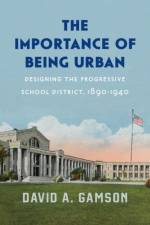
From the 1890s through World War II, the greatest hopes of American progressive reformers lay not in the government, the markets, or other seats of power but in urban school districts and classrooms. The Importance of Being Urban focuses on four western school systems - in Denver, Oakland, Portland, and Seattle - and their efforts to reconfigure public education in the face of rapid industrialization and the perceived perils [GDA1] of the modern city. In an era of accelerated immigration, shifting economic foundations, and widespread municipal shake-ups, reformers argued that the urban school district could provide the broad blend of social, cultural, and educational services needed to prepare students for twentieth-century life. These school districts were a crucial force not only in orchestrating educational change, but in delivering on the promise of democracy. David A. Gamson's book provides eye-opening views of the histories of American education, urban politics, and the Progressive Era.
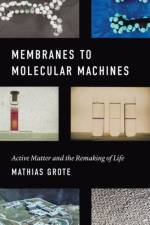
Today's science tells us that our bodies are filled with molecular machinery that orchestrates all sorts of life processes. When we think, microscopic "channels" in our brain cells' membranes open and close; when we run, tiny "motors" in our muscle cells' membranes spin; and when we see, light operates "molecular switches" in our eyes and nerves. A molecular-mechanical vision of life has become commonplace in both the halls of philosophy of science departments and the offices of drug companies developing "proton pump inhibitors" or medicines such as Prozac. Membranes to Molecular Machines explores just how late twentieth-century science came to think of our cells and bodies this way. This story is told through the lens of membrane research, an unwritten history at the crossroads of molecular biology, biochemistry, physiology and the neurosciences, that directly feeds into today's synthetic biology as well as nano- and biotechnology. Mathias Grote shows how these sciences have not only made us think differently about life, they have, by reworking what membranes and proteins represent in laboratories, allowed us to manipulate life as "active matter" in new ways. Covering the science of biological membranes since the mid-1960s, this book connects that history to contemporary work with optogenetics, a method for stimulating individual neurons using light, and should appeal to scholars interested in the intersection of chemical research and the life sciences.
The City of Light. For many, these four words instantly conjure late nineteenth-century Paris and the garish colors of Toulouse-Lautrec's iconic posters. More recently, the Eiffel Tower's nightly show of sparkling electric lights has come to exemplify our fantasies of Parisian nightlife. Though we reflect longingly on such scenes, in Illuminated Paris, Hollis Clayson shows that there's more to these clichés than meets the eye. In this richly illustrated book, she traces the dramatic evolution of lighting in Paris and how artists responded to the shifting visual and cultural scenes that resulted from these technologies. While older gas lighting produced a haze of orange, new electric lighting was hardly an improvement: the glare of experimental arc lights--themselves dangerous--left figures looking pale and ghoulish. As Clayson shows, artists' representations of these new colors and shapes reveal turn-of-the-century concerns about modernization as electric lighting came to represent the harsh glare of rapidly accelerating social change. At the same time, in part thanks to American artists visiting the city, these works of art also produced our enduring romantic view of Parisian glamour and its Belle Époque.
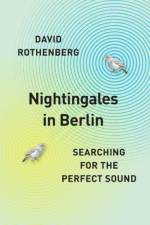
Rothenberg takes us to Berlin's urban landscape to discover and engage with one of nature's most beautiful and celebrated sounds, the nightingale's song.
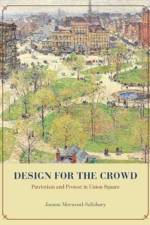
Situated on Broadway between Fourteenth and Seventeenth Streets, Union Square occupies a central place in both the geography and the history of New York City. Though this compact space was originally designed in 1830 to beautify a residential neighborhood and boost property values, by the early days of the Civil War, New Yorkers had transformed Union Square into a gathering place for political debate and protest. As public use of the square changed, so, too, did its design. When Frederick Law Olmsted and Calvert Vaux redesigned the park in the late nineteenth century, they sought to enhance its potential as a space for the orderly expression of public sentiment. A few decades later, anarchists and Communist activists, including Emma Goldman, turned Union Square into a regular gathering place where they would advocate for radical change. In response, a series of city administrations and business groups sought to quash this unruly form of dissidence by remaking the square into a new kind of patriotic space. As Joanna Merwood-Salisbury shows us in Design for the Crowd, the history of Union Square illustrates ongoing debates over the proper organization of urban space--and competing images of the public that uses it. In this sweeping history of an iconic urban square, Merwood-Salisbury gives us a review of American political activism, philosophies of urban design, and the many ways in which a seemingly stable landmark can change through public engagement and design. Published with the support of Furthermore: a program of the J. M. Kaplan Fund.
Arjomand categorizes revolutions in two groups: ones that expand the existing body politic and power structure, and ones that aim to erode-but paradoxically augment-their authority.
Is love best when it is fresh? For many, the answer is a resounding "yes." The intense experiences that characterize new love are impossible to replicate, leading to wistful reflection and even a repeated pursuit of such ecstatic beginnings. Aaron Ben-Ze'ev takes these experiences seriously, but he's also here to remind us of the benefits of profound love--an emotion that can only develop with time. In The Arc of Love, he provides an in-depth, philosophical account of the experiences that arise in early, intense love--sexual passion, novelty, change--as well as the benefits of cultivating long-term, profound love--stability, development, calmness. Ben-Ze'ev analyzes the core of emotions many experience in early love and the challenges they encounter, and he offers pointers for weathering these challenges. Deploying the rigorous analysis of a philosopher, but writing clearly and in an often humorous style with an eye to lived experience, he takes on topics like compromise, commitment, polyamory, choosing a partner, online dating, and when to say "I love you." Ultimately, Ben-Ze'ev assures us, while love is indeed best when fresh, if we tend to it carefully, it can become more delicious and nourishing even as time marches on.
Although Alfred Russel Wallace (1823-1913) was one of the most famous scientists in the world at the time of his death at the age of ninety, today he is known to many as a kind of "almost-Darwin," a secondary figure relegated to the footnotes of Darwin's prodigious insights. But this diminution could hardly be less justified. Research into the life of this brilliant naturalist and social critic continues to produce new insights into his significance to history and his role in helping to shape modern thought. Wallace declared his eight years of exploration in southeast Asia to be "the central and controlling incident" of his life. As 2019 marks one hundred and fifty years since the publication of The Malay Archipelago, Wallace's canonical work chronicling his epic voyage, this collaborative book gathers an interdisciplinary array of writers to celebrate Wallace's remarkable life and diverse scholarly accomplishments. Wallace left school at the age of fourteen and was largely self-taught, a voracious curiosity and appetite for learning sustaining him throughout his long life. After years as a surveyor and builder, in 1848 he left Britain to become a professional natural history collector in the Amazon, where he spent four years. Then, in 1854, he departed for the Malay Archipelago. It was on this voyage that he constructed a theory of natural selection similar to the one Charles Darwin was developing, and the two copublished papers on the subject in 1858, some sixteen months before the release of Darwin's On the Origin of Species. But as the contributors to the Companion show, this much-discussed parallel evolution in thought was only one epoch in an extraordinary intellectual life. When Wallace returned to Britain in 1862, he commenced a career of writing on a huge range of subjects extending from evolutionary studies and biogeography to spiritualism and socialism. An Alfred Russel Wallace Companion provides something of a necessary reexamination of the full breadth of Wallace's thought--an attempt to describe not only the history and present state of our understanding of his work, but also its implications for the future.
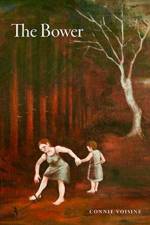
How can a person come to understand wars and hatreds well enough to explain them truthfully to a child? The Bower engages this timeless and thorny question through a recounting of the poet-speaker's year in Belfast, Northern Ireland, with her young daughter. The speaker immerses herself in the history of Irish politics--including the sectarian conflict known as The Troubles--and gathers stories of a painful, divisive past from museum exhibits, newspapers, neighbors, friends, local musicians, and cabbies. Quietly meditative, brooding, and heart-wrenching, these poems place intimate moments between mother and daughter alongside images of nationalistic violence and the angers that underlie our daily interactions. A deep dive into sectarianism and forgiveness, this timely and nuanced book examines the many ways we are all implicated in the impulse to "protect our own" and asks how we manage the histories that divide us.
In this book, historian María M. Portuondo takes us to sixteenth-century Spain, where she identifies a community of natural philosophers and biblical scholars. They shared what she calls the "Spanish Disquiet"--a preoccupation with the perceived shortcomings of prevailing natural philosophies and empirical approaches when it came to explaining the natural world. Foremost among them was Benito Arias Montano--Spain's most prominent biblical scholar and exegete of the sixteenth century. He was also a widely read member of the European intellectual community, and his motivation to reform natural philosophy shows that the Spanish Disquiet was a local manifestation of greater concerns about Aristotelian natural philosophy that were overtaking Europe on the eve of the Scientific Revolution. His approach to the study of nature framed the natural world as unfolding from a series of events described in the Book of Genesis, ultimately resulting in a new metaphysics, cosmology, physics, and even a natural history of the world. By bringing Arias Montano's intellectual and personal biography into conversation with broader themes that inform histories of science of the era, The Spanish Disquiet ensures an appreciation of the variety and richness of Arias Montano's thought and his influence on early modern science.
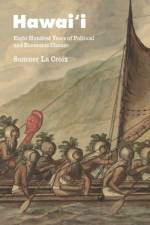
Relative to the other habited places on our planet, Hawai'i has a very short history. The Hawaiian archipelago was the last major land area on the planet to be settled, with Polynesians making the long voyage just under a millennium ago. Our understanding of the social, political, and economic changes that have unfolded since has been limited until recently by how little we knew about the first five centuries of settlement. Building on new archaeological and historical research, Sumner La Croix assembles here the economic history of Hawai'i from the first Polynesian settlements in 1200 through US colonization, the formation of statehood, and to the present day. He shows how the political and economic institutions that emerged and evolved in Hawai'i during its three centuries of global isolation allowed an economically and culturally rich society to emerge, flourish, and ultimately survive annexation and colonization by the United States. The story of a small, open economy struggling to adapt its institutions to changes in the global economy, Hawai'i offers broadly instructive conclusions about economic evolution and development, political institutions, and native Hawaiian rights.
In Wherever the Sound Takes You, he explores the essence of music's meaning with a wide spectrum of musicians, trying to understand their connection to their chosen instrument, what they've put themselves through for their music, and what they feel when they play.
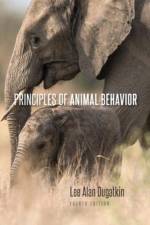
Since the last edition of this definitive textbook was published in 2013, much has happened in the field of animal behavior. In this fourth edition, Lee Alan Dugatkin draws on cutting-edge new work not only to update and expand on the studies presented, but also to reinforce the previous editions' focus on ultimate and proximate causation, as well as the book's unique emphasis on natural selection, learning, and cultural transmission. The result is a state-of-the-art textbook on animal behavior that explains underlying concepts in a way that is both scientifically rigorous and accessible to students. Each chapter in the book provides a sound theoretical and conceptual basis upon which the empirical studies rest. A completely new feature in this edition are the Cognitive Connection boxes in Chapters 2-17, designed to dig deep into the importance of the cognitive underpinnings to many types of behaviors. Each box focuses on a specific issue related to cognition and the particular topic covered in that chapter. As Principles of Animal Behavior makes clear, the tapestry of animal behavior is created from weaving all of these components into a beautiful whole. With Dugatkin's exquisitely illustrated, comprehensive, and up-to-date fourth edition, we are able to admire that beauty anew.
Gives a panoramic view of 1970s music and culture through seventy-eight essays that allow readers to dip in and out of the decade at random or immerse themselves completely in Corbett's chronological journey.
Konda traces the America's obsession with conspiratorial thought from the early days of the Republic up to our own anxious moment.
While the masterpieces of the Italian Renaissance are usually associated with Italy's historical seats of power, some of the era's most characteristic works are to be found in places other than Florence, Rome, and Venice. They are the product of the diversity of regions and cultures that makes up the country. In Endless Periphery, Stephen J. Campbell examines a range of iconic works in order to unlock a rich series of local references in Renaissance art that include regional rulers, patron saints, and miracles, demonstrating, for example, that the works of Titian spoke to beholders differently in Naples, Brescia, or Milan than in his native Venice. More than a series of regional microhistories, Endless Periphery tracks the geographic mobility of Italian Renaissance art and artists, revealing a series of exchanges between artists and their patrons, as well as the power dynamics that fueled these exchanges. A counter history of one of the greatest epochs of art production, this richly illustrated book will bring new insight to our understanding of classic works of Italian art.
Context and situation always matter in both human and animal lives. Unique insights can be gleaned from conducting scientific studies from within human communities and animal habitats. Inside Science is a novel treatment of this distinctive mode of fieldwork. Robert E. Kohler illuminates these resident practices through close analyses of classic studies: of Trobriand Islanders, Chicago hobos, corner boys in Boston's North End, Jane Goodall's chimpanzees of the Gombe Stream Reserve, and more. Intensive firsthand observation; a preference for generalizing from observed particulars, rather than from universal principles; and an ultimate framing of their results in narrative form characterize these inside stories from the field. Resident observing takes place across a range of sciences, from anthropology and sociology to primatology, wildlife ecology, and beyond. What makes it special, Kohler argues, is the direct access it affords scientists to the contexts in which their subjects live and act. These scientists understand their subjects not by keeping their distance but by living among them and engaging with them in ways large and small. This approach also demonstrates how science and everyday life--often assumed to be different and separate ways of knowing--are in fact overlapping aspects of the human experience. This story-driven exploration is perfect for historians, sociologists, and philosophers who want to know how scientists go about making robust knowledge of nature and society.
First published in 1925, The City is a trailblazing text in the fields of urban history, urban sociology, and urban studies. Its innovative combination of ethnographic observation and social science theory epitomized the Chicago School of Sociology. Robert E. Park, Ernest W. Burgess, and their collaborators documented the interplay between individuals and larger social structures and institutions, seeking patterns within the city's riot of people, events, and influences. As sociologist Robert J. Sampson notes in his new foreword, though much has changed since The City was first published, we can still benefit from its charge to explain where and why social and racial groups live as they do.
Before the 1940s, children in the United States with severe emotional difficulties would have had few options for care. The first option was usually a child guidance clinic within the community, but they might also have been placed in a state mental hospital or asylum, an institution for the so-called feebleminded, or a training school for delinquent children. Starting in the 1930s, however, more specialized institutions began to open all over the country. Staff members at these residential treatment centers shared a commitment to helping children who could not be managed at home. They adopted an integrated approach to treatment, employing talk therapy, schooling, and other activities in the context of a therapeutic environment. Emotionally Disturbed is the first work to examine not only the history of residential treatment but also the history of seriously mentally ill children in the United States. As residential treatment centers emerged as new spaces with a fresh therapeutic perspective, a new kind of person became visible--the emotionally disturbed child. Residential treatment centers and the people who worked there built physical and conceptual structures that identified a population of children who were alike in distinctive ways. Emotional disturbance became a diagnosis, a policy problem, and a statement about the troubled state of postwar society. But in the late twentieth century, Americans went from pouring private and public funds into the care of troubled children to abandoning them almost completely. Charting the decline of residential treatment centers in favor of domestic care-based models in the 1980s and 1990s, this history is a must-read for those wishing to understand how our current child mental health system came to be.
The history of New York City's urban development often centers on titanic municipal figures like Robert Moses and on prominent inner Manhattan sites like Central Park. New York Recentered boldly shifts the focus to the city's geographic edges--the coastlines and waterways--and to the small-time unelected locals who quietly shaped the modern city. Kara Murphy Schlichting details how the vernacular planning done by small businessmen and real estate operators, performed independently of large scale governmental efforts, refigured marginal locales like Flushing Meadows and the shores of Long Island Sound and the East River in the late nineteenth and early twentieth centuries. The result is a synthesis of planning history, environmental history, and urban history that recasts the story of New York as we know it.
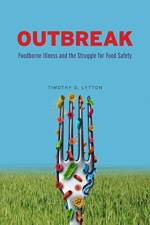
Foodborne illness is a big problem. Wash those chicken breasts, and you're likely to spread Salmonella to your countertops, kitchen towels, and other foods nearby. Even salad greens can become biohazards when toxic strains of E. coli inhabit the water used to irrigate crops. All told, contaminated food causes 48 million illnesses, 128,000 hospitalizations, and 3,000 deaths each year in the United States. With Outbreak, Timothy D. Lytton provides an up-to-date history and analysis of the US food safety system. He pays particular attention to important but frequently overlooked elements of the system, including private audits and liability insurance. Lytton chronicles efforts dating back to the 1800s to combat widespread contamination by pathogens such as E. coli and salmonella that have become frighteningly familiar to consumers. Over time, deadly foodborne illness outbreaks caused by infected milk, poison hamburgers, and tainted spinach have spurred steady scientific and technological advances in food safety. Nevertheless, problems persist. Inadequate agency budgets restrict the reach of government regulation. Pressure from consumers to keep prices down constrains industry investments in safety. The limits of scientific knowledge leave experts unable to assess policies' effectiveness and whether measures designed to reduce contamination have actually improved public health. Outbreak offers practical reforms that will strengthen the food safety system's capacity to learn from its mistakes and identify cost-effective food safety efforts capable of producing measurable public health benefits.
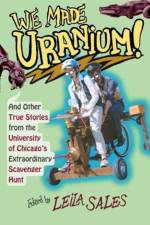
Item #176: A fire drill. No, not an exercise in which occupants of a building practice leaving the building safely. A drill which safely emits a bit of fire, the approximate shape and size of a drill bit. Item #74: Enter a lecture class in street clothes. Receive loud phone call. Shout "I NEED TO GO, THE CITY NEEDS ME!" Remove street clothes to reveal superhero apparel. Run out for the good of the land. Item #293: Hypnotizing a chicken seems easy, but if the Wikipedia article on the practice is to be believed, debate on the optimal method is heated. Do some trials on a real chicken and submit a report . . . for science of course. Item #234: A walking, working, people-powered but preferably wind-powered Strandbeest. Item #188: Fattest cat. Points per pound. The University of Chicago's annual Scavenger Hunt (or "Scav") is one of the most storied college traditions in America. Every year, teams of hundreds of competitors scramble over four days to complete roughly 350 challenges. The tasks range from moments of silliness to 1,000-mile road trips, and they call on participants to fully embrace the absurd. For students it is a rite of passage, and for the surrounding community it is a chance to glimpse the lighter side of a notoriously serious university. We Made Uranium! shares the stories behind Scav, told by participants and judges from the hunt's more than thirty-year history. The twenty-three essays range from the shockingly successful (a genuine, if minuscule, nuclear reaction created in a dorm room) to the endearing failures (it's hard to build a carwash for a train), and all the chicken hypnotisms and permanent tattoos in between. Taken together, they show how a scavenger hunt once meant for blowing off steam before finals has grown into one of the most outrageous annual traditions at any university. The tales told here are absurd, uplifting, hilarious, and thought-provoking--and they are all one hundred percent true.
Abonner på vårt nyhetsbrev og få rabatter og inspirasjon til din neste leseopplevelse.
Ved å abonnere godtar du vår personvernerklæring.