
















Gjør som tusenvis av andre bokelskere
Abonner på vårt nyhetsbrev og få rabatter og inspirasjon til din neste leseopplevelse.
Ved å abonnere godtar du vår personvernerklæring.Du kan når som helst melde deg av våre nyhetsbrev.

"Histories of communication are still relatively rare birds, but this one is distinctive on several grounds. The two authors are/were undisputed giants in the field. Ken Cmiel, the originator of the book, still unfinished when he suddenly died in 2006, was a cultural historian of communication; his best friend, John Peters, is one of the world leaders in the intellectual history of communication. In completing that unfinished manuscript, Peters has performed astonishing prestidigitation here in creating an effective hybrid: he retains the core of Cmiel's account, while creating a unique book that, courtesy of Peters, brilliantly spins out the solid Cmielian core and its material traces into gorgeous reflections on aspects of how we make our way through a world of images and information. Promiscuous Knowledge constructs a cultural and intellectual history of information, images, and conceptions of knowledge since the 17th century, with an emphasis on the American context since the 19th century. Cmiel/Peters sketch the way in which various containers for information-knowledge, expertise, abridgment, books, digests, encyclopedias, museums, etc.-have variably organized gluts of information, and how these containers have eroded since the 1970s. A parallel throughline traces social attitudes and practices around images and key media for circulating and experiencing them. Cmiel envisioned the largest contour of the book as a contribution to the history of truth and truth-making. His protagonists are pictures and facts, images and information. They enact a process of gradual dismantling, erosion, or collapse of the mass culture system from last century into the present. Promiscuous knowledge has a new face, courtesy of the online universe full of filter bubbles, echo chambers, and fake news. Google offers a single portal to a churning mass of confusion; it lacks a principle of inclusion/inclusivity, it has no way of framing the whole. Peters has shaped what Cmiel started out with into a better Trump-era book than an Obama-era book. And he has retained its core: a brief history of how we left the world of fact for the world of information"--
Moses Maimonides's Guide of the Perplexed is the greatest philosophical text in the history of Jewish thought and a major work of the Middle Ages. For almost all of its history, however, the Guide has been read and commented upon in translation--in Hebrew, Latin, Spanish, French, English, and other modern languages--rather than in its original Judeo-Arabic. This volume is the first to tell the story of the translations and translators of Maimonides' Guide and its impact in translation on philosophy from the Middle Ages to the present day. A collection of essays by scholars from a range of disciplines, the book unfolds in two parts. The first traces the history of the translations of the Guide, from medieval to modern renditions. The second surveys its influence in translation on Latin scholastic, early modern, and contemporary Anglo-American philosophy, as well as its impact in translation on current scholarship. Interdisciplinary in approach, this book will be essential reading for philosophers, historians, and religious studies scholars alike.
"Between 1650 and 1800, the social and intellectual changes that were sweeping Europe also transformed its mapmaking practices. Throughout the nations on the continent as well as their overseas territories, a new emphasis on geometrical principles gave rise to improved tools for measurement and mapping of the world, even as the rising power of the state enabled large-scale mapping and surveying projects. As illustrated in this comprehensive history, however, cartography encompasses a wide variety of processes for making, circulating, and using maps of different types, and the developments of the Enlightenment era affected these processes in different ways, depending on the type of map and the context of its production. The volume's 489 encyclopedia-style articles, contributed by an international cast of 207 scholars and experts, range from short biographical sketches of key individuals to multipart entries on such broad topics as "Geodetic Surveying," "Thematic Mapping," and "Map Collecting." Each entry includes bibliographical references, and the volume is illustrated with 954 images, all printed in full color"--
A New York Times Book Review Notable Book of the Year "I visited womanhood and stayed. It was not for the pleasures, though I discovered many I had not imagined, and many pains too. But calculating pleasures and pains was not the point. The point was who I am." Once a golden boy of conservative economics and a child of 1950s privilege, Deirdre McCloskey (formerly Donald) had wanted to change genders from the age of eleven. But it was a different time, one hostile to any sort of straying from the path--against gays, socialists, women with professions, men without hats, and so on--and certainly against gender transition. Finally, in 1995, at the age of fifty-three, it was time for McCloskey to cross the gender line. Crossing is the story of McCloskey's dramatic and poignant transformation from Donald to Dee to Deirdre. She chronicles the physical procedures and emotional evolution required and the legal and cultural roadblocks she faced in her journey to womanhood. By turns searing and humorous, this is the unflinching, unforgettable story of her transformation--what she lost, what she gained, and the women who lifted her up along the way.
Papers of the international conference "A Voice as Something More," held at the University of Chicago in November 2015.
How things are divided up or pieced together matters. Half a bridge is of no use at all. Conversely, many things would do more good if they could be divided up differently: Perhaps you would prefer a job that involves a third less work and a third less pay or a car that materializes only when needed and is priced accordingly? Difficulties in "slicing" and "lumping" shape nearly every facet of how we live and work--and a great deal of law and policy as well. Lee Anne Fennell explores how both types of challenges--carving out useful slices and assembling useful lumps--surface in myriad contexts, from hot button issues like conservation and eminent domain to developments in the sharing economy to personal struggles over work, money, time, diet, and exercise. Yet the significance of configuration is often overlooked, leading to missed opportunities for improving our lives. With a technology-fueled entrepreneurial explosion underway that is dividing goods, services, and jobs in novel ways, and as urbanization and environmental threats raise the stakes for assembling resources and cooperation, this is an especially exciting and crucial time to confront questions of slicing and lumping. The future of the city, the workplace, the marketplace, and the environment all turn on matters of configuration, as do the prospects for more effective legal doctrines, for better management of finances and health, and more. This book reveals configuration's power and potential--as a unifying concept and as a focus of public and private innovation.
With every passing year, more and more people learn that they or their young or unborn child carries a genetic mutation. But what does this mean for the way we understand a person? Today, genetic mutations are being used to diagnose novel conditions like the XYY, Fragile X, NGLY1 mutation, and 22q11.2 Deletion syndromes, carving out rich new categories of human disease and difference. Daniel Navon calls this form of categorization "genomic designation," and in Mobilizing Mutations he shows how mutations, and the social factors that surround them, are reshaping human classification. Drawing on a wealth of fieldwork and historical material, Navon presents a sociological account of the ways genetic mutations have been mobilized and transformed in the sixty years since it became possible to see abnormal human genomes, providing a new vista onto the myriad ways contemporary genetic testing can transform people's lives. Taking us inside these shifting worlds of research and advocacy over the last half century, Navon reveals the ways in which knowledge about genetic mutations can redefine what it means to be ill, different, and ultimately, human.
"Agriculture plays a key role in economic growth and development. As recently as 1800, more than half the population in most European countries worked on farms and in fields, though this shifted with the industrial revolution. Agricultural efficiencies were not immediately apparent until the middle of the 20th century when yields began to increase and they have continued to grow at a steady pace since. At the same time, inflation-adjusted agricultural commodity prices have been trending downward as increases in supply outpaced increases in demand. Food is an essential good, and while its price is currently low due to its abundance, it is responsible for a large consumer surplus given the highly inelastic demand. Understanding the factors that contribute to the upward trend in yields is of first-order importance for food security and human welfare. This book contains eight chapters that examine the factors behind the remarkably steady increase in yields around the globe, in order to better understand whether this trend can continue into the future and whether it will impose significant environmental externalities. The volume provides fresh and original analyses using methodological innovations to analyze recently available micro-level data sets"--
"This book provides a comprehensive treatment, with chapters that examine the returns to undergrad education, how costs differ by major, the productivity of for-profit schools, the productivity of various types of faculty, how online education has affected the market, and more. This work addresses the five challenges to assessing productivity in higher ed: multiple outcomes, the "multi-product" nature of institutions, selection, attribution, and the public nature of some benefits"--
"Long a vital fixture in the University of Chicago's intellectual community, David Tracy (b. 1939) is also widely considered the most important Catholic theologian in North America. He is known for his work on the pluralistic context of theology and his embrace of ambiguity as a necessary and enriching facet of religious life. Tracy's work is unusual for its disciplinary breadth, drawing on science, literature, the arts, Continental philosophy, psychoanalysis, and non-Western religious traditions. This second volume of his "Selected Essays" is devoted to profiles of significant theologians, philosophers, and religious thinkers. The first volume (already transmitted) gathers Tracy's most important essays on broad theological questions. The title of volume 2 refers to Walt Whitman's "filaments," which are thrown out from the speaking self to others (ancient, medieval, modem, and contemporary) in order to "catch somewhere, O my soul." Tracy's essays on these individual interlocutors are arranged in rough chronological order from ancient theology (Augustine) through medieval (William of St. Thierry) to early modem (Martin Luther) to modem and contemporary (Bernard Lonergan, Karl Rahner, Reinhold Niebuhr, Paul Tillich, et al.). Taken together, these essays can be understood as a partial initiation into a history of Christian theology, defined by Tracy's key virtues of plurality and ambiguity. These two volumes of essays--Tracy's first books in over twenty years-will be greeted as a major event for Catholic theology and religious studies more generally"--
What is authority? How is it constituted? How ought one understand the subtle (and sometimes not-so-subtle) relations between authority and coercion? Between authorized and subversive speech? In this fascinating and intricate analysis, Bruce Lincoln argues that authority is not an entity but an effect. More precisely, it is an effect that depends for its power on the combination of the right speaker, the right speech, the right staging and props, the right time and place, and an audience historically and culturally conditioned to judge what is right in all these instances and to respond with trust, respect, and even reverence. Employing a vast array of examples drawn from classical antiquity, Scandinavian law, Cold War scholarship, and American presidential politics, Lincoln offers a telling analysis of the performance of authority, and subversions of it, from ancient times to the present. Using a small set of case studies that highlight critical moments in the construction of authority, he goes on to offer a general examination of "corrosive" discourses such as gossip, rumor, and curses; the problematic situation of women, who often are barred from the authorizing sphere; the role of religion in the construction of authority; the question of whether authority in the modern and postmodern world differs from its premodern counterpart; and a critique of Hannah Arendt's claims that authority has disappeared from political life in the modern world. He does not find a diminution of authority or a fundamental change in the conditions that produce it. Rather, Lincoln finds modern authority splintered, expanded, and, in fact, multiplied as the mechanisms for its construction become more complex-and more expensive.
It started with the searing sound of a slide careening up the neck of an electric guitar. In 1970, twenty-three-year-old Bruce Iglauer walked into Florence's Lounge, in the heart of Chicago's South Side, and was overwhelmed by the joyous, raw Chicago blues of Hound Dog Taylor and the HouseRockers. A year later, Iglauer produced Hound Dog's debut album in eight hours and pressed a thousand copies, the most he could afford. From that one album grew Alligator Records, the largest independent blues record label in the world. Bitten by the Blues is Iglauer's memoir of a life immersed in the blues--and the business of the blues. No one person was present at the creation of more great contemporary blues music than Iglauer: he produced albums by Koko Taylor, Albert Collins, Professor Longhair, Johnny Winter, Lonnie Mack, Son Seals, Roy Buchanan, Shemekia Copeland, and many other major figures. In this book, Iglauer takes us behind the scenes, offering unforgettable stories of those charismatic musicians and classic sessions, delivering an intimate and unvarnished look at what it's like to work with the greats of the blues. It's a vivid portrait of some of the extraordinary musicians and larger-than-life personalities who brought America's music to life in the clubs of Chicago's South and West Sides. Bitten by the Blues is also an expansive history of half a century of blues in Chicago and around the world, tracing the blues recording business through massive transitions, as a genre of music originally created by and for black southerners adapted to an influx of white fans and musicians and found a worldwide audience. Most of the smoky bars and packed clubs that fostered the Chicago blues scene have long since disappeared. But their soul lives on, and so does their sound. As real and audacious as the music that shaped it, Bitten by the Blues is a raucous journey through the world of Genuine Houserockin' Music.
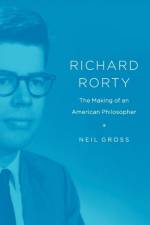
On his death in 2007, Richard Rorty was heralded by the New York Times as "one of the world's most influential contemporary thinkers." Controversial on the left and the right for his critiques of objectivity and political radicalism, Rorty experienced a renown denied to all but a handful of living philosophers. In this masterly biography, Neil Gross explores the path of Rorty's thought over the decades in order to trace the intellectual and professional journey that led him to that prominence. The child of a pair of leftist writers who worried that their precocious son "wasn't rebellious enough," Rorty enrolled at the University of Chicago at the age of fifteen. There he came under the tutelage of polymath Richard McKeon, whose catholic approach to philosophical systems would profoundly influence Rorty's own thought. Doctoral work at Yale led to Rorty's landing a job at Princeton, where his colleagues were primarily analytic philosophers. With a series of publications in the 1960s, Rorty quickly established himself as a strong thinker in that tradition-but by the late 1970s Rorty had eschewed the idea of objective truth altogether, urging philosophers to take a "relaxed attitude" toward the question of logical rigor. Drawing on the pragmatism of John Dewey, he argued that philosophers should instead open themselves up to multiple methods of thought and sources of knowledge-an approach that would culminate in the publication of Philosophy and the Mirror of Nature, one of the most seminal and controversial philosophical works of our time. In clear and compelling fashion, Gross sets that surprising shift in Rorty's thought in the context of his life and social experiences, revealing the many disparate influences that contribute to the making of knowledge. As much a book about the growth of ideas as it is a biography of a philosopher, Richard Rorty will provide readers with a fresh understanding of both the man and the course of twentieth-century thought.
The debate over scientists' social responsibility is a topic of great controversy today. Peter J. Kuznick here traces the origin of that debate to the 1930s and places it in a context that forces a reevaluation of the relationship between science and politics in twentieth-century America. Kuznick reveals how an influential segment of the American scientific community during the Depression era underwent a profound transformation in its social values and political beliefs, replacing a once-pervasive conservatism and antipathy to political involvement with a new ethic of social reform.
"Taking the course of Lenore Tawney's life as a starting point, this publication will function as an expanded biography. It will begin with her trajectory as an artist, weaving together important events, communities of artists, and individuals who made an impact on Tawney's artistic and spiritual practice."--Provided by publisher.
Recognized in America chiefly for his films, Pier Paolo Pasolini (1922-1975) in fact reinvented interdisciplinarity in postwar Europe. Pasolini self-confessedly approached the cinematic image through painting, and the numerous allusions to early modern frescoes and altarpieces in his films have been extensively documented. Far less understood, however, is Pasolini's fraught relationship to the aesthetic experiments of his own age. In Against the Avant-Garde, Ara H. Merjian demonstrates how Pasolini's campaign against neocapitalist culture fueled his hostility to the avant-garde. An atheist indebted to Catholic ritual; a revolutionary communist inimical to the creed of 1968; a homosexual hostile to the project of gay liberation: Pasolini refused the politics of identity in favor of a scandalously paradoxical practice, one vital to any understanding of his legacy. Against the Avant-Garde examines these paradoxes through case studies from the 1960s and 1970s, concluding with a reflection on Pasolini's far-reaching influence on post-1970s art. Merjian not only reconsiders the multifaceted work of Italy's most prominent postwar intellectual, but also the fraught politics of a European neo-avant-garde grappling with a new capitalist hegemony.
Drawing from a rich corpus of art works, including sarcophagi, tomb paintings, and floor mosaics, Patrick R. Crowley investigates how something as insubstantial as a ghost could be made visible through the material grit of stone and paint. In this fresh and wide-ranging study, he uses the figure of the ghost to offer a new understanding of the status of the image in Roman art and visual culture. Tracing the shifting practices and debates in antiquity about the nature of vision and representation, Crowley shows how images of ghosts make visible structures of beholding and strategies of depiction. Yet the figure of the ghost simultaneously contributes to a broader conceptual history that accounts for how modalities of belief emerged and developed in antiquity. Neither illustrations of ancient beliefs in ghosts nor depictions of afterlife, these images show us something about the visual event of seeing itself. The Phantom Image offers essential insight into ancient art, visual culture, and the history of the image.
New Orleans in the 1920s and 1930s was a deadly place. In 1925, the city's homicide rate was six times that of New York City and twelve times that of Boston. Jeffrey S. Adler has explored every homicide recorded in New Orleans between 1925 and 1940--over two thousand in all--scouring police and autopsy reports, old interviews, and crumbling newspapers. More than simply quantifying these cases, Adler places them in larger contexts--legal, political, cultural, and demographic--and emerges with a tale of racism, urban violence, and vicious policing that has startling relevance for today.Murder in New Orleans shows that whites were convicted of homicide at far higher rates than blacks leading up to the mid-1920s. But by the end of the following decade, this pattern had reversed completely, despite an overall drop in municipal crime rates. The injustice of this sharp rise in arrests was compounded by increasingly brutal treatment of black subjects by the New Orleans police department. Adler explores other counterintuitive trends in violence, particularly how murder soared during the flush times of the Roaring Twenties, how it plummeted during the Great Depression, and how the vicious response to African American crime occurred even as such violence plunged in frequency--revealing that the city's cycle of racial policing and punishment was connected less to actual patterns of wrongdoing than to the national enshrinement of Jim Crow. Rather than some hyperviolent outlier, this Louisiana city was a harbinger of the endemic racism at the center of today's criminal justice state. Murder in New Orleans lays bare how decades-old crimes, and the racially motivated cruelty of the official response, have baleful resonance in the age of Black Lives Matter.
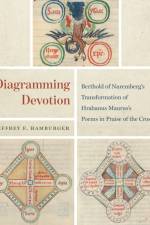
During the European Middle Ages, diagrams provided a critical tool of analysis in cosmological and theological debates. In addition to drawing relationships among diverse areas of human knowledge and experience, diagrams themselves generated such knowledge in the first place. In Diagramming Devotion, Jeffrey F. Hamburger examines two monumental works that are diagrammatic to their core: a famous set of picture poems of unrivaled complexity by the Carolingian monk Hrabanus Maurus, devoted to the praise of the cross, and a virtually unknown commentary on Hrabanus's work composed almost five hundred years later by the Dominican friar Berthold of Nuremberg. Berthold's profusely illustrated elaboration of Hrabnus translated his predecessor's poems into a series of almost one hundred diagrams. By examining Berthold of Nuremberg's transformation of a Carolingian classic, Hamburger brings modern and medieval visual culture into dialogue, traces important changes in medieval visual culture, and introduces new ways of thinking about diagrams as an enduring visual and conceptual model.
More than any other decade, the sixties capture our collective cultural imagination. And while many Americans can immediately imagine the sound of Martin Luther King Jr. declaring "I have a dream!" or envision hippies placing flowers in gun barrels, the revolutionary sixties resonates around the world: China's communist government inaugurated a new cultural era, African nations won independence from colonial rule, and students across Europe took to the streets, calling for an end to capitalism, imperialism, and the Vietnam War. In this innovative work, James Meyer turns to art criticism, theory, memoir, and fiction to examine the fascination with the long sixties and contemporary expressions of these cultural memories across the globe. Meyer draws on a diverse range of cultural objects that reimagine this revolutionary era stretching from the 1950s to the 1970s, including reenactments of civil rights, antiwar, and feminist marches, paintings, sculptures, photographs, novels, and films. Many of these works were created by artists and writers born during the long Sixties who were driven to understand a monumental era that they missed. These cases show us that the past becomes significant only in relation to our present, and our remembered history never perfectly replicates time past. This, Meyer argues, is precisely what makes our contemporary attachment to the past so important: it provides us a critical opportunity to examine our own relationship to history, memory, and nostalgia.
"This book does nothing less than revise the history of photography in its incipient moments. It tells a story of radical chemical experiments at the London academies, and he traces how some of the most exciting reproductive techniques and patents of the late eighteenth century fared during the nineteenth, when entrepreneurs tried to refine them into alternative technologies to photography"--
"Originally published in Hebrew as Isha Levada; Tel Aviv: ÃAòhuzat bayit, 2016"--Copyright page.
Drawing on four decades of experience advising boards and CEOs on how to do just that, Thomas A. Cole offers in CEO Leadership a straightforward and accessible guide to navigating corporate governance today.
When Juliette Kinzie first visited Chicago in 1831, it was anything but a city. An outpost in the shadow of Fort Dearborn, it had no streets, no sidewalks, no schools, no river-spanning bridges. And with two hundred disconnected residents, it lacked any sense of community. In the decades that followed, not only did Juliette witness the city's transition from Indian country to industrial center, but she was instrumental in its development. Juliette is one of Chicago's forgotten founders. Early Chicago is often presented as "a man's city," but women like Juliette worked to create an urban and urbane world, often within their own parlors. With The World of Juliette Kinzie, we finally get to experience the rise of Chicago from the view of one of its most important founding mothers. Ann Durkin Keating, one of the foremost experts on nineteenth-century Chicago, offers a moving portrait of a trailblazing and complicated woman. Keating takes us to the corner of Cass and Michigan (now Wabash and Hubbard), Juliette's home base. Through Juliette's eyes, our understanding of early Chicago expands from a city of boosters and speculators to include the world that women created in and between households. We see the development of Chicago society, first inspired by cities in the East and later coming into its own midwestern ways. We also see the city become a community, as it developed its intertwined religious, social, educational, and cultural institutions. Keating draws on a wealth of sources, including hundreds of Juliette's personal letters, allowing Juliette to tell much of her story in her own words. Juliette's death in 1870, just a year before the infamous fire, seemed almost prescient. She left her beloved Chicago right before the physical city as she knew it vanished in flames. But now her history lives on. The World of Juliette Kinzie offers a new perspective on Chicago's past and is a fitting tribute to one of the first women historians in the United States.
In his first collection of poems, many of which were written during his years as a US Army Special Forces medic, Graham Barnhart explores themes of memory, trauma, and isolation. Ranging from conventional lyrics and narrative verse to prose poems and expressionist forms, the poems here display a strange, quiet power as Barnhart engages in the pursuit and recognition of wonder, even while concerned with whether it is right to do so in the fraught space of the war zone. We follow the speaker as he treads the line between duty and the horrors of war, honor and compassion for the victims of violence, and the struggle to return to the daily life of family and society after years of trauma. Evoking the landscapes and surroundings of war, as well as its effects on both US military service members and civilians in war-stricken countries, The War Makes Everyone Lonely is a challenging, nuanced look at the ways American violence is exported, enacted, and obscured by a writer poised to take his place in the long tradition of warrior-poets.
Abonner på vårt nyhetsbrev og få rabatter og inspirasjon til din neste leseopplevelse.
Ved å abonnere godtar du vår personvernerklæring.