


















Gjør som tusenvis av andre bokelskere
Abonner på vårt nyhetsbrev og få rabatter og inspirasjon til din neste leseopplevelse.
Ved å abonnere godtar du vår personvernerklæring.Du kan når som helst melde deg av våre nyhetsbrev.

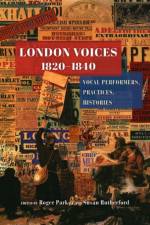
London, 1820. The British capital is a metropolis that overwhelms dwellers and visitors alike with constant exposure to all kinds of sensory stimulation. Over the next two decades, the city's tumult will reach new heights: as population expansion places different classes in dangerous proximity and ideas of political and social reform linger in the air, London begins to undergo enormous infrastructure change that will alter it forever. It is the London of this period that editors Roger Parker and Susan Rutherford pinpoint in this book, which chooses one broad musical category--voice--and engages with it through essays on music of the streets, theaters, opera houses, and concert halls; on the raising of voices in religious and sociopolitical contexts; and on the perception of voice in literary works and scientific experiments with acoustics. Emphasizing human subjects, this focus on voice allows the authors to explore the multifaceted issues that shaped London, from the anxiety surrounding the city's importance in the musical world at large to the changing vocal imaginations that permeated the epoch. Capturing the breadth of sonic stimulations and cultures available--and sometimes unavoidable--to residents at the time, London Voices, 1820-1840 sheds new light on music in Britain and the richness of London culture during this period.
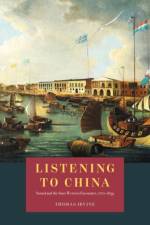
"Listening to China is our first important foray in the field of global music history, which is rapidly establishing itself as the main area of growth in music studies. Compellingly and expertly written by a seasoned scholar, it tells the story of how Westerners experienced China with their ears at the time of the Sino-Western encounter of ca. 1800, and what this meant for their own construction of musical knowledge. It explores two kinds of Western practices of listening in and to China: ear-witness accounts by travelers to China, including diplomats, trade officials, and missionaries; and writings about Chinese music by European writers, philosophers, and music historians who constructed China's sound in their imaginations. The book's primary objective is a better understanding of how Westerners gained/gathered sonic knowledge of China and to investigate the aural dimensions of the Sino-Western encounter At the same time, the book reconsiders the idea of a specifically Western music history by showing how it was precisely the comparison with a great "other"--China--that helped the idea itself to emerge. Ultimately, the book draws attention to the importance of China for the construction of (musical) knowledge during and following the European Enlightenment."--
Emanuele Senici's new book provides a fresh look at the motives behind the Rossinian furore and its aftermath by placing his works into the culture and society in which they were conceived, performed, seen, heard, and discussed.
"This book is an exploration of the relationship between philosophy and political inquiry. John G. Gunnell is seeking to explain certain dimensions of how philosophy has influenced political science and political theory but also how these latter fields have understood and deployed philosophy. When social scientists and social theorists turn to the work of philosophers for intellectual authority what they extract is often selective and in the service of some prior agenda. The philosophers whose work he discusses have all in various degrees been objects of the conversation of political theory, but close acquaintance with that work is often limited and derivative. Gunnell's goal is to initiate a more genuine "conversation" with certain philosophers and political theorists"--
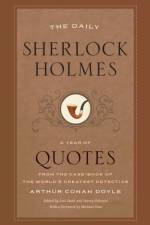
"Dr. Watson, Mr. Sherlock Holmes," said Stamford, introducing us. "How are you?" he said cordially, gripping my hand with a strength for which I should hardly have given him credit. "You have been in Afghanistan, I perceive." "How on earth did you know that?" I asked in astonishment. "Never mind," said he, chuckling to himself. At that first sight of Watson, Sherlock Holmes made brilliant deductions. But even he couldn't know that their meeting was inaugurating a friendship that would make himself and the good Doctor cultural icons, as popular as ever more than a century after their 1887 debut. Through four novels and fifty-six stories, Arthur Conan Doyle led the pair through dramatic adventures that continue to thrill readers today, offering an unmatched combination of skillful plotting, period detail, humor, and distinctive characters. For a Holmes fan, there are few pleasures comparable to returning to his richly imagined world--the gaslit streets of Victorian London, the companionable clutter of 221B Baker Street, the reliable fuddlement (and nerves of steel) of Watson, the perverse genius of Holmes himself. It's all there in The Daily Sherlock Holmes, the perfect bedside companion for fans of the world's only consulting detective. Within these pages readers will find a quotation for every day of the year, drawn from across the Conan Doyle canon. Beloved characters and familiar lines recall favorite stories and scenes, while other passages remind us that Conan Doyle had a way with description and a ready wit. Moriarty and Mycroft, Lestrade and Mrs. Hudson; the Hound, the Red-Headed League, the Speckled Band, and the dread Reichenbach Falls--it's all here, anchored, of course, in that unforgettable duo of Holmes and Watson. No book published this year will bring a Holmes fan more pleasure. Come, readers. The game is afoot.
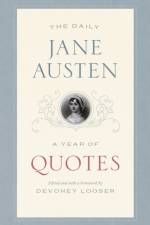
It is a truth universally acknowledged that Jane Austen is eminently, delightfully, and delectably quotable. This truth goes far beyond the first line of Pride and Prejudice, which has muscled out many other excellent sentences. So many gems of wit and wisdom from her novels deserve to be better known, from Northanger Abbey on its lovable, naive heroine--"if adventures will not befal a young lady in her own village, she must seek them abroad"--to Persuasion's moving lines of love from its regret-filled hero: "You pierce my soul. I am half agony, half hope. Tell me not that I am too late." Devoney Looser, a.k.a. Stone Cold Jane Austen, has drawn 378 genuine, Austen-authored passages from across the canon, resulting in an anthology that is compulsively readable and repeatable. Whether you approach the collection on a one-a-day model or in a satisfying binge read, you will emerge wiser about Austen, if not about life. The Daily Jane Austen will amuse and inspire skeptical beginners, Janeite experts, and every reader in between by showcasing some of the greatest sentences ever crafted in the history of fiction.
Imagine you are a Palestinian who came to America as a young man, eventually finding yourself caught between the country you live in with your wife and daughter, and the home--and parents--you left behind. Imagine living every day in your nonnative language and becoming estranged from your native tongue, which you use less and less as you become more ensconced in the United States. This is the story told by Ahmad Almallah in Bitter English, an autobiography-in-verse that explores the central role language plays in how we construct our identities and how our cultures construct them for us. Through finely crafted poems that utilize a plainspoken roughness to keep the reader slightly disoriented, Almallah replicates his own verbal and cultural experience of existing between languages and societies. There is a sense of displacement to these poems as Almallah recounts the amusing, sad, and perilous moments of day-to-day living in exile. At the heart of Bitter English is a sense of loss, both of home and of his mother, whose struggle with Alzheimer's becomes a reflection of his own reality in exile. Filled with wit, humor, and sharp observations of the world, Bitter English brings a fresh poetic voice to the American immigrant experience.
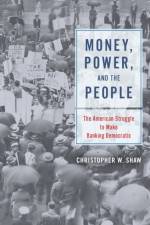
Banks and bankers are hardly the most beloved institutions and people in this country. With its corruptive influence on politics and stranglehold on the American economy, Wall Street is held in high regard by few outside the financial sector. But the pitchforks raised against this behemoth are largely rhetorical: we rarely see riots in the streets or public demands for an equitable and democratic banking system that result in serious national changes. Yet the situation was vastly different a century ago, as Christopher W. Shaw shows. This book upends the conventional thinking that financial policy in the early twentieth century was set primarily by the needs and demands of bankers. Shaw shows that banking and politics were directly shaped by the literal and symbolic investments of the grassroots. This engagement remade financial institutions and the national economy, through populist pressure and the establishment of federal regulatory programs and agencies like the Farm Credit System and the Federal Deposit Insurance Corporation. Shaw reveals the surprising groundswell behind seemingly arcane legislation, as well as the power of the people to demand serious political repercussions for the banks that caused the Great Depression. One result of this sustained interest and pressure was legislation and regulation that brought on a long period of relative financial stability, with a reduced frequency of economic booms and busts. Ironically, this stability led to the decline of the very banking politics that brought it about. Giving voice to a broad swath of American figures, including workers, farmers, politicians, and bankers alike, Money, Power, and the People recasts our understanding of what might be possible in balancing the needs of the people with those of their financial institutions.
This landmark volume captures all aspects of Boston's past in a series of 57 stunning full-color spreads. Each section features newly created thematic maps that focus on moments and topics in that history.
What does democracy look like? And when should we cause trouble to pursue it? Troublemakers fuses photography and history to demonstrate how racial and economic inequality gave rise to a decades-long struggle for justice in one American city. In dialogue with 275 of Art Shay's photographs, Erik S. Gellman takes a new look at major developments in postwar US history: the Second Great Migration, "white flight," and neighborhood and street conflicts, as well as shifting party politics and the growth of the carceral state. The result is a visual and written history that complicates--and even upends--the morality tales and popular memory of postwar freedom struggles. Shay himself was a "troublemaker," seeking to unsettle society by illuminating truths that many middle-class, white, media, political, and businesspeople pretended did not exist. Shay served as a navigator in the US Army Air Forces during World War II, then took a position as a writer for Life Magazine. But soon after his 1948 move to Chicago, he decided to become a freelance photographer. Shay wandered the city photographing whatever caught his eye--and much did. His lens captured everything from private moments of rebellion to era-defining public movements, as he sought to understand the creative and destructive energies that propelled freedom struggles in the Windy City. Shay illuminated the pain and ecstasy that sprung up from the streets of Chicago, while Gellman reveals their collective impact on the urban fabric and on our national narrative. This collaboration offers a fresh and timely look at how social conflict can shape a city--and may even inspire us to make trouble today.
Gentrification is transforming cities, small and large, across the country. Though it's easy to bemoan the diminished social diversity and transformation of commercial strips that often signify a gentrifying neighborhood, determining who actually benefits and who suffers from this nebulous process can be much harder. The full story of gentrification is rooted in large-scale social and economic forces as well as in extremely local specifics--in short, it's far more complicated than both its supporters and detractors allow. In Newcomers, journalist Matthew L. Schuerman explains how a phenomenon that began with good intentions has turned into one of the most vexing social problems of our time. He builds a national story using focused histories of northwest Brooklyn, San Francisco's Mission District, and the onetime site of Chicago's Cabrini-Green housing project, revealing both the commonalities among all three and the place-specific drivers of change. Schuerman argues that gentrification has become a too-easy flashpoint for all kinds of quasi-populist rage and pro-growth boosterism. In Newcomers, he doesn't condemn gentrifiers as a whole, but rather articulates what it is they actually do, showing not only how community development can turn foul, but also instances when a "better" neighborhood truly results from changes that are good. Schuerman draws no easy conclusions, using his keen reportorial eye to create sharp, but fair, portraits of the people caught up in gentrification, the people who cause it, and its effects on the lives of everyone who calls a city home.
In 2008, Waltz with Bashir shocked the world by presenting a bracing story of war in what seemed like the most unlikely of formats--an animated film. Yet as Donna Kornhaber shows in this pioneering new book, the relationship between animation and war is actually as old as film itself. The world's very first animated movie was made to solicit donations for the Second Boer War, and even Walt Disney sent his earliest creations off to fight on gruesome animated battlefields drawn from his First World War experience. As Kornhaber strikingly demonstrates, the tradition of wartime animation, long ignored by scholars and film buffs alike, is one of the world's richest archives of wartime memory and witness. Generation after generation, artists have turned to this most fantastical of mediums to capture real-life horrors they can express in no other way. From Chinese animators depicting the Japanese invasion of Shanghai to Bosnian animators portraying the siege of Sarajevo, from African animators documenting ethnic cleansing to South American animators reflecting on torture and civil war, from Vietnam-era protest films to the films of the French Resistance, from firsthand memories of Hiroshima to the haunting work of Holocaust survivors, the animated medium has for more than a century served as a visual repository for some of the darkest chapters in human history. It is a tradition that continues even to this day, in animated shorts made by Russian dissidents decrying the fighting in Ukraine, American soldiers returning from Iraq, or Middle Eastern artists commenting on the Israeli-Palestinian conflict, the Arab Spring, or the ongoing crisis in Yemen. Nightmares in the Dream Sanctuary: War and the Animated Film vividly tells the story of these works and many others, covering the full history of animated film and spanning the entire globe. A rich, serious, and deeply felt work of groundbreaking media history, it is also an emotional testament to the power of art to capture the endurance of the human spirit in the face of atrocity.
Every May, a sea of 250,000 people decked out in red and white head to Chicago's Loop to celebrate the Polish Constitution Day Parade. In the city, you can tune into not one but four different Polish-language radio stations or jam out to the Polkaholics. You can have lunch at pierogi food trucks or pick up paczkis at the grocery store. And if you're lucky, you get to take off Casimir Pulaski Day. For more than a century, Chicago has been home to one of the largest Polish populations outside of Poland, and the group has had enormous influence on the city's culture and politics. Yet, until now, there has not been a comprehensive history of the Chicago Polonia. With American Warsaw, award-winning historian and Polish American Dominic A. Pacyga chronicles more than a century of immigration, and later emigration back to Poland, showing how the community has continually redefined what it means to be Polish in Chicago. He takes us from the Civil War Era until today, focusing on how three major waves of immigrants, refugees, and fortune seekers shaped and then redefined the Polonia. Pacyga also traces the movement of Polish immigrants from the peasantry to the middle class and from urban working-class districts dominated by major industries to suburbia. He documents Polish Chicago's alignments and divisions: with other Chicago ethnic groups; with the Catholic Church; with unions, politicians, and City Hall; and even among its own members. And he explores the ever-shifting sense of Polskosc, or "Polishness." Today Chicago is slowly being eclipsed by other Polish immigrant centers, but it remains a vibrant--and sometimes contentious--heart of the Polish-American experience. American Warsaw is a sweeping story that expertly depicts a people who are deeply connected to their historical home and, at the same time, fiercely proud of their adopted city. As Pacyga writes, "While we were Americans, we also considered ourselves to be Poles. In that strange Chicago ethnic way, there was no real difference between the two."
There's a reason we pay top dollar for champagne and that bottles of wine from prestige vineyards cost as much as a car: a place's distinct geographical attributes, known as terroir to wine buffs, determine the unique profile of a wine--and some rarer locales produce wines that are particularly coveted. In Volcanoes and Wine, geologist Charles Frankel introduces us to the volcanoes that are among the most dramatic and ideal landscapes for wine making. Traveling across regions wellknown to wine lovers like Sicily, Oregon, and California, as well as the less familiar places, such as the Canary Islands, Frankel gives an in-depth account of famous volcanoes and the wines that spring from their idiosyncratic soils. From Santorini's vineyards of rocky pumice dating back to a four-thousand-year-old eruption to grapes growing in craters dug in the earth of the Canary Islands, from Vesuvius's famous Lacryma Christi to the ambitious new generation of wine growers reviving the traditional grapes of Mount Etna, Frankel takes us across the stunning and dangerous world of volcanic wines. He details each volcano's most famous eruptions, the grapes that grow in its soils, and the people who make their homes on its slopes, adapting to an ever-menacing landscape. In addition to introducing the history and geology of these volcanoes, Frankel's book serves as a travel guide, offering a host of tips ranging from prominent vineyards to visit to scenic hikes in each location. This illuminating guide will be indispensable for wine lovers looking to learn more about volcanic terroirs, as well as anyone curious about how cultural heritage can survive and thrive in the shadow of geological danger.
When it was first published a quarter of a century ago, Richard Posners exposition and defense of an economic approach to antitrust law was a jeremiad against the intellectual disarray that then characterized the field. As other perspectives on antitrust law have fallen away, Posners book has played a major role in transforming the field of antitrust law into a body of economically rational principles largely in accord with the ideas set forth in the first edition. Todays antitrust professionals may disagree on specific practices and rules, but most litigators, prosecutors, judges, and scholars agree that the primary goal of
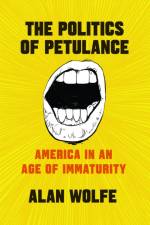
America in an Age of Immaturity. How did we get into this mess? Every morning, many Americans ask this as, with a cringe, they pick up their phones and look to see what terrible thing President Trump has just said or done. Regardless of what hes complaining about or whom hes attacking, a second question comes hard on the heels of the first How on earth do we get out of this? Alan Wolfe has an answer. In The Politics of Petulance he argues that the core of our problem isnt Trump himselfits that we are mired in an age of political immaturity. That immaturity is not grounded in any one ideology, nor is it a function of age or education. Its in an
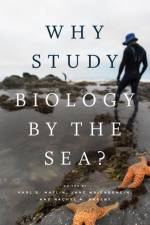
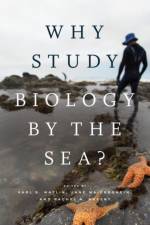
"Since the middle of the 19th century, biologists have migrated to the seashore to study marine organisms as a way of understanding life. By the turn of the 20th century, such work was being done inside permanent seaside field stations. The Stazione Zoologica, in Naples, Italy (from 1874), and the Marine Biological Laboratory, in Woods Hole, Massachusetts (from 1888), attracted leaders in many biological fields, and helped establish biology as a modern science. Why Study Biology by the Sea? tells the story of these unique scientific institutions while attempting to answer the contemporary question, "Why study biology by the sea?" The volume examines the origins and value of these places via perspectives that range from cell biology to philosophy of science"--
Partitioning Palestine is the first history of the ideological and political forces that led to the idea of partition--that is, a division of territory and sovereignty--in British mandate Palestine in the first half of the twentieth century. Inverting the spate of narratives that focus on how the idea contributed to, or hindered, the development of future Israeli and Palestinian states, Penny Sinanoglou asks instead what drove and constrained British policymaking around partition, and why partition was simultaneously so appealing to British policymakers yet ultimately proved so difficult for them to enact. Taking a broad view not only of local and regional factors, but also of Palestine's place in the British empire and its status as a League of Nations mandate, Sinanoglou deftly recasts the story of partition in Palestine as a struggle to maintain imperial control. After all, British partition plans imagined space both for a Zionist state indebted to Britain and for continued British control over key geostrategic assets, depending in large part on the forced movement of Arab populations. With her detailed look at the development of the idea of partition from its origins in the 1920s, Sinanoglou makes a bold contribution to our understanding of the complex interplay between internationalism and imperialism at the end of the British empire and reveals the legacies of British partitionist thinking in the broader history of decolonization in the modern Middle East.
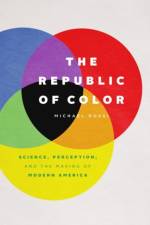
The Republic of Color delves deep into the history of color science in the United States to unearth its origins and examine the scope of its influence on the industrial transformation of turn-of-the-century America. For a nation in the grip of profound economic, cultural, and demographic crises, the standardization of color became a means of social reform--a way of sculpting the American population into one more amenable to the needs of the emerging industrial order. Delineating color was also a way to characterize the vagaries of human nature, and to create ideal structures through which those humans would act in a newly modern American republic. Michael Rossi's compelling history goes far beyond the culture of the visual to show readers how the control and regulation of color shaped the social contours of modern America--and redefined the way we see the world.
Volume 2 of this critical edition includes the translation of Volumes 3 and 4 of the second, revised French edition of Alexander von Humboldt's Essai politique sur le royaume de de Nouvelle Espagne from 1825 to 1827 as well as notes, supplements, indexes, and more. Alexander von Humboldt was the most celebrated modern chronicler of North and South America and the Caribbean, and this translation of his essay on New Spain--the first modern regional economic and political geography--covers his travels across today's Mexico in 1803-1804. The work canvases natural-scientific and cultural-scientific objects alike, combining the results of fieldwork with archival research and expert testimony. To show how people, plants, animals, goods, and ideas moved across the globe, Humboldt wrote in a variety of styles, bending and reshaping familiar writerly conventions to keep readers attentive to new inputs. Above all, he wanted his readers to be open-minded when confronted with cultural and other differences in the Americas. Fueled by his comparative global perspective on politics, economics, and science, he used his writing to support Latin American independence and condemn slavery and other forms of colonial exploitation. It is these voluminous and innovative writings on the New World that made Humboldt the undisputed father of modern geography, early American studies, transatlantic cultural history, and environmental studies. This two-volume critical edition--the third installment in the Alexander von Humboldt in English series--is based on the full text, including all footnotes, tables, and maps, of the second, revised French edition of Essai politique sur le royaume de de Nouvelle Espagne from 1825 to 1827, which has never been translated into English before. Extensive annotations and full-color atlases are available on the series website.
Volume 1 of this critical edition includes a note on the text from the Humboldt in English team, an introduction by editors Vera M. Kutzinski and Ottmar Ette, a preface to the first edition by Alexander von Humboldt, and the translation of Volumes 1 and 2 of Humboldt's Essai politique sur le royaume de de Nouvelle Espagne from 1825 to 1827. Alexander von Humboldt was the most celebrated modern chronicler of North and South America and the Caribbean, and this translation of his essay on New Spain--the first modern regional economic and political geography--covers his travels across today's Mexico in 1803-1804. The work canvases natural-scientific and cultural-scientific objects alike, combining the results of fieldwork with archival research and expert testimony. To show how people, plants, animals, goods, and ideas moved across the globe, Humboldt wrote in a variety of styles, bending and reshaping familiar writerly conventions to keep readers attentive to new inputs. Above all, he wanted his readers to be open-minded when confronted with cultural and other differences in the Americas. Fueled by his comparative global perspective on politics, economics, and science, he used his writing to support Latin American independence and condemn slavery and other forms of colonial exploitation. It is these voluminous and innovative writings on the New World that made Humboldt the undisputed father of modern geography, early American studies, transatlantic cultural history, and environmental studies. This two-volume critical edition--the third installment in the Alexander von Humboldt in English series--is based on the full text, including all footnotes, tables, and maps, of the second, revised French edition of Essai politique sur le royaume de de Nouvelle Espagne from 1825 to 1827, which has never been translated into English before. Extensive annotations and full-color atlases are available on the series website.
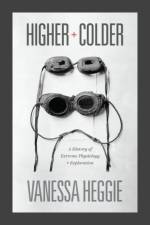
During the long twentieth century, explorers went in unprecedented numbers to the hottest, coldest, and highest points on the globe. Taking us from the Himalaya to Antarctica and beyond, Higher and Colder presents the first history of extreme physiology, the study of the human body at its physical limits. Each chapter explores a seminal question in the history of science, while also showing how the apparently exotic locations and experiments contributed to broader political and social shifts in twentieth-century scientific thinking. Unlike most books on modern biomedicine, Higher and Colder focuses on fieldwork, expeditions, and exploration, and in doing so provides a welcome alternative to laboratory-dominated accounts of the history of modern life sciences. Though centered on male-dominated practices--science and exploration--it recovers the stories of women's contributions that were sometimes accidentally, and sometimes deliberately, erased. Engaging and provocative, this book is a history of the scientists and physiologists who face challenges that are physically demanding, frequently dangerous, and sometimes fatal, in the interest of advancing modern science and pushing the boundaries of human ability.
First edition published under title: Exotic no more: anthropology on the front lines. 2002.
"This book tells the story of how Jane Addams, during her first decade at Hull House, used social evolutionary thinking to develop a method of ethical deliberation. Addams presented her method for addressing the most troubling social problems of the era in Democracy and Social Ethics (1902), a foundational text of classical American pragmatism."--
Abonner på vårt nyhetsbrev og få rabatter og inspirasjon til din neste leseopplevelse.
Ved å abonnere godtar du vår personvernerklæring.