


















Gjør som tusenvis av andre bokelskere
Abonner på vårt nyhetsbrev og få rabatter og inspirasjon til din neste leseopplevelse.
Ved å abonnere godtar du vår personvernerklæring.Du kan når som helst melde deg av våre nyhetsbrev.

"The Chicago lakefront is one of the great geographical wonders of America, and its development has been spectacular in its own right. The ribbon of wealth along the Lake Michigan shore has few if any rivals nationwide for sustained architectural significance. This confluence of money, development, and style lies at the heart of this updated edition of Neil Harris's book, which takes us into dozens of buildings, from south to north, detailing development histories, design choices, floor plans, and more"--
Includes bibliographical references and index.
The postwar American advertising agency was an unusually powerful institution. Ads and the desires they articulated (or created) played outsized roles in shaping a new suburban order and the gender relations it embodied. Jean Wade Rindlaub, a pathbreaking and strong but perhaps alienated woman, made her name on ad campaigns for Chiquita and other companies that ironically encouraged other women to stay in the kitchen. Ellen Wayland-Smith will use Rindlaub's story as a framework for a cultural history of how women's desires were codified and packaged by the postwar advertising industry--and how they came to have unexpected geopolitical impact.
"In this innovative volume, editors Dan Edelstein, Stefanos Geroulanos, and Natasha Wheatley bring together a stunning collection of essays that challenge our understanding of what it means to interpret history by focusing on the nexus of two concepts, "power" and "time," as they manifest themselves in a wide variety of case studies. Analyzing history, culture, politics, technology, law, art, and science, and including ambitious essays on human rights, sovereignty, Islamic, European, and Indian history, slavery, capitalism, revolution, the Supreme Court, and even the Manson Family, this engaging book shows how "temporal regimes" are constituted through the shaping of power in historically specific ways. Power and Time is poised to be a game-changing, agenda-setting volume, highlighting the work of some of the most respected, innovative historians currently writing"--
"A history of the understudied but highly inventive Fluxus collective founded in NYC in the late 1950s/early 1960s. Fluxus was an unruly, endlessly shifting gang of performers, conceptual writers, musicians, and installation artists who wanted to integrate life into art using found and ordinary objects and processes (like cooking and shaving). Fluxus first arose in the United States under the leadership of George Maciunas and quickly spread to Europe. Artists from Claus Oldenberg to Allan Kaprow to Dick Higgins to Allison Knowles to Joseph Beuys to Gerhard Richter to Nam June Paik to Yoko Ono to Robert Filliou all participated in Fluxus at some point. Unlike other books about Fluxus, this one explores not just the movement itself but also how it figures the transition from modernism to postmodernism, and the historical origins of experimental art practices of the present"--
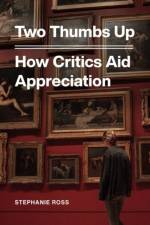
"Everyone's a critic, the saying goes. This seems truer than ever in the age of social media, with countless daily posts praising or lambasting the latest episode of Game of Thrones, the most recent installment in the Marvel universe movie franchise, or the new Beyoncâe album. And yet, even with all this cacophony of opinions, professional critics still wield a considerable amount of power and influence, encouraging us to ask the same basic questions that have engaged aesthetic philosophers and everyday art lovers for centuries: How should we engage with art? What can enhance those experiences? Are some views more informed than others? Do critics help us appreciate art? In Two Thumbs Up, philosopher Stephanie Ross tackles these questions and offers a Hume-inspired account of the importance of critics in aiding our appreciation of artworks and helping us understand our experiences better. In accessible prose, Ross shows how, when they do their jobs well, critics can open up a work for us, training us to hone and enhance our receptivity to the powers of art"--
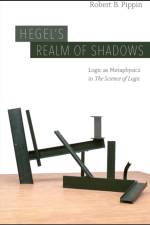
Hegel frequently claimed that the heart of his entire system was a book widely regarded as among the most difficult in the history of philosophy, The Science of Logic. This is the book that presents his metaphysics, an enterprise that he insists can only be properly understood as a "logic," or a "science of pure thinking." Since he also wrote that the proper object of any such logic is pure thinking itself, it has always been unclear in just what sense such a science could be a "metaphysics." Robert B. Pippin offers here a bold, original interpretation of Hegel's claim that only now, after Kant's critical breakthrough in philosophy, can we understand how logic can be a metaphysics. Pippin addresses Hegel's deep, constant reliance on Aristotle's conception of metaphysics, the difference between Hegel's project and modern rationalist metaphysics, and the links between the "logic as metaphysics" claim and modern developments in the philosophy of logic. Pippin goes on to explore many other facets of Hegel's thought, including the significance for a philosophical logic of the self-conscious character of thought, the dynamism of reason in Kant and Hegel, life as a logical category, and what Hegel might mean by the unity of the idea of the true and the idea of the good in the "Absolute Idea." The culmination of Pippin's work on Hegel and German idealism, this is a book that no Hegel scholar or historian of philosophy will want to miss.
"W. J. T. Mitchell's son Gabriel was diagnosed with schizophrenia at the age of nineteen and died by suicide at the age of 38, leaping from his apartment high in Chicago's Marina City towers. Gabe left behind a remarkable archive of creative work and a father determined to learn from, and bear witness to, Gabe's journey. What is a father to do when caught between his skepticism about psychiatry and the reality of a son suffering from mental illness? How to see madness clearly from within the daily challenges of loving his gifted but delusional child? Gabe's story holds many lessons-for parents and caregivers of the mentally ill, for those interested in mental illness as a social and political identity, for those interested in the question of the outsider artist. Gabe himself had a larger, "macrocosmic" ambition beyond the story of his own condition. He wanted to make a film that would show madness from inside and out, as media stereotype and spectacle, as minority status and stigma, as a form of disability that is an extreme form of a subjective experience we all endure at some point. He would explore all possible images of madness, from the monster to the magician, the clown to the kook and crank, the mad scientist to the mad sovereign. His ambition was to "transform schizophrenia from a death sentence to a learning experience." This book challenges us to learn from Gabe's attempt to find redemption inside his madness. It is also a moving story of a father's love and a family's resilience"--
"As Dustin Abnet shows, the robot-whether automaton, Mechanical Turk, cyborg, or iPhone, whether humanized machine or mechanized human being-has long been a fraught embodiment of human fears. Abnet investigates, moreover, how the discourse of the robot has reinforced social and economic inequalities as well as fantasies of social control. "Robots" as a trope are not necessarily mechanical but are rather embodiments of quasi humanity, exhibiting a mix of human and nonhuman characteristics. Such figures are troubling to dominant discourses, which cannot easily assimilate them or identify salient boundaries. The robot lurks beneath the fears that fracture society"--
"During World War II, far more soldiers stayed in the United States than went overseas. This was a disaster for the port cities that hosted them and the civilians who lived there. Whether stationed there or on leave, soldiers and sailors ran amok, terrorizing and assaulting women in particular. These soldiers answered largely only to military authorities, who often looked the other way. Their behavior changed these cities. Some red-light districts were targeted for urban renewal and razed. Others continued to cater, however hypocritically, to the demand for vice. Hiltner draws on novels, films, and movies to show that the military occupation of American cities was well known at the time-even though we have subsequently slathered it beneath nostalgia for the "greatest generation.""--
""There's a language for other / languages," writes Rachel DeWoskin in "Two Menus" in a poem titled "Foreigners." But what if the "foreigner" referred to exists within us? Indeed, how do we reconcile our multiple selves, the ones we're born into with those that we develop far from childhood histories and familiar geographies? How do we reconcile the language of our parents with the ones we ourselves adopt as adults? "Two Menus" shows us what it's like to live between languages (English and Chinese) and cultures (the US and China), between histories (youth and adulthood), and how thinking in different languages and locales, over time, shifts our perspectives and our forms of expression. In traditional lyrics and experimental forms, in language that reflects the awkwardness of human communication itself, DeWoskin crosses back and forth between the divided worlds of the self, exploring the elusiveness of understanding in the midst of contradictory social norms. The result is a unique book of poems, partaking in equal parts of humor and bitterness, confusion and delight"--
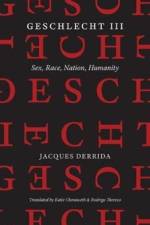
"This book is an event in Derrida scholarship, as it marks the publication of a long-lost Derrida text simply as "Geschlecht III," which the French philosopher never completed. Part of a series of reflections that represent his most sustained engagement with the writings of Martin Heidegger, this third part was thought by Derrida himself to be the heart of his Geschlecht series. The enigmatic word itself has several meanings in German, and Derrida teases out its implications for topics as diverse and provocative as sexual difference, nationalism, race, and humanity, engaging with Heidegger's controversial oeuvre throughout, as well as a host of other philosophical thinkers and even poetic ones, in the case of Georg Trakl. Thanks to the meticulous editorial work of Geoffrey Bennington, Katie Chenoweth, and Rodrigo Therezo, and vividly rendered by Chenoweth and Therezo's translation, Derrida's most mysterious text, awaited for decades, is finally available for new generations to ponder"--
"What if we could predict natural disasters? What do scientists know about them already, and what do they wish they knew? Dangerous Earth explores for general readers the state of the sciences that investigate volcanoes, earthquakes, tsunamis, hurricanes, landslides, rip currents, and - the deadliest hazard of all - climate change and its likely local effects. Each chapter takes the reader on a tour of our understanding of one of these hazards, beginning with narratives of key historical events (such as the eruption of Mt. St. Helen's and the landfall of Hurricane Katrina) and ending with overviews of what remains unknown about Earth's most dynamic processes. Along the way, we meet the scientists learning to read the planet's warning signs and working to pass the messages along to the rest of us"--
"American politics and culture are rife with people or groups demonizing others by projecting their own qualities onto them-from the cries of oppression heard at "tiki riots" to "No puppet, you're the puppet." But as John Corrigan shows, this isn't merely aggravating social behavior or transparent political maneuvering; it's a misdirected expression of trauma that is endemic to American institutions, American conceptions of self, and American history. Time and again, Corrigan shows, American churches in particular have campaigned against intolerance elsewhere even as they have abetted or performed it at home"--
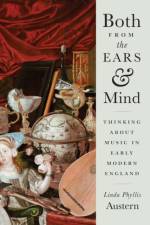
"As recent scholarship has begun to register, music during the sixteenth and seventeenth centuries occupied a much wider intellectual and cultural position than it did in later centuries, including the present one. Linda Austern's study aims to restore music to its former scope and give us a renewed sense of its role and effects in early-modern English society. The book brings to life the kinds of educated debates and conversations that would accompany musical performances or animate intellectual gatherings, and engages with the various genres of writings about music that circulated at the time. Attending to materials that go beyond music's conventional limits, these chapters probe the role of music in commonplace books, health maintenance and marriage manuals, rhetorical and theological treatises, and mathematical dictionaries. Ultimately, Austern illustrates how music was an indispensable frame of reference that became central to the fabric of life during a time of tremendous intellectual, social, and technological change"--
Papers from a workshop organized by the National Bureau of Economic Research and held at Cambridge, MA, on 27 April 2018.
"Americans take great pride in their respect for the rule of law and our Constitution. And yet too frequently specific legal rights and procedures protected by the Constitution have been suspended on the grounds of emergency, and we have tolerated the longer exclusion of groups such as African-Americans from the full protection of our laws and the Constitution. This collection of essays by leading historians and scholars of law and American history, explores what it means for a democracy to suspend the rule of law and how Americans both justify and dispute these suspensions. Too often they are treated as isolated events, ignoring larger patterns of exclusion from the rule of law, as well as the threat they pose to democracy. In this book the authors seek to weave together these stories to show what these suspensions tell us about the limits of American democracy"--
"This book resurrects science history between Robert Boyle and Antoine-Laurent Lavoisier by telling the story of a remarkable genius who devised an innovative, comprehensive, and experimentally based theory of alchemy/chemistry (called chymistry) that was widely celebrated and adopted both in his own time and after. Wilhelm Homberg (1653-1715) is a bridge between traditions: he held an expansive vision for chymistry as a natural philosophical discipline while at the same time continued to pursue metallic transmutation, only lightly veiled in his official publications. In Lawrence M. Principe's hands, Holmberg's life and work, particularly at the Acadâemie Royale, provide new insights on several of the significant changes that chymistry underwent during and immediately after his lifetime. This new biography radically revises what was previously known about the contours of chymistry and scientific institutions in the early eighteenth century"--
With more than two hundred species distributed across most of mainland Mexico, Central and South America, and islands in the Caribbean Sea, the Phyllostomidae bat family (American leaf-nosed bats) is one of the world's most diverse mammalian families in terms of its trophic, or feeding, diversity. From an insectivorous ancestry, extant species have evolved into several dietary classes, including blood-feeding, vertebrate carnivory, and the consumption of nectar, pollen, and fruit, in a period of about 30 million years. Phyllostomidae's plant-visiting species are responsible for pollinating more than five hundred species of neotropical shrubs, trees, vines, and epiphytes--many of which are economically and ecologically important--and they also disperse the seeds of at least another five-hundred plant species. Fruit-eating and seed-dispersing members of this family thus play a crucial role in the regeneration of neotropical forests, and the fruit eaters are among the most abundant mammals in these habitats. Coauthored by leading experts in the field and synthesizing the latest advances in molecular biology and ecological methods, Phyllostomid Bats is the first overview in more than forty years of the evolution of the many morphological, behavioral, physiological, and ecological adaptations in this family. Featuring abundant illustrations as well as details on the current conservation status of phyllostomid species, it is both a comprehensive reference for these ecologically vital creatures and a fascinating exploration of the evolutionary process of adaptive radiation.
"This book is a fresh examination of Aristotle's teaching on the relation between reason and moral virtue in the Nicomachean Ethics, taking as its point of departure the oft-noted, but still perhaps not sufficiently appreciated fact, that this treatise is the first half of a two-volume work on political science. As such, it lays the foundation for Aristotelian political science and, in significant ways, for the field of political science altogether. The proper aim of the political community according to Aristotle is to promote the human good; it is the task of the Nicomachean Ethics to elaborate what this good is. It provides Aristotle's fullest answer to the most radical question about justice, the question of why we should be just or moral at all, in its teaching on the essential relation of virtue to happiness"--
"Thomas Pangle continues his exploration of the work of Xenophon, a student of Socrates and an historian, who wrote about Socrates, the man, his ideas, and their reception in Athens. In a sequel to his earlier account of Xenophon's Memorabilia, this book takes up the three remaining works of Xenophon, which were devoted to memorializing his teacher Socrates: the Oeconomicus, the Symposium, and the Apology of Socrates to the Jury. As Pangle puts it, the question that is the theme of these works is which of the two distinct ways of life and human character types-that of the Socratic political philosopher with his philosophic virtues, or that of the gentleman with his civic and moral virtues-is superior, standing as the highest standard for all human existence"--
"It has been nearly 60 years since the publication of Silent Spring, in which Rachel Carson brought to light evidence of the devastating ecological effects of pesticides. This book, by Frank von Hippel, is a sweeping history of these chemicals and our complicated relationship with them. It shows how they've made the modern world possible, while at the same time threatening its essential fabric. "This book starts with a tragedy that led scientists on an urgent mission to prevent famine with chemicals," von Hippel writes in his manuscript's Prologue. "It ends with the realization that those chemicals were insidiously damaging human health and driving species toward extinction." Along the way, we learn how pesticides' destructive legacy led to the environmental movement and made possible a new era of ecological thinking"--
"In Bankrupt in America, Mary and Brad Hansen show that examination of how Americans have used bankruptcy law and the history of the law itself offers important perspective on the history of bankruptcy in America. Using new statistical and documentary evidence, they illustrate the cycles of interaction between bankruptcy law's use and its own evolution. The authors first offer a broad overview of the laws at various levels governing the collection of debt and position their research in the literature on bankruptcy. They establish the need for a framework that integrates various lines of thought, and introduce of the methods of their approach, which incorporates new institutional economics and cliometrics, that is, the incorporation of econometric data analysis. They then illustrate the general path to bankruptcy by discussing the series of decisions that creditors and debtors make at every stage and how various formal and informal institutions influence these decisions. The core of the book will comprise a generally chronological narrative from 1898, when the first major federal bankruptcy law was enacted to an end point of 2005. Hansen and Hansen reach novel conclusions about causes and consequences of bankruptcy and raise nuances in the relationship between bankruptcy rates and economic growth. For instance, while higher bankruptcy rates are usually considered a negative, the authors show that higher bankruptcy may actually signal economic growth if it is due to an expansion of credit markets. Further, the authors contribute to our understanding of what drives differences in bankruptcy rates among states by illustrating the influence of the broader legal framework. Ultimately, this work find that long-run growth in personal bankruptcy is the result of growth in credit and that the study of legal governance provides useful viewpoints from which to draw out patterns in bankruptcy"--
Abonner på vårt nyhetsbrev og få rabatter og inspirasjon til din neste leseopplevelse.
Ved å abonnere godtar du vår personvernerklæring.